Attractions and Places To See around Spoleto - Top 20
Best attractions and places to see around Spoleto include a diverse range of historical, cultural, and natural sites within this Umbrian hilltown. The region features a well-preserved historical center with Roman, medieval, and Renaissance architecture. Spoleto is situated amidst natural beauty, including the sacred woods of Monteluco and the scenic Valnerina along the Nera River. Visitors can explore ancient landmarks, cultural institutions, and picturesque landscapes.
Best attractions and places to see around Spoleto
- The most popular attractions is Marmore Falls, a waterfall that is among the highest in Europe, with a total height difference of 165 meters. This controlled flow waterfall is known for its three jumps and is a significant feat of Roman engineering.
- Another must-see spot is Caprareccia Station, an other man-made historical site located along the former narrow-gauge Spoleto-Norcia railway line. This station is situated in a mountainous area and is known for its emblematic tunnels and scenic surroundings.
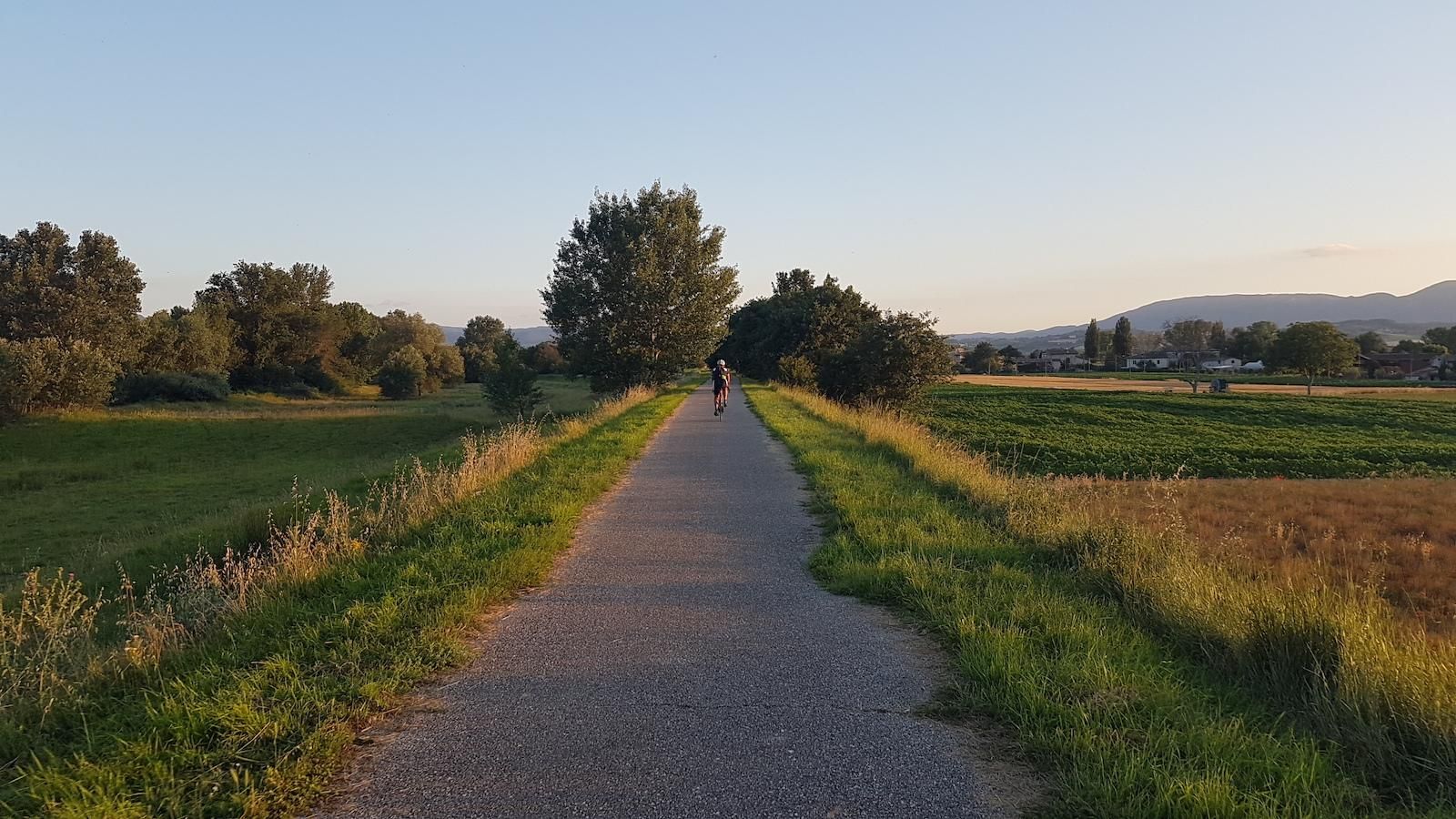
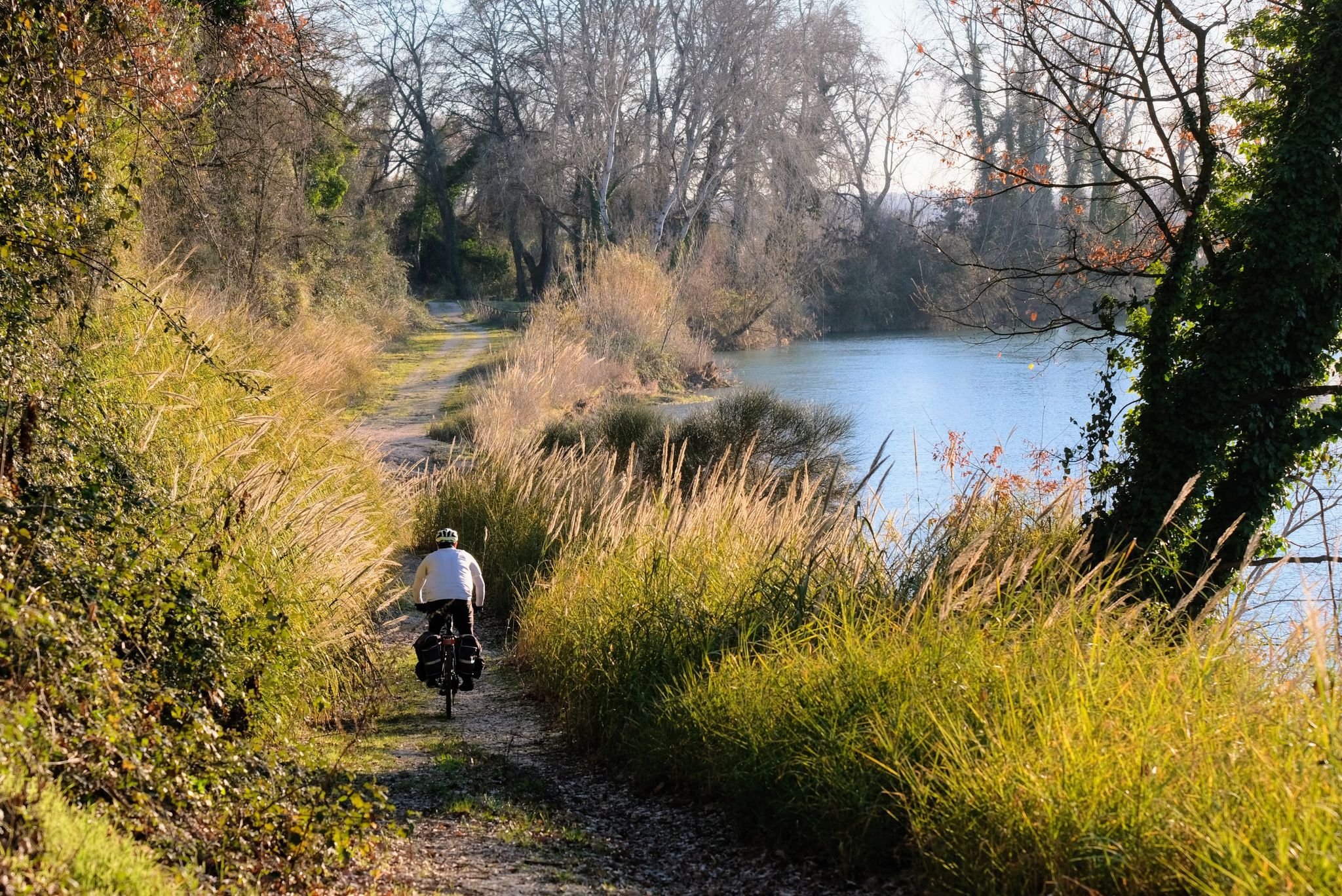
- Visitors also love Section of the Spoleto-Norcia Railway, a cycle way that offers a route through nature and history. This section is part of a former railway line, featuring tunnels and viaducts, making it a popular choice for cycling.
- Spoleto is known for its historical sites, natural monuments, and scenic cycle routes. The area offers a variety of attractions to see and explore, from ancient Roman structures to impressive waterfalls and repurposed railway paths.
- The attractions around Spoleto are appreciated by the komoot community, with over 199 upvotes and 138 photos shared across 44 highlights.
Last updated: October 9, 2026
Marmore Falls
Highlight • Waterfall
Translated by Google •
Tip by

Marmore Falls
Highlight • Waterfall
Tip by

Sign up now to discover places like this
Get recommendations on the best single tracks, peaks, & plenty of other exciting outdoor places.
Third Drop of Marmore Falls
Highlight • Waterfall
Translated by Google •
Tip by

Caprareccia Station
Highlight • Structure
Translated by Google •
Tip by

Cathedral of Spoleto
Highlight • Religious Site
Cathedral: the symbol of the city of Spoleto
With its magnificent façade, Spoleto Cathedral provides a kind of backdrop to the Piazza Duomo, which is home to many other buildings.
The cathedral was built in the 12th century on the remains of an earlier religious building named after Santa Maria del Vescovado, which in turn stood on an older church dedicated to the martyr Primiano. The crypt of Santa Primiano, accessed through the rectory, dates back to the 9th century and represents the only original part of the old cathedral, which was rebuilt at the end of the 12th century.
Adjacent to the facade of the cathedral, on the left side, is the imposing square-shaped bell tower. The façade also features an elegant portico with five rounded arches supported by Corinthian columns, a marvelous work by the master Ambrogio Barocci dating from 1492. The upper part is divided into two levels separated by a cornice supported by blind arches: the lower part is decorated with five beautiful rose windows, the central one being larger and surrounded by the symbols of the four evangelists; the upper part features three rose windows and three pointed-arch niches, of which the central, larger one is decorated with a wonderful mosaic depicting Christ enthroned between the Madonna and Saint John the Evangelist. The decorative elements are further emphasized by the use of blocks of local white and pink stone, which highlight the architectural details.
Inside, the space is divided into three naves with a central apse, and the plan is a Latin cross with a transept. The building houses numerous works of art by artists from various eras: the bronze bust of Urban VIII was made by Gian Lorenzo Bernini in 1640; the cross with the iconography of the Living Christ (Triumphal) is a work by Alberto Sotio from 1187; and the cycle of the Stories of the Virgin, which adorns the central apse, was painted by Filippo Lippi between 1467 and 1469.
Finally, two chapels are particularly admirable: the Chapel of the Santissima Icona, which houses a 12th-century Byzantine panel that, according to tradition, was given to the city of Spoleto by Frederick Barbarossa as a sign of peace; and the Chapel of the Reliquies, which houses one of the only two surviving letters written by Saint Francis himself. It is a small rectangular parchment (13 x 6 cm) made of goatskin, consisting of nineteen lines, addressed to Fra Leone. The other handwritten letter is the so-called Chartula, kept in the Basilica of Assisi and, according to tradition, written by Francis in 1224 after his stigmatization on Mount Verna.
The interior of the building, as it appears today, is the result of a decisive intervention in the 17th century that gave it a Baroque style.
Text / Source: Exploring Umbria srl,
exploring-umbria.com/de/entdecke-spoleto/gehenswuerdigkeiten-in-spoleto/kathedrale-santa-maria-assunta-dom-von-spoleto/#:~:text=Die%20Kathe Drale%20 was%20 built%20 in the%20tw%C3%B6th%20th century%20 on%20, a%20%C3%A4older%2C%20%20%20%20M%C3%A4rtyr%20Primiano%20%20%20house%20dedicated to the%20M%C3%A4rtyr%20Primiano%20.
Translated by Google •
Tip by

Sign up for free to discover even more attractions around Spoleto.
Already have an account?
Start today with a free account
Your next adventure awaits.
Popular around Spoleto



Tips from the Community

Work on the waterfalls began in 54 BC by the consul Appius Claudius Pulchrus. With the fall of the Western Roman Empire, the maintenance of the canal ended, and only in the 15th century was a new canal built. Further work was carried out in the subsequent decades. https://it.wikipedia.org/wiki/Cascata_delle_Marmore
2
0
If you only view the waterfalls from the terrace, you don't need a rain cape. However, if you want to go to the upper part of the waterfall, it is advisable to buy one on-site (at the ticket office) or bring one with you.
2
0

The climb to the top is worth it 👍💪🇮🇹
2
0

what can I say, a suggestive place to see both for a day trip and for a short stay in the splendid Val Nerina
2
0

Cathedral of Santa Maria Assunta, Spoleto Cathedral Cathedral: the symbol of the city of Spoleto With its magnificent façade, Spoleto Cathedral provides a kind of backdrop to the Piazza Duomo, which is home to many other buildings. The cathedral was built in the 12th century on the remains of an earlier religious building named after Santa Maria del Vescovado, which in turn stood on an older church dedicated to the martyr Primiano. The crypt of Santa Primiano, accessed through the rectory, dates back to the 9th century and represents the only original part of the old cathedral, which was rebuilt at the end of the 12th century. Adjacent to the facade of the cathedral, on the left side, is the imposing square-shaped bell tower. The façade also features an elegant portico with five rounded arches supported by Corinthian columns, a marvelous work by the master Ambrogio Barocci dating from 1492. The upper part is divided into two levels separated by a cornice supported by blind arches: the lower part is decorated with five beautiful rose windows, the central one being larger and surrounded by the symbols of the four evangelists; the upper part features three rose windows and three pointed-arch niches, of which the central, larger one is decorated with a wonderful mosaic depicting Christ enthroned between the Madonna and Saint John the Evangelist. The decorative elements are further emphasized by the use of blocks of local white and pink stone, which highlight the architectural details. Inside, the space is divided into three naves with a central apse, and the plan is a Latin cross with a transept. The building houses numerous works of art by artists from various eras: the bronze bust of Urban VIII was made by Gian Lorenzo Bernini in 1640; the cross with the iconography of the Living Christ (Triumphal) is a work by Alberto Sotio from 1187; and the cycle of the Stories of the Virgin, which adorns the central apse, was painted by Filippo Lippi between 1467 and 1469. Finally, two chapels are particularly admirable: the Chapel of the Santissima Icona, which houses a 12th-century Byzantine panel that, according to tradition, was given to the city of Spoleto by Frederick Barbarossa as a sign of peace; and the Chapel of the Reliquies, which houses one of the only two surviving letters written by Saint Francis himself. It is a small rectangular parchment (13 x 6 cm) made of goatskin, consisting of nineteen lines, addressed to Fra Leone. The other handwritten letter is the so-called Chartula, kept in the Basilica of Assisi and, according to tradition, written by Francis in 1224 after his stigmatization on Mount Verna. The interior of the building, as it appears today, is the result of a decisive intervention in the 17th century that gave it a Baroque style. Text / Source: Exploring Umbria srl, https://www.exploring-umbria.com/de/entdecke-spoleto/gehenswuerdigkeiten-in-spoleto/kathedrale-santa-maria-assunta-dom-von-spoleto/#:~:text=Die%20Kathe Drale%20 was%20 built%20 in the%20tw%C3%B6th%20th century%20 on%20, a%20%C3%A4older%2C%20%20%20%20M%C3%A4rtyr%20Primiano%20%20%20house%20dedicated to the%20M%C3%A4rtyr%20Primiano%20.
16
0


Lovely place I'm happy I visited it
1
0
Frequently Asked Questions
What are the most significant historical landmarks to visit in Spoleto?
Spoleto is rich in history. Key historical landmarks include the majestic 13th-century Ponte delle Torri, which offers breathtaking views and connects to Monteluco. Overlooking the city is the Rocca Albornoziana, a 14th-century fortress that now houses a museum. The Spoleto Cathedral (Duomo di Santa Maria Assunta) is a masterpiece of Umbrian Romanesque architecture with frescoes by Filippo Lippi. You can also explore the ancient Roman Amphitheater and the Arch of Drusus and Germanicus. Don't miss the UNESCO World Heritage site, the 4th-century Basilica of San Salvatore, a prime example of Lombard architecture.
Are there any natural attractions or scenic viewpoints near Spoleto?
Absolutely. The most popular natural attraction is Marmore Falls, one of Europe's highest controlled flow waterfalls, known for its impressive three jumps. For scenic views, the Ponte delle Torri provides spectacular vistas of the valley. The sacred wood of Monteluco, connected by the bridge, offers a serene natural setting. The Valnerina, just outside the city along the Nera River, is also known for its natural beauty and views of Monte Sibilla.
What outdoor activities can I do around Spoleto?
Spoleto and its surroundings offer various outdoor activities. You can enjoy cycling or walking along the Section of the Spoleto-Norcia Railway, a former railway line featuring tunnels and viaducts. For more extensive cycling, gravel biking, or running, explore the numerous routes available. For example, you can find many options for gravel biking, running, and cycling around Spoleto.
Are there family-friendly attractions in the Spoleto area?
Yes, several attractions are suitable for families. Marmore Falls is a fantastic experience for all ages, with designated viewing points. The Section of the Spoleto-Norcia Railway is also popular for family bike rides or walks, offering a unique journey through nature and history with its tunnels and viaducts.
What cultural sites and museums can I visit in Spoleto?
Spoleto boasts several cultural sites and museums. The Rocca Albornoziana houses a museum dedicated to the city's history. Palazzo Collicola is home to Spoleto's Museo Carandente for Modern and Contemporary Art. The Spoleto Archaeological Museum, located in a former Benedictine convent, incorporates the Roman theater and displays Roman artifacts. The Spoleto Diocesan Museum showcases religious art and includes admission to the unique Sant'Eufemia Church.
What is the best time of year to visit Spoleto for outdoor activities?
The best time to visit Spoleto for outdoor activities is generally during the spring (April to June) and autumn (September to October). During these seasons, the weather is pleasant, with comfortable temperatures for hiking, cycling, and exploring the natural beauty of Monteluco and Valnerina. The summer months can be quite hot, while winters are cooler and may have more rainfall.
Can I find any unique or 'hidden gem' attractions in Spoleto's surroundings?
Beyond the main highlights, consider exploring the Casa Romana, an ancient Roman house offering a glimpse into elite Roman life. The Torre dell'Olio, the tallest medieval tower, has an interesting legend. For a unique historical site along a scenic route, visit Caprareccia Station, part of the former Spoleto-Norcia railway line, known for its emblematic tunnels and picturesque surroundings.
What do visitors enjoy most about the attractions around Spoleto?
Visitors frequently praise the spectacular nature of Marmore Falls, often highlighting its impressive height and the unique experience of seeing the water flow controlled. The historical significance and scenic beauty of the former Spoleto-Norcia railway, including sections like the Section of the Spoleto-Norcia Railway and Caprareccia Station, are also highly appreciated for immersing cyclists and hikers in both nature and history.
Are there any specific trails or routes recommended for hiking near Spoleto?
Yes, the area around Spoleto offers several hiking opportunities. The sacred wood of Monteluco, accessible via the Ponte delle Torri, has trails suitable for walking. For more structured routes, you can explore various running trails that are also suitable for hiking, such as the Monteluco di Spoleto loop from Spoleto. The former Spoleto-Norcia railway line also provides scenic paths for walking.
What is the Festival of Two Worlds (Festival dei Due Mondi) in Spoleto?
The Festival dei Due Mondi is a renowned cultural event founded in 1958. It attracts artists and spectators from around the world to Spoleto for performances in opera, theater, dance, and music. If you plan to visit during late June or early July, you might experience this vibrant festival, which adds a unique cultural dimension to the city.
Is public transport available to reach walking trails or attractions outside the city center?
While Spoleto's historic center is walkable, reaching some outdoor attractions like the starting points for trails in Monteluco or the Valnerina might require local buses or a short drive. For specific public transport information to trailheads, it's advisable to check local transport schedules upon arrival. Many cycling and hiking routes, such as those along the former Spoleto-Norcia railway, are accessible from or near the city itself.
Most popular routes around Spoleto
Most popular attractions around Spoleto

Get inspired with the komoot mobile app


Explore more
Still not found the Highlight you’re looking for? See guides of the top attractions in other regions:
