The best gravel rides around Spoleto
4.6
(43)
525
riders
35
rides
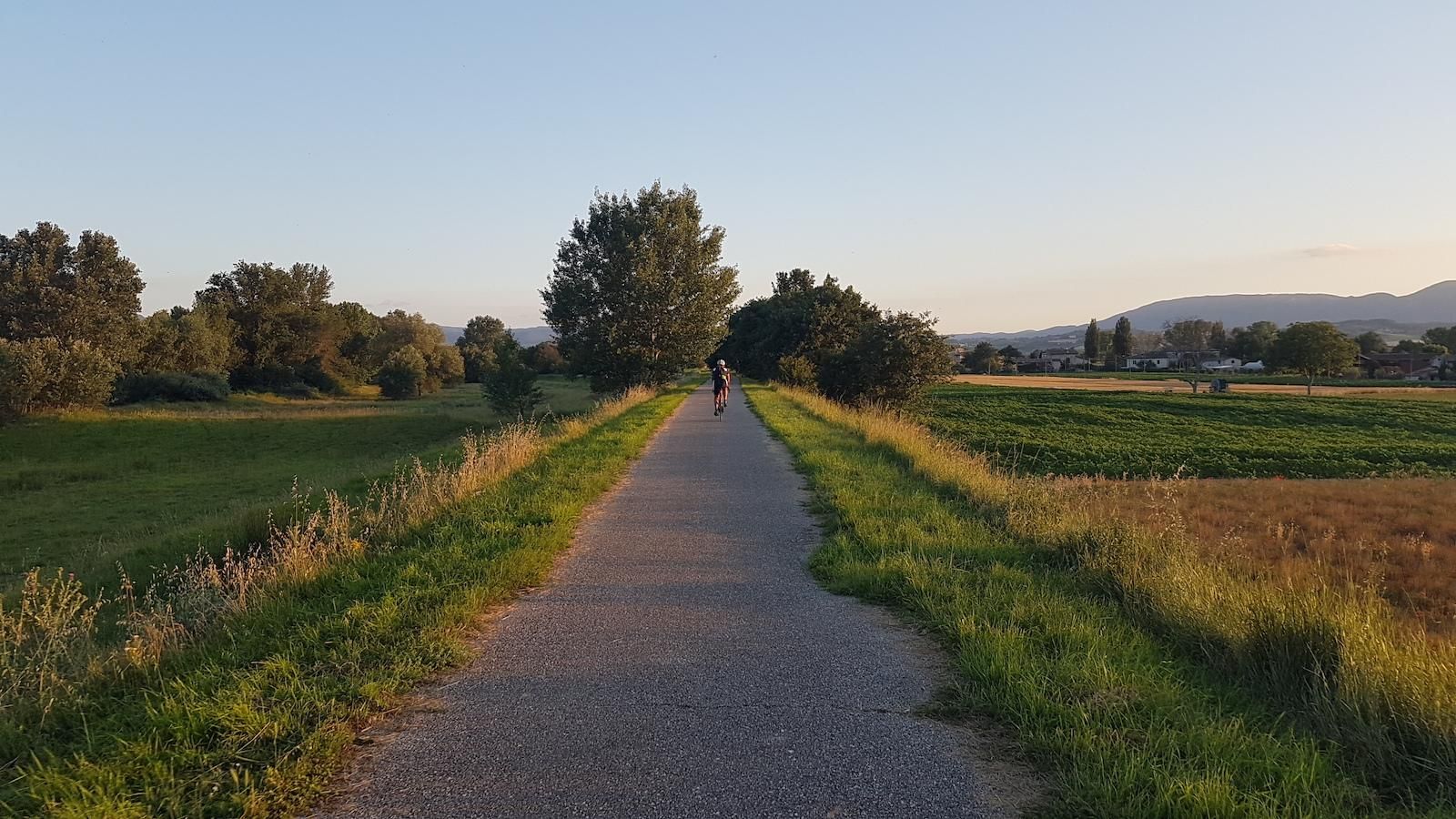
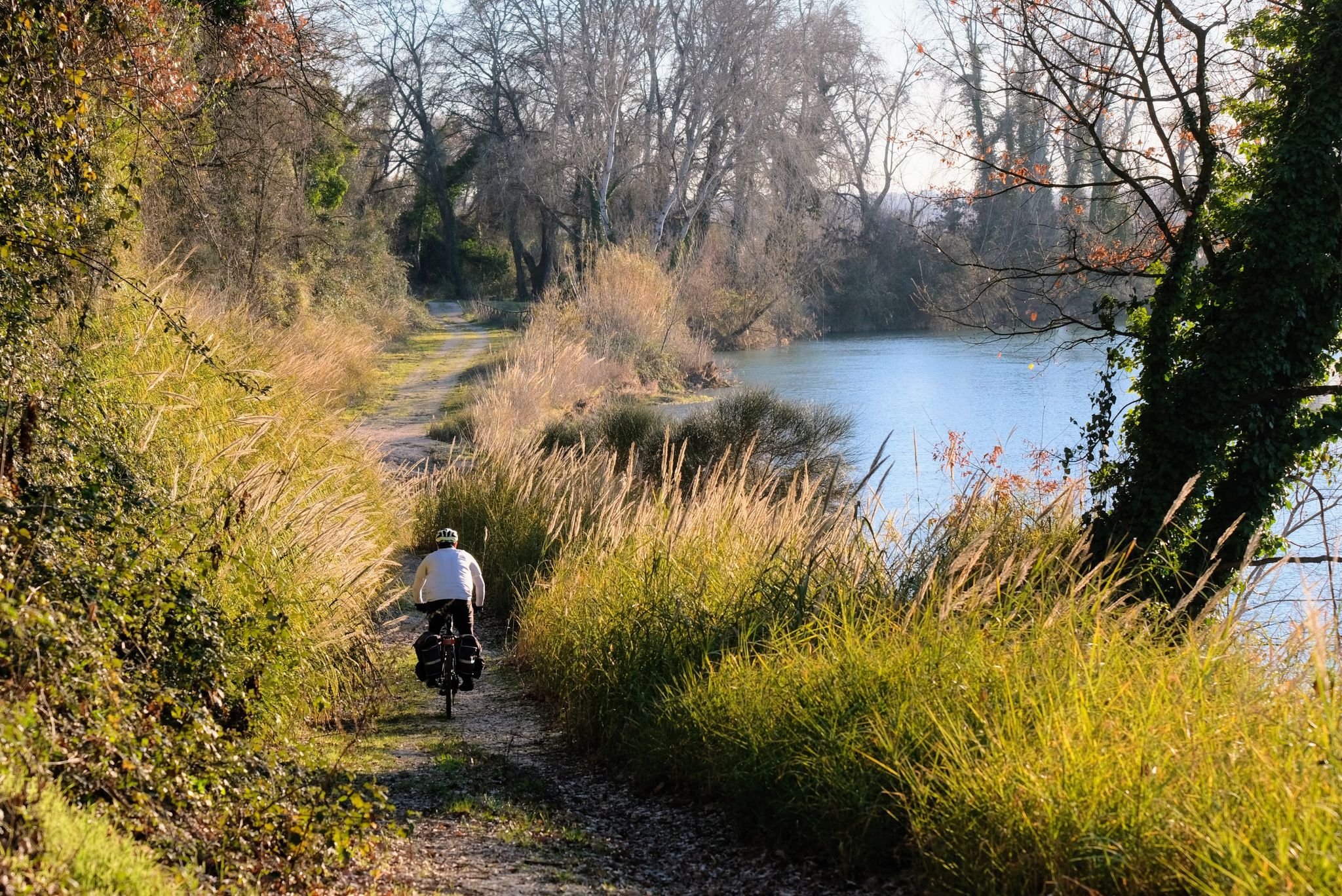
Gravel bike trails around Spoleto traverse the diverse landscapes of Umbria, characterized by rolling hills, dense holm oak forests, and picturesque valleys. The region features varied terrain, from the historic Former Spoleto-Norcia Railway path to quiet secondary roads winding through olive groves and vineyards. Spoleto is situated at the foothills of the Apennine Mountains, providing routes with significant elevation changes. The area offers a mix of challenging climbs and scenic paths, making it suitable for various gravel biking experiences.
Best gravel bike trails around Spoleto
- The most popular gravel bike trail is Caprareccia Railway Bridge – Caprareccia Station loop from Baiano di Spoleto, a 27.6 miles (44.4 km) trail that takes 3 hours 52 minutes to complete. This route follows a section of the historic Former Spoleto-Norcia Railway, featuring tunnels and viaducts.
- Another top favourite among local gravel bikers is Caprareccia Railway Bridge – Caprareccia Station loop from Spoleto, a difficult 46.9 miles (75.5 km) path. This longer route on the old railway line offers varied terrain and panoramic views of the surrounding valleys.
- Local gravel bikers also love the View of Macerino – Portaria Village loop from Firenzuola, a 34.6 miles (55.8 km) trail leading through the Umbrian hills and valleys, often completed in about 3 hours 52 minutes.
- Gravel biking around Spoleto is defined by the Umbrian Hills, the Monteluco Forest, and the historic Former Spoleto-Norcia Railway. The network offers options for different ability levels, from moderate paths to more challenging routes with significant climbs.
- The routes in Spoleto are highly rated by the komoot community with an average score of 4.7 stars from over 40 reviews. More than 500 gravel bikers have used komoot to explore Spoleto's varied terrain.
Last updated: August 15, 2026
4.5
(2)
25
riders
65.5km
04:33
980m
980m
Hard gravel ride. Very good fitness required. Mostly paved surfaces. Suitable for all skill levels.
5.0
(2)
27
riders
Hard gravel ride. Very good fitness required. Mostly paved surfaces. Suitable for all skill levels.

Sign up for free
5.0
(1)
30
riders
80.4km
05:29
1,150m
1,150m
Hard gravel ride. Very good fitness required. Mostly paved surfaces. Suitable for all skill levels.
5.0
(2)
13
riders
75.5km
05:09
1,640m
1,640m
Hard gravel ride. Very good fitness required. Mostly paved surfaces. Suitable for all skill levels.
5.0
(2)
17
riders
55.8km
03:53
1,340m
1,340m
Hard gravel ride. Very good fitness required. Mostly paved surfaces. Suitable for all skill levels.
Get access to more routes and recommendations from other explorers.
Sign up for free
Already have an account?
Our route recommendations are based on thousands of hikes, rides, and runs completed by other people on komoot.
Start today with a free account
Your next adventure awaits.
Login or Signup


Tips from the Community

If you only view the waterfalls from the terrace, you don't need a rain cape. However, if you want to go to the upper part of the waterfall, it is advisable to buy one on-site (at the ticket office) or bring one with you.
1
0


what can I say, a suggestive place to see both for a day trip and for a short stay in the splendid Val Nerina
1
0

Cathedral of Santa Maria Assunta, Spoleto Cathedral Cathedral: the symbol of the city of Spoleto With its magnificent façade, Spoleto Cathedral provides a kind of backdrop to the Piazza Duomo, which is home to many other buildings. The cathedral was built in the 12th century on the remains of an earlier religious building named after Santa Maria del Vescovado, which in turn stood on an older church dedicated to the martyr Primiano. The crypt of Santa Primiano, accessed through the rectory, dates back to the 9th century and represents the only original part of the old cathedral, which was rebuilt at the end of the 12th century. Adjacent to the facade of the cathedral, on the left side, is the imposing square-shaped bell tower. The façade also features an elegant portico with five rounded arches supported by Corinthian columns, a marvelous work by the master Ambrogio Barocci dating from 1492. The upper part is divided into two levels separated by a cornice supported by blind arches: the lower part is decorated with five beautiful rose windows, the central one being larger and surrounded by the symbols of the four evangelists; the upper part features three rose windows and three pointed-arch niches, of which the central, larger one is decorated with a wonderful mosaic depicting Christ enthroned between the Madonna and Saint John the Evangelist. The decorative elements are further emphasized by the use of blocks of local white and pink stone, which highlight the architectural details. Inside, the space is divided into three naves with a central apse, and the plan is a Latin cross with a transept. The building houses numerous works of art by artists from various eras: the bronze bust of Urban VIII was made by Gian Lorenzo Bernini in 1640; the cross with the iconography of the Living Christ (Triumphal) is a work by Alberto Sotio from 1187; and the cycle of the Stories of the Virgin, which adorns the central apse, was painted by Filippo Lippi between 1467 and 1469. Finally, two chapels are particularly admirable: the Chapel of the Santissima Icona, which houses a 12th-century Byzantine panel that, according to tradition, was given to the city of Spoleto by Frederick Barbarossa as a sign of peace; and the Chapel of the Reliquies, which houses one of the only two surviving letters written by Saint Francis himself. It is a small rectangular parchment (13 x 6 cm) made of goatskin, consisting of nineteen lines, addressed to Fra Leone. The other handwritten letter is the so-called Chartula, kept in the Basilica of Assisi and, according to tradition, written by Francis in 1224 after his stigmatization on Mount Verna. The interior of the building, as it appears today, is the result of a decisive intervention in the 17th century that gave it a Baroque style. Text / Source: Exploring Umbria srl, https://www.exploring-umbria.com/de/entdecke-spoleto/gehenswuerdigkeiten-in-spoleto/kathedrale-santa-maria-assunta-dom-von-spoleto/#:~:text=Die%20Kathe Drale%20 was%20 built%20 in the%20tw%C3%B6th%20th century%20 on%20, a%20%C3%A4older%2C%20%20%20%20M%C3%A4rtyr%20Primiano%20%20%20house%20dedicated to the%20M%C3%A4rtyr%20Primiano%20.
15
0
The Park - Fonti del Clitunno, Ristorante Pizzeria, Campello Sul Clitunno A body of water with a circumference of just over 400 meters and an area of almost 10,000 square meters, this small lake is home to numerous plant species that contribute to the fame of the Fonti del Clitunno. Moss, seagrass, water horsetail, sedge, curled brosca, giant shrimp, marsh forget-me-not, and water nasturtium, also known as watercress, are just some of the plants found in the pond. Around the banks are the trees that characterize the surroundings, most notably the cypress poplar, covered in dense foliage in summer. Then there's the weeping willow, whose spread dates back to the fashion that spread this plant in Paris in the 1840s, which is said to have shaded Napoleon's tomb on Saint Helena. Text / Source: Fonti del Clitunno - Ristorante Pizzeria, Campello Sul Clitunno https://www.fontidelclitunno.it/
14
0
Fonti del Clitunno - Ristorante Pizzeria, Campello Sul Clitunno Dream apartments, treat yourself to the relaxation you deserve. A gastronomic experience in the Parco della Poesia and a garden with tables for pampering yourself. From here, O Clitumnus, the white herds and the bull, the greatest holocaust, have repeatedly dipped into your sacred waters, bringing Roman triumphs to the temples of the gods. History Have you ever seen the Fonti del Clitunno? If not, and I don't think so, otherwise you would have told me about it, go and see. "I saw it recently and regret having done it too late." Thus wrote Pliny the Younger to a friend, and his advice still holds true today. The Fonti del Clitunno as we see them today are different from those of the first century, during Pliny's time. A violent earthquake in 444 AD changed the face of the area and was likely the cause of the narrowing of the Clitunno River, which had previously been navigable. The layout of the Clitunno springs as we see them today is thanks to the patient work of Paolo Campello della Spina, who, between 1860 and 1865, removed the earth to make room for the pond and encouraged the growth of vegetation that still characterizes the Clitunno springs today. A few years later, Giosue Carducci wrote the barbaric ode "Alle Fonti del Clitunno." Text/Source: Fonti del Clitunno - Ristorante Pizzeria, Campello Sul Clitunno https://www.fontidelclitunno.it/
14
0

Beautiful ride, between viaducts with breathtaking views and truly suggestive tunnels... to do at least once... also suitable for small bikers
0
0

Frequently Asked Questions
How many gravel bike trails are there around Spoleto?
There are over 20 gravel bike trails available around Spoleto, offering a variety of experiences through the Umbrian landscape. These routes are highly rated by the komoot community, with an average score of 4.7 stars.
What is the general difficulty of gravel biking in Spoleto?
Gravel biking in Spoleto offers a mix of terrain suitable for various skill levels. While most routes are rated as difficult, featuring significant elevation gains and varied surfaces, there are also moderate options. The region's diverse landscape, from rolling hills to the Apennine foothills, ensures a challenging yet rewarding experience for experienced riders, with some sections of the Former Spoleto-Norcia Railway being more accessible.
Are there any beginner-friendly gravel trails in Spoleto?
While many routes in Spoleto are challenging, sections of the iconic Former Spoleto-Norcia Railway can be more accessible for beginners, especially with an e-bike. This path offers a mix of asphalted and unpaved terrain, with some regular slopes but generally avoids overly technical off-road passages. For a less strenuous experience, consider routes that stick to the flatter parts of the Umbrian Valley.
What natural features or landmarks can I see while gravel biking in Spoleto?
Gravel biking around Spoleto offers stunning views of the Umbrian Hills, olive groves, and vineyards. You can explore the dense holm oak woods of the Monteluco Forest, ride through the picturesque Valnerina, and encounter the unique engineering marvels of the Former Spoleto-Norcia Railway, including 19 tunnels and 24 bridges. Don't miss the enchanting Clitunno Springs, a natural spectacle praised by poets, or the historic Ruins of the Pagan Sanctuary on Monte Torre Maggiore.
Are there specific viewpoints along the gravel routes?
Yes, many gravel routes in Spoleto offer panoramic viewpoints. The Former Spoleto-Norcia Railway, in particular, provides stunning vistas of the Nera Valley, especially around the Caprareccia pass and viaduct. Routes like the View of Macerino – Portaria Village loop from Firenzuola also lead through the Umbrian hills, offering expansive views of the surrounding countryside and charming villages.
What is the best season for gravel biking in Spoleto?
The best seasons for gravel biking in Spoleto are typically spring and autumn. During these times, the weather is mild, and the landscapes are particularly vibrant with blooming flowers or rich autumn colors. Summer can be quite warm, especially in the valleys, while winter might bring colder temperatures and potentially wet conditions on some unpaved sections.
Is parking available near the gravel trails in Spoleto?
Yes, parking is generally available in and around Spoleto, particularly near the starting points of popular routes. For routes utilizing the Former Spoleto-Norcia Railway, you can often find parking in towns like Spoleto or Baiano di Spoleto, which serve as access points to the trail.
Can I reach gravel bike routes using public transport?
Spoleto is well-connected by public transport, particularly by train, making it possible to access the region and some trailheads. The city itself is a major hub, and from there, you can often cycle directly onto routes like the Former Spoleto-Norcia Railway or the Assisi-Spoleto Cycle Path. Local bus services might also connect to smaller towns near other trail access points.
Are there cafes or places to stop along the gravel bike trails?
Yes, many gravel routes in Spoleto pass through or near charming medieval villages where you can find cafes, restaurants, and small shops. The Former Spoleto-Norcia Railway, for instance, connects Spoleto with other towns like Norcia, offering opportunities for refreshment and cultural immersion along the way. Exploring the wider network of secondary roads will also lead you to quaint villages with local amenities.
Are the gravel trails in Spoleto family-friendly?
While many routes in Spoleto involve significant elevation changes and can be challenging, certain sections of the Former Spoleto-Norcia Railway are suitable for families, especially if using e-bikes or choosing shorter segments. The Assisi-Spoleto Cycle Path is another pleasant, mostly flat option that connects Spoleto to Assisi, offering a more relaxed ride through vineyards and olive groves, which can be enjoyable for families.
Are there circular gravel routes around Spoleto?
Yes, many gravel routes around Spoleto are designed as loops, allowing you to start and end in the same location. Popular examples include the Caprareccia Railway Bridge – Caprareccia Station loop from Baiano di Spoleto and the Caprareccia Railway Bridge – Spoleto–Norcia Cycle Path loop from Spoleto, which both incorporate sections of the historic railway line.
What do other gravel bikers enjoy the most about gravel biking in Spoleto?
The komoot community highly rates gravel biking in Spoleto, with an average score of 4.7 stars from over 40 reviews. Riders frequently praise the unique experience of traversing the historic Former Spoleto-Norcia Railway, with its tunnels and viaducts, as well as the breathtaking panoramic views of the Umbrian Hills and Valnerina. The diverse terrain and the blend of natural beauty with historical landmarks are also often highlighted as key attractions.
Most popular attractions around Spoleto

Get inspired with the komoot mobile app


Explore more
Browse the best Gravel rides in other regions.
