Top 14 Castles around Bagnone
Best castles around Bagnone are found in the medieval village nestled in the Lunigiana mountains of Tuscany. This region features historically significant castles, each contributing to the area's rich past. The landscape is characterized by its mountainous terrain and strategic river valleys, which historically made it a crucial area for defense and control of mountain roads.
Best castles around Bagnone
- The most popular castles is Piagnaro Castle and Museum of Lunigiana Stele Statues, a castle built around the year…
Last updated: August 23, 2026
Historic Center of Pontremoli
Highlight • Historical Site
You will find a beautiful church on the central square of …
Translated by Google •
Tip by

Piagnaro Castle and Museum of Lunigiana Stele Statues
Highlight • Castle
Translated by Google •
Tip by

Sign up now to discover places like this
Get recommendations on the best single tracks, peaks, & plenty of other exciting outdoor places.
Sign up for free
Malaspina Castle Tower, Villafranca in Lunigiana
Highlight • Castle
Translated by Google •
Tip by

Lusuolo Castle and Medieval Village
Highlight • Castle
Translated by Google •
Tip by
Brunella Fortress
Highlight • Castle
Translated by Google •
Tip by

Sign up for free to discover even more castles around Bagnone.
Sign up for free
Already have an account?
Start today with a free account
Your next adventure awaits.
Login or Signup



Other adventures around Bagnone

Tips from the Community

The Torre del Castello Malaspina in the municipality of Villafranca in Lunigiana mainly refers to the imposing and famous cylindrical structure of the Castello Malaspina di Malgrate, although in the municipal capital there are also the ruins of the Castello di Malnido, the historic Dantesque residence of the Malaspina marquises, which was also originally equipped with a control tower. The best-preserved and famous fortification with its slender tower is located precisely in the hamlet of Malgrate. The cylindrical keep towers over the valley and is an unmistakable symbol of the Lunigiana landscape.
0
0
The Castello del Piagnaro and the Museum of the Lunigianesi Stele Statues "Augusto Cesare Ambrosi" form one of the most fascinating historical and archaeological complexes in Tuscany. Located in Pontremoli (Massa-Carrara), this millennial site dominates the medieval village and holds a prehistoric enigma unique in Europe.
0
0

The Statue Stele are anthropomorphic vertical stone sculptures, of variable size but generally between 2 and 3 meters in height. These mysterious works of art are testimonies to the culture and spirituality of the ancient peoples who inhabited Lunigiana. Their exact function remains a subject of debate among scholars. Some hypothesize that the Statue Stele could represent ancient gods or local deities, while others suggest they could be funerary symbols or commemorative monuments. The carved figures often feature enigmatic and abstract symbols, such as concentric circles, cupules, and linear engravings, which may have religious, astronomical, or ritualistic significance. The understanding of these symbols is still the subject of research and study by archaeologists and experts.
1
0

Aula is a fundamental hub of the Via Francigena, it was tormented by the bombings of the Second World War, causing the almost total destruction of its historic center, of which very few vestiges remain. It is located a few kilometers from the border with Liguria, on a narrow strip of land at the confluence of the Magra river and the Aulella stream, a decisive place for the civil and religious life of the entire area before the year 1000. Aulla in that period was already a small village and its importance was linked precisely to its central position along the Via Francigena, both as a pilgrimage road and as a commercial artery. The center of the town had an important role in defending the roads that led from the Lucca area and Liguria towards the Cisa Pass.
0
0
The Brunella Fortress owes its name to the hill on which it was built in the mid-16th century. The fort is a typical example of Renaissance military architecture, designed to defend against firearm attacks. It is an almost square construction with large polygonal struts. What is certain is that the complex represents the most powerful military work in Lunigiana and its strategic position allowed it, in the past, to control all the main routes in the area and the arrivals from the Apennine passes.
0
0
Ruins of the Malnido Castle, with the square dedicated to Dante Alighieri, ancient guest of the Malaspina, and the remains of the church of San Nicolò, the medieval road leads to the parish church of San Giovanni
0
0
The Piagnaro Castle is a fortress built in a strategic point to protect the Apennine passes and around which the first medieval nucleus was formed, built around the year 1000. For centuries it has been an integral part of the city's defensive system. In its thousand-year history it has undergone numerous destructions and subsequent reconstructions that have brought it to its current appearance. The Castle maintained its military function until the end of the 18th century. Its name derives from the so-called piagne, the gray sandstone slabs used in Lunigiana to cover the roofs of buildings, including that of the castle.
1
0

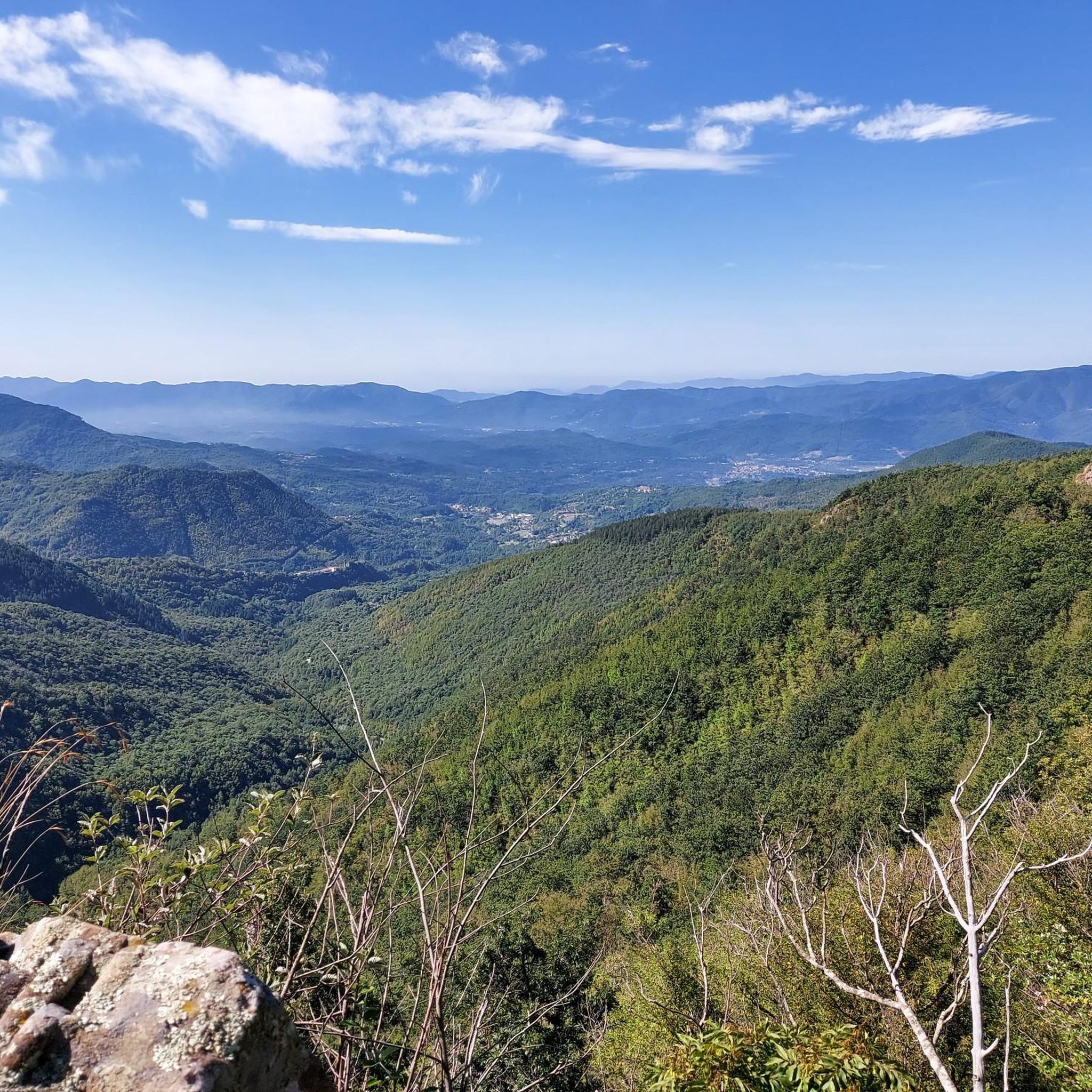
The hike up to the castle is worth it. Great views!
1
0
Frequently Asked Questions
What historical significance do the castles around Bagnone hold?
The castles in the Bagnone area, nestled in the Lunigiana mountains, are rich in history, reflecting centuries of strategic importance. Many, like Bagnone Castle and Castiglione del Terziere Castle, were built by powerful families such as the Malaspina dello Spino Fiorito dynasty or served as Byzantine strongholds. They controlled vital mountain roads and river valleys, evolving from defensive structures to administrative centers under Florentine rule, showcasing a blend of medieval and Renaissance architecture.
Which castles offer a comprehensive historical experience for visitors?
For a comprehensive historical experience, Castiglione del Terziere Castle is highly recommended. Its origins trace back to a 6th/7th-century Byzantine stronghold, later expanded by the Malaspina family and adapted by the Florentines. Visitors can appreciate its architectural evolution and strategic location overlooking the Bagnone river valley. Another excellent option is Piagnaro Castle, which houses the Museum of Lunigiana Stele Statues, offering insights into ancient Ligurian-Apuan civilization.
Can I visit Bagnone Castle?
Bagnone Castle, with its imposing cylindrical stone tower, is a prominent landmark. However, the castle itself is privately owned and not open to the public. You can still appreciate its commanding presence from the highest hill in Bagnone and explore the well-preserved medieval structure of the surrounding village, including the small church of San Nicolao.
Are there any castles that are privately owned or have limited access?
Yes, several castles in the region are privately owned or have limited public access. Bagnone Castle is privately owned and not open to visitors. The ruins of Treschietto Castle are also on private property, with access limited to the northeast side. It's always advisable to check local information for specific access details before planning your visit to any castle.
What can I see at Brunella Fortress?
Brunella Fortress is a prime example of Renaissance military architecture. Its strategic position historically controlled main routes and arrivals from the Apennine passes. Beyond its historical significance, the fortress offers beautiful views and has even had Cross Country rings created nearby for outdoor enthusiasts.
What is the history of Malgrate Castle?
Malgrate Castle is a medieval fortification first mentioned in 1351, though its origins are likely older. It stands on a hill dominating the Bagnone river valley. The complex features a 25-meter-high tower and Guelph battlements, and while it performed defensive functions, it was transformed into a noble residence in 1641. Its majesty makes it one of the most attractive castles in Lunigiana.
What can I find at Lusuolo Castle?
Lusuolo Castle and Medieval Village is a fascinating example of civil and military medieval architecture. The castle, dating from the mid-14th century, has been destroyed and rebuilt multiple times due to its strategic position. Today, it houses the Museum of the Emigration of the People of Tuscany, offering a unique cultural experience.
Are there hiking trails near the castles around Bagnone?
Yes, the Bagnone area offers numerous hiking opportunities. You can find trails like the 'View of the Apuan Alps – Malgrate loop from Bagnone' or the 'Historic Village of Filetto – Bridge over the Bagnone Stream loop from Bagnone,' both of moderate difficulty. For more options, explore the Hiking around Bagnone guide.
Are there family-friendly castles or activities in the area?
The Historic Center of Pontremoli, which includes Piagnaro Castle and its museum, is considered family-friendly. Exploring the medieval streets and bridges of Pontremoli can be an engaging experience for all ages. Additionally, the Lusuolo Castle houses the Museum of the Emigration, which can be an educational visit for families.
What is the best time of year to visit the castles around Bagnone?
The best time to visit the castles around Bagnone is generally during spring (April-June) and autumn (September-October). During these seasons, the weather is pleasant for exploring, and the natural scenery is particularly beautiful. Summer can be warm, but still enjoyable, while winter visits might offer a different, quieter atmosphere, though some facilities or access might be limited.
Are dogs allowed at the castles or on nearby trails?
While specific castle policies for dogs vary (many privately owned castles or ruins may not permit them inside), the surrounding natural areas and hiking trails are generally dog-friendly. Always keep your dog on a leash and clean up after them. It's best to check individual castle regulations if you plan to enter specific grounds.
Are there public transport options to reach the castles around Bagnone?
Public transport options to reach individual castles directly can be limited, as many are nestled in rural or elevated locations. Bagnone itself is accessible, and from there, local buses or taxis might be available to reach some nearby villages. However, for many castles, especially those in more remote settings like Treschietto, driving or walking is often the most practical way to access them.
Where can I find parking near the castles?
Parking availability varies by castle. For castles located within or near villages, such as those accessible from the Historic Center of Pontremoli, you can often find designated parking areas in the town center. For more remote castle ruins, parking might be limited to small pull-offs or roadside spots. It's advisable to research specific parking options for each castle you plan to visit.
Most popular routes around Bagnone
Most popular attractions around Bagnone

Get inspired with the komoot mobile app


Explore more
Looking for the best castles somewhere else? Discover other guides around Bagnone:
