Attractions and Places To See around Claremorris-Swinford Municipal District - Top 20
Best attractions and places to see around Claremorris-Swinford Municipal District offers a diverse landscape of natural beauty, historical sites, and cultural experiences in County Mayo, Ireland. This region features significant historical landmarks, including ancient abbeys and castles, alongside natural features like lakes and woodlands. Visitors can explore a variety of attractions, from pilgrimage sites to outdoor recreational areas. The district provides opportunities for engaging with local heritage and enjoying the natural environment.
Best attractions and places to see around Claremorris-Swinford Municipal District
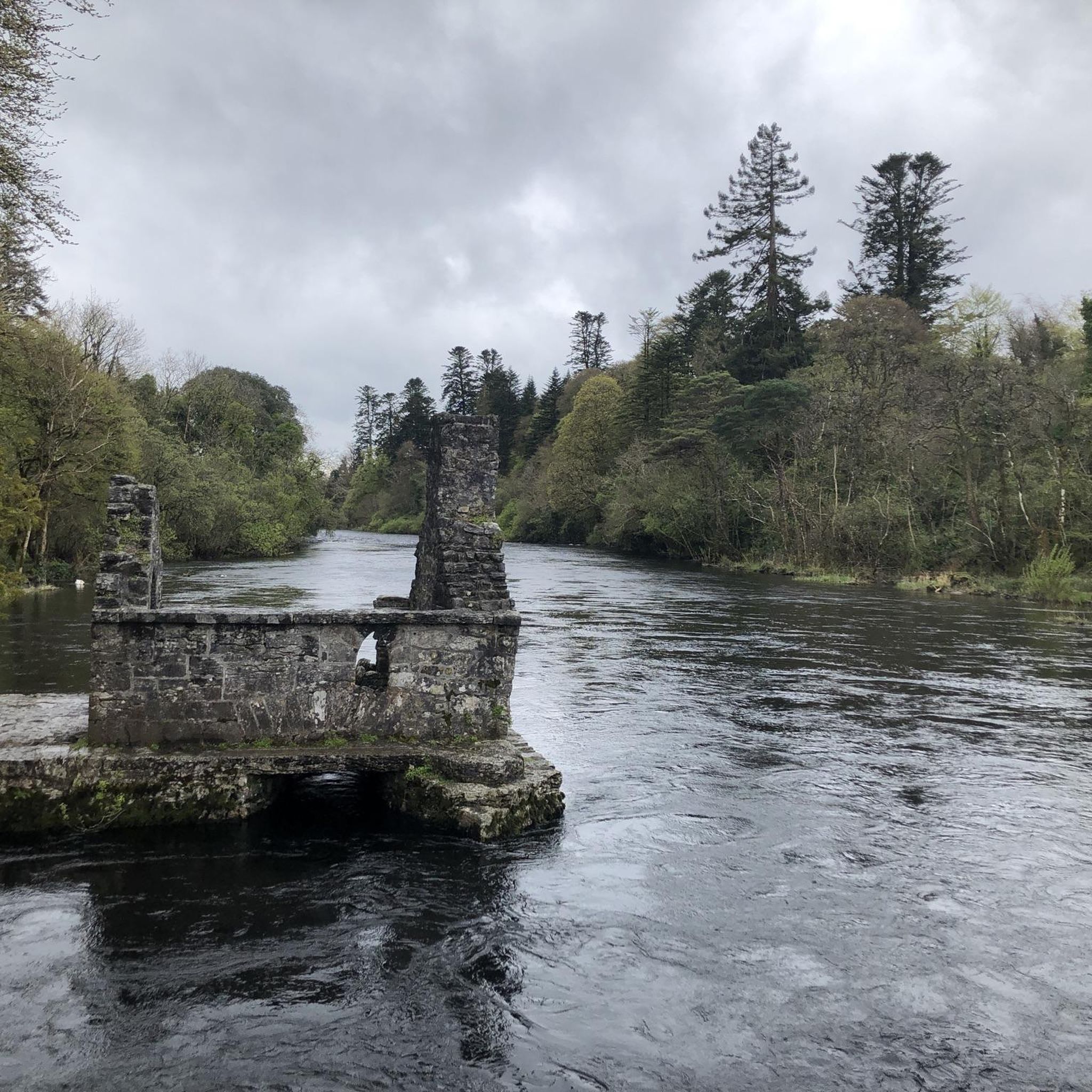
- The most popular attractions is Monks' Fishing House on the River Cong, a historical site that was once used by monks for fishing, featuring a unique system to catch fish. This structure is located on an island in the River Cong, near Lough Corrib.
- Another must-see spot is Cong Abbey, a 13th-century ruined Augustinian monastery. Visitors can explore its ancient structures and imagine medieval monastic life.
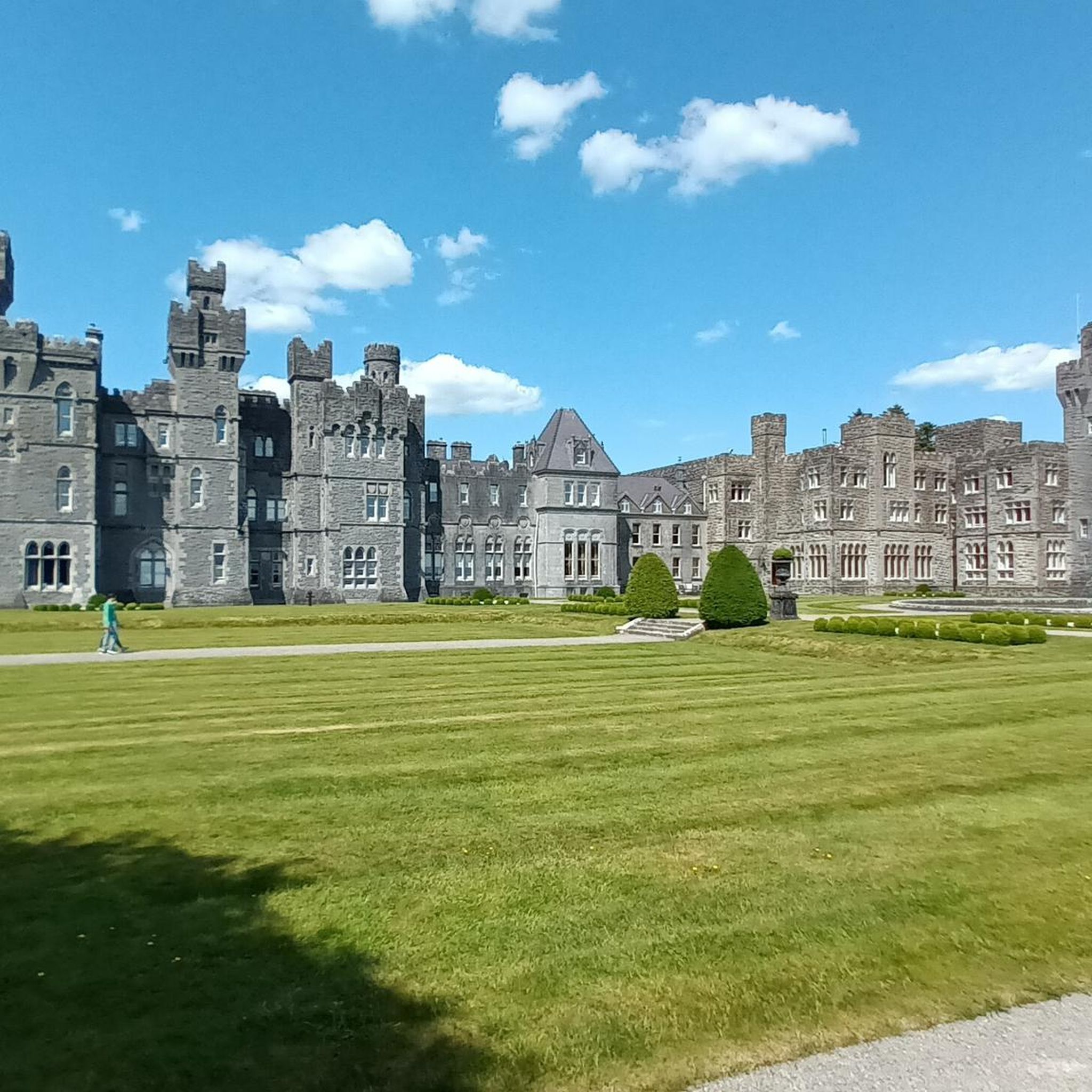
- Visitors also love Ashford Castle, a medieval castle that now operates as a 5-star hotel. Its extensive gardens and historical significance make it a notable landmark in the region.
- Claremorris-Swinford Municipal District is known for its historical sites, natural features, and cultural venues. The region offers a variety of attractions to see and explore, including ancient ruins, lakes, and local heritage centers.
- The attractions around Claremorris-Swinford Municipal District are appreciated by the komoot community, with more than 160 upvotes and 90 photos shared.
Last updated: July 15, 2026
Monks' Fishing House on the River Cong
Highlight • Historical Site
Incidentally, the small bridge behind the abbey also gives free access to the grounds of Ashford Castle.
Translated by Google •
Tip by

Cong Abbey
Highlight • Historical Site
Entry is free. Parking is available directly at the Abbey.
megalithicireland.com/Cong%20Abbey,%20Mayo.html
Translated by Google •
Tip by
Sign up now to discover places like this
Get recommendations on the best single tracks, peaks, & plenty of other exciting outdoor places.
Sign up for free
Ashford Castle
Highlight • Castle
In the 19th century, Ashford Castle was purchased and both restored and expanded by Benjamin Guinness, a member of the famous brewing family. His son, Arthur Guinness, 1st Baron Ardilaun, was responsible for creating the extensive gardens and forests, which are now decorated with exotic plants from all over the world. Since 1939, the castle has served as one of Ireland's most exclusive 5-star hotels, attracting guests from all over the world, including numerous celebrities and royalty.
Visiting Ashford Castle is not only a trip back in time, but also an opportunity to experience the luxurious amenities and exceptional service of one of the world's leading hotels. The magnificent gardens and picturesque lake provide ample opportunities for walking and exploring in some of Ireland's most beautiful scenery.
Access to the grounds of Ashford Castle is normally reserved for hotel guests, but there are routes to allow viewing, such as the footbridge at Monk's Fishing House behind the abbey, which offers free entry. However, visitors should inform themselves in advance about the current access conditions and possible restrictions.
Translated by Google •
Tip by

The Quiet Man Statue (John Wayne and Maureen O'Hara), Cong
Highlight • Monument
(irishcentral.com/culture/entertainment/statue-of-maureen-ohara-and-john-wayne-in-the-quiet-man-to-be-unveiled-226117441-237780801)
Tip by

St. Mary's Church (Church of Ireland), Cong
Highlight • Religious Site
Translated by Google •
Tip by

Spirit of Design Shelter
Highlight • Structure
Translated by Google •
Tip by

The Neale Pyramid
Highlight • Monument
- en.wikipedia.org/wiki/Neale,_County_Mayo
- mayo.ie/getattachment/378ef6e7-29c7-4ca0-ad7c-f5039953e472/The-Neal-Heritage-Loop-Walk.pdf?lang=en-IE
Tip by

Glebe Stone Circle
Highlight • Historical Site
Glebe (North)
About 16 m in diameter, 23 stones remain, up to 1.2 m in height. The monument was later landscaped as a tree ring, and some stones have been disturbed by tree roots.
The others nerby are not reachable - you have to climb over walls and fences. Maybe there are cows and bulls on the field... At least one is covered with plants and bramble.
Nymphsfield 1 (West)
About 10 m (33 ft) in diameter, the smallest circle.
Tonaleeaun (East)
An embanked recumbent stone circle with an orthostat at the west end.
Nymphsfield 2 (South)
10 m (33 ft) in diameter with 19 stones.
Tip by
The Gods of The Neale Monument
Highlight • Monument
- en.wikipedia.org/wiki/Neale,_County_Mayo
- mayo.ie/getattachment/378ef6e7-29c7-4ca0-ad7c-f5039953e472/The-Neal-Heritage-Loop-Walk.pdf?lang=en-IE
Tip by
Kelly's Cave
Highlight • Cave
The cave is about 16 m long and consists of two rectangular chambers and a hole in the roof which acts as a skylight. Four steps lead down to an underground stream, and benches have been carved into the walls.
The entrance is blocked with an iron gate. The path to the grave (about 160 meters) is very impressive too - large stones (coverd with moss) stand and lie along the path.
en.wikipedia.org/wiki/Kelly%27s_Cave
Tip by
Sign up for free to discover even more attractions around Claremorris-Swinford Municipal District.
Sign up for free
Already have an account?
Start today with a free account
Your next adventure awaits.
Login or Signup
Popular around Claremorris-Swinford Municipal District
Follow the water - Along Ireland's rivers and lakes
Awaken your spirit of discovery — family-friendly walks in Ireland
Ireland's wild west
Hiking around Claremorris-Swinford Municipal District
Road Cycling Routes around Claremorris-Swinford Municipal District
MTB Trails around Claremorris-Swinford Municipal District
Cycling around Claremorris-Swinford Municipal District
Running Trails around Claremorris-Swinford Municipal District
Other adventures around Claremorris-Swinford Municipal District


Tips from the Community

There is only access to one Stone Circle. Glebe (North) About 16 m in diameter, 23 stones remain, up to 1.2 m in height. The monument was later landscaped as a tree ring, and some stones have been disturbed by tree roots. The others nerby (some are visible) are not reachable - you have to climb over walls and fences. Maybe there are cows and bulls on the field... At least one is covered with plants and bramble. Also known as 'Cong Stone Circles'
0
0

Ashford Castle, a stunning medieval castle on the shores of Lough Corrib near the town of Cong in County Mayo, is one of Ireland's most magnificent and historic buildings. Originally built in the 13th century by a noble Anglo-Norman family, the castle has a long and fascinating history spanning several centuries. In the 19th century, Ashford Castle was purchased and both restored and expanded by Benjamin Guinness, a member of the famous brewing family. His son, Arthur Guinness, 1st Baron Ardilaun, was responsible for creating the extensive gardens and forests, which are now decorated with exotic plants from all over the world. Since 1939, the castle has served as one of Ireland's most exclusive 5-star hotels, attracting guests from all over the world, including numerous celebrities and royalty. Visiting Ashford Castle is not only a trip back in time, but also an opportunity to experience the luxurious amenities and exceptional service of one of the world's leading hotels. The magnificent gardens and picturesque lake provide ample opportunities for walking and exploring in some of Ireland's most beautiful scenery. Access to the grounds of Ashford Castle is normally reserved for hotel guests, but there are routes to allow viewing, such as the footbridge at Monk's Fishing House behind the abbey, which offers free entry. However, visitors should inform themselves in advance about the current access conditions and possible restrictions.
5
0
The Monks Fishing House on the Cong River is a fascinating historical landmark that was used by monks for fishing in centuries past. The inventive design, which included a hole in the ground through which the net was lowered, reflects the ingenuity of the time. When enough fish were caught in the net, a bell connected to the net signaled the cook in the monastery that it was time to collect the fish. Surrounded by scenic countryside and the flowing Cong River, known for its salmon run, this idyllic cottage offers visitors a glimpse into the monks' way of life and use of natural resources. It's worth not only looking at the fisherman's house itself, but also looking into the water under the bridge, where, with a bit of luck, salmon can be observed in their natural habitat. Access to the grounds of nearby Ashford Castle via the small bridge behind the abbey is another insider tip for visitors. Although the direct route to the castle may now be partially restricted, the walk along the river is still very worthwhile and leads through impressive landscapes. For hiking enthusiasts, there are several circular hiking trails in the area that start from this historic point and lead through the breathtaking nature of Connemara. A visit to the Monk Fisherman's House and its surroundings is therefore not only a cultural experience, but also an opportunity to explore the beauty of the Irish countryside on foot.
1
0

Wikipedia (Cong Abbey, 2023-12-24): https://en.m.wikipedia.org/wiki/Cong_Abbey “… The grounds of the abbey also contain a monks' fishing house, probably built in the 15th or 16th century, on an island in the River Cong leading towards nearby Lough Corrib. …”
3
0

At the bridge, look not only at the fisherman's house but also at the water under the bridge. The Cong is known for its salmon run and with a bit of luck you can see a salmon "in one piece" in its natural state and not just in the frozen section as a fillet. But you can almost always find brown trout there. Access to Asford Castle along the river path was only possible up to the meadow in front of the hotel (as of June 2023). There was now a gatehouse with security guards. Then you can't go any further! The path along the river is worth every meter.
3
1
The Pyramid of The Neale is an architectural folly built in the form of a step pyramid around 1760. Listed on the Record of Protected Structures for County Mayo, it is a 30-foot structure rising from a series of steps from the base nearly 40 feet in width. John Kilmaine of Alcester, England provides the following information on the structure: "It is said that the pyramid is constructed on an old tumulus. The building of the pyramid is attributed to Sir John Browne the 7th Baronet and 1st Baron of Kilmaine, in memory of his brother, Sir George Browne. The structure, which at one time was crowned by a lead figure of Apollo, was designed by the Earl of Charlemont for his brother in law, Sir John Browne, The Neale". There are a few varying stories of the building of the Pyramid. One such story is that Lord Kilmaine was anxious to find a way of relieving the extreme poverty of his tenants in the post famine years, so he employed several men to pick up the stones around the estate. He had those stones piled up and built into a pyramid. This provided the poor people with a little additional income. In the later years a wind-vane adorned the top of the pyramid, so the landlord could indulge in his passion for meteorology and the recording of weather systems over a period of 30 years. The Office of Public Works refurbished the Pyramid in 1990. - https://en.wikipedia.org/wiki/Neale,_County_Mayo - https://www.mayo.ie/getattachment/378ef6e7-29c7-4ca0-ad7c-f5039953e472/The-Neal-Heritage-Loop-Walk.pdf?lang=en-IE
0
0
Gods Of The Neale About 200 yards east of The Neale village, inside the old demesne wall and close to the ruins of Lord Kilmaine's house, is a stone monument that is known as The Gods of The Neale. A collection of stone slabs with carvings of three mythical figures, a griffin, a unicorn and an angel is enshrined in a stone structure. The inscription refers to the sculptured figures as Deithe Feile, Diana Ffeale, and The Gods of The Neale, from which The Neale gets its name. Among other mythological characters mentioned in the inscription is Loo Lave Adda (Lú Lamhfhada) whose hand is reputed to be buried under a nearby "Long Stone". - https://en.wikipedia.org/wiki/Neale,_County_Mayo - https://www.mayo.ie/getattachment/378ef6e7-29c7-4ca0-ad7c-f5039953e472/The-Neal-Heritage-Loop-Walk.pdf?lang=en-IE
0
0

On the abbey grounds close to Cong Abbey is a delightful stone bridge and next to it is a charming 15th/16th century monks fishing house built over the River Cong. In the floor of this small ruin is a trapdoor where the monks would have been able to fish in relative comfort.
1
0
Frequently Asked Questions
What historical sites can I explore in the Claremorris-Swinford Municipal District?
The district is rich in history. You can visit the ancient ruins of Cong Abbey, a 13th-century Augustinian monastery. Other significant historical sites include Ballintubber Abbey, the ruins of St. Mary's Carmelite Abbey (1288), Ballinasmalla Abbey with its inscribed stones, and the Clogher Heritage Complex which features a restored cottage and monastic sites. Don't miss the unique Monks' Fishing House on the River Cong, an ingenious medieval fishing system.
Are there any natural attractions or outdoor spaces to visit?
Yes, the region boasts several beautiful natural spots. Monks' Fishing House on the River Cong is set in a scenic location. You can also explore McMahon Park and Clare Lake in Claremorris, offering walks and bird-watching. Lough Carra and Lough Mask are popular for fishing and feature forest walks. Brabazon Woods near Swinford provides nature walks, while the Clogher Bog Eco Loop offers an 8km trail to experience bogland biodiversity.
What activities are available for families with children?
Families will find plenty to do. McMahon Park and Clare Lake in Claremorris feature a 'Land of the Giants' trail with oversized attractions, perfect for children. Brabazon Woods in Swinford has a children's playground and a charming fairy trail. Many historical sites like Cong Abbey and Ashford Castle are also considered family-friendly, offering engaging exploration opportunities.
Where can I find walking or running trails in the area?
For walking and running, the Claremorris-Swinford Municipal District offers several options. Clare Lake in McMahon Park has a nearly 5km walking/running route. The Callow Loop trail near Callow Lakes is suitable for walking. You can find more detailed routes and trails, including the Cong Nature Trail loop and various running loops around Claremorris, Kiltimagh, and Foxford, in the Running Trails around Claremorris-Swinford Municipal District guide.
Are there cycling routes suitable for exploring the district?
Absolutely. The region offers diverse cycling experiences. The Callow Loop trail is suitable for mountain biking. For road cycling, you can explore routes like the Lough Mask loop or the Ballinrobe to Shrule Castle loop. More options, including a cycling loop from Ashford Castle to The Quiet Man Statue and Cong Abbey, are detailed in the Cycling around Claremorris-Swinford Municipal District guide and the Road Cycling Routes guide.
What cultural experiences does the region offer?
The district is rich in cultural offerings. Visit Hennigan's Heritage Centre in Swinford for insights into local life over 200 years. The Swinford Library and Cultural Centre hosts cultural and musical events. Claremorris Town Hall Theatre is a venue for drama and art exhibitions, and the Claremorris Library, housed in a distinctive former church, regularly hosts art exhibitions and traditional Irish music recitals. Swinford also hosts Siamsa Sráide, one of Mayo's largest annual summer festivals.
Can I visit any castles in the Claremorris-Swinford Municipal District?
Yes, the region is home to impressive castles. Ashford Castle, a stunning medieval castle on the shores of Lough Corrib, now operates as a 5-star hotel with extensive gardens. You can also find the ruins of Castlemacgarrett Old, a 13th-century castle, on the banks of the River Robe near Claremorris.
Are there any religious or pilgrimage sites in the area?
The region is home to significant religious sites. Knock Shrine is a renowned Roman Catholic pilgrimage site where an apparition was reported in 1879, featuring the Basilica of Our Lady, Queen of Ireland. Ballintubber Abbey and Cong Abbey are also important historical monastic sites.
What do visitors particularly enjoy about the attractions here?
Visitors appreciate the blend of history and natural beauty. The ancient ruins of Cong Abbey allow visitors to step back in time, while the unique Monks' Fishing House on the River Cong is often highlighted for its ingenuity. The scenic paths along the River Cong and the opportunity to view Ashford Castle are also popular, offering beautiful landscapes and a sense of historical grandeur.
What are some unique or lesser-known places to discover?
Beyond the main attractions, you might enjoy discovering the Neale Pyramid, an unusual historical monument. The Clogher Bog Eco Loop offers a unique insight into local biodiversity. For film buffs, The Quiet Man Statue in Cong commemorates the famous movie filmed there, providing a charming photo opportunity.
Is there a good time of year to visit the attractions?
The Claremorris-Swinford Municipal District is enjoyable year-round, but the warmer months from late spring to early autumn (May to September) are ideal for outdoor activities like walking, cycling, and exploring natural features. During this period, you can also experience local festivals like Swinford's Siamsa Sráide. Historical sites and cultural venues are generally accessible throughout the year.
Are there any facilities for sports or recreation?
Yes, the district offers various sports and recreational facilities. Golf enthusiasts can visit Claremorris Golf Club, an 18-hole parkland course, or Swinford Golf Club, a nine-hole woodland course. Claremorris Saddlery is a premier equestrian center offering horse riding. Ballinrobe Racecourse hosts ten race meetings annually. Additionally, Claremorris Leisure Centre provides a swimming pool, gym, jacuzzi, sauna, and steam room.
Most popular routes around Claremorris-Swinford Municipal District
Most popular attractions around Claremorris-Swinford Municipal District

Get inspired with the komoot mobile app


Explore more
Still not found the Highlight you’re looking for? See guides of the top attractions in other regions:
