The best MTB trails around Itri
4.5
(363)
1,291
riders
14
rides
Mountain bike trails around Itri offer diverse and challenging terrain, characterized by significant elevation changes and technical sections. The region is situated near the Monti Aurunci Natural Park, providing a scenic backdrop of mountains and historical landscapes. Riders can expect routes with predominantly off-road sections, including unstable pavement, roots, and rocks, requiring good physical condition and technical skills. The area features prominent natural features like Monte Redentore and the Sette Acque Spring, integrated into many routes.
Best mountain bike trails…
Last updated: October 11, 2026
4.5
(30)
43
riders
36.7km
02:24
440m
440m
Moderate mountain bike ride. Good fitness required. Suitable for all skill levels.
4.6
(5)
18
riders
56.2km
05:20
1,670m
1,670m
Hard mountain bike ride. Very good fitness required. Advanced riding skills necessary. Some portions of the route may require you to push your bike.

4.2
(5)
14
riders
47.3km
03:07
660m
660m
Moderate mountain bike ride. Good fitness required. Suitable for all skill levels.
5.0
(1)
24
riders
48.2km
04:44
1,310m
1,310m
Hard mountain bike ride. Very good fitness required. Advanced riding skills necessary.
27
riders
57.1km
05:20
1,440m
1,440m
Hard mountain bike ride. Very good fitness required. Advanced riding skills necessary.
Get access to more routes and recommendations from other explorers.
Already have an account?
Our route recommendations are based on thousands of hikes, rides, and runs completed by other people on komoot.
Start today with a free account
Your next adventure awaits.
Other adventures around Itri

Tips from the Community

Descending from Monte Orlando on a beautiful winding road, we suddenly find ourselves in front of a beautiful view of medieval Gaeta and the Angevin-Aragonese Castle in the foreground.
0
0
The powder magazines are an important historical testament to human presence and activity on Monte Orlando in past eras and are part of the complex of fortifications and military constructions dating back to the Aragonese and Bourbon periods (14th-18th centuries). Even in more recent times, as indeed already in Roman times, the extraordinary strategic position of Monte Orlando was appreciated. The powder magazines, enclosed within mighty walls, contain installations where war material (mainly gunpowder) was stored. Today, the Carolina, the Ferdinando, and the Trabacco are preserved in good condition and clearly visible. From here, you can also admire stunning views of cliffs overlooking the sea.
0
0
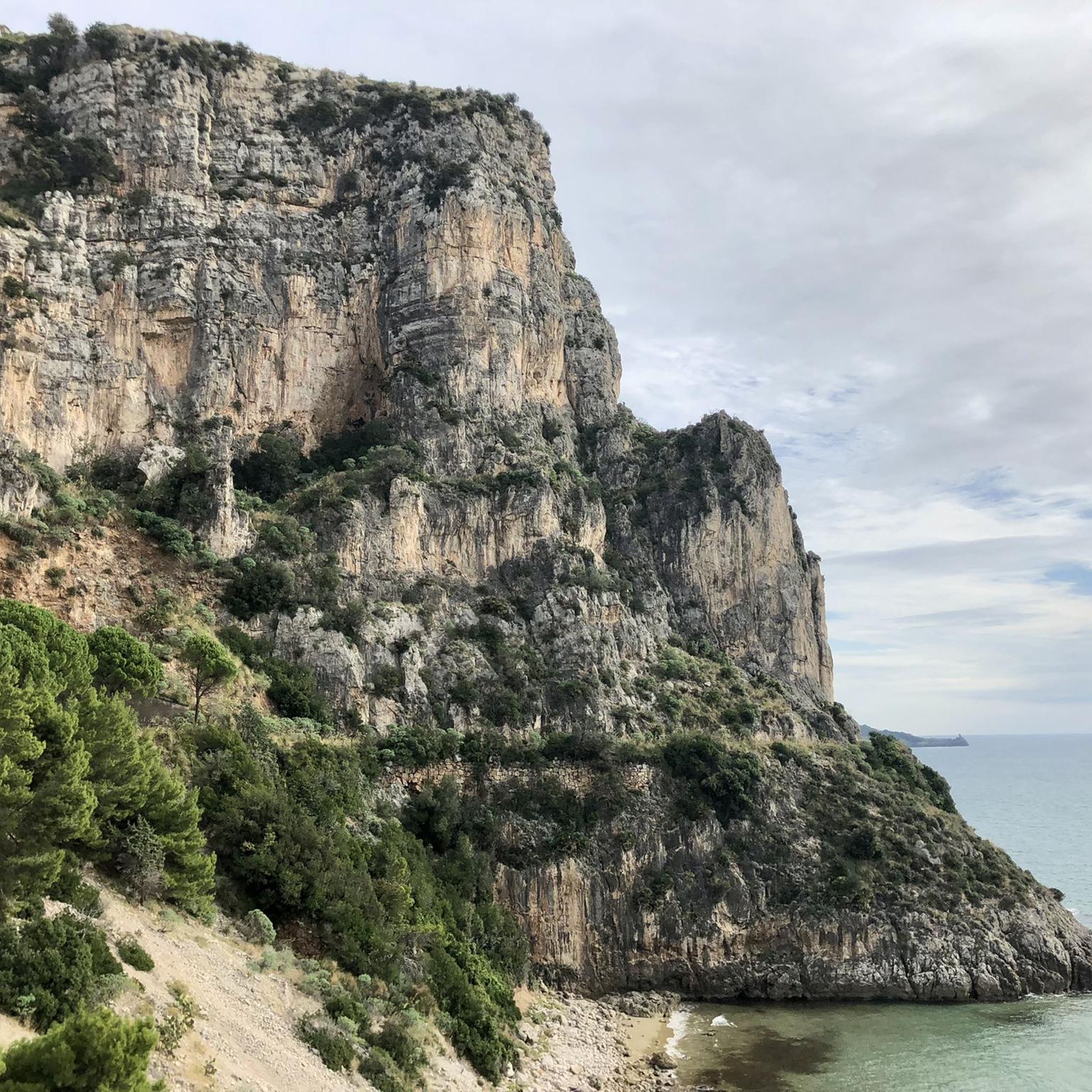
The Park of Monte Orlando covers an area of 89 hectares, of which 59 are land area and 30 are marine area. Located within the territory of Gaeta, the Park represents the terminal part of the Aurunci mountain system. This protected area is managed by the Riviera di Ulisse Regional Park Authority together with the areas of the Gianola and Monte di Scauri Suburban Regional Park and the Natural Monument of Sperlonga. With a typically rounded shape, Monte Orlando is connected to the mainland to the north by a thin strip of land and ends in the south with a high rocky coast characterized by spectacular cliffs. The territory is affected by the corrosive action of water; in fact, rain penetrating the rocks dissolves the calcium carbonate contained within them, giving rise to numerous and typical erosive forms. The sea has also contributed to shaping the promontory and, over the centuries, through wave motion, has modeled and etched the rocks, leaving fossil traces, recognizable signs of the ancient sea level. Human intervention, in different historical eras, has left its mark on Monte Orlando. Particular attention should be paid to the military fortifications, built both outside and inside the current Park, which made Gaeta a fortress of strategic importance for the Kingdom of Naples. At the summit, we find the Mausoleum of Lucius Munatius Plancus.
0
0
The city of Gaeta owes its name to Caieta, Aeneas's nurse, who, according to tradition, is buried right here. According to another interpretation, it derives from the Greek term indicating the “cavity” of the famous gulf. Whatever the truth, what is certain is that the city has a very ancient history, a past that can still be felt in some areas such as the medieval quarter of Sant’Erasmo, attested as early as the era of the Duchy of Gaeta and the maritime republics. A decadent nostalgia can be felt in the streets of the quarter, visibly marked by the bombings of World War II. However, houses dating back to the 12th century are still visible along narrow alleys made of stairs, underpasses, and arches. The medieval quarter has two hearts. The first is the Church of San Giovanni a Mare, a 10th-century Romanesque building with evident Byzantine influence. The second is the Cathedral, consecrated in the 12th century. Inside, a splendid marble Easter candelabrum is kept, while outside stands the imposing Arab-Sicilian bell tower, with interwoven arches, inlays, and majolica tiles. Above all dominates the Aragonese-Angevin castle, which dates back to the 8th century and was later enlarged in the 13th and then in the 16th centuries. Finally, visit the Church of the Annunciation with the Golden Grotto, the Sanctuary of the Split Mountain with the mausoleum of Lucius Munatius Plancus, and the characteristic Via dell'Indipendenza.
0
0
After the dirt road immersed in a beautiful beech forest, you reach a picnic area where you turn right towards Christ the Redeemer.
0
0
Once at the top of the climb, a wonderful panorama opens up over the valley with a view of Christ the Redeemer.
0
0

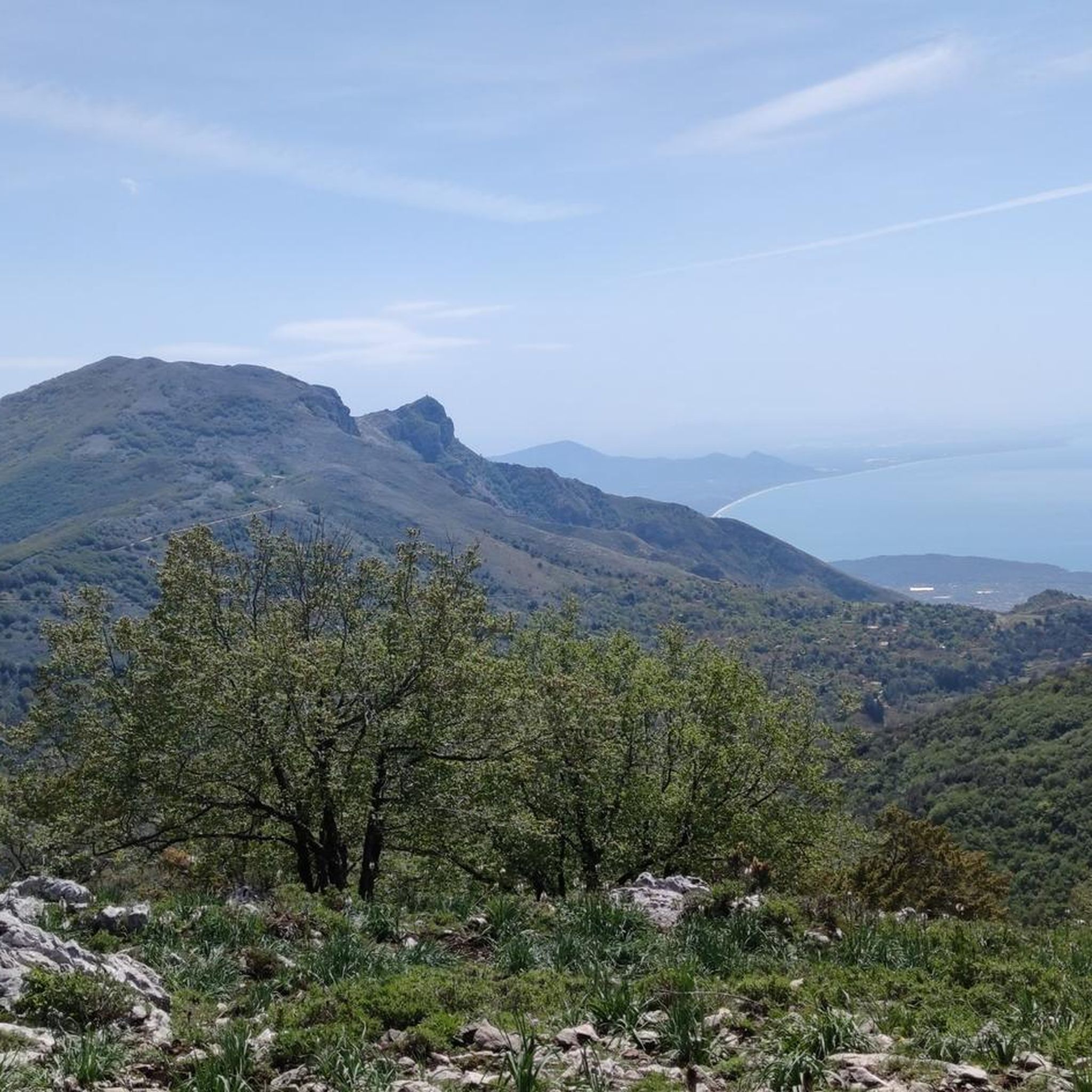
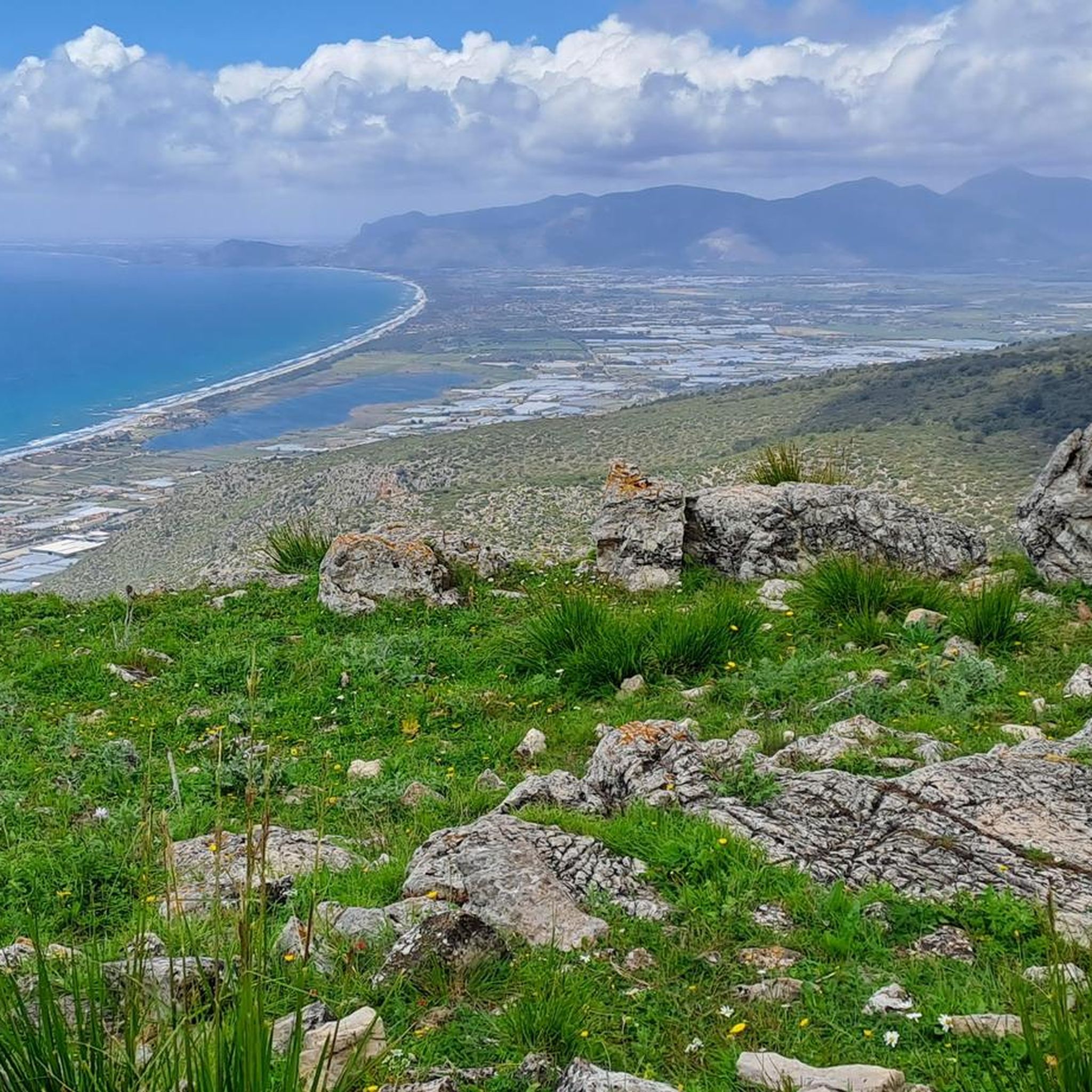
The climb to the Redentore rewards with a breathtaking panorama of the Gulf of Gaeta
0
0

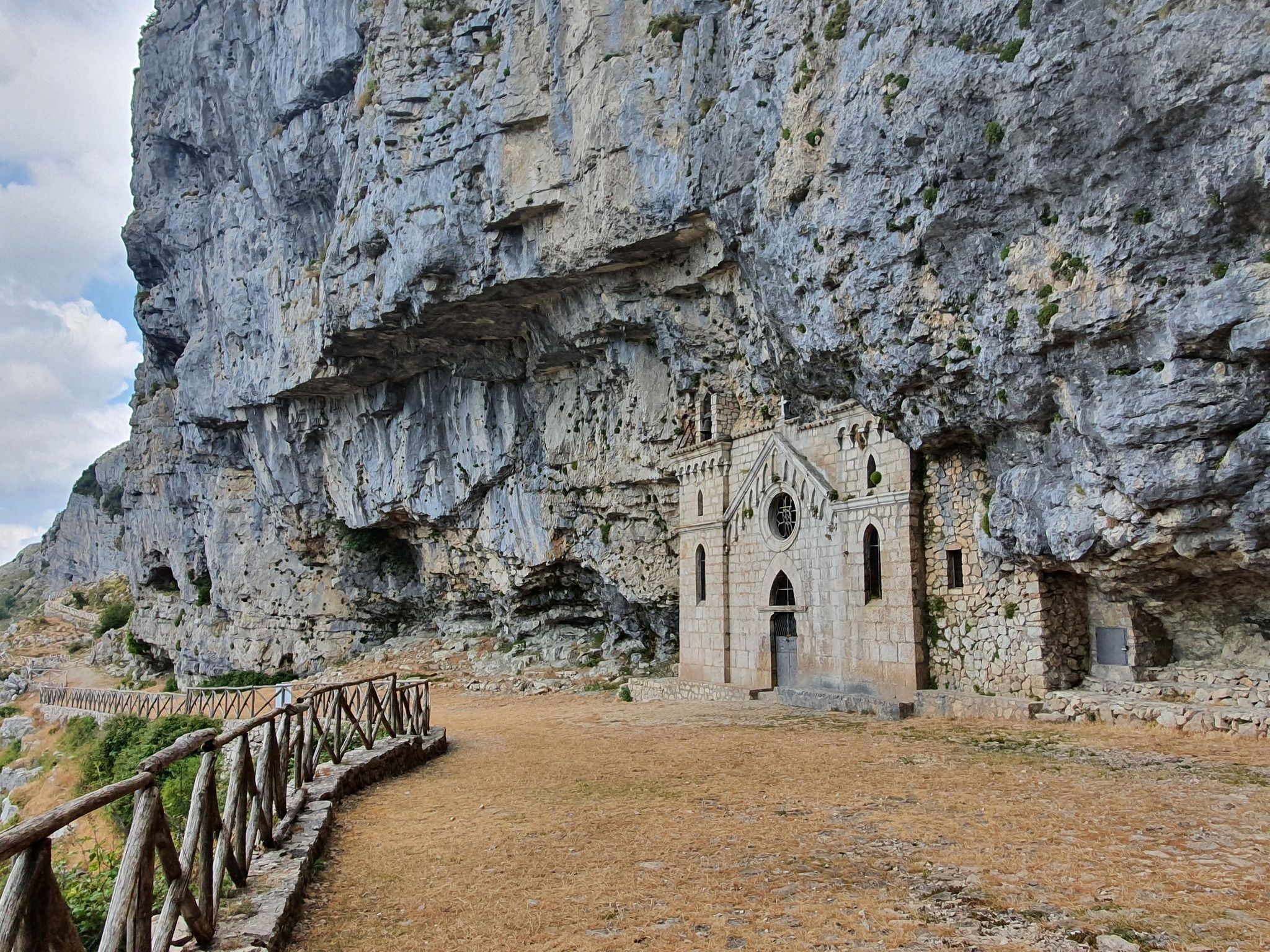
Beautiful sanctuary to visit
0
0
Frequently Asked Questions
How many mountain bike trails are there around Itri?
Itri offers a diverse network of 14 mountain bike trails. These routes cater to various skill levels, with 6 moderate and 8 difficult options available for exploration.
What kind of terrain can I expect on mountain bike trails in Itri?
The mountain bike trails around Itri feature diverse and challenging terrain. You can expect significant elevation changes, predominantly off-road sections, and technical elements like roots, rocks, and unstable pavement. Some routes also incorporate stretches of the ancient Appian Way, which can be quite technical due to uneven surfaces.
Are there mountain bike trails for less experienced riders in Itri?
Yes, Itri has 6 moderate mountain bike routes that are suitable for less experienced riders or those looking for a less strenuous ride. An example is the Sette Acque Spring – Sperlonga loop from Itri, which offers varied terrain and coastal views.
What are some of the most challenging mountain bike trails in Itri?
For experienced riders seeking a challenge, Itri offers 8 difficult routes. The Ascent to Monte Redentore – View of Maranola loop from Itri is particularly noted for its challenging technical sections with roots and rocks, alongside significant elevation gain. Another demanding option is the Monument to Pietro Pascale loop from Itri, which features substantial climbs through mountainous terrain.
Are there any circular mountain bike routes in Itri?
Yes, many of the mountain bike routes in Itri are designed as loops, allowing you to start and finish in the same location. Examples include the Ascent to Monte Redentore – View of Maranola loop from Itri and the Sette Acque Spring – Sperlonga loop from Itri.
What natural features or scenic viewpoints can I find along the mountain bike trails in Itri?
Mountain biking in Itri offers access to stunning natural features and viewpoints. Many routes traverse the Monti Aurunci Natural Park, providing scenic backdrops. You can encounter prominent features like Cima del Redentore (Monte Altino), offering rewarding views, and the natural Sette Acque Spring, which is integrated into several biking loops.
Are there any historical landmarks or attractions to see while mountain biking in Itri?
Yes, Itri's mountain biking routes often blend natural beauty with historical interest. The Itri Castle is frequently integrated into local cycling routes, such as the Itri Castle – Monument to Pietro Pascale loop from Itri. You might also encounter stretches of the ancient Appian Way within the Monti Aurunci Natural Park, offering a unique historical experience.
What is the best time of year for mountain biking in Itri?
While specific weather data isn't provided, the region's diverse terrain suggests that spring and autumn would likely offer the most pleasant temperatures for mountain biking, avoiding the intense heat of summer and potential winter chill or rain. Always check local weather forecasts before heading out.
What do other mountain bikers enjoy about the trails in Itri?
The mountain bike trails in Itri are highly rated by the komoot community, with an average score of 4.4 stars from over 300 reviews. Riders often praise the varied terrain, the challenging technical sections, and the scenic beauty of the Monti Aurunci Natural Park and historical landmarks like Itri Castle.
Are there family-friendly mountain bike trails in Itri?
While many routes involve significant elevation changes and technical sections, there are moderate trails that could be suitable for families with some mountain biking experience. It's advisable to review the route details and difficulty ratings on komoot to choose trails that match your family's skill level and endurance.
Can I bring my dog on the mountain bike trails in Itri?
Information regarding specific dog-friendly policies for mountain bike trails in Itri is not explicitly provided. When planning to bring your dog, it's always best to check local regulations for the Monti Aurunci Natural Park and individual trail rules, and ensure your dog is well-behaved and on a leash where required.
Where can I find parking for mountain bike trails in Itri?
Specific parking locations for individual trailheads are not detailed here. However, Itri is a town with various access points to the surrounding trails. It's recommended to check komoot's route planner for specific starting points and any associated parking information provided by other users or local guides.
Most popular attractions around Itri

Get inspired with the komoot mobile app


Explore more
Browse the best MTB trails in other regions.
