Attractions and Places To See in Majona - Top 19
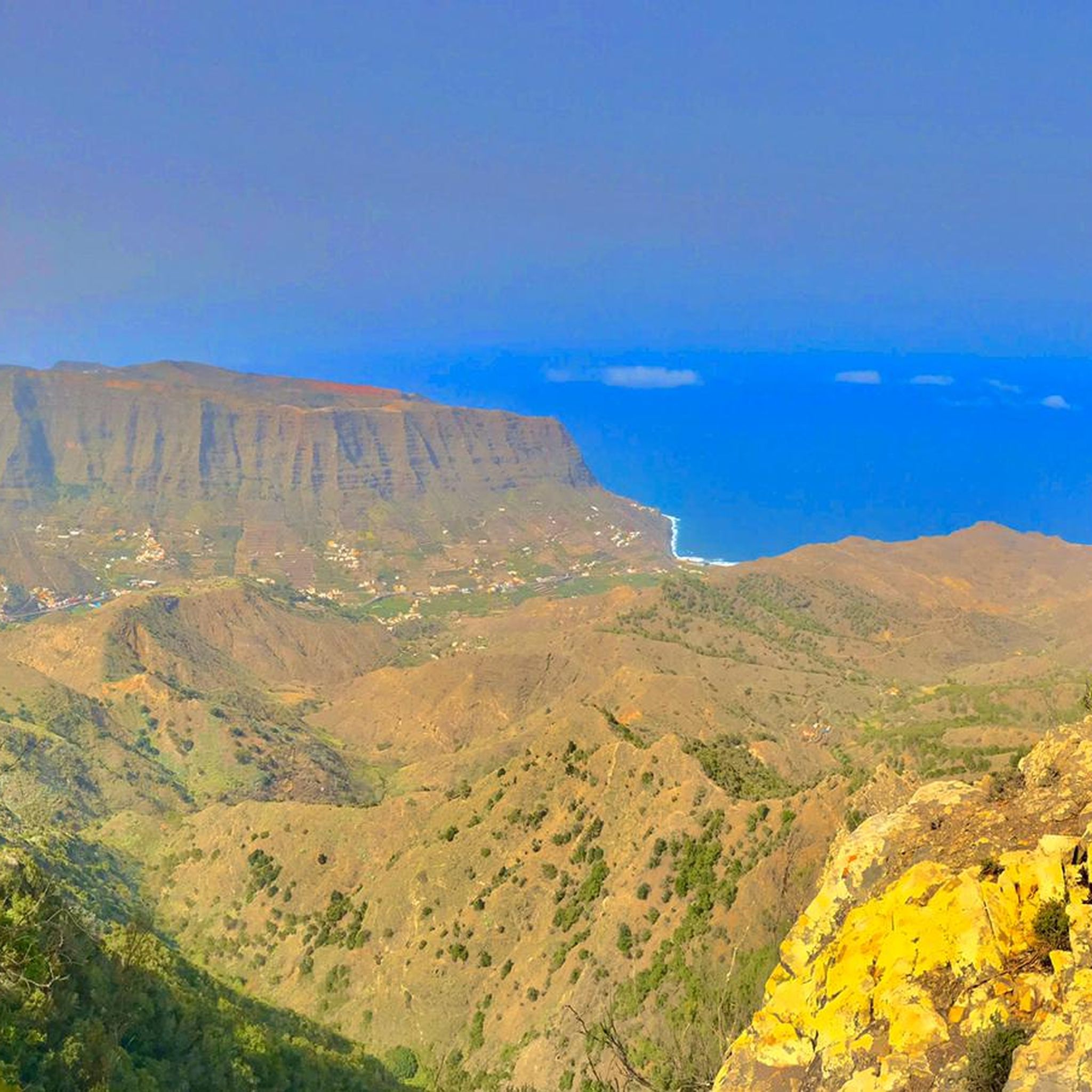
Best attractions and places to see in Majona are characterized by rugged natural beauty and diverse ecosystems. The region is dominated by the Majona Natural Park, featuring dramatic ravines and impressive cliffs. Visitors can explore a variety of natural features and sites of ethnographic and historical value. The area offers a blend of natural landscapes and cultural insights.
Best attractions and places to see in Majona
- The most popular attractions is Abandoned Settlement of El Palmar, a settlement where…
Last updated: July 7, 2026
Majona Natural Park
Highlight • Natural Monument
Translated by Google •
Tip by

CV-14 Track
Highlight (Segment) • Trail
Translated by Google •
Tip by
Sign up now to discover places like this
Get recommendations on the best single tracks, peaks, & plenty of other exciting outdoor places.
Sign up for free
Mirador de Manaderos
Highlight • Viewpoint
Translated by Google •
Tip by

Beautiful view of San Sebastián
Highlight • Viewpoint
Translated by Google •
Tip by

Goat Trail on the Ridge of Garajonay
Highlight • Trail
Translated by Google •
Tip by

Sign up for free to discover even more attractions in Majona.
Sign up for free
Already have an account?
Start today with a free account
Your next adventure awaits.
Login or Signup
Tips from the Community

This viewpoint belongs to the old route of the GM-1, next to the Aguajilva Tunnels. If you come down from above, you will find a metal gate: the old section was closed after the construction of the modern road and can no longer be fully traversed. The only way to get there today is from below, via a small track that leads to the viewpoint and the old rest area. And precisely therein lies the charm of the place: it seems like a forgotten fragment of the old Gomera. Here, the curves carved into the rock, the silence of the old road, and the brutal views towards the inland ravines and the Chejelipes area are still preserved. While cars pass through the mountain via the modern tunnels, this corner remains frozen in another era. It is one of those hidden places that almost no one visits by chance... and for that very reason, it retains so much personality.
0
0
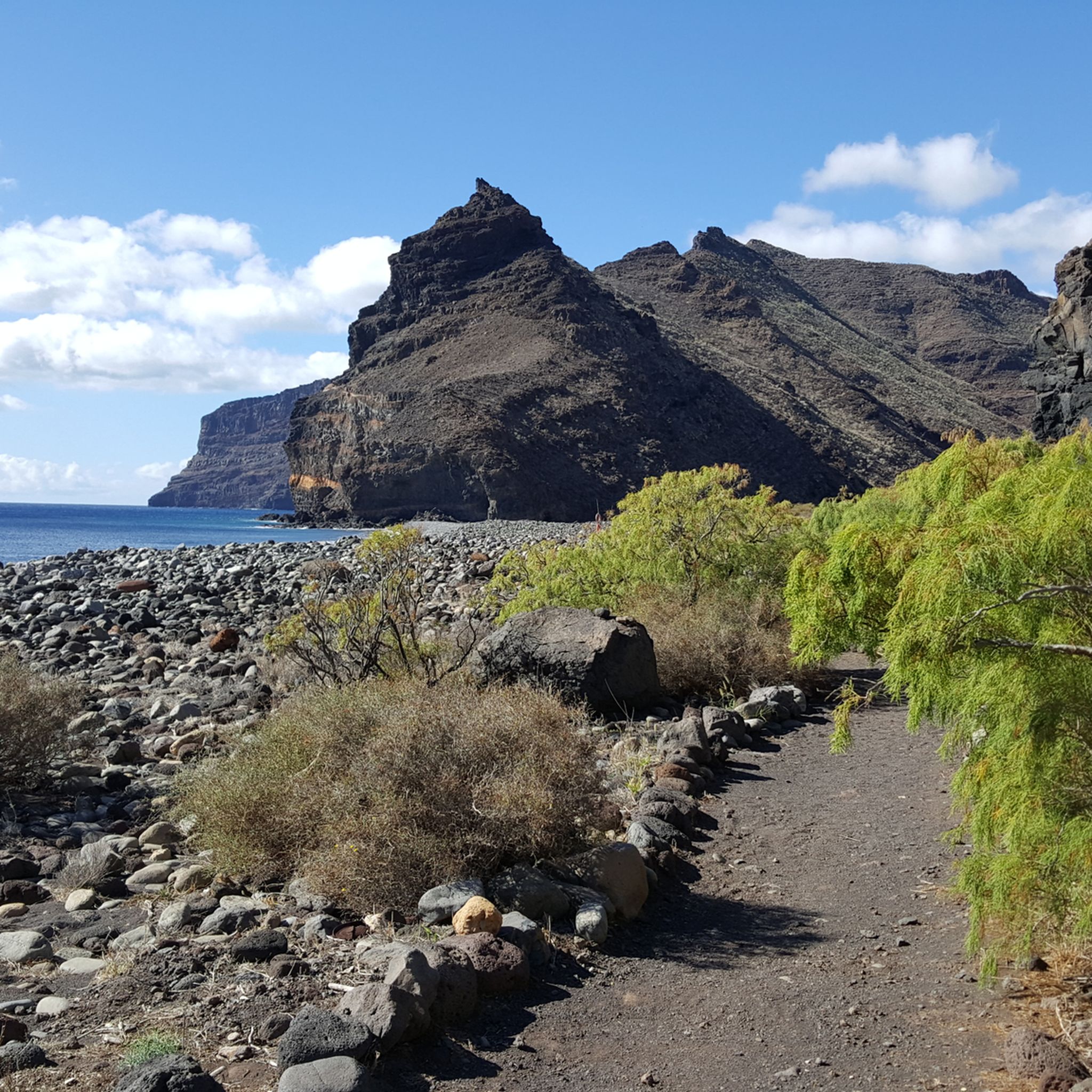
The Majona Natural Park is a protected area in the northeast of La Gomera, between San Sebastián and Hermigua. It was created to conserve one of the island's wildest and least altered landscapes: enormous volcanic ravines, arid slopes, old paths, and all the vegetation typical of the Gomera's dry climate, such as tabaibas, cardones, and palm trees. Unlike Garajonay, here there are no large humid forests or constant fog. Majona has a much harsher and more open appearance, with tracks hanging over precipices and enormous views of the Atlantic. Historically, it was also an important area for capturing and transporting water through galleries, reservoirs, and long pipelines, such as the pipe that accompanies the track towards Roque Garaballo.
0
0
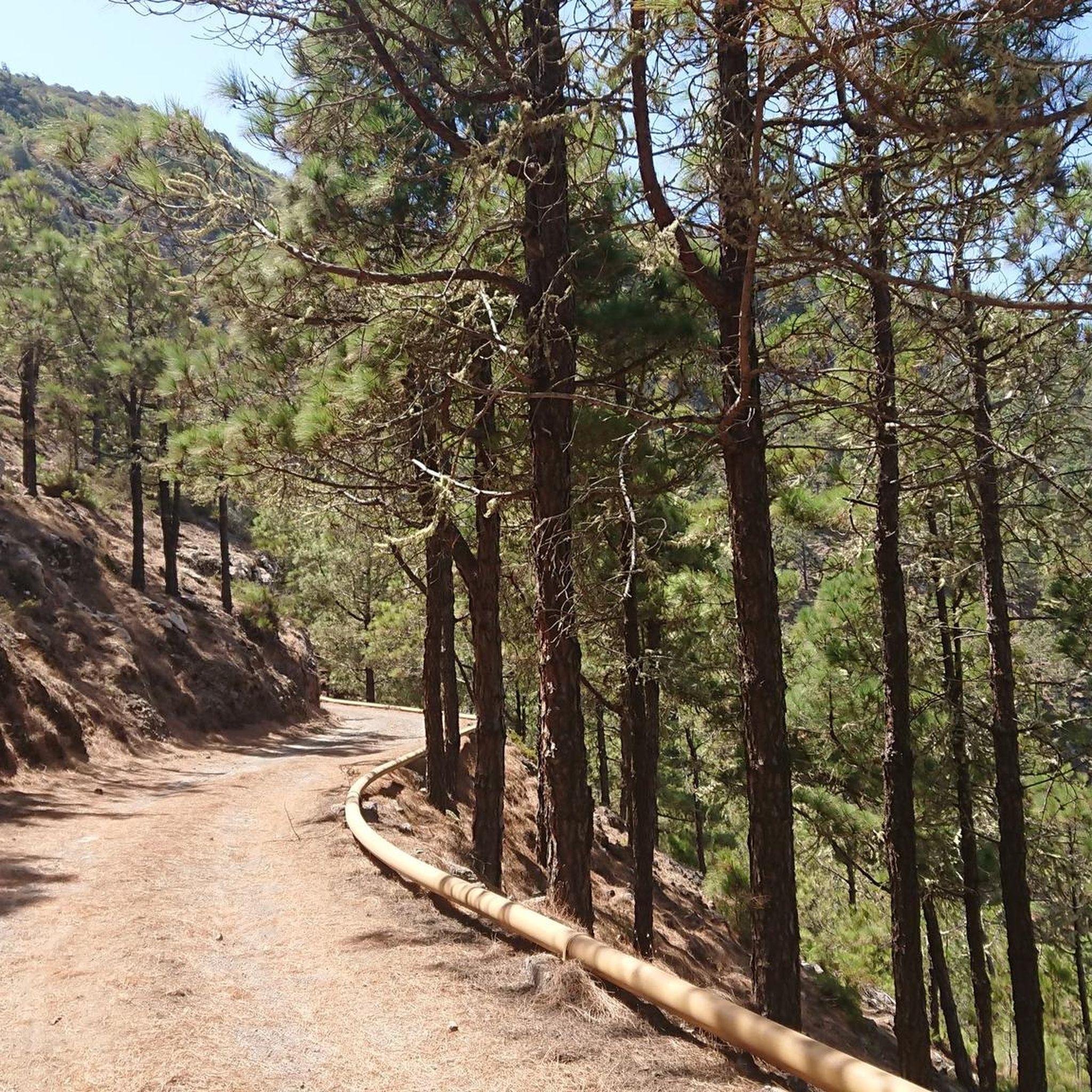
From the GM-1 to Roque Garaballo, the trail is marked by the large metal pipe that accompanies the route through curves, ravines, and volcanic slopes. In many sections, you can perfectly hear the water running inside, even when the path seems to climb again. The system works by taking advantage of the island's natural pressure and gradients: the water circulates confined within the pipe and maintains its flow thanks to the principle of communicating vessels and the force accumulated in previous descents. On an island where historically every liter of water was vital, these pipes allowed water to be transported over long distances, crossing rugged and inaccessible terrain. Riding alongside this pipe suspended over the void, hearing the water in the middle of an arid and silent landscape, gives this trail a very special and almost forgotten atmosphere.
0
0
This trail runs through one of the high areas above San Sebastián and offers a very different perspective of the Gomera capital. From here you can perfectly understand how the village became wedged between volcanic ravines that descend directly towards the port and the Atlantic. The altitude and the open orientation towards the east allow you to enjoy enormous views over San Sebastián, the sea and, on clear days, even Teide in the background. The trail usually combines open sections, constant wind and summit vegetation, with that very typical La Gomera feeling where in a few minutes you can go from humid forest to dry, volcanic landscapes looking towards the coast.
1
0

There are masses of goats 🐐 on the mountain Feeding the goats in the late afternoon is a special experience At the sound of a whistle, all the animals quickly jump from the mountain ⛰️ onto the road to eat 🌽
1
0
The CV-14 highway in La Gomera, known as the El Rejo highway, is a road that connects the dorsal highway (GM-2) with the highway that runs between San Sebastián and Vallehermoso (GM- On several occasions, CV-14 has had to be temporarily closed due to landslides caused by adverse weather conditions, such as rain and strong winds. It is important for cyclists and e-bikers traveling on this road to remain cautious, especially during and after periods of bad weather, as landslides and other risk situations may occur. https://www.youtube.com/watch?v=6a8bN8TLfXc https://www.youtube.com/watch?v=-KsUjRB73Yw
0
0

Starting on the south side of the Park, ascending from the GM-01 highway from San Sebastián, to contemplate the Jaragán peak at 680m. The beautiful cone-shaped peak contrasts with the blue sky.
0
0

Small path that is very steep but offers a beautiful view of San Sebastian.
1
0
Frequently Asked Questions
What natural features can I explore in Majona?
Majona is dominated by the stunning Majona Natural Park, characterized by dramatic ravines like Majona and Juel, and impressive cliffs that meet the sea. You can also find diverse microclimates, from fayal-brezal in higher regions to laurisilva forests in ravines, and coastal vegetation. The Majona Natural Park itself is a highlight, known for its rugged slopes and dense forest cover.
Are there any notable viewpoints in Majona?
Yes, Majona offers several breathtaking viewpoints. The Goat Trail on the Ridge of Garajonay provides scenic views, including the picturesque Jaragán peak at 680m. Another highlight is the Scenic Ascent to Degollada de la Cumbre, which offers overwhelming contrasting landscapes, especially when transitioning from dry barrancos to lush forests.
What kind of wildlife can be observed in Majona Natural Park?
Majona Natural Park is a haven for wildlife, with 31 identified species. It's particularly notable for its endemic reptiles, including the Gomero lizard, Gomero perenquén, and smooth lizard. Birdwatchers will also appreciate that 68% of all La Gomera's bird species reside within the park.
What hiking opportunities are available in Majona?
Majona is a paradise for hikers, offering a network of well-marked trails for various fitness levels. Popular routes include a circular trail from Las Casetas and the scenic ascent to Degollada de la Cumbre. For more detailed routes, you can explore options like the 'From Parque Natural de Majona to Encheneda — circular' or 'Bar La Vista – Laurel Forest loop from La Gomera' on the Hiking in Majona guide.
Are there options for cycling or running in Majona?
Absolutely. Majona provides excellent terrain for both cycling and running. Cyclists can find routes such as the 'San Sebastian de La Gomera loop from Montaña Ismael' or the 'CV-14 Track – Garajonay National Park loop from Hermigua' in the Cycling in Majona guide. Runners can explore trails like 'Enchereda – Roque Garaballo loop from Montaña Ismael' or 'Beautiful view of San Sebastián loop from Cabecera Barranco de Aguajilva' in the Running Trails in Majona guide.
Are there any historical or cultural sites to visit in Majona?
Beyond its natural beauty, Majona holds ethnographic and historical value. Within the Natural Park, you can discover natural caves, ancient rock engravings, and old sacrificial aras. The region also features isolated hamlets like Taguluche, Juel, and Enchereda, showing vestiges of past livestock and agricultural practices. The Abandoned Settlement of El Palmar is a unique historical site where nature has reclaimed old buildings.
What is the Abandoned Settlement of El Palmar?
The Abandoned Settlement of El Palmar is a fascinating 'lost place' in Majona. It's an old farm and settlement where nature has slowly reclaimed the buildings, adorned with vibrant bougainvillea and fragrant herbs. Visitors describe it as a beautiful spot with sensational views, offering a glimpse into the region's past.
What is the best time to visit Majona for outdoor activities?
Majona's diverse microclimates mean conditions can vary. Generally, the region is pleasant for outdoor activities for much of the year. However, it's advisable to check local weather forecasts, especially during or shortly after rain, as some trails, like the Scenic Ascent to Degollada de la Cumbre, can become slippery and muddy.
Are there any specific plant species unique to Majona?
Yes, Majona's diverse habitats support a rich variety of flora, including endemic plant species. You can find unique plants like cardoncillo and bejeques, particularly in the coastal vegetation zones. The higher regions feature fayal-brezal, while laurisilva forests thrive at the bottom of ravines.
What do visitors enjoy most about Majona?
Visitors to Majona frequently praise its rugged natural beauty and the sense of discovery. The overwhelming contrasting landscapes, especially along trails like the Scenic Ascent to Degollada de la Cumbre, are often highlighted. The unique experience of seeing nature reclaim old buildings at the Abandoned Settlement of El Palmar is also a community favorite.
Is there public transport or parking available for Majona's attractions?
While Majona is best explored by car for flexibility, public transport options to nearby towns exist. For specific trailheads and attractions within Majona Natural Park, parking availability can vary. It's recommended to research specific access points for trails like the Goat Trail on the Ridge of Garajonay, which ascends from the GM-01 highway, to plan your visit effectively.
Most popular routes in Majona

Get inspired with the komoot mobile app


Explore more
Still not found the Highlight you’re looking for? See guides of the top attractions in other regions:
