Top 13 Natural Monuments in Yukon
Best natural monuments in Yukon showcase a landscape characterized by towering mountains, extensive glaciers, and unique geological formations. The territory features vast wilderness areas, including Canada's highest peak, Mount Logan, and glacier-fed alpine lakes. These 13 natural monuments offer diverse environments, from rugged mountain peaks and vibrant tundra to dramatic river canyons and unique desert landscapes. The region's natural features provide opportunities for observing diverse ecosystems and geological history.
Best natural monuments in Yukon
- The most popular natural monuments is Five Finger Rapids, a river formation where four basalt rock pillars divide the Yukon River into five channels. Historically, these rapids were a significant obstacle for gold prospectors.
- Another must-see spot is Kluane National Park and Reserve, a natural monument encompassing Canada's highest mountain, Mount Logan, and extensive non-polar ice fields. This UNESCO World Heritage Site protects more than 22,000 km2 of the Northern Coastal Mountains.
- Visitors also love View of Ä’äy Chù (Slims River) Valley, a viewpoint overlooking a river fed by the Kaskawulsh Glacier. The river's flow direction has changed due to glacial melt, illustrating significant environmental shifts.
- Yukon is known for its mountains, glaciers, rivers, and unique geological formations. Visitors can explore a variety of natural monuments, including vast national parks, glacial lakes, and distinctive desert landscapes.
- The natural monuments in Yukon are appreciated by the komoot community, with more than 9 upvotes and 7 photos shared.
Last updated: August 19, 2026
Five Finger Rapids
Highlight • River
Translated by Google •
Tip by

Kluane National Park and Reserve
Highlight • Natural Monument
Kluane National Park is home to Canada's highest mountains, including Mount Logan (5,959 m), Canada's highest peak. The park features the world's largest non-polar ice fields, covering almost half of the park.
parks.canada.ca/pn-np/yt/kluane/visit/cartes-maps/PNR-Kluane-NPR
parks.canada.ca/pn-np/yt/kluane
parkscanadahistory.com/publications/fact-sheets/eng/kluane.pdf
Translated by Google •
Tip by

Sign up now to discover places like this
Get recommendations on the best single tracks, peaks, & plenty of other exciting outdoor places.
Sign up for free
King's Throne
Highlight • Summit
parks.canada.ca/pn-np/yt/kluane/activ/randonnee-hiking/kings-throne
Translated by Google •
Tip by
Carcross Desert
Highlight • Natural Monument
Efforts by the Yukon provincial government to place the dunes under protection failed due to resistance from the local population. Judging by the wheel tracks in the sand, the dunes are used for recreation.
en.wikipedia.org/wiki/Carcross_Desert
Translated by Google •
Tip by
Kathleen Lake (Mät’àtäna Män)
Highlight • Lake
parks.canada.ca/pn-np/yt/kluane/visit/services/kathleen
Showing Translation
Tip by
Kaskawulsh Glacier
Highlight • Natural Monument
Showing Translation
Tip by
View of Ä’äy Chù Valley
Highlight • Viewpoint
Like most glaciers worldwide, the ‘Kaskawulsh Glacier‘ has also shown a significant retreat over the last decades. As a result, the flow direction of the Slims River changed in the spring of 2016. Now, the majority of the glacial meltwater flows east into the Kaskawulsh River, which leads to the Alsek River and the Pacific Ocean. This was the first time that human-induced climate change was involved in the rearrangement of a major river.
Showing Translation
Tip by
Kluane Lake
Highlight • Lake
In May 2016, the Slims River disappeared within four days as a result of climate change, leaving a tidal flat where the Alaska Highway crosses the bay. With the loss of the main water supply, 'Kluane Lake' is likely to become an isolated and shrinking lake.
en.wikipedia.org/wiki/Kluane_Lake
Translated by Google •
Tip by
Sheep Creek Trail
Highlight • Trail
It leads up to just above the tree line and with a bit of luck, you can observe Dall sheep.
Showing Translation
Tip by

Thechàl Dhâl Visitor Centre
Highlight • Rest Area
From the center's outdoor deck, fixed binoculars can be used in spring and autumn to see Dall sheep on the south-east slope of nearby Thechàl Dhâl' Mountain.
parks.canada.ca/pn-np/yt/kluane/visit/services/info
Translated by Google •
Tip by
Sign up for free to discover even more natural monuments in Yukon.
Sign up for free
Already have an account?
Start today with a free account
Your next adventure awaits.
Login or Signup
Popular around Yukon
Around the World in 80 Days
Canada's Dempster Highway — make gravel great again
The Yukon, larger than life – hiking in the Canadian Great North
Canada by train – scenic hikes from Western stations
The longest footpath in the world – Trans Canada Trail
Adventure Yukon – stunning hikes on your road trip
Hiking in Yukon
Running Trails in Yukon
Cycling in Yukon
MTB Trails in Yukon
Other adventures in Yukon


Tips from the Community

You could spend hours strolling along the shore of this large, beautiful lake, with new views opening up time and time again. Unfortunately, the adjacent trails were closed due to bears.
0
0


This hike should not be missed. It leads up to just above the tree line and with a bit of luck, you can observe Dall sheep.
1
0

Small path to the cliff over the Yukon
0
0

Kluane National Park and Reserve is located in the Yukon Province and borders British Columbia and Alaska. The national park was established in 1976 and protects more than 22,000 km2 of Canada's Northern Coastal Mountains. Kluane and adjacent Wrangell-St. Elias National Park in Alaska were jointly designated a UNESCO World Heritage Site in 1979. Kluane National Park is home to Canada's highest mountains, including Mount Logan (5,959 m), Canada's highest peak. The park features the world's largest non-polar ice fields, covering almost half of the park. https://parks.canada.ca/pn-np/yt/kluane/visit/cartes-maps/PNR-Kluane-NPR https://parks.canada.ca/pn-np/yt/kluane http://parkscanadahistory.com/publications/fact-sheets/eng/kluane.pdf
2
0
At 408 km2, 'Kluane Lake' is the largest lake in the Yukon. The Alaska Highway runs along the southwest side of the lake. Until 2016, 'Kluane Lake' was fed by the Ä'äy Chù (Slims River) with meltwater from the 'Kaskawulsh Glacier'. In May 2016, the Slims River disappeared within four days as a result of climate change, leaving a tidal flat where the Alaska Highway crosses the bay. With the loss of the main water supply, 'Kluane Lake' is likely to become an isolated and shrinking lake. https://en.wikipedia.org/wiki/Kluane_Lake
2
0
The 'Thechàl Dhâl Visitor Center' is located on the Alaska Highway / Kluane Lake about 1 hour north of Haines Junction. Thechàl Dhâl Visitor Center is open from May 19th to September 4th from 10am to 4pm. From the center's outdoor deck, fixed binoculars can be used in spring and autumn to see Dall sheep on the south-east slope of nearby Thechàl Dhâl' Mountain. https://parks.canada.ca/pn-np/yt/kluane/visit/services/info
2
0
The ‘Kaskawulsh Glacier‘ is a huge glacier in the ‘St. Elias Mountain Range‘. It covers an area of more than 39,000 km2 and consists of two converging outlet glaciers that are more than 6 km wide. The glacial water flows into two large river valleys, the Slims River and the Kaskawulsh River. However, due to the glacier's retreat, only a small amount of meltwater has been flowing into the Slims River since the spring of 2016.
2
0
Frequently Asked Questions
What unique natural features can I expect to see in Yukon's natural monuments?
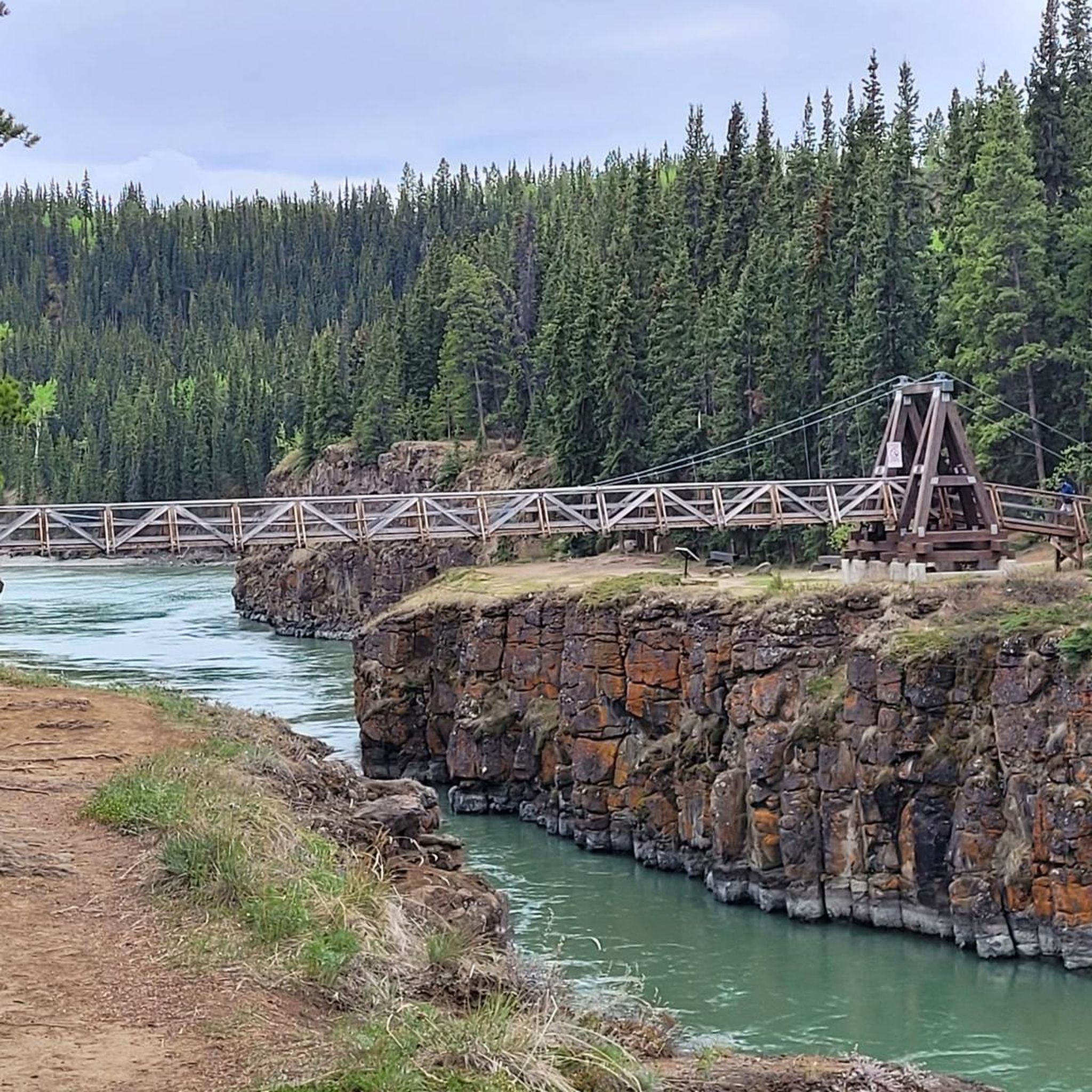
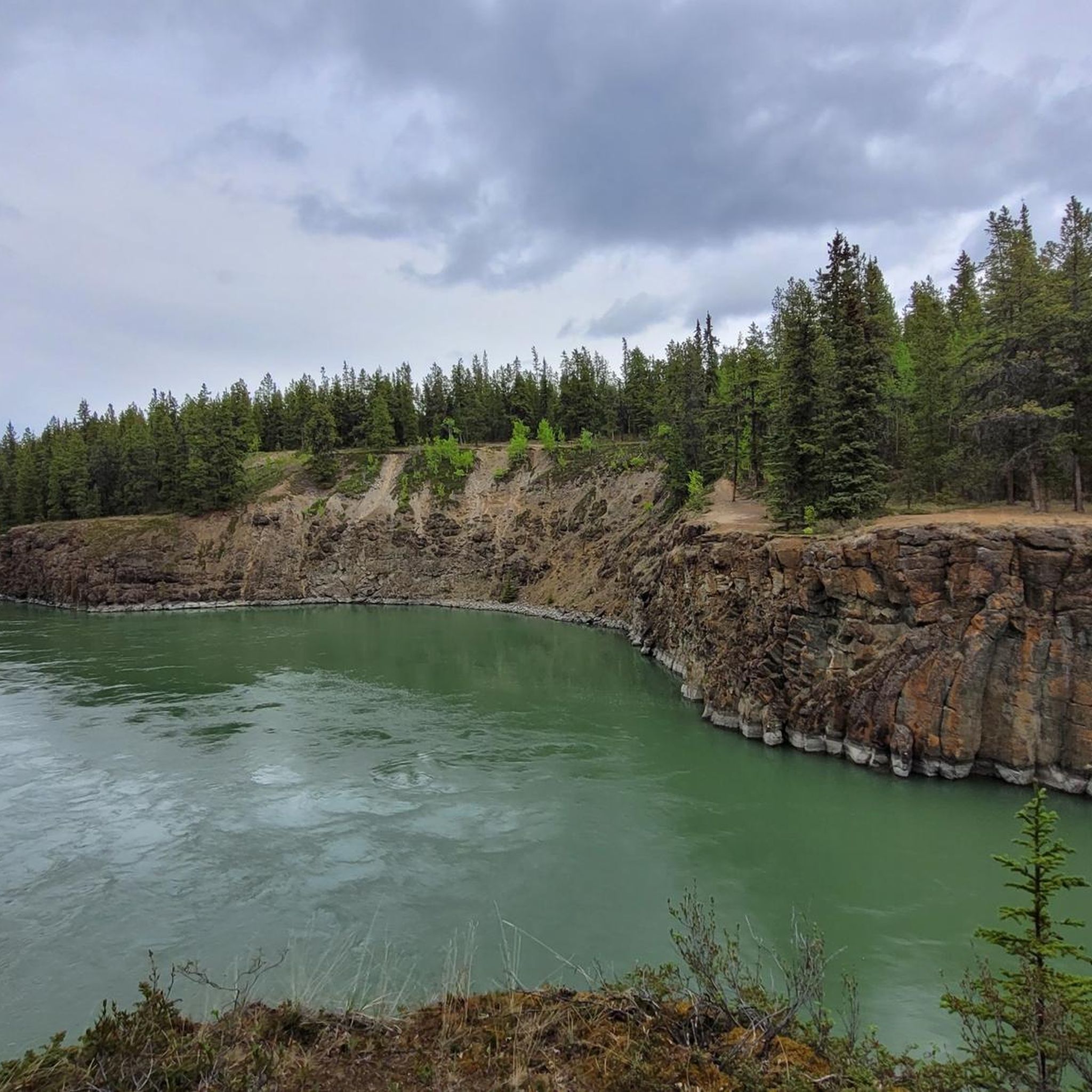
Yukon's natural monuments showcase a diverse range of features, from towering mountains and extensive glaciers to unique geological formations. You can explore Canada's highest peak, Mount Logan, within Kluane National Park and Reserve, vast icefields, and glacier-fed alpine lakes like Kathleen Lake and Kluane Lake. Other highlights include the dramatic basalt cliffs of Miles Canyon, the striking emerald waters of Emerald Lake, and the unique sand dunes of the Carcross Desert.
Are there family-friendly natural monuments in Yukon?
Yes, several natural monuments in Yukon are suitable for families. The Carcross Desert offers a unique and accessible landscape for exploration. Kathleen Lake (Mät’àtäna Män) provides opportunities for hiking and recreation with well-maintained campsites. The Thechàl Dhâl Visitor Centre is also a family-friendly spot within Kluane National Park, offering facilities and viewpoints.
What is the best time of year to visit Yukon's natural monuments?
The best time to visit Yukon's natural monuments largely depends on what you wish to experience. Summer (June to August) offers extended daylight with the Midnight Sun, ideal for hiking and exploring. Fall (September to October) brings vibrant autumn colors. Winter (November to March) is prime for witnessing the spectacular Aurora Borealis (Northern Lights) and offers opportunities for winter activities, though some areas may be less accessible.
What kind of outdoor activities can I do near Yukon's natural monuments?
Yukon's natural monuments are surrounded by opportunities for various outdoor activities. You can find numerous running trails, cycling routes, and hiking paths. For example, near Whitehorse, you can explore routes like the Whistlebend River loop for running, or the Rotary Centennial Bridge – Whitehorse Dam loop for cycling. For hiking, there are easy trails like Goldensides Mountain or the Miles Canyon & Chadburn Red Ski loop. You can find more details on these activities in the Running Trails in Yukon, Cycling in Yukon, and Easy hikes in Yukon guides.
Are there any natural monuments with historical significance in Yukon?
Yes, several natural monuments hold historical importance. Five Finger Rapids on the Yukon River was a significant and dangerous obstacle for gold prospectors during the Klondike Gold Rush. Miles Canyon, near Whitehorse, was also a crucial passage for prospectors and an Indigenous fish camp, with its dramatic basalt cliffs telling tales of volcanic activity and human history.
What are the difficulty levels of trails near Yukon's natural monuments?
Trail difficulty varies significantly across Yukon's natural monuments. Many areas, like parts of Kluane National Park and Reserve, offer challenging routes such as the path to King's Throne, which is steep and unpaved. However, there are also intermediate options like the Sheep Creek Trail and family-friendly, easier walks around lakes like Kathleen Lake. Always check specific trail conditions and difficulty ratings before heading out.
Can I see wildlife at Yukon's natural monuments?
Yukon's natural monuments are excellent for wildlife viewing. Kluane National Park and Reserve is known for grizzly bears and eagles. Tombstone Territorial Park is home to caribou, bears, and over 150 species of birds. Ivvavik National Park is a vital calving ground for the Porcupine caribou herd. Always maintain a safe distance and be aware of your surroundings when observing wildlife.
Are permits required to visit natural monuments in Yukon?
Permit requirements can vary. For national parks like Kluane National Park and Reserve, day-use and backcountry camping permits may be necessary, especially for certain trails or activities. Territorial parks like Tombstone Territorial Park might also have specific regulations. It's always best to check the official Parks Canada or Yukon Parks websites for the most current information regarding permits before your visit.
What are the Northern Lights and Midnight Sun, and where can I experience them in Yukon?
The Northern Lights (Aurora Borealis) are spectacular celestial displays of dancing colors, best seen during the dark winter months (late August to April). The Midnight Sun is the phenomenon of extended daylight, where the sun remains visible for 24 hours or more, occurring during the summer months (May to July). Both can be experienced across much of the Yukon due to its high latitude, offering unique natural spectacles depending on the season of your visit.
What is the Carcross Desert, and why is it considered a natural monument?
The Carcross Desert is a unique natural monument often called the 'world's smallest desert.' It consists of sand dunes formed from glacial silt blown from nearby windward lakes, covering about one square mile. It's considered a natural anomaly due to its desert-like features set against a backdrop of mountains, providing a surreal landscape and an interesting spot for a hike to observe unusual plant varieties.
Are there any natural monuments in Yukon that illustrate significant environmental changes?
Yes, the View of Ä’äy Chù (Slims River) Valley offers a poignant example. The Slims River, once fed by the Kaskawulsh Glacier and flowing into Kluane Lake, dramatically changed its course in 2016 due to glacial melt. Most of the meltwater now flows east into the Alsek River and the Pacific Ocean, illustrating a significant environmental shift attributed to climate change.
What should I wear when hiking in Yukon's natural monuments?
When hiking in Yukon's natural monuments, it's crucial to dress in layers, as weather can change rapidly. Essential items include moisture-wicking base layers, insulating mid-layers (fleece or down), and a waterproof and windproof outer shell. Sturdy hiking boots, a hat, gloves, and sun protection are also recommended. Be prepared for varying temperatures, even in summer, and always carry extra clothing.
Are there visitor centers or facilities available at Yukon's natural monuments?
Yes, some natural monuments offer visitor facilities. For instance, Kluane National Park and Reserve has the Thechàl Dhâl Visitor Centre, providing information and services. Kathleen Lake also has a well-maintained campsite with toilets and access to fresh drinking water. However, many of Yukon's wilderness areas are remote, so it's advisable to check specific monument details for available amenities before your trip.
Most popular attractions in Yukon

Get inspired with the komoot mobile app


Didn’t find what you were looking for?
Find even more amazing natural monuments in Yukon by checking out the top Highlights region by region:
Explore more
Extend your search for the best caves by checking out these guides of the top ones in Yukon:
