Top 8 Castles in Latgale
Best castles in Latgale offer a glimpse into the region's history and culture. Latgale features a diverse landscape with lakes and rivers, providing scenic backdrops for its historical sites. The area is known for its architectural heritage, ranging from medieval ruins to preserved manors. These sites reflect various historical periods and architectural styles, contributing to the region's cultural significance.
Best castles in Latgale
- The most popular castles is Rēzekne Castle Ruins, a castle that was the seat of a…
Last updated: May 17, 2026
1st Coastal Lunette, Daugavpils Fortress
Highlight • Historical Site
approaching the main rampart of
the fortress, its walls were detached
from the external fortifications with
the help of a moat. In case …
Tip by

Dinaburg Castle Ruins and Castle Model
Highlight • Castle
DINABURG CASTLE RUINS source:
visitdaugavpils.lv/lt/turisma-objekts/dinaburgas-pilsdrupas-un-pils-makets
Translated by Google •
Tip by

Sign up now to discover places like this
Get recommendations on the best single tracks, peaks, & plenty of other exciting outdoor places.
Sign up for free
Kalkūne Manor Castle
Highlight • Castle
Tip by

Rēzekne Castle Ruins
Highlight (Segment) • Castle
Translated by Google •
Tip by

Vecsaliena Manor (Červonka Manor)
Highlight • Castle
Translated by Google •
Tip by

Vārkava Manor
Highlight • Castle
Tip by

Ludza Castle Ruins
Highlight • Castle
Tip by
Rēzekne Castle Ruins
Highlight • Castle
Tip by
Start today with a free account
Your next adventure awaits.
Login or Signup




Tips from the Community

Ruins in the heart of the city. A few good shots.
0
0

Ancient Baltic tribes built a wooden castle on the caste hill berween Big and Small Ludza lakes. In the place of the castle in 1399 German crusaders built an imposing castle for protection of theeastern frontier of the Livonian Orderslorey grey sione and brick building with 6 towers, 3 gates and 2 castle 1765, only the ruins have remained on the castle hill.
0
0
Vārkavas Manor was firstly mentioned in 1583, as a manor belonging to Rezekne. In the 16th century in the place of the present Vārkava administrative center. Cassel is renovated and tiny exebitionis open for visitors.
0
0

In my knowledge , this manor located on the sosial centre now. There is a fence around and doors are closed. Probably you can get into it with permition from director of the centre. The manor castle was built in 1890-1892 according to project of the well-known architect V. Neiman (he was the chief architect in Daugavpils in the period from 1878 to 1895). The castle belonged to August von Etingen. The castle itself is asymmetrical, with towers, turrets and roof constructions its leaves quite a picturesque impression. The castle architecture reflects mostly to medieval architecture. However, the main entrance with a small column based on a balcony has purely classic motives. It is possible to notice a similarity to the shapes of Renascence. There used to be a sculpture of Order Master Valter von Pletenberg. The initial building overview can be seen in a published picture in the book by E. Serafim. The castle interiors have not been preserved. https://www.visitdaugavpils.lv/en/turisma-objekts/kalkunes-muizas-pils/
0
0
Ruins and museum is free entrance. Museum working hours from 12PM to 3PM Friday, Saturday and Sunday.
0
0

Vecsaliena manor, or Chervonka's house, is located in Chervonka, Vecsaliena parish, Augšdaugava region. The manor belonged to the Han family until the agrarian reform of 1920 and has remained intact to this day. Currently, it houses the Vecsaliena parish administration. The Vecsaliena manor palace was built of red bricks in 1870 in the English neo-Gothic style. Bricks were brought from a local kiln, while lime was burnt from dolomite mined on the banks of the Daugava. The main element of the facade of the manor house are pointed arches. The risalites, mezzanines and the tower increase the plasticity of the building. On the first floor there is a hall with an ornate ceiling and an oven with decorative clay formations. You can climb the spiral staircase to the castle tower, which offers a view of Vecsaliena Park. In front of the building there is a wide circle of grass, the road from the palace to the pub is planted with rowan trees, on the side of it there is a preserved Karian house.
0
0

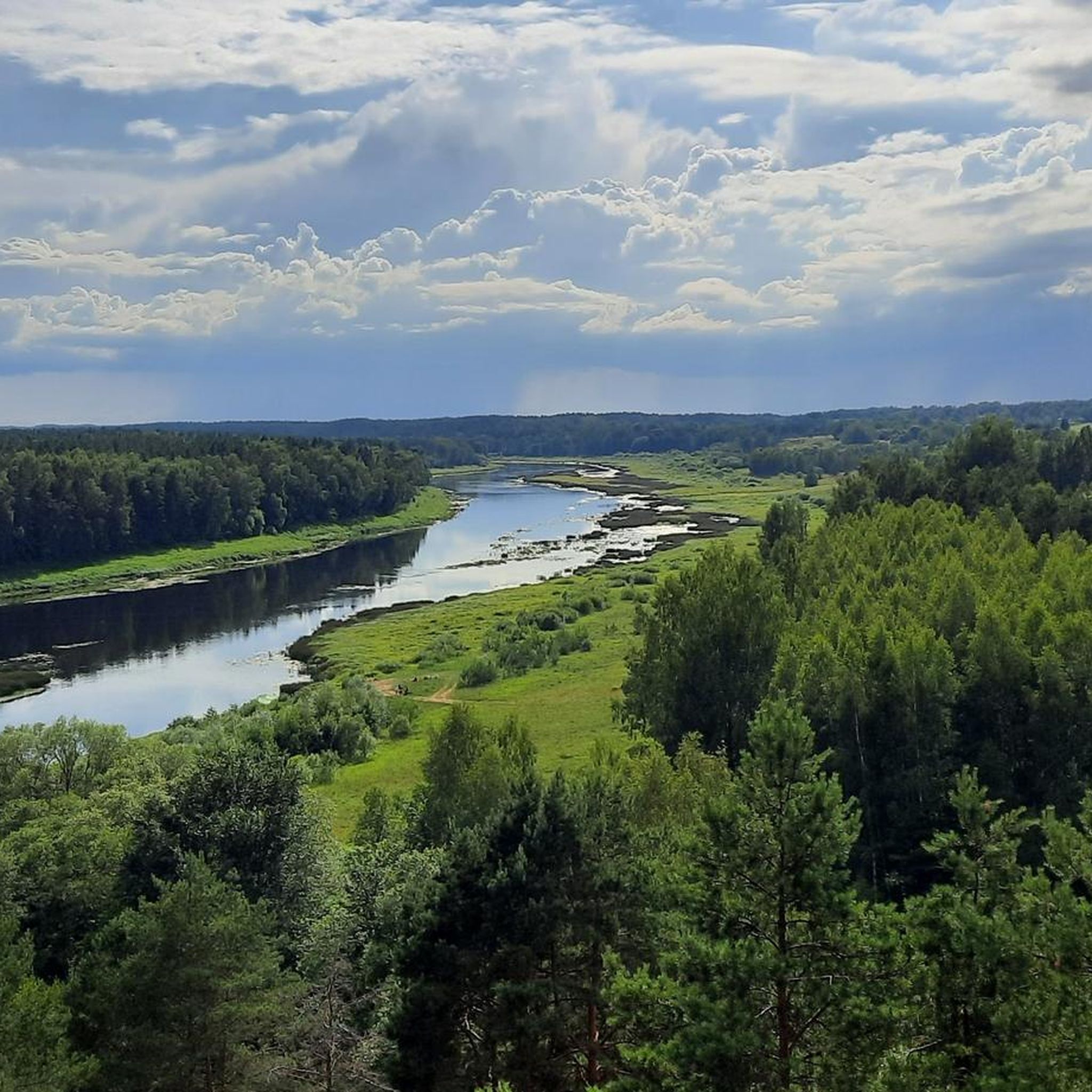
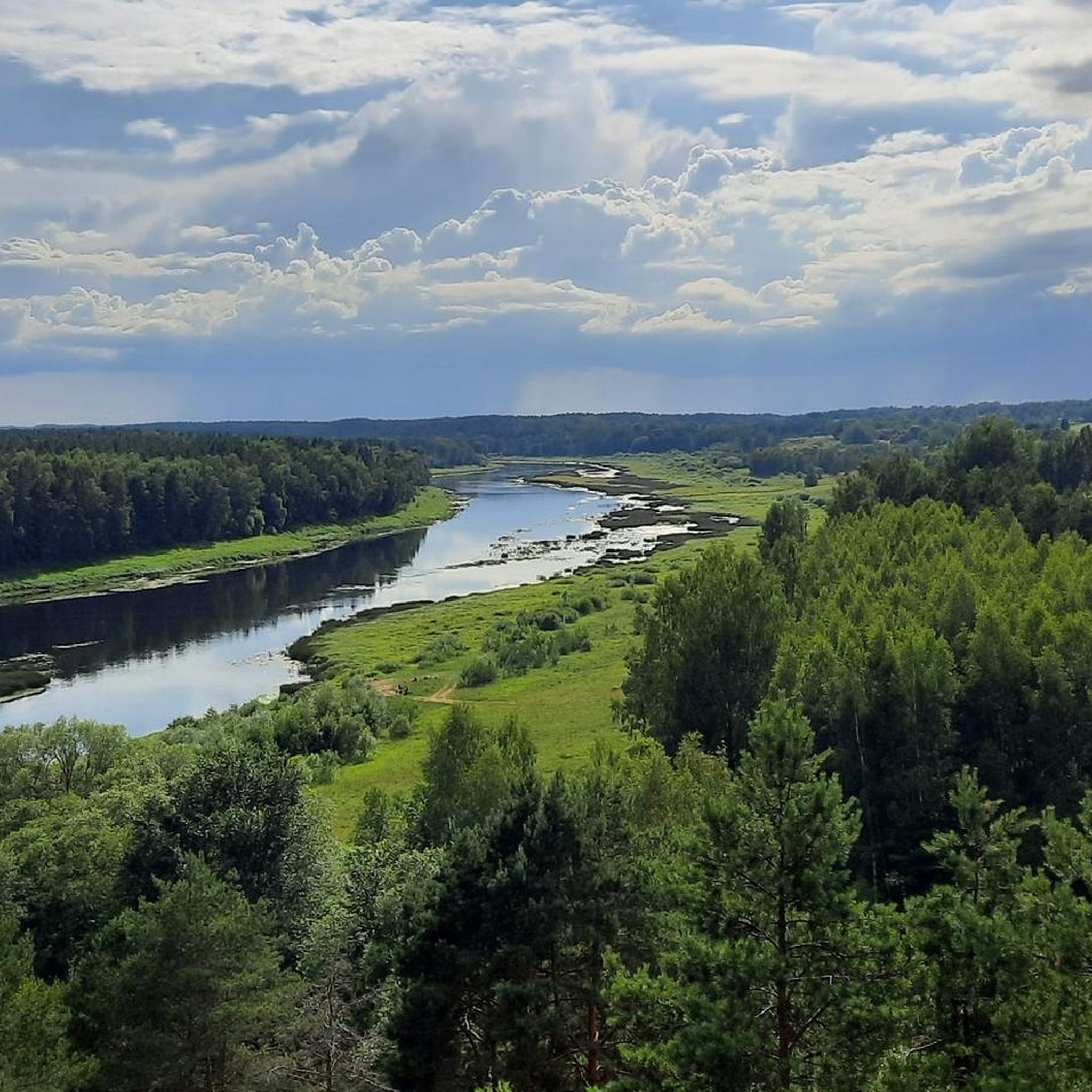
Dinaburg Castle stands on the right bank of the Daugava, approximately 18 km upriver from Daugavpils, 3 km southwest of the nearest railway station and 1 km from the Daugavpils - Kraslava road, on the ancient site of the Naujiene mound. Dinaburg Castle was built in 1277 by Ernst von Ratzeburg (Ernests Rasburg), a master of the Livonian Order, on the site of the Naujiene mound, as a border fortress facing Lithuania. Immediately after the construction of the castle in 1278, under the leadership of King Traiden, it was besieged by the Lithuanian army. In the 13th century, the residential area of Latgala included the southeastern part of the current Latgala region, which was the property of the order since 1264. The inhabited lands on the left bank of the Daugava extend to the town of Naujiene, which, although it was on the right bank of the Daugava, was mentioned in a document of 1259 as the extreme eastern point of the border of the Seleucid land. Near Naujiene was one of the 3 main crossing points of the Daugava (the other two - near Sėlpils and near Dole island), which Lithuanians used to get to Vidzeme. At this point - at the Lithuanian border - the Livonian Order built Dinaburg Castle. The maximum length of the castle building is approximately 59 m, the maximum width (in the western part) is approximately 26 m. The building materials they used were very large bricks (dimensions: 30 x 14 x 10 cm), boulders (mainly for foundations) and limestone slabs. The entrance to Dinaburg Castle was from the eastern side - through 2 fore-castles, surrounded by boulder walls and moats. source: @turizmogidas.lt
0
0
there is a parking lot, outdoor tables, a place to rest and outdoor benches DINABURG CASTLE RUINS source: https://www.visitdaugavpils.lv/lt/turisma-objekts/dinaburgas-pilsdrupas-un-pils-makets/
0
0
Frequently Asked Questions
Which castles in Latgale are particularly family-friendly?
Several castles in Latgale offer family-friendly experiences. Vecsaliena Manor (Červonka Manor) and Vārkava Manor are noted for being family-friendly. Lielborne Manor, while not in the highlights list, is also known for its outdoor activities like swings, a children's playground, and climbing wall, making it appealing for families.
What kind of historical sites can I find near the castles in Latgale?
Beyond the castles themselves, Latgale offers a rich array of historical sites. For instance, the 1st Coastal Lunette, Daugavpils Fortress is a significant fortification with a unique design to prevent enemy approach. The Rēzekne Castle Ruins and Ludza Castle Ruins are remnants of medieval strongholds, offering a glimpse into the region's military past. The Krāslava Castle Complex of Counts Plāters provides insight into 18th-century aristocratic life.
Are there opportunities for outdoor activities or hiking near Latgale's castles?
Yes, Latgale's diverse landscape provides many opportunities for outdoor activities. You can find various hiking trails, including easy routes like the Ež. Zarasas loop or the Mikhail Gate – Daugavpils Fortress Cannons loop. For more active pursuits, there are running trails and MTB trails available throughout the region, often near historical sites. For example, Ludza Castle Ruins are situated on a hill between two lakes, offering scenic surroundings for walks.
What natural features can be enjoyed around the castles in Latgale?
Many castles in Latgale are set amidst beautiful natural surroundings. The Ludza Castle Ruins are located on a hill between two lakes, providing splendid views. Vecsaliena (Chervonka) Castle is surrounded by an open-plan park with 14 species of exotic trees. The Krāslava Castle Complex features an extensive 22-hectare park with about 70 different tree and shrub species. Lielborne Manor is uniquely situated within the 'Daugavas loki' (Bends of the Daugava River) Nature Park, and Preiļi Park and Counts Manor Complex boasts a 42-hectare park with ponds and canals.
Which castles offer the best viewpoints in Latgale?
For impressive views, the Ludza Castle Ruins offer splendid vistas over the town of Ludza from its castle hill. Similarly, the Rēzekne Castle Ruins, located on an ancient castle hill, provide a good vantage point in the center of Rēzekne. Dinaburg Castle Ruins and Castle Model is also categorized as a viewpoint.
What is the best time of year to visit the castles in Latgale?
The summer months are generally ideal for visiting Latgale's castles, as the weather is pleasant for exploring ruins and parks. The Great Latgalian Market is hosted annually at Ludza Castle Ruins in the summer, making it a particularly vibrant time to visit. Spring and autumn also offer beautiful scenery with fewer crowds, especially for enjoying the extensive parks like those at Vecsaliena Castle or Krāslava Castle Complex.
Are there any unique architectural styles among Latgale's castles and manors?
Latgale's castles and manors showcase diverse architectural styles. Vecsaliena (Chervonka) Castle is a notable example of Neo-Gothic architecture, described as a 'fairy-tale castle.' The Krāslava Castle Complex is an 18th-century architectural monument with outstanding interior wall paintings. Lūznava Manor is an Art Nouveau gem, beautifully restored as a cultural hub. Kalkūne Manor Castle, built in the late 19th century, features an asymmetrical design with towers and turrets, reflecting medieval and Renaissance influences.
Can I find accommodation or dining options near the castles in Latgale?
Yes, some manors offer accommodation and dining. Lūznava Manor, for example, allows visitors to rent rooms with a historical ambiance and dine at its local restaurant. Lielborne Manor also offers traditional Latgalian culinary heritage dishes. For other castles, you'll typically find cafes, restaurants, and accommodation options in the nearby towns like Ludza, Rēzekne, or Daugavpils.
What makes Lūznava Manor a unique place to visit in Latgale?
Lūznava Manor stands out as an Art Nouveau gem and a vibrant cultural hub. Originally built in the early 20th century as a center for art and music, it has been reborn to host various exhibitions in collaboration with art centers and Rāzna National Park. Visitors can enjoy guided tours, experience rooms with historical ambiance, and dine at the on-site restaurant, making it a place to experience the artistic and cultural revival of the region.
What are some of the less crowded or hidden gems among Latgale's historical sites?
While popular sites draw crowds, places like Bebrene Manor Complex offer a comprehensive look at a well-preserved 19th-century manor with all its original buildings, including an accessible underground passage, which might be less frequented. Lielborne Manor, nestled within the 'Daugavas loki' Nature Park, also provides a serene experience away from the busiest tourist spots, especially appealing for those seeking a quieter visit.
What is the significance of the Daugavpils Fortress in Latgale's history?
The Daugavpils Fortress, including sites like the 1st Coastal Lunette, is a significant historical site. It was designed with an intricate system of moats and fortifications, including reduits and ravelins, to protect against attacks. The ability to flood the moat with water during an assault highlights its strategic importance. Exploring its various parts, such as the 'Defender’s Track' or 'Scout’s Track,' offers a deep dive into military engineering and history.
Most popular routes in Latgale
Most popular attractions in Latgale

Get inspired with the komoot mobile app


Explore more
Looking for the best castles somewhere else? Discover other guides in Latgale:
