Top 20 Castles in Grosseto
Best castles in Grosseto are found within the Maremma region of Tuscany, an area rich in historical fortifications. These structures are often strategically positioned, offering architectural interest and panoramic views of the surrounding landscape. The region's history is reflected in its diverse castles, ranging from medieval strongholds to Medici military complexes. Grosseto provides numerous opportunities to explore centuries of heritage.
Best castles in Grosseto
- The most popular castles is Sorano, a settlement known as the "Matera of Tuscany." This…
Last updated: October 10, 2026
Castiglione della Pescaia — Historic Town and Fortress
Highlight • Historical Site
Tip by

Massa Marittima Historic Center
Highlight • Historical Site
Translated by Google •
Tip by

Sign up now to discover places like this
Get recommendations on the best single tracks, peaks, & plenty of other exciting outdoor places.
Sorano
Highlight • Settlement
Translated by Google •
Tip by

Historic Center of Capalbio
Highlight • Settlement
Translated by Google •
Tip by

Giuncarico Historic Village
Highlight • Settlement
Translated by Google •
Tip by

Montemassi Castle
Highlight • Castle
Translated by Google •
Tip by

Historic Route Through Sovana Old Town: From Rocca Aldobrandesca to Sovana Cathedral
Highlight (Segment) • Historical Site
Translated by Google •
Tip by

Candeliere Tower
Highlight • Monument
Translated by Google •
Tip by

Orsini Fortress of Sorano
Highlight • Castle
Translated by Google •
Tip by
Forte Stella
Highlight • Historical Site
Translated by Google •
Tip by

Sign up for free to discover even more castles in Grosseto.
Already have an account?
Start today with a free account
Your next adventure awaits.
Popular around Grosseto
Italian Coast2Coast – From Portonovo to Orbetello
Maremma Challenge — A Tuscan, mixed terrain bikepacking loop
The Tuscany Trail – bikepacking in the heart of Italy
A heavenly week cycling in Tuscany
Tuscany by bike – history, cypresses and the Strade Bianche
Cycling adventures in Tuscany from Pian dei Mucini Bike Resort
Ciclovia dei due mari - By bike from the Tyrrhenian Sea to the Adria
MTB on Elba and in Tuscany – trails between sea and mountains
Italy coast to coast by bike – Orbetello to Senigallia
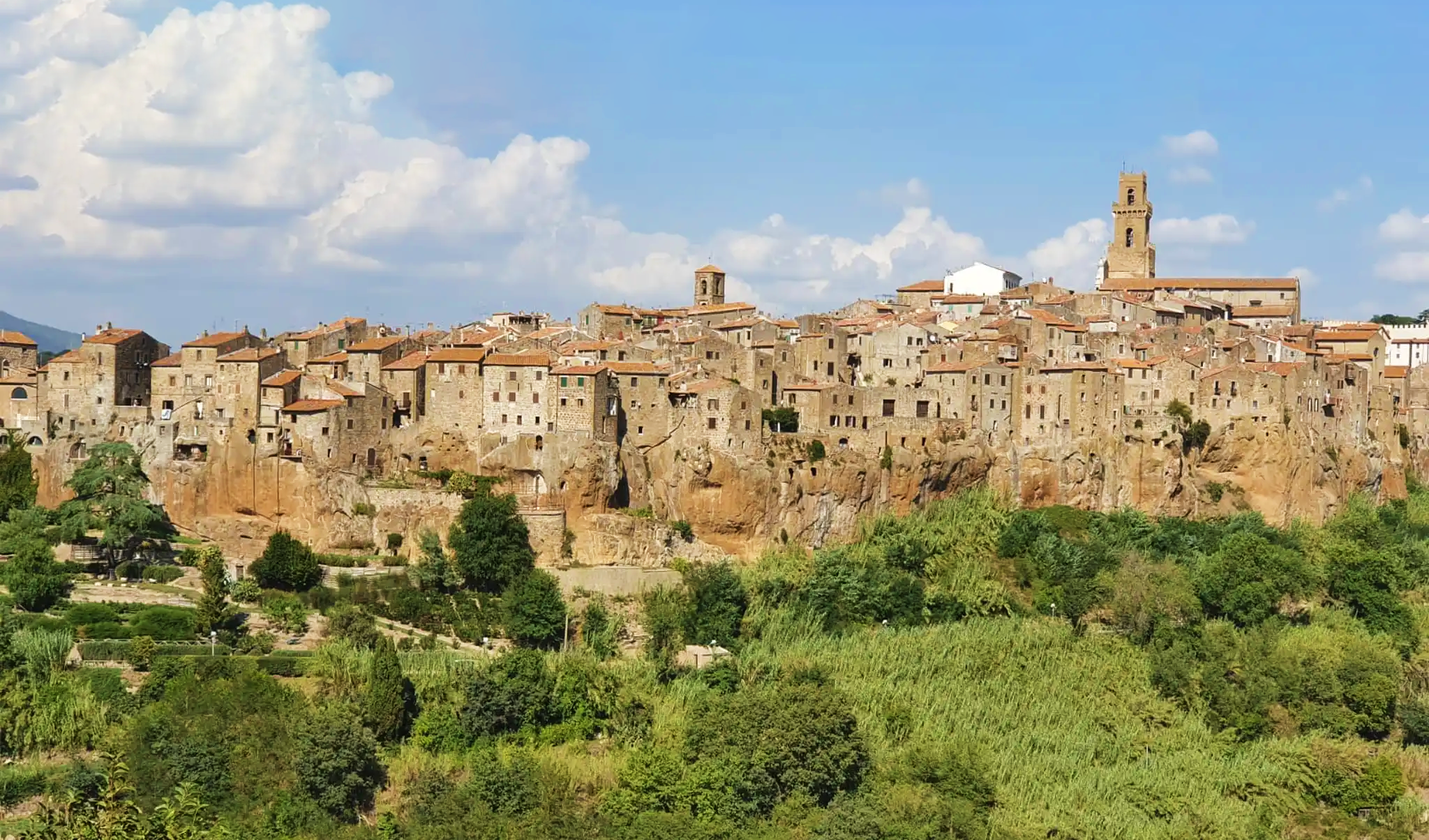
Quarries, Etruscan cuts and hanging villages – the Tufa area by bicycle
Other adventures in Grosseto


Tips from the Community

wonderful and welcoming village
0
0

Giuncarico is an ancient medieval village of early medieval origins located on a hill in Maremma Toscana, a hamlet of the municipality of Gavorrano in the province of Grosseto. The village arose around the 8th century on a height overlooking the Bruna river valley. It was controlled by the Aldobrandeschi, the Pannocchieschi and subsequently by the Republic of Siena. From the mid-16th century it became part of the Grand Duchy of Tuscany.
0
0
The historic village and the fortress (commonly called Castello di Castiglione della Pescaia) represent the medieval heart of this renowned seaside resort in the Tuscan Maremma. Perched on Monte Petriccio, the upper historic center offers an extraordinary combination of architectural evidence and breathtaking views of the Tyrrhenian Sea.
0
0

The Archaeological Museum is housed in the ancient Palazzo del Podestà (1225), which overlooks the Piazza del Duomo of Massa Marittima. The collection is organized into sections, ordered chronologically from the lower paleolithic to the etruscan age; the main piece of the prehistoric collection is the eneolithic statue-stele of Vado all’Arancio, the only find of its type in Maremma; the etruscan finds come mainly from excavations carried out at the village of Lago dell’Accesa, they are mainly kitchenware, loom weights, fishing weights and bricks; also present are the funerary trousseaux found in the necropolises, especially pottery (figulina clay and bucchero), bronze fibulae, iron pot stands, iron and bronze weapons. On the ground floor, an educational section is set up with a life-size reconstruction of typical caves: a paleolithic and an eneolithic one. Guided tours and educational activities, organization of cultural events and film screenings are available.
1
0
The massive Torre del Candeliere (or clock tower) is 24m high and was built to assert its authority in 1228, a few years after Massa Marittima gained independence as a Free Commune. The building's peculiar name derives from the custom of always keeping a fire lit on its summit, making it resemble a huge candle. In 1413, a bell was placed for the first time, later replaced in 1760 by the current one, weighing about 140kg. The first clock was instead placed on the facade in 1443. The Torre del Candeliere is the quintessential panoramic viewpoint of the town. It is therefore visitable, and through its Sienese Arch, it is possible to access the Fortress, the only stretch of walls still walkable today. The Arch and the Fortress were built after the Tower: with the conquest of Massa by Siena in 1335, the Tower was partially demolished, and then rebuilt about a third lower than the original.
1
0

The Montemassi fortress was an imposing medieval fortification that overlooked the entire village from the top of the hill.
0
0
The castle is undoubtedly the most famous monument in the municipality of Roccastrada, if not in the entire Upper Maremma, due to its historical significance (it is depicted in the famous fresco "Guidoriccio da Fogliano at the Siege of Montemassi" in Siena's Palazzo Pubblico, attributed to Simone Martini) and for its outstanding example of Gothic architecture. The fortification, which crowns a 280-meter hill above the town, consists of the remains of two main buildings: to the north is the Palazzo/Mastio, with the base of the sloping wall featuring numerous large windows, indicating its residential and not strictly military function, and the remains of a polygonal tower. Inside the Palazzo
0
0
Frequently Asked Questions
What are some historically significant castles in the Grosseto region?
The Grosseto region, also known as Maremma, is rich in historical fortifications. Notable examples include Sorano, known for its majestic Orsini fortress, and Massa Marittima Historic Center, which features a well-preserved medieval town and an old fortress. Castel di Pietra in Gavorrano, built during the Late Middle Ages, and the Castle of Valle in Follonica, dating back to the 9th century, also offer deep historical insights into the area's past.
Which castles in Grosseto offer the best panoramic views?
Many castles in the Grosseto region are strategically positioned to offer stunning views. Castiglione della Pescaia — Historic Town and Fortress provides splendid panoramic views of the surrounding landscape and the sea. Montemassi Castle offers incredible 360° views over the surrounding hills from its tower. Castel di Pietra in Gavorrano, situated atop a cliff, also commands a view of the Grosseto plain and the Metalliferous Hills.
Are there family-friendly castles to visit in Grosseto?
Yes, several castles and historical sites in Grosseto are considered family-friendly. Massa Marittima Historic Center, Castiglione della Pescaia — Historic Town and Fortress, and Sorano are all listed as family-friendly highlights. Exploring these medieval towns and their fortifications can be an engaging experience for all ages.
What outdoor activities, like hiking or cycling, can I do near Grosseto's castles?
The Grosseto region offers numerous outdoor activities near its historical sites. For hiking, you can explore routes like the 'Climb to Poggio Sentinella and descent to Cala Martina and Cala Violina' or 'Discovering the Olive Trees in Maremma Tuscany'. Cyclists can enjoy routes such as 'Massa Marittima and Lake Accesa Loop' or 'Around Follonica — Ring tour'. You can find more details on these and other routes in the Hiking in Grosseto and Cycling in Grosseto guides.
What is the best time of year to visit the castles in Grosseto?
The best time to visit the castles in Grosseto and the Maremma region is typically during the spring (April to June) and early autumn (September to October). During these months, the weather is pleasant for exploring, with comfortable temperatures and less intense heat than the summer. This also avoids the peak tourist crowds of mid-summer.
Are there any castles in Grosseto that are particularly well-preserved or unique?
Yes, several castles stand out for their preservation and unique characteristics. Montemerano Castle and Town Walls in Manciano are remarkably conserved, with medieval walls and the picturesque Piazza del Castello. The Rocca Orsini in Sorano, originally an Aldobrandesca fortress, is considered one of the most impressive examples of military architecture in Tuscany and now houses a museum.
What kind of historical periods do the castles in Grosseto represent?
The castles in Grosseto span various historical periods, primarily from the medieval era through the Renaissance. You'll find structures like Castel di Pietra from the Late Middle Ages, Aldobrandeschi family fortresses from the 12th century (like Rocca Orsini), and significant fortifications from the 16th century by Cosimo I de' Medici, such as the Fort of Rocchette. These sites showcase the evolution of military architecture and regional power struggles over centuries.
Are there any castles in Grosseto with museums or cultural exhibits?
Yes, the Rocca Orsini in Sorano now houses the Museum of the Middle Ages and the Renaissance, making it a valuable cultural destination. This allows visitors to delve deeper into the history and artifacts of the region.
Where can I find cafes or restaurants near the castles in Grosseto?
Many of the castle towns and villages in Grosseto offer local amenities. For example, Massa Marittima Historic Center has nice little cafes and restaurants. Castiglione della Pescaia — Historic Town and Fortress also provides numerous accommodation and resupply options, including places to grab food. Exploring the historic centers of these towns will lead you to various dining choices.
What are some lesser-known or 'hidden gem' castles in the Grosseto Maremma area?
While many castles are well-known, some offer a more secluded experience. Montemassi Castle, though a ruin, is described as a 'real little secret' with a lot of charm and typical Italian tranquility. The Castle of Valle in Follonica, with its ancient origins and well-preserved ruins, might also be considered a hidden gem for those seeking a quieter historical exploration.
What do visitors enjoy most about exploring castles in Grosseto?
Visitors frequently enjoy the blend of history, stunning views, and the authentic atmosphere. Many appreciate the well-preserved medieval towns like Massa Marittima and Sorano, which offer a journey through centuries of history and culture. The panoramic vistas from elevated fortresses, such as Castiglione della Pescaia, are also a major draw.
Are there any castles in Grosseto that are located near the coast?
Yes, the Fortress of Castiglione della Pescaia is located on a hill overlooking the sea, offering splendid coastal views. The Fort of Rocchette, also near Castiglione della Pescaia, was significantly fortified to enhance coastal defenses, highlighting its strategic seaside location.
Most popular routes in Grosseto
Most popular attractions in Grosseto

Get inspired with the komoot mobile app


Didn’t find what you were looking for?
Explore Grosseto’s best castles region by region:
Explore more
Looking for the best castles somewhere else? Discover other guides in Grosseto:
