Attractions and Places To See in Attica - Top 20
Best attractions and places to see in Attica, a historical region encompassing Athens, blend ancient history with natural landscapes. This area features iconic landmarks, significant cultural sites, and diverse natural escapes. Attica is characterized by its rich archaeological heritage, including numerous ancient ruins, and its varied topography, from mountains to coastal areas.
Best attractions and places to see in Attica
- The most popular attractions is Parthenon, the Acropolis of Athens, a historical site that is the most famous structure of ancient Greece. These unique buildings were built on a rock 156 meters high.
- Another must-see spot is The Propylaea of the Acropolis, a historical site and the entrance to the Acropolis. Visitors can expect mighty white marble columns and an impressive architectural insight into the Acropolis.
- Visitors also love Hellenic Parliament Building, a man-made monument in the neoclassical style. This impressive building has housed the Greek Parliament since 1935 and features a porch supported by Doric columns.
- Attica is known for historical sites, natural features, and cultural sites. The region offers a variety of ancient ruins, significant natural landscapes, and vibrant urban districts to explore.
- The attractions in Attica are appreciated by the komoot community, with 385 total highlights, 864 photos, and 542 upvotes.
Last updated: October 9, 2026
Parthenon, the Acropolis of Athens
Highlight • Historical Site
Source: weltkulturerbe.com/europa/greece/acropolis-of-athen.html
Translated by Google •
Tip by

The Propylaea of the Acropolis
Highlight • Historical Site
Tip by

Sign up now to discover places like this
Get recommendations on the best single tracks, peaks, & plenty of other exciting outdoor places.
Monastiraki Square and the Church of Panagia Pantanassa
Highlight • Settlement
Translated by Google •
Tip by

Hadrian's Arch
Highlight • Monument
The gate spanned a pre-existing road that ran from the old city to the southwestern part of the city. It was not part of a city wall. It is usually assumed that its function was to mark the separation between the old city and the new part of the city that Hadrian had built, but it is also thought that the residents of Athens wanted to honor Hadrian for his building activities with the arch as the new founder of their city.
The arch is 18 m high, 12.5 m wide and 2.30 m thick. On either side of the passage, the arch was decorated with Corinthian columns, of which only the bases and upper parts can now be seen. On top of the arch is a colonnade of four columns, crowned by a pediment between the two middle columns.
Translated by Google •
Tip by

Hellenic Parliament Building
Highlight • Monument
The Greek parliament has been meeting in this impressive building since 1935.
Translated by Google •
Tip by

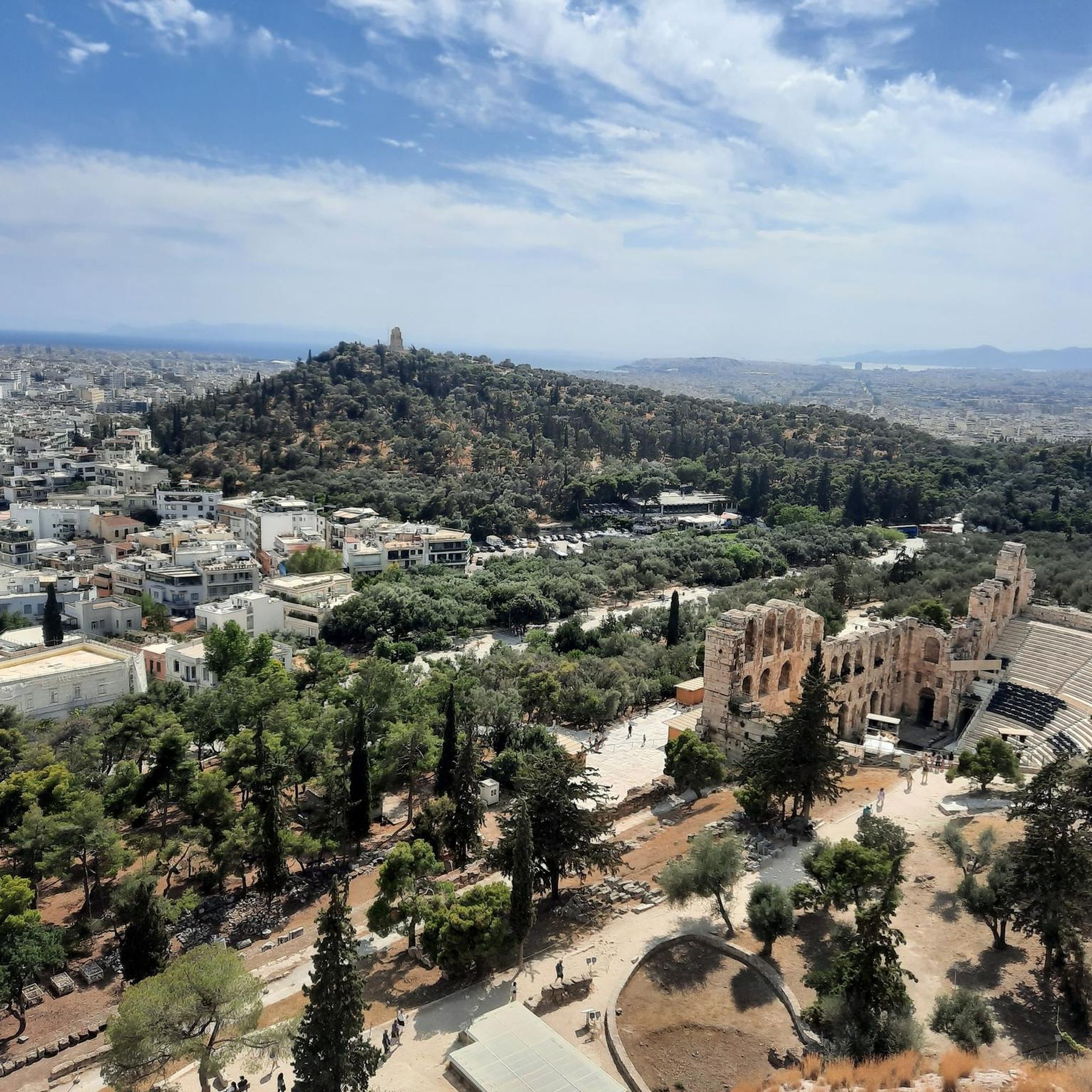
Odeon of Herodes Atticus
Highlight • Historical Site
Built in the 5th century BC, it could accommodate up to 17,000 spectators and was a venue for theatrical performances, including the works of renowned playwrights like Aeschylus, Sophocles, and Euripides.
The theatre still holds performances today. The acoustics are fantastic and it's well worth seeing a show here if you get the chance.
Tip by

Plaka: Churches and Chapels, Athens
Highlight • Religious Site
Translated by Google •
Tip by

Roman Agora, Athens
Highlight • Historical Site
Source: Wikipedia
Translated by Google •
Tip by
Plaka district
Highlight • Settlement
In the past, it was a nightclub district; however, most of these establishments closed in the 1970s when the government banned loud music. The strategy was highly successful, and now it's an area with restaurants, jewellery stores, tourist shops, and cafes. While it has become quite commercialised, it still retains its neighbourhood charm, arguably making it the most pleasant area in central Athens.
Many restaurants cater to tourists, but some offer good food. By following my restaurant recommendations in this guide, you can enjoy your evenings without unpleasant surprises on your bill or a stomach ailment on the day of your Acropolis visit.
Tip by

Theatre of Dionysus
Highlight • Historical Site
Translated by Google •
Tip by

Sign up for free to discover even more attractions in Attica.
Already have an account?
Start today with a free account
Your next adventure awaits.
Other adventures in Attica

Tips from the Community

The picturesque Plaka district, located at the foot of the Acropolis in Athens, holds an extraordinary heritage of Byzantine churches and small historical chapels dating mostly from the 10th-12th centuries. These small architectural gems made of stone and bricks blend perfectly with the cobbled alleys and white houses of the district.
0
0

The oldest church
6
0
This is the new parliament
6
0


Hadrian's Gate is an ancient building in Athens. It marks the entrance to the Athenian Temple of Olympian Zeus and was dedicated to Hadrian during his visit to Athens in 132. Strictly speaking, it was not a city gate, but rather a monument of honor.
5
0
Hadrian's Gate is an ancient structure in Athens. It marks the entrance to the Temple of Olympian Zeus and was dedicated in honor of Hadrian during his visit to Athens in 132. Strictly speaking, it was not a city gate, but rather a monument of honor. WIKIPEDIA
5
0

There are two inscriptions on the gate. The inscription on the western side reads: "This is Athens, the ancient city of Theseus", and the text on the eastern side reminds: "This is the city of Hadrian, not Theseus". https://www.podrozepoeuropie.pl/luk-hadriana-w-atenach/
5
0
In gratitude to the emperor and on the occasion of his arrival in the city, the Arch (also called the Gate) of Hadrian was built in 132 BC. The characteristic two-level arch was built of Pentelic marble, which was extracted from the nearby Mount Penteleikon. The same building material was used in the construction of the most important monuments on the Acropolis, including the Parthenon. The total height of the monument is about 18 m, its width is 13.50 m, and its depth is over 2.30 m. Two styles were used in the building: the lower one refers to Roman triumphal arches, and the upper one to the traditional Greek propylon (monumental gate). https://www.podrozepoeuropie.pl/luk-hadriana-w-atenach/
6
0
Frequently Asked Questions
What historical sites should I visit in Attica?
Beyond the iconic Parthenon, the Acropolis of Athens, Attica offers a wealth of ancient history. Explore the entrance to the Acropolis, The Propylaea, or the Roman-era Hadrian's Arch. Don't miss the Odeon of Herodes Atticus, an ancient stone theatre still hosting performances, or the Roman Agora, once a bustling marketplace.
Are there any natural attractions or outdoor spaces to explore in Attica?
Attica boasts diverse natural beauty. You can visit the dramatic Acropolis, which is built on a 156-meter high rock. Beyond the city, explore Mount Parnitha, the highest mountain in the region, offering challenging hikes and diverse flora. Mount Hymettus provides scenic trails and a historic monastery. The Athenian Riviera features beautiful beaches, while unique natural features like Vouliagmeni Lake, a therapeutic saltwater lake, are also worth a visit.
What are some family-friendly attractions in Attica?
Many of Attica's historical sites are suitable for families, such as Hadrian's Arch and the Hellenic Parliament Building. The vibrant Monastiraki Square is a lively spot for all ages, and Syntagma Square is a central hub with plenty to see. For outdoor family fun, consider Schinias National Park with its beach and wetlands, or the picturesque Lake Marathon.
Where can I find panoramic views of Athens and the surrounding area?
For breathtaking panoramic views, the Acropolis itself offers stunning vistas from its elevated position. Another excellent spot is Mount Lycabettus, which provides unparalleled views of Athens and can be reached by funicular or hiking. The Propylaea of the Acropolis also offers an impressive architectural insight into the Acropolis with views.
Can I find hiking trails near Attica's main attractions?
Yes, Attica offers numerous hiking opportunities. You can find trails that loop around historical sites like the Acropolis, such as the "The Propylaea of the Acropolis – Parthenon, the Acropolis of Athens loop." For more extensive hikes, explore the guides for Hiking in Attica or even Waterfall hikes in Attica, which feature routes like the "Rapentosa Reservoir loop."
What cultural neighborhoods or districts are worth exploring in Athens?
The Plaka district, known as the "Neighborhood of the Gods," is a charming area beneath the Acropolis with narrow streets, neoclassical architecture, and numerous shops and tavernas. The Psiri District is another vibrant neighborhood, offering a mix of traditional tavernas, hip bars, and street art. Don't miss Anafiotika, a picturesque, village-like area resembling a Cycladic island village.
Is Attica accessible for visitors with wheelchairs?
While many ancient sites may present challenges due to their historical nature, central areas like Syntagma Square are generally wheelchair accessible. It's advisable to check specific accessibility details for individual attractions before visiting, especially for archaeological sites.
What is the best time of day to visit the Acropolis?
Visitors often recommend visiting the Acropolis in the late afternoon. At this time, it tends to be less hot, and the large tourist groups have often departed, allowing for a more serene experience. It also offers beautiful lighting for photography.
Are there any significant ancient temples outside of Athens in Attica?
Yes, the Acropolis is the most famous, but Attica is home to other impressive ancient temples. The Temple of Poseidon at Cape Sounion, perched dramatically on a clifftop, offers breathtaking views of the Aegean Sea, especially at sunset. The Sanctuary of Artemis at Brauron and the Amphiareion in Oropos are also significant archaeological sites with temple remains.
What unique natural features can be found in Attica?
Attica features several unique natural spots. Vouliagmeni Lake is a distinctive saltwater lake on the Athenian Riviera, known for its therapeutic properties and stunning beauty, formed from a collapsed cave. Schinias National Park is an important ecological site with a beautiful beach, wetlands, and pine forest. The Saronic Islands, easily accessible from Attica, also offer diverse natural landscapes.
What kind of cycling routes are available in Attica?
Attica offers a variety of cycling routes, particularly for road cycling. You can find routes like the "Karamanlis Tunnels – Holes of Karamanlis loop" or the "Marathon Dam – Marathon Dam Climb loop." For more options and detailed routes, explore the Road Cycling Routes in Attica guide.
What do visitors enjoy most about the Acropolis?
Visitors are consistently impressed by the historical significance and architectural grandeur of the Acropolis. They appreciate the well-preserved structures like the Propylaea and the Parthenon, often noting the impressive white marble columns and the insight into ancient Greek civilization. The panoramic views from the top are also a major highlight.
Most popular routes in Attica
Most popular attractions in Attica

Get inspired with the komoot mobile app


Didn’t find what you were looking for?
Are you keen on exploring more awesome places nearby? Browse our guides:
Explore more
Still not found the Highlight you’re looking for? See guides of the top attractions in other regions:
