Landschaftsschutzgebiet Schurwaldrand Altbach-Plochingen-Reichenbach
Landschaftsschutzgebiet Schurwaldrand Altbach-Plochingen-Reichenbach
Attractions and Places To See in Landschaftsschutzgebiet Schurwaldrand Altbach-Plochingen-Reichenbach - Top 20
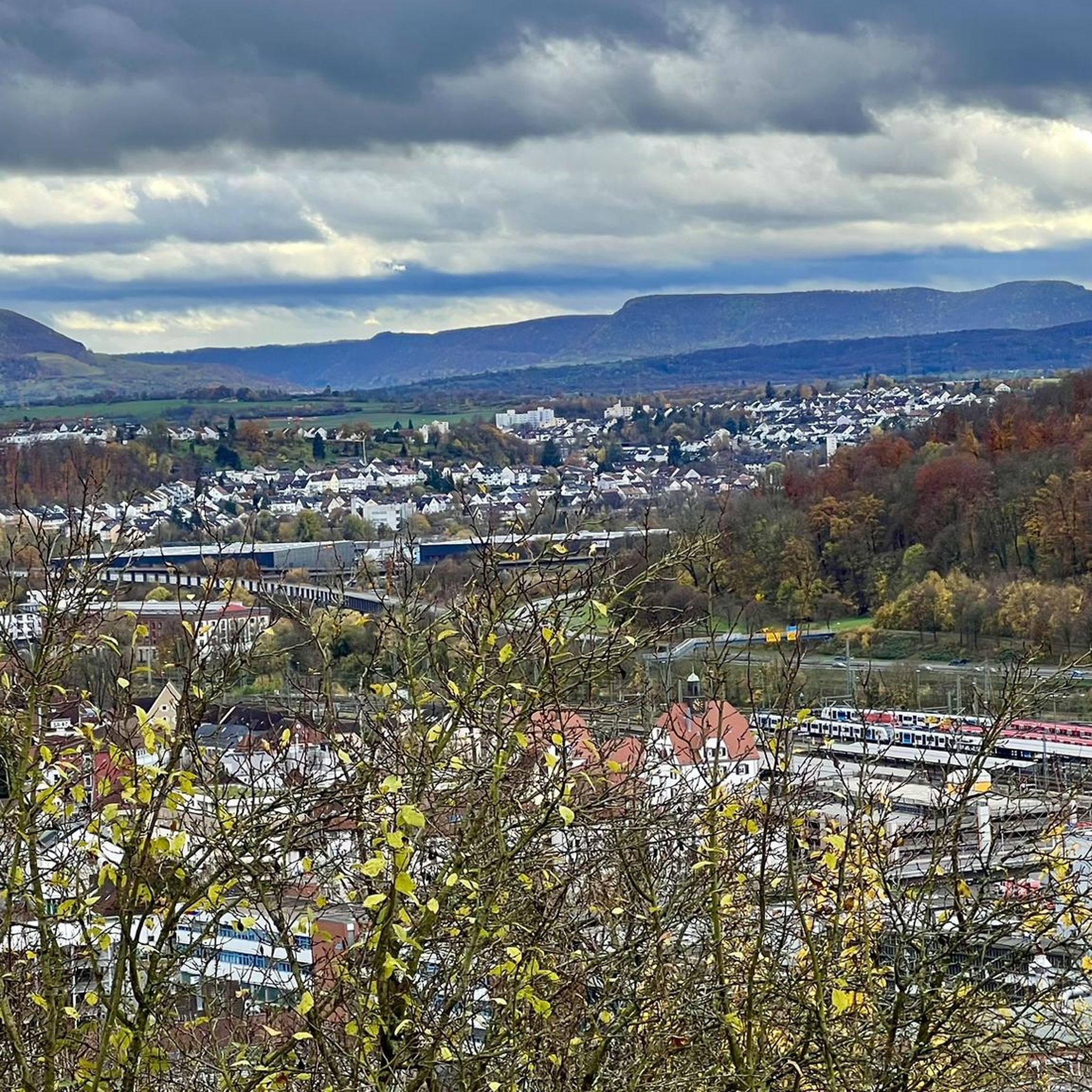
Best attractions and places to see in Landschaftsschutzgebiet Schurwaldrand Altbach-Plochingen-Reichenbach include a protected landscape area in the Esslingen district of Baden-Württemberg, Germany. This region is characterized by near-natural slope forests, Schurwald ravines, extensive orchards, and historic vineyard walls. It offers diverse natural scenery and recreational opportunities, bordering the Neckar and Fils river valleys. The area serves as a habitat for various plants and animals, providing high recreational value.
Best attractions and places to see in Landschaftsschutzgebiet Schurwaldrand Altbach-Plochingen-Reichenbach
- The most…
Last updated: July 5, 2026
Ringelnatter Trail
Highlight (Segment) • Trail
Translated by Google •
Tip by

Four Giant Sequoias near Gschlägwiese, Baltmannsweiler
Highlight • Natural Monument
Translated by Google •
Tip by

Sign up now to discover places like this
Get recommendations on the best single tracks, peaks, & plenty of other exciting outdoor places.
Sign up for free
Old Bühleiche (Plochingen-Stumpenhof)
Highlight • Natural Monument
Tip by

Schachenbach Stream and Schachen Forest
Highlight • Forest
Tip by
Marian Grotto
Highlight • Religious Site
Translated by Google •
Tip by

Sign up for free to discover even more attractions in Landschaftsschutzgebiet Schurwaldrand Altbach-Plochingen-Reichenbach.
Sign up for free
Already have an account?
Start today with a free account
Your next adventure awaits.
Login or Signup
Popular around Landschaftsschutzgebiet Schurwaldrand Altbach-Plochingen-Reichenbach
Cycling in Landschaftsschutzgebiet Schurwaldrand Altbach-Plochingen-Reichenbach
Road Cycling Routes in Landschaftsschutzgebiet Schurwaldrand Altbach-Plochingen-Reichenbach
Running Trails in Landschaftsschutzgebiet Schurwaldrand Altbach-Plochingen-Reichenbach
MTB Trails in Landschaftsschutzgebiet Schurwaldrand Altbach-Plochingen-Reichenbach
Hiking in Landschaftsschutzgebiet Schurwaldrand Altbach-Plochingen-Reichenbach

Gravel biking in Landschaftsschutzgebiet Schurwaldrand Altbach-Plochingen-Reichenbach
Tips from the Community

Here you'll find giant sequoia trees! They're really interesting to take a closer look at, very impressive!
2
0

Lourdes or Marian grottos usually have one and the same origin: an apparition of the Virgin Mary to 14-year-old Bernadette Soubirous. While she was collecting wood in the forest, a female figure of great beauty and in a shimmering gold cloud is said to have appeared to her in the rock grotto Massabielle near Lourdes: the Mother of God. In the years that followed, Lourdes grottos were built in many Catholic communities. This was also the case in Württemberg. Numerous devotions still take place at these Lourdes or Marian grottos in the month of May, which is the month of Mary. Source: https://www.schwaebische.de/regional/bodensee/meckenbeuren/auch-in-oberschwaben-lebt-die-besondere-tradition-von-lourdesgrotten-weiter-2529148
0
0

These 4 giants are located directly at the hiking car park + barbecue area near Baltmansweiler.
2
0

The sequoia trees still look a bit small
1
1

She is still alive, a young oak tree was planted next to it.
0
0
Quiet place, could be overlooked without signs.
1
0

Location and History: The group of giant sequoias stands just past the Gschlägwiese rest and barbecue area near the Weißer Weg (White Path). King Wilhelm I of Württemberg commissioned the royal forestry directorates in the state to undertake an extraordinary planting project, the preparation, implementation, and diversity of which are unparalleled in history. In the mid-19th century, the discovery of the giant sequoias in North America was a major sensation. King Wilhelm I, a renowned nature lover, seized the opportunity to have seeds of these giants delivered directly from California and to have thousands of saplings of this exotic tree species cultivated in the greenhouse of what is now the Wilhelma Zoo in Stuttgart. At that time, these arboreal giants were known in Württemberg as Wellintonias. The saplings were subsequently planted systematically in prominent locations in the royal forests and in numerous palace gardens and parks throughout Württemberg.
2
0
Standort und Geschichte: Der Bannwald "Schachen" im Schurwald nördlich von Plochingen gehört zu den größten Naturwaldreservaten in der Region Stuttgart. Der Bannwald Schachen wurde im Jahr 2004 ausgewiesen. Seine Fläche ist 73 Hektar. Der Bannwald befindet sich im obersten Teil des Lützelbachtals im Schurwald. Dieses Tal mündet bei Reichenbach in das Filstal. Der Jahrhundertorkan Lothar hat an Weihnachten 1999 beträchtliche Zerstörungen im Gebiet angerichtet. Das führte schließlich zur Ausweisung des Bannwalds. Nun kann man dort verfolgen, wie die Natur mit dem Schadensereignis fertig wird. Heute sieht man von den Sturmschäden nichts mehr. Überall trifft man auf einen dicht bewachsenen Wald mit auffallend vielen Jungbäumen. Man sieht dem Wald an, dass dort seit bald 10 Jahren keine forstwirtschaftliche Nutzung mehr stattfindet. Allerdings ist die Verwilderung des Walds noch nicht so weit fortgeschritten, dass man einen Urwald mit viel Totholz vor sich hat. Man kann den Bannwald auf Wegen umrunden. Teilweise führen die Wege auch ein Stück durch den Bannwald hindurch. An zwei Stellen am Rand des Bannwalds finden sich ausführliche Informationstafeln zum Schutzgebiet. Dort kann man sich den Wegverlauf genau einprägen. Einer der Wege die den Bannwald Schachen eingrenzen ist der Arbeitsdienstweg. Auch unmittelbar am Östlichen Rand parallel zum Arbeitsdienstweg fließt der Schachenbach durch den Bannwald. Der Schachenbach entspringt unter der heutigen Deponie Weißer Stein und verläuft etwa 2,5 km in südlicher Richtung, wo er dann in den Lützelbach mündet. Auf seinem Weg in den Lützelbach überquert er den Forscherpfad und viele kleine Bäche aus den Klingen der Fuchsklinge münden im Schachenbach. Der Schachenbach bildet auch die Grenze zwischen den westlichen Schurwald und dem Mittleren Schurwald. Das Wort Schachen selber kommt über mittelhochdeutsch schache/schach von althochdeutsch scahho. Es bedeutet allgemein ‚Wald‘ oder ‚Buschwerk‘, als einzeln stehendes Waldstück oder Vorsaum eines Waldes, bis hin zu Forstparzelle. Verwandt sind altnordisch skógr, schwedisch skog dänisch skov ‚Wald‘. In Ortsnamen ist zeitlich speziell ein bei der Urbarmachung des Hochmittelalters stehengebliebenes Waldstück als Rodungsname anzunehmen. Quelle: zum Teil, Wege in der Region.de und Wikipedia
2
0
Frequently Asked Questions
What natural features define the Landschaftsschutzgebiet Schurwaldrand Altbach-Plochingen-Reichenbach?
The protected landscape area is characterized by its near-natural slope forests (Hangwälder) and distinctive Schurwald ravines (Schurwaldklingen). You'll also find extensive orchards (Streuobstwiesen) and historic vineyard walls, which are integral to the landscape and provide important habitats. The area borders the Neckar and Fils river valleys, with the confluence of the Fils into the Neckar in Plochingen.
Are there any notable natural monuments to visit in the region?
Yes, the area features several significant natural monuments. You can visit the Four Giant Sequoias near Gschlägwiese, Baltmannsweiler, which were planted by King Wilhelm I. Another historical natural landmark is the Old Bühleiche (Plochingen-Stumpenhof), a venerable oak tree with a rich history. The Ulrichsbrunnen (Ulrich's Well) north of Rotbach in the Plochingen plain is also a specific point of natural interest.
What historical or cultural sites can I explore in the region?
Plochingen offers several historical and cultural highlights. The iconic Hundertwasser House "Wohnen unterm Regenturm" is a unique architectural landmark. You can also visit the late Gothic Stadtkirche St. Blasius, the outstanding Alemannic Old Town Hall from 1530, and the Ottilienkapelle, Plochingen's oldest building dating back to 1328. Additionally, well-preserved Historic Vineyard Towers can be found.
What kind of hiking opportunities are available in the Landschaftsschutzgebiet?
The Landschaftsschutzgebiet is excellent for hiking, with numerous well-signposted routes. You can explore the near-natural slope forests and Schurwald ravines. For specific routes, consider the 'Forester's Spring loop from Baltmannsweiler' or the more extensive 'Plochinger Rundwanderung'. There are also several waterfall hikes available, ranging from easy to moderate difficulty.
Are there trails suitable for mountain biking or gravel biking?
Yes, the area offers diverse trails for cycling enthusiasts. The Ringelnatter Trail is a technical singletrack with rooty sections, suitable for both beginners and advanced mountain bikers. For more options, you can explore dedicated MTB Trails or Gravel Biking routes in the region, with difficulties ranging from easy to difficult.
Are there family-friendly attractions or walks in the area?
Absolutely. Many natural sites are suitable for families, such as the Four Giant Sequoias near Gschlägwiese, Baltmannsweiler, and the Old Bühleiche (Plochingen-Stumpenhof). The Marian Grotto also offers a quiet, family-friendly spot for rest. The Landscape Park Bruckenwasen in Plochingen, created for the 1998 State Garden Show, provides recreational opportunities closer to the town center and is ideal for family outings.
What is the Schachenbach Stream and Schachen Forest?
The Schachenbach Stream and Schachen Forest is one of the largest natural forest reserves in the Stuttgart region. Designated in 2004, this area allows visitors to observe natural regeneration after significant storm damage from Hurricane Lothar in 1999. It's a fascinating place to see how nature recovers and thrives, with a dense forest and many young trees.
Can I find quiet places for reflection or rest?
Yes, the Marian Grotto, built in 1953, is known as a quiet place for rest and reflection. Its serene atmosphere makes it a perfect spot to pause during your exploration of the region.
What do visitors enjoy most about the Landschaftsschutzgebiet Schurwaldrand Altbach-Plochingen-Reichenbach?
Visitors particularly appreciate the diverse natural scenery, including the near-natural slope forests and distinctive ravines. The extensive network of hiking and cycling trails is highly valued for outdoor activities. The blend of natural beauty with historical sites like the Hundertwasser House and ancient churches also makes the region a unique and enjoyable destination.
Is the Neckar Valley Cycle Path accessible from this area?
Yes, the protected area borders the Neckar River, making the scenic Neckar Valley Cycle Path easily accessible. This path offers beautiful views along the river and is a popular choice for cyclists looking to explore the wider region.
What are the main towns bordering the protected area?
The main towns bordering the Landschaftsschutzgebiet are Altbach, Plochingen, and Reichenbach an der Fils. These towns serve as excellent starting points for exploring the natural landscapes and offer their own local charm, amenities, and connections to various hiking and cycling routes.
Most popular routes in Landschaftsschutzgebiet Schurwaldrand Altbach-Plochingen-Reichenbach
Most popular attractions in Landschaftsschutzgebiet Schurwaldrand Altbach-Plochingen-Reichenbach

Get inspired with the komoot mobile app


Explore more
Still not found the Highlight you’re looking for? See guides of the top attractions in other regions:
