The best cycling routes in Hawai'I Volcanoes National Park
80
riders
14
rides
Touring cycling in Hawai'i Volcanoes National Park offers exploration across diverse volcanic landscapes, from sea level to over 13,000 feet. The park features an extensive network of bike-friendly routes, traversing lush rainforests, stark volcanic deserts, and ancient lava flows. Cyclists can experience varied terrain, including paved roads and some dirt trails, with routes designed for different fitness levels. This UNESCO World Heritage Site provides unique geological and biological diversity for outdoor enthusiasts.
Best touring cycling routes in Hawai'I Volcanoes National Park
- The most popular touring cycling route is Hilina Pali via Devil's Throat, a 17.3 miles (27.8 km) trail that takes 1 hour 51 minutes to complete. This route winds through the Kaʻū Desert, offering views of fault scarps and old lava flows.
- Another top favourite among local touring cyclists is Mauna Loa Road to Mauna Loa Lookout, a difficult 15.2 miles (24.5 km) path. This route climbs through koa woodlands and over prehistoric lava flows, providing panoramic views of Kīlauea.
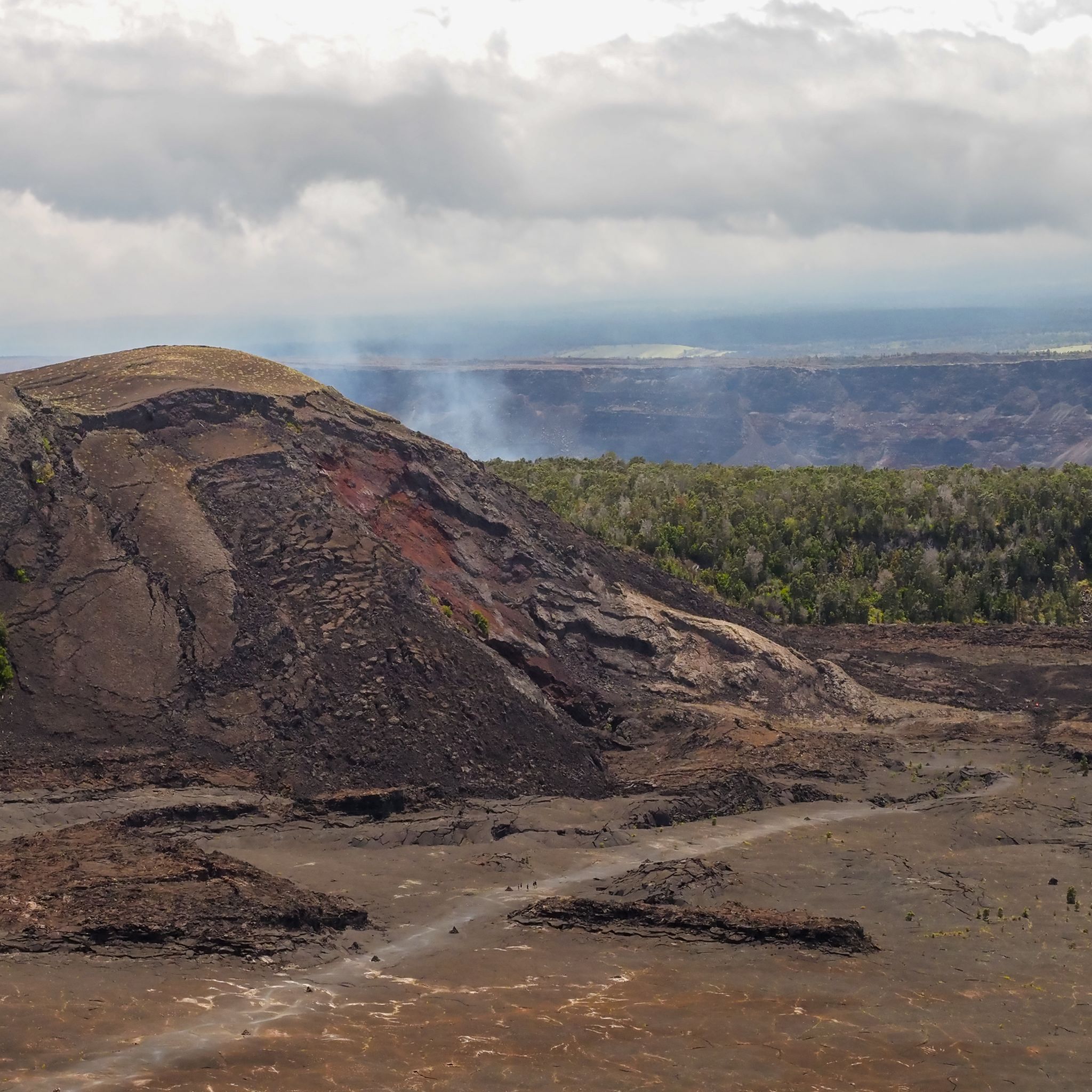
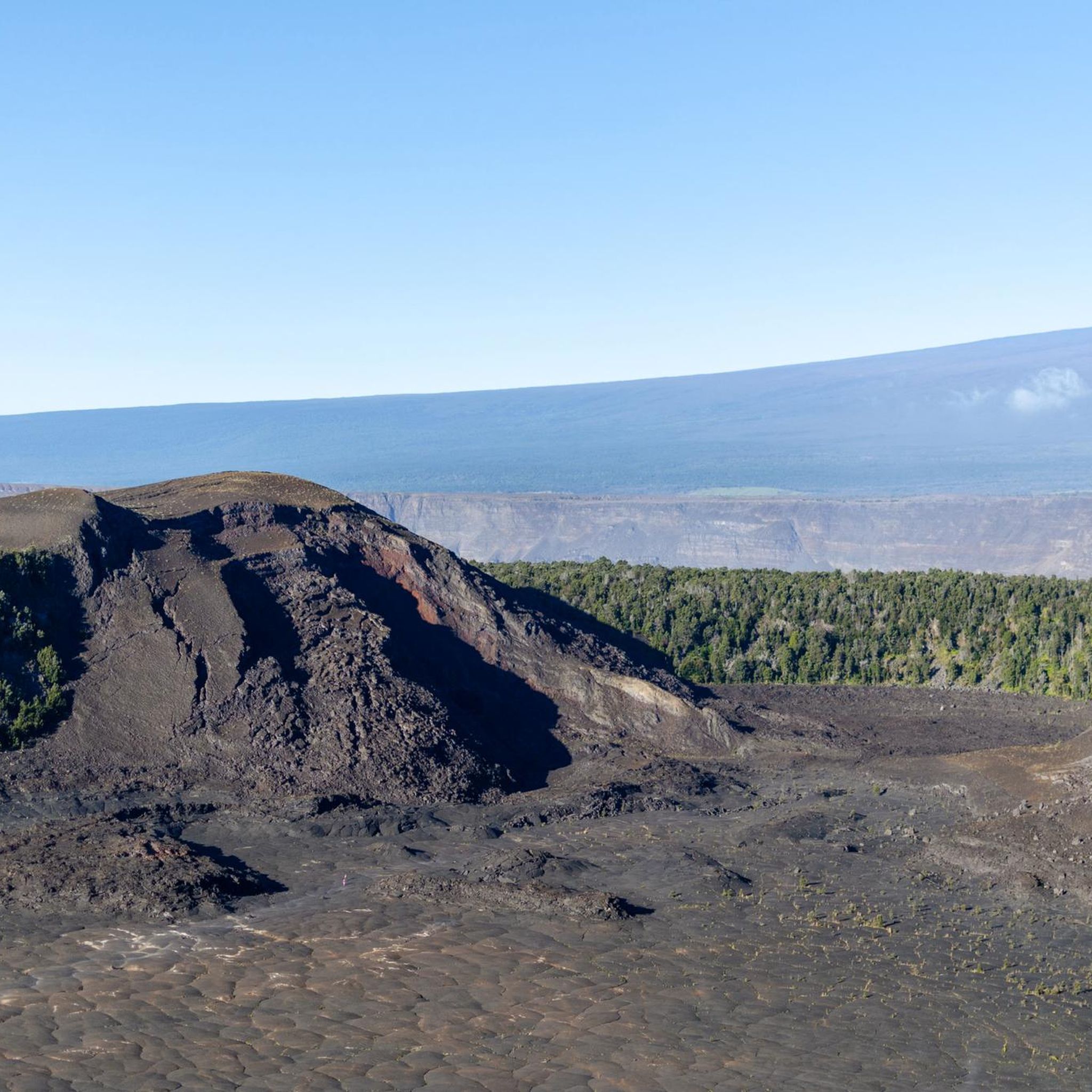
- Local touring cyclists also love the Crater Rim to Kīlauea Iki Overlook, a 3.0 miles (4.8 km) trail leading through volcanic landscapes and lush forest, often completed in about 17 minutes.
- Touring cycling in Hawai'I Volcanoes National Park is defined by dramatic volcanic landscapes, dense rainforests, and expansive lava flows. The network offers options for easy, moderate, and challenging routes suitable for various ability levels.
- The guide includes highly-rated routes that showcase the best of the region's landscape. More than 20 touring cyclists have used komoot to explore Hawai'I Volcanoes National Park's varied terrain.
Last updated: July 8, 2026
1
riders
27.8km
01:51
380m
380m
Moderate bike ride. Good fitness required. Mostly paved surfaces. Suitable for all skill levels.
24.5km
02:16
670m
670m
Hard bike ride. Very good fitness required. Mostly paved surfaces. Suitable for all skill levels.

Sign up for free
4.79km
00:17
40m
40m
Easy bike ride. Great for any fitness level. Mostly paved surfaces. Suitable for all skill levels.
31.7km
02:20
750m
750m
Hard bike ride. Very good fitness required. Mostly paved surfaces. Suitable for all skill levels.
8.18km
00:29
50m
50m
Easy bike ride. Great for any fitness level. Mostly paved surfaces. Suitable for all skill levels.
Get access to more routes and recommendations from other explorers.
Sign up for free
Already have an account?
Our route recommendations are based on thousands of hikes, rides, and runs completed by other people on komoot.
Start today with a free account
Your next adventure awaits.
Login or Signup

Other adventures in Hawai'I Volcanoes National Park

Tips from the Community

Viewpoint with shelter and great view of the Pacific
3
0
Closed and inaccessible since 2018!
2
0
The center is closed for renovations until August 2026
2
0

The Jaggar Museum will be demolished in late 2023 due to thousands of earthquakes during the 2018 Kīlauea volcano eruption. This will bring an end to the 96-year history of the Jaggar Museum. Today you can still spectate at the Uēkahuna Bluff after much restorations performed by NPS.
0
0
Hilina Pali Overlook provides visitors with a incredible view of the Hawaiian coastline and Pacific Ocean. There is a shelter and bathroom here to provide shelter from any storms, althought there is no potable water.
0
0
Kealakomo Overlook has panoramic views of the Pacific Ocean and lava fields. Kealakomo Overlook gets its name from the ancient village that once resided here and is now partially covered from the Maunaulu flows of 1969-1974. Don't tell real estate developers, but the Maunaulu flows created approximately 210 acres of new land.
0
0
At the bottom of the Chain of Craters Road you can see steep lava rock cliffs. Winds are known to be high here, so use caution if you have deep wheels! This is a unique view with the blue crashing waves on one side and the brown laval fields stretching up the side of the volcano.
0
0
Open 9am-5pm daily, the Kīlauea Visitor Center is a great place to stop before entering the park. There is a park store here that sells books, posters, and other souvenirs! On the back side of the building there are restrooms and across the street you can find a few restaurants and another gift shop!
0
0
Frequently Asked Questions
How many touring cycling routes are available in Hawai'i Volcanoes National Park?
There are 15 touring cycling routes available in Hawai'i Volcanoes National Park, offering a range of experiences from easy rides to challenging climbs through diverse volcanic landscapes.
Are there easy touring cycling routes suitable for beginners or families?
Yes, the park offers several easy touring cycling routes. A great option is Crater Rim to Kīlauea Iki Overlook, a 3.0-mile (4.8 km) trail that takes about 17 minutes and leads through volcanic landscapes and lush forest. Another easy choice is the Crater Rim Trail, an 8.2 km (5.1 miles) route that offers scenic views with minimal elevation gain.
What are some challenging touring cycling routes in the park?
For experienced cyclists seeking a challenge, the park offers several difficult routes. The Mauna Loa Road to Mauna Loa Lookout is a difficult 15.2-mile (24.5 km) path with significant elevation gain, climbing through koa woodlands and over prehistoric lava flows to panoramic views of Kīlauea. Another demanding option is Chain of Crateers Road via Muliwai a Pele, which features a thrilling descent but a notoriously challenging return ascent.
What unique geological sights can I see while cycling in Hawai'i Volcanoes National Park?
Cycling in the park offers unparalleled access to unique geological features. Along routes like Crater Rim Drive, you can see the Steaming Bluff (Wahine Kapu) and Sulphur Banks (Haʻakulamanu). The Nāhuku (Thurston Lava Tube) is also accessible, allowing you to explore an ancient lava tube. Further along Chain of Craters Road, you can witness the dramatic Holei Sea Arch and the ancient Puʻuloa Petroglyphs etched into lava rock.
Are there any circular touring cycling routes in the park?
While many routes are out-and-back, the park's road network allows for various loop possibilities, especially around the Kīlauea caldera. The Crater Rim Drive itself is an 11-mile paved loop that encircles the Kīlauea Caldera, offering a continuous scenic ride.
What are the general rules and regulations for biking in Hawai'i Volcanoes National Park?
Cyclists are generally permitted on paved roads and designated paved sections of trails. E-bikes are also allowed. It's important to be aware that roads can be narrow and winding with limited visibility, especially in rainforest areas. Always follow park signage and be prepared for varied weather conditions. For detailed and up-to-date regulations, it's best to consult the official National Park Service website: nps.gov/havo/planyourvisit/bike.htm.
When is the best time of year to go touring cycling in Hawai'i Volcanoes National Park?
Hawai'i Volcanoes National Park offers cycling opportunities year-round due to its tropical climate. However, weather conditions can vary significantly with elevation. Early morning or late afternoon rides are often recommended to avoid the heaviest traffic, which typically occurs between 10 AM and 3 PM, and to experience cooler temperatures.
What should I bring for a touring cycling trip in the park?
Given the varied terrain and microclimates, it's essential to be prepared. Bring plenty of water, as it may not be available on all routes. Layers of clothing are advisable to adapt to changing temperatures, from lush rainforests to stark volcanic deserts. Sun protection, rain gear, and basic bike repair tools are also recommended.
Where can I find scenic viewpoints along the cycling routes?
The park is full of scenic viewpoints. Along Crater Rim Drive, you'll find the Kīlauea Overlook, Steaming Bluff, Sulphur Banks, and the Kīlauea Iki Overlook, offering views of the Halemaʻumaʻu Crater. The Hilina Pali via Devil's Throat route leads to the Hilina Pali Overlook, providing vistas 2,000 feet down to the coastal flats.
How long does it take to cycle the Crater Rim Drive?
The full Crater Rim Drive is an 11-mile (17.7 km) paved loop. While specific cycling times vary based on fitness and stops, a section like Crater Rim to Kīlauea Iki Overlook (3.0 miles / 4.8 km) can be completed in about 17 minutes. For the entire loop, plan for at least 1-2 hours of cycling, plus time for stops at various overlooks and attractions.
Are there options for bike rentals near Hawai'i Volcanoes National Park?
While komoot does not offer bike rentals directly, there are several local businesses outside the park that provide bike rental services. It's advisable to research and book rentals in advance, especially during peak seasons, to ensure availability for your cycling adventure in the park.
What makes Hawai'i Volcanoes National Park a unique cycling destination compared to other Big Island trails?
Hawai'i Volcanoes National Park stands out due to its dramatic and diverse volcanic landscapes, encompassing six of Earth's climate zones. Cyclists can experience everything from lush rainforests to stark volcanic deserts and active lava flows. It's a UNESCO World Heritage Site and an International Biosphere Reserve, offering a unique blend of geological wonders, ecological diversity, and Hawaiian cultural sites that are unparalleled on the Big Island.
Most popular routes in Hawai'I Volcanoes National Park
Most popular attractions in Hawai'I Volcanoes National Park

Get inspired with the komoot mobile app


Explore more
Browse the best Cycling routes in other regions.
