The best road cycling routes around Gétigné
4.1
(171)
2,216
riders
477
rides
Road cycling routes around Gétigné traverse a landscape characterized by river valleys, rolling hills, and expansive vineyards within the Nantes Vineyard region. The area is shaped by the Moine and Sèvre Nantaise rivers, offering varied elevations and scenic routes. Cyclists encounter diverse terrain, from gentle slopes along riverbanks to more challenging ascents in the surrounding hilly areas. This blend of natural features provides a range of road cycling experiences.
Best road cycling routes around Gétigné
- The most popular road cycling…
Last updated: June 27, 2026
4.0
(4)
21
riders
26.3km
01:17
260m
260m
Easy road ride. Great for any fitness level. Mostly well-paved surfaces and easy to ride.
5.0
(1)
16
riders
30.3km
01:16
130m
130m
Moderate road ride. Great for any fitness level. Some segments of this route may be unpaved and difficult to ride.

Sign up for free
4.0
(2)
15
riders
49.8km
02:05
260m
260m
Moderate road ride. Good fitness required. Mostly well-paved surfaces and easy to ride.
3.5
(2)
12
riders
Moderate road ride. Good fitness required. Mostly well-paved surfaces and easy to ride.
3.7
(3)
17
riders
66.7km
02:48
360m
360m
Moderate road ride. Good fitness required. Some segments of this route may be unpaved and difficult to ride.
Get access to more routes and recommendations from other explorers.
Sign up for free
Already have an account?
Our route recommendations are based on thousands of hikes, rides, and runs completed by other people on komoot.
Start today with a free account
Your next adventure awaits.
Login or Signup

Tips from the Community

From 1805 to 1827, the sculptor François-Frédéric Lemot (winner of the Prix de Rome in 1790) transformed a former hunting forest belonging to the lords of Clisson into an idealized landscape. Influenced by the gardens of Ermenonville and Méréville, guided by his classical education and the memory of Tivoli, Lemot freely designed his garden whenever his official duties in Paris allowed. It is now a park managed by the department, freely accessible for a relaxing break with a beautiful view of the château.
0
0

Clisson Castle has quite a story to tell: first an impregnable fortress overlooking the Sèvre, then a ducal residence, and finally a romantic ruin. In the 12th century, the powerful lordship of Clisson built this stone castle with highly elaborate defensive architectural systems: arrow slits, gun ports, and slits. A strategic point protecting the border of the Duchy of Brittany in the 15th century, it was abandoned by its owners from the second half of the 17th century onward before being burned down by Republican troops in 1793. But, beyond its grand history, this castle also has a more historic significance! In 1807, François-Frédéric Lemot, creator of the Garenne Lemot estate (a picturesque landscape located on the other side of the river), was captivated by these ruins and purchased it to turn it into an ornamental factory. The château was declared a historic monument in 1924, before being acquired by the Loire-Atlantique department in 1962. Today, visitors can visit it, take a guided tour, or simply experience its history. A stop on the Journey through the Vineyard, it's a stopover during the wine tourism tour of Nantes' wine country, featuring natural sites, heritage features, characterful villages, and unique cellars.
1
0
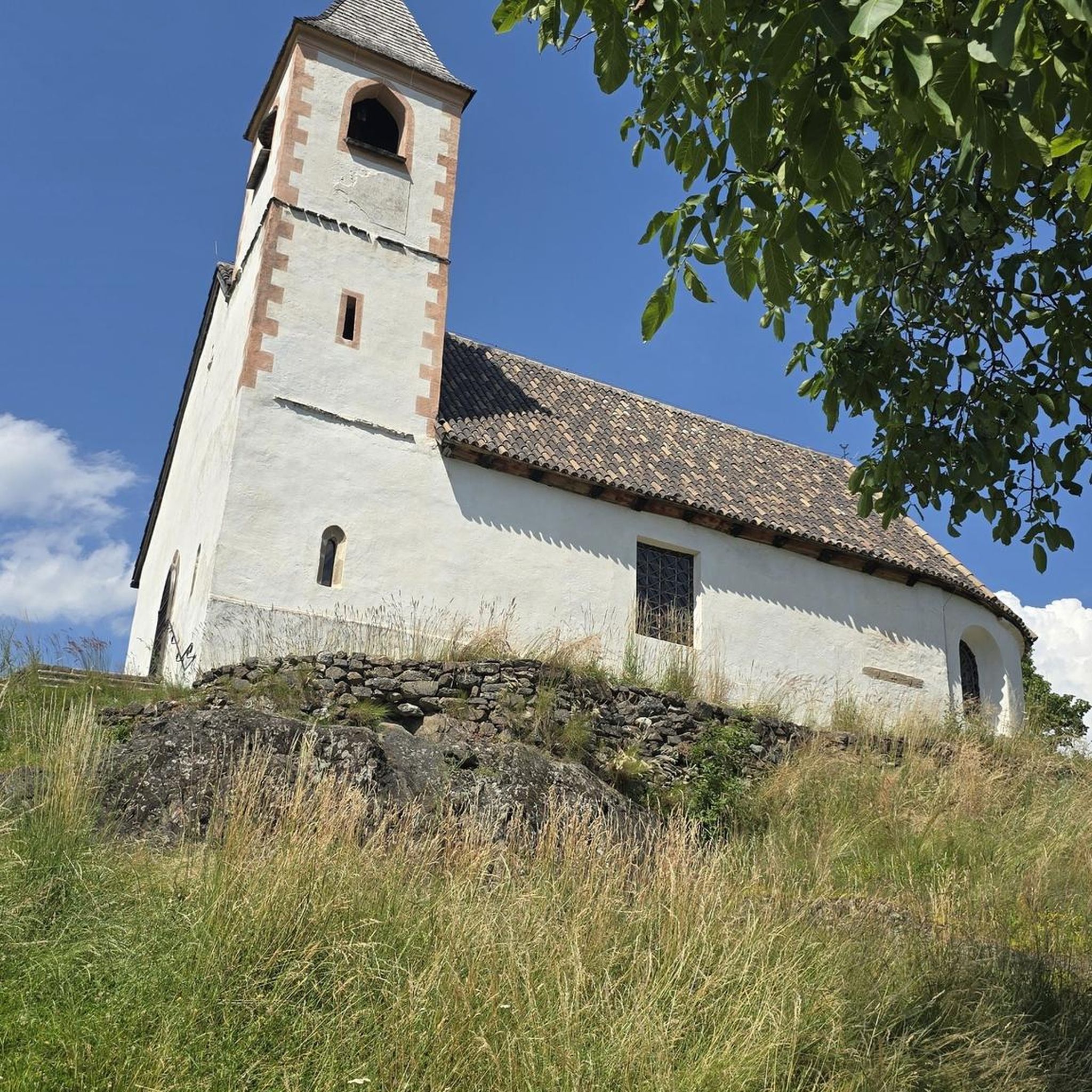
The modest Chapel of Saint Anne is the last vestige of the parish church of Saint Vincent. In the second half of the 11th century, the Chapel of Saint Anne was built. It adjoins the southern flank of a pre-existing castle chapel, probably contemporary with the keep, which dates from the late 10th or early 11th century. At an undetermined date, the two chapels were extended westward and became the chevet of the parish church of Saint Vincent. This extension was completed before 1646, the date at which a drawing by L. Doomer, preserved at the Dobrée Museum in Nantes, shows the complete building. In 1683, Archdeacon Binet described the dilapidated Church of Saint Vincent and the choir on the verge of ruin. No one dared touch it because it belonged to the lord of La Galissonnière and Le Pallet. We can therefore assume that the nave itself belongs to the parish, which is responsible for its upkeep. The choir, a former castle chapel, disappeared during the Revolution. The old church was razed in 1853, and only the Sainte-Anne chapel was spared thanks to the intervention of Prosper Mérimée. A new church was built on a new site in the village, reusing the stones from the old building. In addition to its dilapidated condition, the old church had the disadvantage of being located far from the village. The chapel was listed as a historical monument in 1941 (decree of August 9). It was restored in 1957. NOTE: THE CHURCH HAS BEEN CLOSED SINCE JULY 23, 2018, FOR INDEFINITE WORK.
1
0
The Trinity Church is getting a makeover in the heart of Clisson Off-limits since 2018, the Trinity Church in Clisson is undergoing extensive restoration work until 2027, accompanied by reinforcement and safety work. The Trinity Church in Clisson has been off-limits since 2018 due to pieces of tufa stone found on the floor of the building, raising concerns about safety issues. The restoration has been decided upon, along with reinforcement and safety work. This work is expected to continue until 2027. The construction site will soon be explained to the residents of Clisson, using signs. The artwork and furnishings have been protected and stored, tarpaulins protect the building and the workers, the vaults and framework will be restored, and the wall plasterwork will be examined and redone where necessary. The work will concern the side aisles until next summer, the nave for the following twelve months. Then it will be the turn of the choir and transepts between January 2026 and spring 2027, then the sacristy, the bell tower and the outbuildings.
2
0
The Church of the Trinity was originally a Benedictine priory, with a parish, dependent on the abbeys of Saint-Martin-de-Vertou and Saint-Jouin-de-Marnes. In the 11th century, it was occupied by the canons regular of the Order of Saint Augustine. In 1645, Fontevrist nuns from La Regrippière en Vallet settled there. The convent burned down in 1794 by the infernal columns of the Republican armies. From the 11th century onwards, the church had a choir with an apse, side chapels, and a square bell tower. In the 17th century, the Benedictine nuns replaced the Romanesque choir with an elongated one, featuring a remarkable Baroque altarpiece. They demolished the southern part of the choir to build their oratory. During the French Revolution, the church returned to the parish. Around 1867/1868, work was undertaken. The façade was redone in a neo-Romanesque style, while the neo-Gothic style was preferred for the interior of the religious monument.
1
0


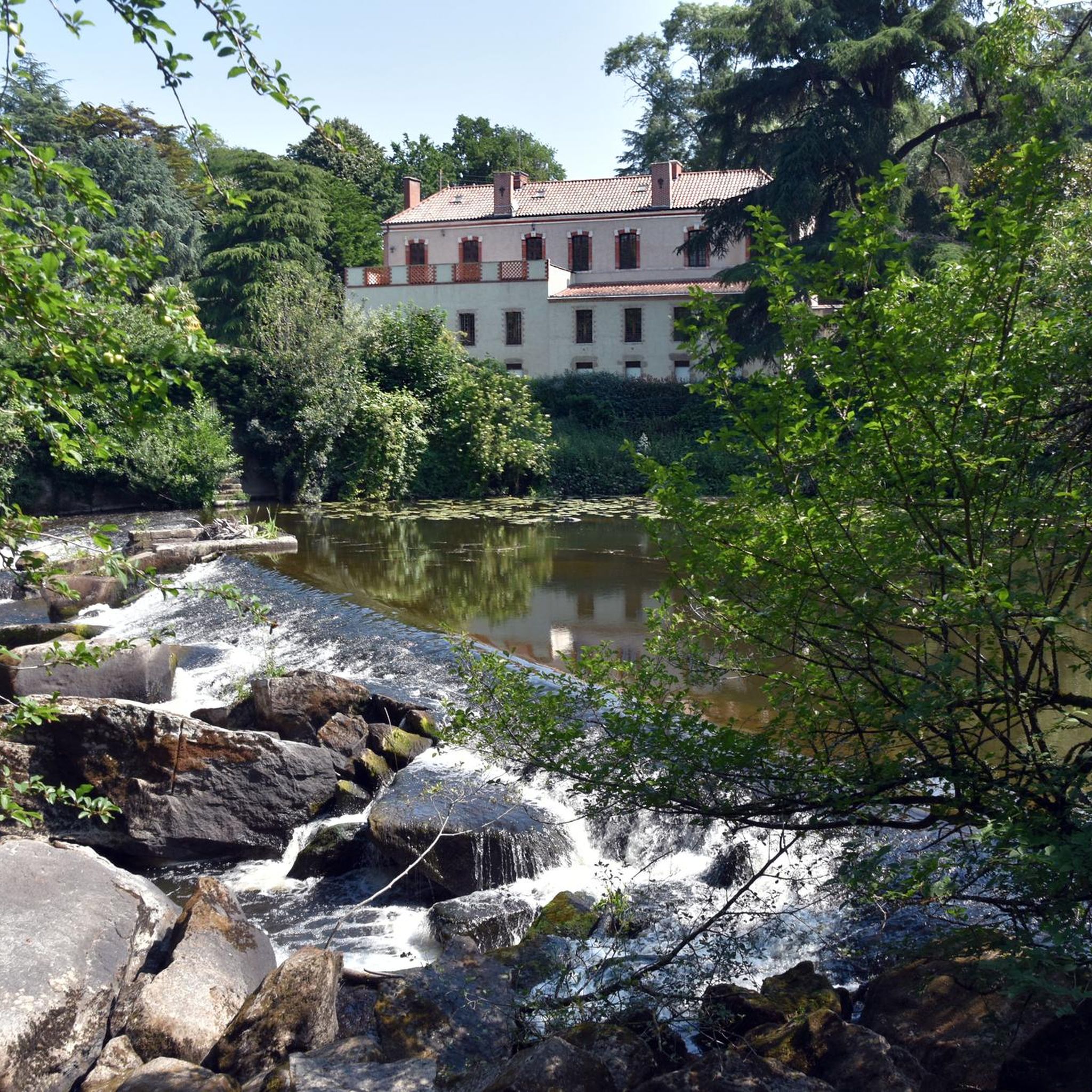
Using the power of moving water to drive a mill wheel is an ancient invention that dates back to pre-Christian times. Thanks to such a construction, human or animal muscle power could be easily replaced by a watercourse - natural or artificially created - in order to grind grain into corn, for example. There are essentially two different ways of driving watermills: either the water simply hits the blades of the water wheel from below to set it in motion; or the water is guided above the wheel and falls onto the blades; this type of construction is more efficient due to natural gravity.
1
0
This ancient church here in Clisson was not dedicated to one of the many people we venerate as saints, but rather the ONE God in THREE persons - God the Father, God the Son (Jesus Christ) and God's Holy Spirit - was chosen as its patron saint. Father Reinhard Körner writes about the mystery of the Holy Trinity: "Among the great prayer-givers in the history of Christianity... I found prayer texts in which each of the divine three was explicitly addressed - in the same prayer. When I tried to recite the texts, I could sense that these people had not only had God the Father, Jesus Christ and the Holy Spirit in mind individually - they were addressing a divine community. And it seemed to me that they could only do this in their written prayers because they did it otherwise, quietly in their hearts."
1
0
Frequently Asked Questions
What kind of terrain can I expect on road cycling routes around Gétigné?
Gétigné's road cycling routes are characterized by a diverse landscape of river valleys, rolling hills, and expansive vineyards within the Nantes Vineyard region. You'll find varied elevations, from gentle slopes along the Sèvre Nantaise and Moine rivers to more challenging ascents in the surrounding hilly areas, with some slopes reaching 4% to 9%.
How many road cycling routes are available in the Gétigné area?
There are over 480 road cycling routes available around Gétigné, offering a wide range of options for different skill levels and preferences. This includes routes suitable for easy rides, moderate challenges, and some more difficult ascents.
Are there any easy road cycling routes suitable for beginners in Gétigné?
Yes, Gétigné offers numerous easy road cycling routes. For instance, the Clisson Castle – Hellfest Rock City loop from Cugand is an easy 17.0-mile (27.3 km) path that provides scenic views around historical landmarks and gentle climbs. Another accessible option is the Château de Clisson – Valley Bridge loop from Clisson, a 24.3-mile (39.1 km) trail through river valleys.
What are some notable landmarks or scenic viewpoints along the road cycling routes?
Many routes offer views of significant landmarks. You can cycle past the impressive Château de Clisson, a medieval castle visible from Gétigné's heights. The area also features historical mills along the Sèvre Nantaise, such as Moulin-Neuf, and the unique 19th-century estate of Domaine de la Garenne Lemot, which is classified as a historical monument.
What is the best time of year to go road cycling in Gétigné?
The region's climate makes spring and summer ideal for road cycling. During these seasons, you can fully enjoy the picturesque panoramas of the Nantes Vineyard, the lush river valleys, and the tranquil country roads. The weather is generally pleasant for longer rides and exploring the natural beauty.
Are there any long-distance road cycling trails near Gétigné?
While Gétigné itself offers many routes, the wider Nantes Vineyard region boasts over 600 kilometers of marked cycling trails, providing ample opportunities for longer distance rides. You can also find routes like the Moulin du Nid d'Oie – Château de Clisson loop from Cugand, which covers over 62 kilometers (38.9 miles).
What do other cyclists say about road cycling in Gétigné?
The road cycling routes in Gétigné are highly rated by the komoot community, with an average score of 4.0 stars from over 160 reviews. Cyclists often praise the diverse terrain, the scenic river valleys, and the quiet country roads that provide an ideal and safe environment for riding.
Are there any circular road cycling routes in Gétigné?
Yes, many of the road cycling routes around Gétigné are designed as loops, allowing you to start and finish in the same location. Examples include the Valley of the Three Provinces – Hellfest Rock City loop from Clisson and the Clisson Castle – Vv loop from Clisson, which offer varied distances and difficulty levels.
Can I find family-friendly road cycling paths in Gétigné?
The region offers routes suitable for various abilities, including easier paths that families can enjoy. The tranquil country roads and dedicated cycling infrastructure make it a pleasant environment for family rides, especially along the flatter sections of river valleys. Routes with gentle climbs, like the Clisson Castle – Hellfest Rock City loop from Cugand, can be good options for families.
Where can I park my car when going road cycling in Gétigné?
While specific parking locations for each route are best checked on individual tour pages, Gétigné and nearby towns like Clisson offer various public parking areas. Given the local cycling culture and dedicated infrastructure, you can typically find convenient spots to park your car before starting your ride.
Are there opportunities to combine road cycling with other activities in Gétigné?
Absolutely! Beyond cycling, the Sèvre Nantaise river offers opportunities for canoeing and kayaking. The area's network of trails is also excellent for hiking and walking, allowing you to explore natural spaces like the Garenne de la Moine or the Domaine de la Garenne Lemot, which blends nature and art.
What kind of natural features will I encounter on the routes?
You'll experience a rich blend of natural features. The routes frequently follow the scenic banks of the Sèvre Nantaise and Moine rivers, revealing lush riparian ecosystems. You'll also cycle through expansive vineyards, wooded areas, and protected natural spaces like the Garenne de la Moine, which is home to diverse flora and fauna.
Most popular attractions around Gétigné

Get inspired with the komoot mobile app


Explore more
Browse the best Road cycling routes in other regions.
