The best walks and hikes around Gétigné
4.6
(298)
1,408
hikers
35
hikes
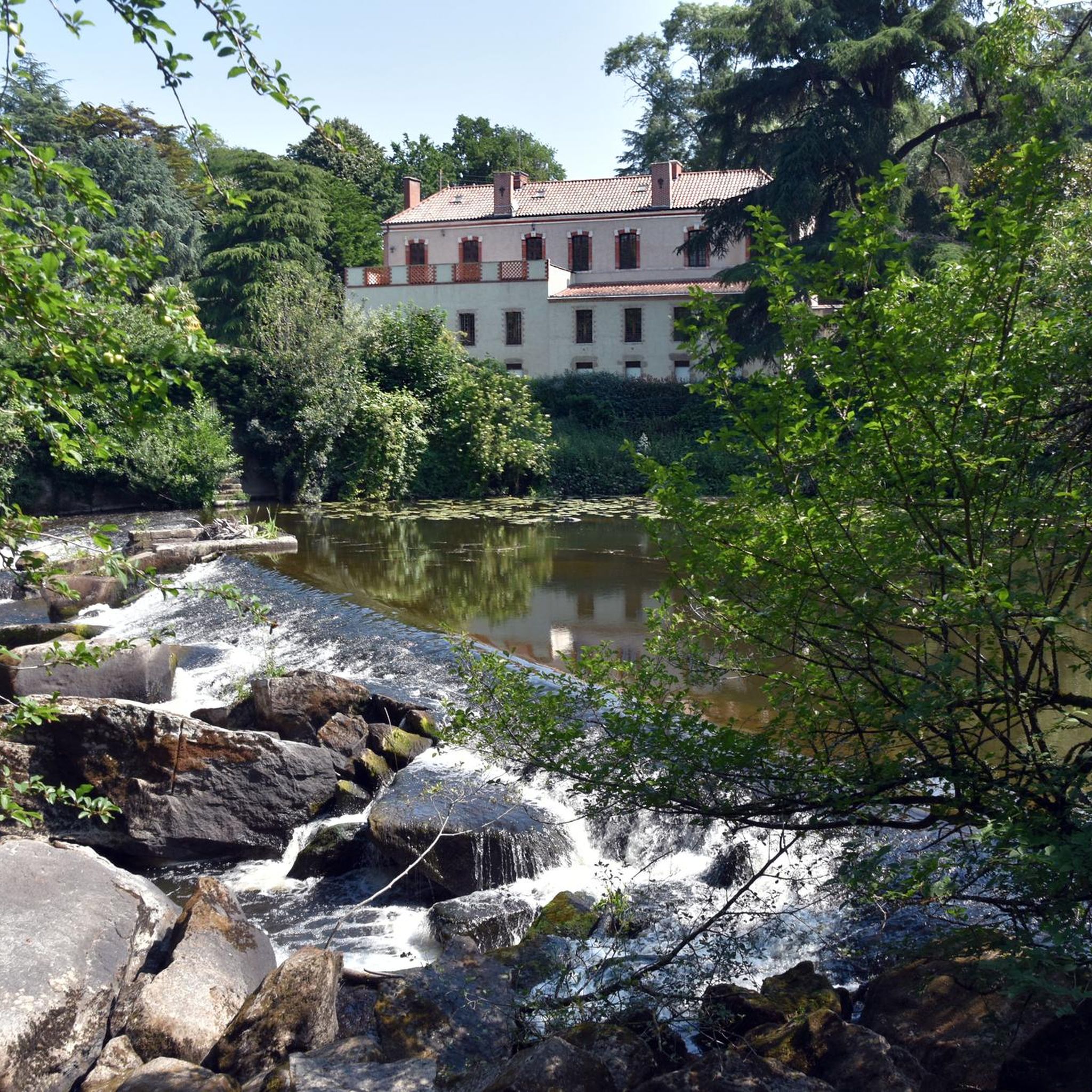
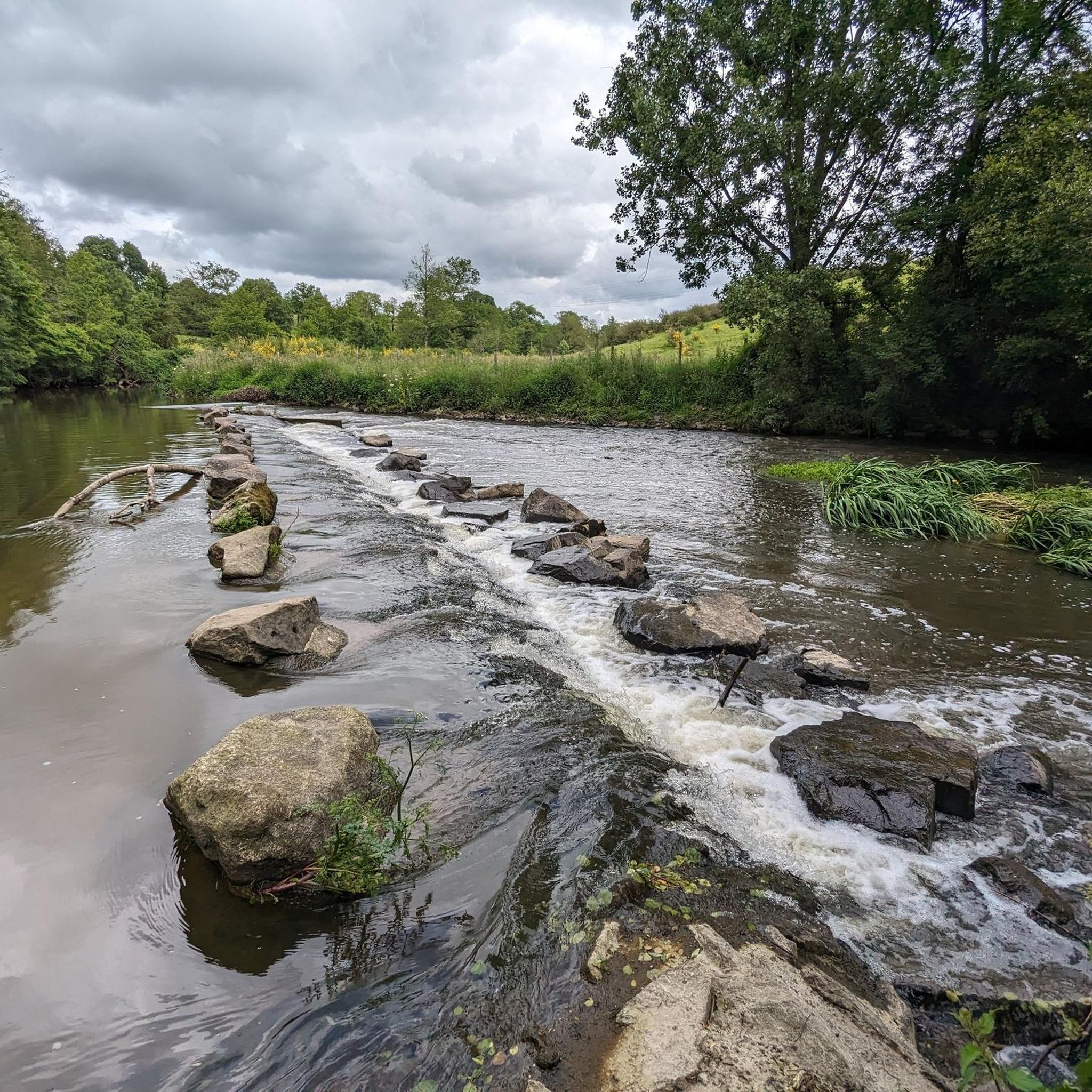
Hiking around Gétigné offers diverse landscapes shaped by the Moine and Sèvre Nantaise rivers, which carve out valleys and converge in the region. Trails often traverse the Vignoble Nantais, providing views of vineyards, and pass through areas like the Garenne de la Moine, known for its wetlands and forests. The terrain includes riverbanks, wooded paths, and countryside routes, with some historical points of interest.
Best hiking trails around Gétigné
- The most popular hiking route is La Sèvre Nantaise — loop…
Last updated: October 12, 2026
4.7
(56)
229
hikers
8.92km
02:20
60m
60m
Moderate hike. Good fitness required. Easily-accessible paths. Suitable for all skill levels.
4.9
(52)
316
hikers
5.47km
01:27
60m
60m
Easy hike. Great for any fitness level. Easily-accessible paths. Suitable for all skill levels.

4.4
(7)
41
hikers
10.2km
02:42
110m
110m
Moderate hike. Good fitness required. Easily-accessible paths. Suitable for all skill levels.
4.6
(7)
24
hikers
13.4km
03:33
130m
130m
Moderate hike. Good fitness required. Easily-accessible paths. Suitable for all skill levels.
4.5
(4)
20
hikers
11.5km
03:03
100m
100m
Moderate hike. Good fitness required. Easily-accessible paths. Suitable for all skill levels.
Get access to more routes and recommendations from other explorers.
Already have an account?
Our route recommendations are based on thousands of hikes, rides, and runs completed by other people on komoot.
Start today with a free account
Your next adventure awaits.

Tips from the Community

This temple, built on the Saint-Gilles hillside, has been listed as a Historic Monument since March 14, 1988. It owes its name to the friendship between the Cacault brothers and the sculptor François-Frédéric Lemot, initiators and creators of Clisson's Italianate architecture in the early 19th century. Pierre Cacault wanted to build a mausoleum in memory of his brother François, who died in Clisson on October 10, 1805, but he lacked sufficient financial means. ➢ It was François-Frédéric Lemot who helped his friend carry out his project. He purchased the former Saint-Gilles-et-Saint-Brice chapel and its outbuildings at the end of 1808. The buildings are part of the cemetery, which has long been used for the burial of parishioners from all over Clisson, except for La Trinité. ➢ Paul de Berthou states in his work "Clisson and its Monuments" that "...the church of St. Gilles and St. Brice had been large and beautiful, but a lord of Clisson had its proportions reduced because it overlooked the castle too closely and posed a danger to him in the event of a siege." ➢ The remodeled church includes two chapels forming arms of the cross, one dedicated to the Blessed Virgin and the other to St. John the Evangelist, whose brotherhood once sat on this site. A small bell tower, containing two bells, stands at the crossing of the transept. ➢ Pierre Cacault died on January 29, 1810. François-Frédéric Lemot took over the project and decided that the monument would be dedicated to the memory of the two brothers. In 1811, he acquired land on the Saint-Gilles hillside and commissioned the architect Mathurin Crucy to draw up the plans. ➢ The first project was inspired by Greek temples. Mr. Crucy proposed a plan representing a peripteral temple of the Doric order, without a base, with six columns on the façade, surmounted by a pediment. F.F. Lemot simplified the plan, retaining a "cella" and four Doric columns surmounted by a triangular pediment on the façade. This choice recalls the Temple of the Sybil in Tivoli and is found in other contemporary monuments (the Temple of Friendship in Belz, the memorial monument to the victims of Quiberon in Auray). ➢ The Temple of Friendship was built between 1812 and 1824 on the former foundations of the parish church of Saint Gilles. The side chapels were razed, their foundations later serving to build a small, asymmetrical transept. The old nave was demolished and the walls rebuilt in line with those of the choir, with the entrance door on the side of the current cemetery. ➢ It took several years before the roof was laid and the plastering completed (1824). ➢ This temple was to house the tombs of the Cacaults. Antoine Peccot (1766-1814), a friend of Mr. Crucy, the Cacaults, and F.F. Lemot, had proposed, before 1814, that a dedication be inscribed to the Cacault brothers. The poem invited passersby to remember the talents, virtues, and prodigal benefits of these two brothers. The inscription was never engraved. The tombs were never built because the heirs of the Cacault brothers did not authorize the transfer of the ashes of Pierre and François (buried in Nantes). .➢ On May 6, 1827, François-Frédéric Lemot died in Paris. His body, repatriated to Clisson on May 18, was buried in the Temple of Friendship. ➢ On September 17, 1829, this tomb was blessed by the vicar of Notre-Dame. From then on, the site was designated: "Lemot Chapel" or "Chapel of the Blessed Virgin." Permission was granted to sing the station mass there on St. Mark's Day, as well as on Rogation Day, and to say devotional low masses. ➢ The monument underwent restoration in 1995.
0
0
Clisson Castle has quite a story to tell: first an impregnable fortress overlooking the Sèvre, then a ducal residence, and finally a romantic ruin. In the 12th century, the powerful lordship of Clisson built this stone castle with highly elaborate defensive architectural systems: arrow slits, gun ports, and slits. A strategic point protecting the border of the Duchy of Brittany in the 15th century, it was abandoned by its owners from the second half of the 17th century onward before being burned down by Republican troops in 1793. But, beyond its grand history, this castle also has a more historic significance! In 1807, François-Frédéric Lemot, creator of the Garenne Lemot estate (a picturesque landscape located on the other side of the river), was captivated by these ruins and purchased it to turn it into an ornamental factory. The château was declared a historic monument in 1924, before being acquired by the Loire-Atlantique department in 1962. Today, visitors can visit it, take a guided tour, or simply experience its history. A stop on the Journey through the Vineyard, it's a stopover during the wine tourism tour of Nantes' wine country, featuring natural sites, heritage features, characterful villages, and unique cellars.
1
0

It spans the Sèvre Nantaise at a height of almost 30 metres, ensuring the passage of the Clisson Cholet railway line. The two roadways supported a wheat mill and a fulling mill, replaced by an electric plant in 1915.
1
0
Viewpoint over the Sèvre Nantaise and the village of Chevalier.
2
0
It spans the Sèvre to connect the communes of Gétigné (Loire Atlantique) and Cugand (Vendée) and provides a lovely view of the valley.
0
0

A historic monument, the Temple of Friendship was built on the St Gilles hillside between 1812 and 1824. It owes its name to the friendship between François and Pierre Cacault and the sculptor François-Frédéric Lemot, initiators and creators of the Italianate architecture of Clisson at the beginning of the 19th century. Pierre Cacault wanted to build a mausoleum in memory of his brother François who died in Clisson on 10 October 1805, but, not having sufficient financial means, it was Lemot who financed the project. Pierre died in 1810. Ultimately, the tombs of the two brothers were not built, because the Cacault heirs did not authorise the transfer of their ashes to the mausoleum. François-Frédéric Lemot was buried in this tomb on 18 May 1827. File produced in partnership with the association "Clisson Histoire et Patrimoine"
0
0
South Gate or CABAREAU Gate or CAHAREAU Gate or Vendée Gate 16th century Listed as a Historic Monument on December 21, 1984. Built between 1592 and 1596 as part of the last major fortification works of the walled city of Clisson, undertaken by Odet d’Avaugour (1549-1598), Count of Vertus and Goëlo, Lord of Clisson. It commanded access to the city from the South and Vendée. It was burned down in September 1793, during the destruction of Clisson. In the middle of the 19th century, noting the danger of crossing it, the municipality decided to move access to the city to the current location of Rue des Halles. Sheet produced in partnership with the association "Clisson Histoire et Patrimoine"
0
0

Quiet place for walking or running
0
0
Frequently Asked Questions
What types of landscapes can I expect to see while hiking in Gétigné?
Gétigné's hiking trails offer a diverse range of landscapes, primarily shaped by the Moine and Sèvre Nantaise rivers. You'll find picturesque river valleys, tranquil riverbanks, and wooded paths, especially in areas like the Garenne de la Moine. Many routes also traverse the
Vignoble Nantais, providing scenic views of vineyards. The terrain varies from easy strolls to more moderate treks, suitable for different ability levels.
Are there any easy hiking trails suitable for beginners or casual walkers in Gétigné?
Yes, Gétigné offers a good selection of easier trails. Out of nearly 40 routes, 14 are classified as easy. These trails are perfect for those looking for a relaxed walk without significant elevation changes. You can find options that follow the gentle curves of the Sèvre Nantaise or wind through the countryside.
What historical or cultural landmarks can I discover along the hiking routes?
Hiking in Gétigné often combines natural beauty with historical discoveries. You can encounter numerous old mills, such as Moulin-Neuf and Moulin du Pé de Vignard, which are testaments to the region's industrial past. Chapels like Sainte Anne also dot the landscape. A prominent attraction is the Domaine de la Garenne Lemot, a listed historical monument with neoclassical architecture and statues, offering panoramic views. Many routes also pass near the impressive Château de Clisson.
Are there any circular hiking routes available in Gétigné?
Yes, Gétigné features several excellent circular routes. For example, the La Sèvre Nantaise — loop from Clisson is a popular moderate 8.9 km trail that follows the river. Another option is the The Rousselin mill – Hucheloup Footbridge loop from La Saulnerie, which takes you past industrial heritage sites. These loops allow you to start and end at the same point, making planning easier.
What do other hikers say about the trails in Gétigné?
The hiking routes in Gétigné are highly regarded by the komoot community, holding an average rating of 4.5 stars from over 250 reviews. Hikers often praise the varied terrain, the beautiful river scenery, and the well-maintained paths that make exploring the region enjoyable.
Can I find trails that connect Gétigné with nearby towns like Clisson?
Absolutely. Gétigné is well-connected to its surroundings. For instance, the Valley Bridge – Château de Clisson loop from Gétigné is a moderate 13.7 km trail that leads through river valleys and past the historic Château de Clisson, offering a great way to explore both areas.
Are there any specific natural features or unique geological sites to look out for?
Beyond the rivers and vineyards, Gétigné boasts unique natural features. The
Garenne de la Moine
is a sensitive natural area with diverse wetlands and forests. You might also encounter theValley of the Three Provinces
, where the Sèvre Nantaise marks the boundary of three historical regions. Geologically,La Pierre de l'Écuelle
, or Rochers de Mélusine, near Saint-Crespin-sur-Moine, offers an interesting sight with its stacked rocks and local legends.What is the best time of year to go hiking in Gétigné?
Gétigné's hiking trails are generally accessible throughout the year. Spring and autumn offer pleasant temperatures and beautiful scenery, with blooming wildflowers or vibrant fall foliage. Summer is also popular, though it can be warmer, while winter provides a quieter, more secluded experience along the river valleys and through the vineyards.
Are there any long-distance hiking options or routes for more experienced hikers?
While Gétigné primarily offers moderate day hikes, some routes are longer and can be combined for extended treks. For example, the Valley Bridge – Garenne-Lemot Estate loop from Haute Gente is a moderate 16 km path, and the Valley Bridge – Garenne-Lemot Estate loop from Gétigné covers 13 km, providing more substantial distances for those seeking a longer challenge.
What kind of wildlife might I encounter on the trails?
The diverse ecosystems around Gétigné, particularly in areas like the Garenne de la Moine, support a variety of wildlife. You might spot numerous plant and animal species, including protected species, especially in the wetlands and forests along the rivers. Birdwatching is also a rewarding activity in these tranquil natural settings.
Are there opportunities for other outdoor activities besides hiking in Gétigné?
Yes, the rivers in Gétigné facilitate other outdoor pursuits. Canoeing on the Sèvre Nantaise is a popular way to explore the local flora, fauna, and historical mills from a different perspective. Horse riding and fishing are also available activities in the area, complementing the extensive hiking network.
Most popular attractions around Gétigné

Get inspired with the komoot mobile app


Explore more
Browse the best Hikes in other regions.
