Attractions and Places To See around Habère-Poche - Top 20
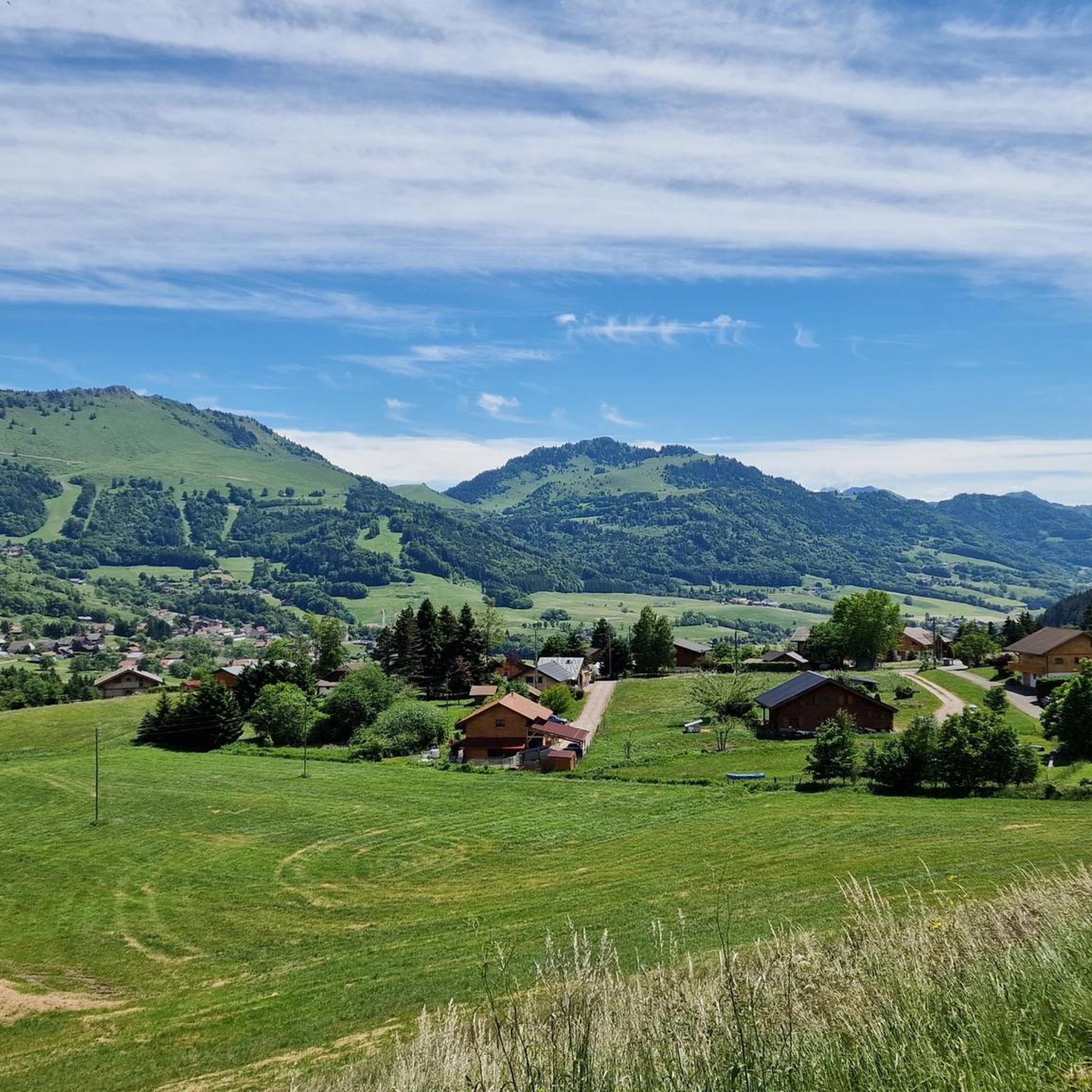
Best attractions and places to see around Habère-Poche include a blend of natural beauty and outdoor opportunities in the Haute-Savoie department of France. Situated in the Vallée Verte, the village is surrounded by peaks and mountain passes, offering a diverse landscape for exploration. The area provides access to numerous natural features and cultural insights, appealing to those seeking mountain experiences.
Best attractions and places to see around Habère-Poche
- The most popular attractions is Mount Forchat, a summit that offers almost panoramic views. An orientation sign helps identify surrounding features, and gliders can often be seen from this lookout point.
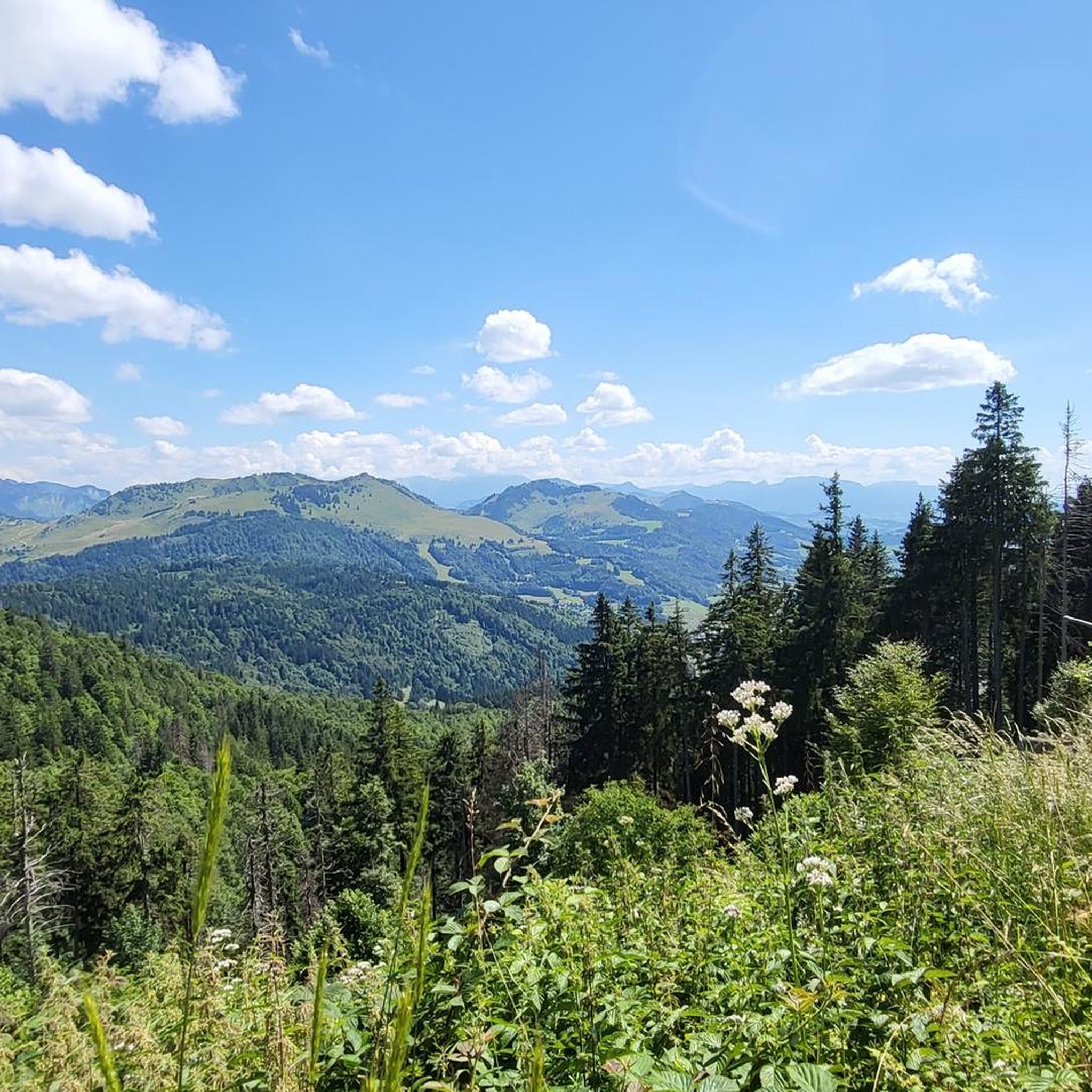
- Another must-see spot is Col de Cou, a mountain pass connecting the Vallée Verte to the Côte-en-Chablais region. It is known for its varied routes and gradients, including a challenging climb from Fessy.
- Visitors also love Jambaz Pass, a mountain pass with scenic landscapes. This pass has been part of the Tour de France route multiple times and offers views of the Rocher de la Motte.
- Habère-Poche is known for its mountain passes, summits, and religious buildings. The region offers a variety of attractions to see and explore, from natural viewpoints to historical sites.
- The attractions around Habère-Poche are appreciated by the komoot community. With over 160 upvotes and 140 photos, these spots are popular among explorers.
Last updated: July 6, 2026
Mount Forchat
Highlight • Summit
An orientation sign allows you to better find your way around the environment. With a bit of luck you can watch the gliders that took off from Ramble with the winch from here.
Translated by Google •
Tip by

Jambaz Pass
Highlight • Mountain Pass
Beautiful landscape.
More information: quaeldich.de/paesse/col-de-jambaz
Translated by Google •
Tip by

Sign up now to discover places like this
Get recommendations on the best single tracks, peaks, & plenty of other exciting outdoor places.
Sign up for free
Col de Cou
Highlight • Mountain Pass
Translated by Google •
Tip by

Saint Bruno Chapel
Highlight • Religious Site
Translated by Google •
Tip by

Pointe des Brasses
Highlight • Summit
Les Brasses is a toponym from a mountain pasture located above Viuz-en-Sallaz2. It could derive from the German Brache, which designates fallow or fallow land2,3, or from the Old German braka meaning “clearing”3. It is possible that it also derives from the Latin bracchium3 (“arm”), referring to the arms of the river, three of which have their source in Brasses: the Menoge, the Entreverges and Airets streams.
In June 2013, a cross made by students from the Viuz-en-Sallaz Catholic Automobile School was erected on its summit. Six meters high, it is made up of 33 metal cubes measuring 30 centimeters on each side, assembled on site and arranged in a spiral by the students themselves. She was blessed on July 7, 2013 by Mgr Boivineau, Bishop of Annecy.
Translated by Google •
Tip by

Sign up for free to discover even more attractions around Habère-Poche.
Sign up for free
Already have an account?
Start today with a free account
Your next adventure awaits.
Login or Signup
Popular around Habère-Poche
Other adventures around Habère-Poche

Tips from the Community


This chapel, dedicated to Saint Bruno, founder of the Carthusian Order, was built on the remains of the former convent church of the Carthusian monastery of Sainte-Marie de Vallon[1]. In 1543, the Carthusians of Vallon were forced to leave their monastery, which was dismantled[1]. When they regained possession of their property in 1607, they found only ruins of the old charterhouse. Only a few sections of the walls remained standing[1]. After building their fortified house in Génicot[2] on the right bank of the Brevon (now on the lake), they erected a chapel in the part of the old charterhouse, in homage to Saint Bruno and in memory of the monks who preceded them. Since the walls of the choir of their former convent church and those of the sacristy had not collapsed, a nave surmounted by a wooden vault was built in 1651[3]. In 1793, it was sold as national property[3]. Abandoned by its new owners, it then passed to the Gougain family, along with the entire property known as "La chèvre"[1]. In 1833, the Carthusians returned to work repairing the walls and vault, redoing the roof, and installing a bell tower. Bishop Pierre-Joseph Rey inaugurated the renovated chapel during the summer of 1836[3]. It received various donations, including from Converset David François Marie[citation needed]. In 1847, it was finally transferred to the churchyard[1]. Processions would go there to pray for rain or good weather; but Bishop Louis Rendu banned these events in 1852[citation needed]. In 1855, it was burned to the ground. A violent wind blew as the Abbey building burned and burning embers set it alight in turn[1]. Nothing new remained except the walls. M Chappaz undertook a collection throughout the parish and had repairs carried out during 1856: plaster vault, roof, bell tower, gallery, floor, altar[3]. On July 11, 1857, the renovated chapel was blessed.
1
0

Beautiful views into the depths and beyond.
2
0

The climb up the winding path to Chapelle Saint-Bruno is rewarded with breathtaking panoramic views of Lac de Vallon and the surrounding mountains. This historic chapel, perched on top of a hill, with its peaceful interior, is a place where you can enjoy a serene atmosphere. Don’t forget to take the time to soak up the breathtaking view and listen to the soothing sounds of nature.
1
0

The Col de Cou, at an altitude of 1,117 metres, takes you from the Vallée Verte to the Côte-en-Chablais region. Several roads lead there, which allows you to train by varying the routes and difficulties. The hardest climb is the one on the western slope from Fessy, with seven kilometres at an average of 7.5%.
1
0

Nice climb just too steep, about 5%, and not too busy.
0
0

It can blow hard up there! I recommend the path that goes down to La Tour from the east
0
1

The cross means summit of the Brasse mountain
1
0
Frequently Asked Questions
What natural features can I explore around Habère-Poche?
The region around Habère-Poche is rich in natural beauty. You can explore several mountain passes like Col de Cou, Jambaz Pass, and Col de Saxel, each offering unique landscapes. The dominant Mount Forchat provides panoramic views. Additionally, the Cascade de la Diomaz is a beautiful waterfall approximately 6 km away, and the Menoge River originates nearby at the Col des Moises.
What are the best viewpoints in the Habère-Poche area?
For breathtaking vistas, head to Mount Forchat, which offers almost panoramic views and an orientation sign to help identify surrounding features. Other excellent viewpoints include Col de Cou, Col de Saxel, and the historic Saint Bruno Chapel, which provides stunning views of Lac de Vallon and the surrounding mountains.
What hiking opportunities are available around Habère-Poche?
Habère-Poche is a fantastic base for hiking. You'll find a variety of trails, from moderate to difficult. Popular routes include the 'Encrenaz Pass – Mount Forchat loop from Col de Cou' and the 'Col du Feu – Mount Forchat loop from Col des Moises'. For more options, explore the 'Hiking around Habère-Poche' guide, which features numerous trails for all levels, including those with significant elevation gain. You can find detailed routes and information on the Hiking around Habère-Poche guide page.
Are there challenging hikes for experienced trekkers?
Yes, the region offers several challenging hikes. For instance, the 'Pointe de Chalune – Col de Foron loop from Lac de Vallon' and the 'Pointe de Miribel loop from Bogève' are rated as difficult. These routes often involve significant elevation changes and rugged terrain, providing a rewarding experience for seasoned hikers. More challenging mountaineering routes can be found in the Mountain Hikes around Habère-Poche guide.
Can I go cycling around Habère-Poche?
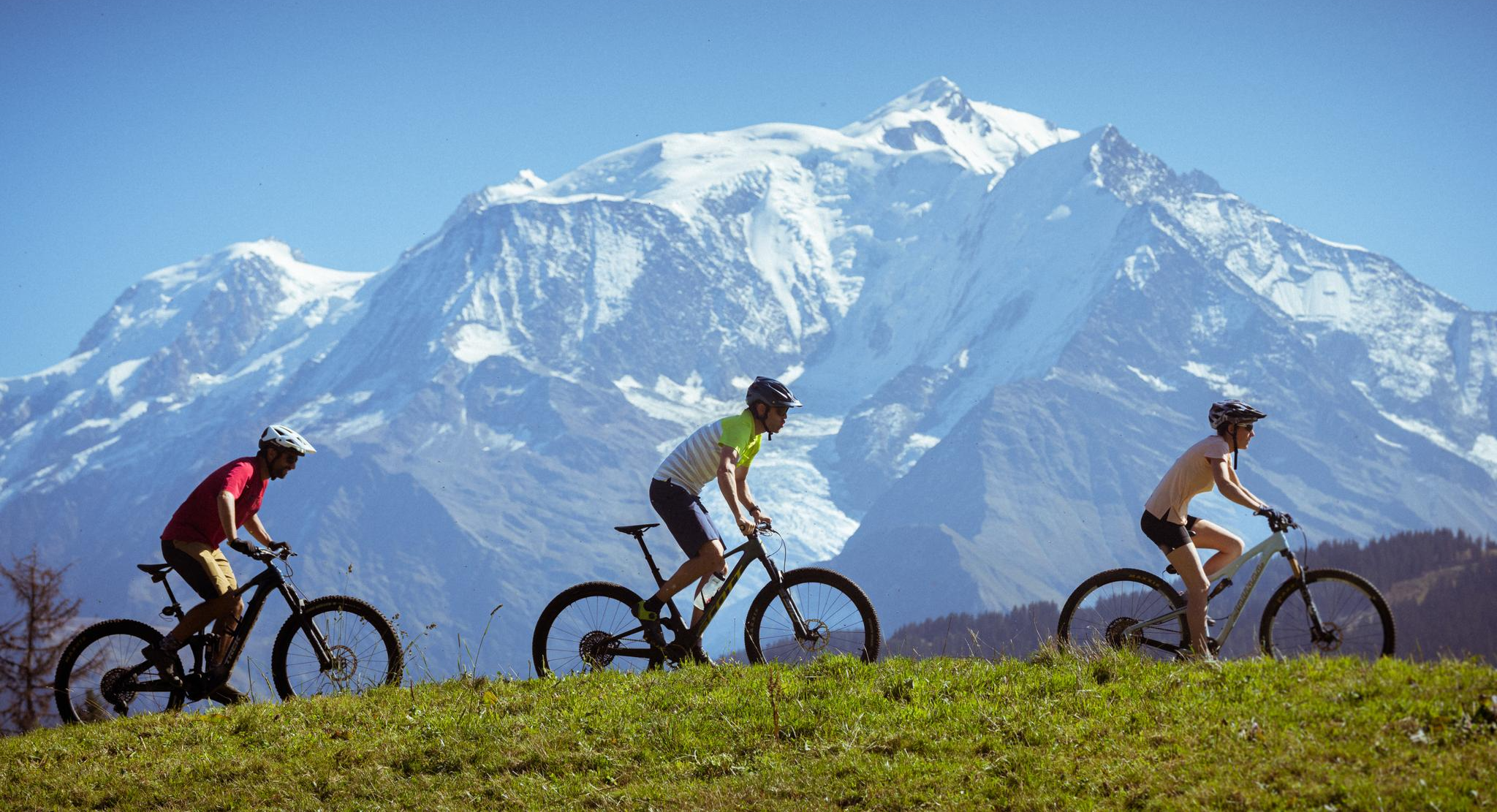
Absolutely! Habère-Poche and the Vallée Verte are popular for cycling. The area features numerous mountain passes that are frequently part of the Tour de France, such as Jambaz Pass. You can find various road cycling routes, including the 'Col de Saxel (944 m) – Lake view loop from Habère-Poche' or the 'Col de Cou – Col des Moises loop from Perrignier'. Additionally, the Les Habères station transforms into a VTT (mountain bike) park in the summer. Discover more routes on the Road Cycling Routes around Habère-Poche guide page.
What winter activities can I do in Habère-Poche?
Habère-Poche is a fantastic winter destination. The Les Habères Ski Resort offers 25 km of slopes for downhill skiing, connected to Bellevaux-Hirmentaz for a total of 50 km. The Plateau des Moises is renowned for cross-country skiing. Snowshoeing is also a popular activity, allowing you to explore the serene winter landscapes. For a unique experience, you can even enjoy a 'Soirée en Igloo' on the Plaine-Joux plateau.
Are there any historical or cultural sites to visit?
While primarily known for its natural beauty, Habère-Poche also offers cultural insights. The Saint Bruno Chapel is a historic religious building with a rich past and offers stunning views. You can also explore thematic discovery paths like 'L'appel de la montagne,' which traces the footsteps of local mountain figures, and the 'Circuit des meulières de la Corbière' for a glimpse into local heritage.
Are there family-friendly activities in Habère-Poche?
Yes, Habère-Poche is well-suited for families. The Les Habères Ski Resort is known for being family-friendly, offering slopes for all levels. In warmer months, the Plateau des Moises features four thematic discovery paths called 'Secrets de fées,' perfect for engaging younger visitors. A visit to the Moisés Farm can also be an enjoyable experience for children.
What do visitors particularly enjoy about the attractions near Habère-Poche?
Visitors frequently praise the panoramic views, especially from Mount Forchat, where an orientation sign helps identify the surrounding features. The varied routes and gradients of the mountain passes like Col de Cou are appreciated by cyclists. The peaceful atmosphere and breathtaking scenery at places like Saint Bruno Chapel are also highly valued by the komoot community.
What nearby towns or attractions are worth a day trip from Habère-Poche?
Several charming towns and attractions are within easy reach for a day trip. You can visit Thonon-les-Bains (approx. 12-13 km) on Lac Léman, known for its lakefront and the Jardins Du Château De Ripaille. Evian (approx. 17 km), another picturesque spa town on Lac Léman, and Yvoire (approx. 17 km), one of France's 'Most Beautiful Villages,' are also excellent choices. For more natural beauty, consider Abondance (approx. 20 km) or the stunning Lac d'Annecy (approx. 50 km).
Are there opportunities for gliding or unique aerial experiences?
Yes, Habère-Poche is known for its glider piloting school, offering introductory flights for those interested in experiencing the region from above. This provides a unique perspective of the Vallée Verte and its surrounding peaks.
When is the best time to visit Habère-Poche for outdoor activities?
The best time to visit depends on your preferred activities. For hiking, mountain biking, and exploring natural attractions, the spring, summer, and autumn months (roughly May to October) offer pleasant weather. For skiing, snowshoeing, and other winter sports, the season typically runs from December to March, when the Les Habères Ski Resort is fully operational and the landscape is covered in snow.
Most popular routes around Habère-Poche
Most popular attractions around Habère-Poche

Get inspired with the komoot mobile app


Explore more
Still not found the Highlight you’re looking for? See guides of the top attractions in other regions:
