Attractions and Places To See around Montpellier-De-Médillan - Top 20
Best attractions and places to see around Montpellier-De-Médillan include historical sites and natural features within this rural French commune in Charente-Maritime. The area serves as a base for exploring the Saintonge region and the Atlantic coast. Montpellier-De-Médillan is characterized by its rural environment and proximity to the Gironde estuary, offering a blend of cultural heritage and natural landscapes. The commune itself features historical architecture, with numerous other attractions located within a short distance.
Best attractions and places to see around…
Last updated: July 7, 2026
You can spot a church by its steeple,
Highlight • Other
Translated by Google •
Tip by

Notre-Dame Church of Corme-Écluse
Highlight • Religious Site
Translated by Google •
Tip by
Sign up now to discover places like this
Get recommendations on the best single tracks, peaks, & plenty of other exciting outdoor places.
Sign up for free
Saint-Romain Church of Saint-Romain-de-Benet
Highlight • Religious Site
Translated by Google •
Tip by
A crypt built on an ancient underground refuge,
Highlight • Other
Translated by Google •
Tip by
The Maison Forte of Pisany
Highlight • Castle
* But in the dictionary of fortified castles, it is noted: The strong house.
Translated by Google •
Tip by
Sign up for free to discover even more attractions around Montpellier-De-Médillan.
Sign up for free
Already have an account?
Start today with a free account
Your next adventure awaits.
Login or Signup


Tips from the Community

The church suffered little damage during the Hundred Years' War and the Wars of Religion. From the end of the 18th century, maintenance work was undertaken mainly inside the church. In 1822, the reconstruction of the bell tower framework began, followed in 1852 by the restoration of the west facade. A further restoration took place around 1860, and the sacristy was enlarged by the construction of a semicircular annex extending the Romanesque apse. Beginning in 1880, a roof repair campaign began, and a new belfry was installed in the bell tower. From 1890 to 1900, the cemetery surrounding the church was moved to the "Fief des Rentes," and the former burial site was transformed into a public square. Starting in 1926, the choir roof was replaced and the bell tower was made watertight. In 1971, the work program included the renovation of the exterior walls, the demolition of the false apse and the sacristy that concealed the apse of the south transept. In 1990, the main door was replaced with oak leaves, the stones were repointed, and the collapsed arch keystone was reinstalled. In the 2000s, the municipality repaired the mechanism of the two belfry bells, and the building was illuminated and maintenance work was carried out.
0
0
The Church of Our Lady of Corme-Écluse, the seat of a former Benedictine priory of the Abbey of the Ladies of Saintes, was donated around 1104 by Ramnulfus Focaudi (Bishop of Saintes between 1083 and 1106) to the Royal Abbey of Saint-Jean-d'Angély "so that he might always enjoy it and possess it in perpetuity." This abbey was thus responsible for the reconstruction of the sanctuary in the mid-12th century in the Romanesque style. A plaque affixed to the south wall of the nave contains a few historical snippets, still legible: 1200, the Benedictines completed the construction and adorned the church with an oak statue of the Blessed Virgin; 1327, the Abbot of Saint-Jean-d'Angely and an envoy of Pope John XXII prayed before the venerated image; In 1628, a pilgrimage was established to venerate the statue; In 1733, the statue was mutilated. The desecrator was punished. The church's plan is a slightly asymmetrical Latin cross (the north arm of the transept is longer than the south arm). The nave consists of two bays covered by pointed barrel vaults. It is lit by three symbolic windows rebuilt in the 13th century. A transverse arch separates the nave from the transept, whose crossing, under the bell tower, is covered by a cupola on squinches. The south arm of the transept opens onto an apse with a semi-dome vault. However, the north arm, rebuilt in the 17th century in the Romanesque style, is slightly longer than the south arm, and is designed on a rectangular plan without an apse. This arm has a portal with columns and toric rollers. After passing the triumphal arch, the choir begins with a straight bay covered with a semi-circular barrel vault and ends with a semi-circular vaulted arch.
0
0
Upon arriving in Corme-Écluse, it's only natural to stop at the church square, the heart of the Cormillon village. On this square, facing the town hall, stands the Church of Notre-Dame. Walk around it to admire the architectural details characteristic of the 12th-century Saintonge Romanesque style. The church was the seat of a former Benedictine priory of the Abbey of the Ladies of Saintes. The sculpted decoration of the Abbey of the Ladies certainly inspired that of the church of Corme-Écluse. This was often the case; mother abbeys were taken as examples by the priories that depended on them in terms of architecture and sculpture. In some cases, it is even assumed that the sponsors, artists, or craftsmen were the same people or at least from the same circle, sometimes descendants. Since the 13th century, the monument has been the destination of numerous pilgrimages that continue to this day. The pilgrimage takes place on the third Sunday of July in the convent gardens, followed by a procession to the Church of Our Lady.
0
0
Of the first church built in the 12th century, only the apse, the transept, the Gothic chapels and the bell tower remain, which is one of the best preserved and most elegant in Saintonge. It rises on three square floors supported by a powerful stump, and each face is decorated with a slender arcade with five arches supported by columns with capitals. The upper floor is pierced on each side by three elegant semi-circular twin bays. Of the church, entrusted to the Chaise-Dieu Abbey in 1084 by Robert de Pons, only the eastern part remains, the nave having disappeared during the Wars of Religion (16th century). Inside, note the dome divided into eight compartments as well as very beautiful capitals in the original sanctuary, decorated with acanthus leaves and palmettes. An ossuary crypt, from the end of the 12th or beginning of the 13th century, located under the chapel, extends the northern arm of the transept. It is accessible by a small staircase. It is covered with a primitive ribbed cross. A stone bench goes around the crypt about 50 centimeters from the current floor. Open on request at the town hall.
0
0

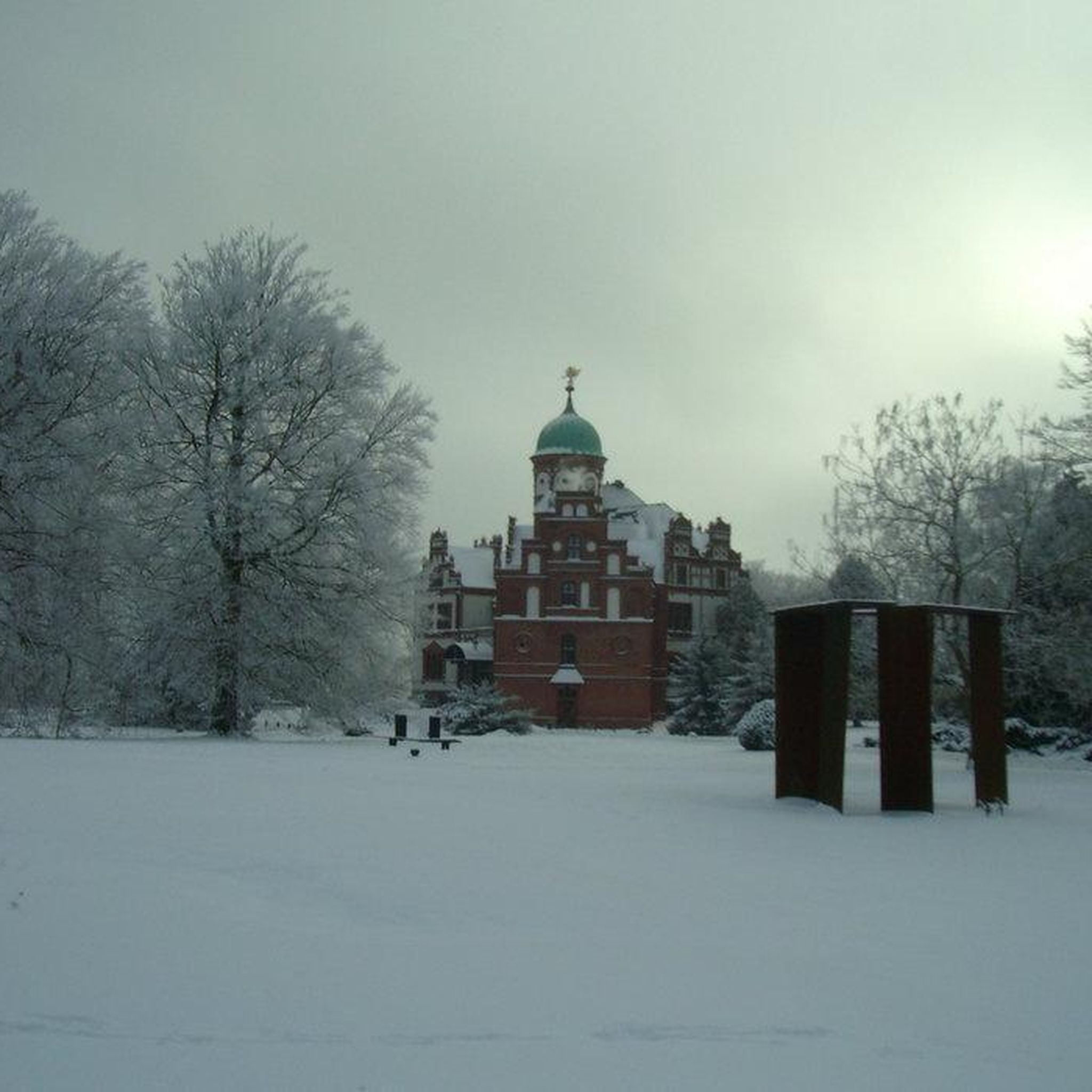
This rather atypical-looking church is the result of several reconstruction campaigns, which spanned nearly eight centuries from the 12th to the beginning of the 20th century. The characteristic element lies mainly in its line of domes, built in 1901, and left visible. Built in cement, they give the building a false oriental air.
0
0

Huge Church of St Romain de Benet!
0
0
This sanctuary undoubtedly had to suffer depredations during the various conflicts that bloodied Saintonge, as evidenced by the various reconstruction campaigns, which make the building a synthesis of Saintonge Romanesque and late Gothic styles. The watchtower and machicolations of the southern transept bear witness to the wars of religion, which were particularly violent in the region. A crypt built on an old underground refuge, perhaps of Celtic origin, was rediscovered in 1976. The complex architecture of the Saint-Martin church bears witness to numerous alterations over the centuries. The oldest parts of this former Casadean possession seem to date back to the 12th century, a period which saw the flowering of many Romanesque churches in the Saintonge countryside. The facade, high and slender, consists of two horizontal registers and is crowned with a sharp gable, which adds to its monumentality. The lower part consists of a single arched portal, with four bare arches (the keystones having been redone in 1895) supported by small columns with capitals decorated with interlacing, sculpted faces and birds drinking from the same chalice. , or on the contrary turning away from each other. The upper part is made up of a central bay with three arches, framed by two blind arcades, separated by a series of finely worked small columns mounted on a cornice and a fluted base and ending in candles. The transition between this floor and the gable is formed by a series of modillions representing animals whose names the sculptor transcribed into Latin on the edge of the tablets (Leopardus, Colube) as well as a curious character sticking out his tongue, illustration of the character willingly facetious of the "ymagiers" of the Middle Ages. The nave is made up of four bays, covered with a basket-handle vault. A series of columns with capitals devoid of any ornamentation once carried the beams supporting the primitive barrel vault, which has now disappeared. Ample broken barrel arcades punctuate its side elevations. Transept and choir have been considerably redesigned. If the structure of the transept and the primitive pre-choir are found again, with their Romanesque capitals and their barrel vaults, the whole has been "enveloped" by Gothic additions, forcing the masonry of this part of the building to be redone. church. In fact, the square of the transept has the particularity of being surrounded by dissimilar pillars, carrying roughly assembled arches. These transformations date from 1488, the year in which a report mentions the construction of "d'ung arseau soulz the tower of the bell tower of the said place". The vast Gothic sanctuary “doubles” the Romanesque parts. It is made up of a choir and two side chapels, all covered with ribbed vaults, which fall on culs-de-lampe representing enigmatic birds and human heads. Large ogival bays, where trilobes and quatrefoils mingle, flood this part of the building with light. A gilded wooden altarpiece, surrounded by two Louis XV style credenzas, take place in the choir and the adjacent chapels. The central motif is "The Lamb of the Apocalypse" caught in a radiant background. This set, restored by the Beaux-Arts in 1975, was designed for the Abbaye aux Dames de Saintes. The dome of the medieval extension of the crypt. The entrance to the crypt is at the foot of the high altar. The latter was rediscovered in 1976 by the priest at the time, D.Héraud. Entirely carved into the rock, it seems to have been built in the 5th century, perhaps on an underground refuge of Celtic origin. Enlarged in the 12th century, it served for a long time as an ossuary. Outside, the square bell tower rises at the crossroads of the transept, where a dome on pendentives has been fitted. Built in the 14th century, it is flanked by a "pine cone" staircase turret. Traces of fortifications (watchtower and battlements), but also of fire, testify to the fights of the wars of religion in the 16th century. Church open daily.
0
0
* On road maps and city plans, the construction is called: The castle. * But in the dictionary of fortified castles, it is noted: The strong house. Doubt is therefore allowed but I prefer the wording of the dictionary "La Maison Forte" The history of the stronghold: * In the 12th century, archaeologists assume the construction of a small fortified castle. * In the 15th century, the site became the property of the President of the Parliament of Bordeaux. * At the end of the 15th century, the "castle" was modernized. * In the 16th century, during the Wars of Religion, the Sainte Barbe chapel was destroyed. * At the beginning of the 18th century, the "castle" was sold to Charles-Auguste Bessier, advisor to the King * In the middle of the 18th century, buildings and land belonged to Jean-Charles de Senecterre who did not maintain the buildings much. * In 1784, the building was partially destroyed damaged by a violent storm * Around 1792, the revolutionaries requisition the ruins. They are sold as national property. * In the 21st century, the discovery of the outside from the road is open and free. Visiting the interior is prohibited.
0
1
Frequently Asked Questions
What historical and architectural sites can I explore in and around Montpellier-De-Médillan?
Montpellier-De-Médillan itself features the imposing Church of St. Martin, with foundations dating back to the eleventh century and showcasing Romanesque and Gothic elements. Nearby, you can visit the Saint-Romain Church of Saint-Romain-de-Benet, known for its distinct cupolas, or the Notre-Dame Church of Corme-Écluse, a 12th-century Saintonge Romanesque style church that was once a Benedictine priory. The crypt built on an ancient underground refuge is another unique historical site. For a glimpse into medieval fortifications, consider visiting The Maison Forte of Pisany.
Are there opportunities for hiking near Montpellier-De-Médillan?
Yes, the rural environment around Montpellier-De-Médillan offers several hiking opportunities. You can find various trails, including moderate routes like the "Remarkable Oak Tree loop from Charente-Maritime" (10.9 km) or the "Saint-Pierre Church of Cozes loop from Cozes" (10.2 km). For more options and detailed route information, explore the Hiking around Montpellier-De-Médillan guide.
What natural features and viewpoints can I discover in the area?
The region is characterized by its rich hydrographic landscape and proximity to the Gironde estuary, about 20 kilometers away. While Montpellier-De-Médillan itself is rural, nearby natural attractions include several forests such as Forêt de Pons (16km) and Forêt de Suzac (19km), as well as capes like Pointe de Suzac (20km). These areas offer opportunities to enjoy the natural beauty of the Saintonge region.
What are some family-friendly activities or attractions near Montpellier-De-Médillan?
Many of the historical churches, such as the Saint-Romain Church of Saint-Romain-de-Benet and the Notre-Dame Church of Corme-Écluse, are considered family-friendly and offer an educational experience. For outdoor family fun, consider exploring the nearby forests or taking an easy walking route. The region's small heritage and tranquil environment are suitable for families looking for a peaceful getaway.
Can I find cycling or mountain biking routes around Montpellier-De-Médillan?
Absolutely! The area is well-suited for cycling. You can find gravel biking routes like the "Boulevard du Marais – View of the La Roche cliff loop from Cozes" (45.5 km, moderate) or mountain biking trails such as the "Super singles start! – Trails and Singletracks Loop loop from La Combe à Chevalier" (33 km, moderate). For a comprehensive list of routes, check out the Gravel biking around Montpellier-De-Médillan and MTB Trails around Montpellier-De-Médillan guides.
What are some notable historic towns I can visit as a day trip from Montpellier-De-Médillan?
Several historic towns are within easy reach. Saintes, about 15 km away, boasts a Roman amphitheater and the Basilique St Eutrope. Pons, approximately 16 km distant, features a castle tower and the ancient Hôpital des Pèlerins. You could also visit Talmont-sur-Gironde (17 km), recognized as one of France's "Most Beautiful Villages" with its impressive Church Sainte-Radegonde, or the spa town of Jonzac (32 km) with its small castle.
Are there any coastal attractions or beaches nearby?
Yes, Montpellier-De-Médillan is conveniently located for accessing the Atlantic coast. Meschers-sur-Gironde, roughly 18 km away, offers beaches and a rocky coast. The popular seaside resort of Royan is about 22 km distant, providing more beaches and a pleasant promenade for visitors.
What is the best time of year to visit Montpellier-De-Médillan and its surrounding attractions?
The region, being in Charente-Maritime, generally enjoys a mild climate. Spring and early autumn are ideal for exploring historical sites and enjoying outdoor activities like hiking and cycling, with pleasant temperatures and fewer crowds. Summer is perfect for visiting the nearby coastal areas and beaches, though it can be busier.
Are there any gardens or abbeys worth visiting near Montpellier-De-Médillan?
Yes, for those interested in gardens and historical religious sites, you can visit La Roche Courbon, which features remarkable gardens about 21 km away. Another option is Parcs et jardins du château de Beaulon, located around 23 km from the commune. The Abbaye de Fontdouce, near Saint-Bris-des-Bois, is an abbey approximately 27 km away that offers a glimpse into the region's monastic history.
What do visitors particularly enjoy about the attractions around Montpellier-De-Médillan?
Visitors appreciate the blend of historical heritage and natural landscapes. The unique architecture of churches like the Saint-Romain Church of Saint-Romain-de-Benet, with its distinct cupolas, and the well-preserved bell tower of the church mentioned in "You can spot a church by its steeple" are often highlighted. The tranquil rural setting and the opportunity to explore centuries of history are also highly valued.
Are there dog-friendly walking routes or areas near Montpellier-De-Médillan?
While specific dog-friendly trails are not detailed in the provided data, the general rural environment and numerous forests in the surrounding area, such as Forêt de Pons and Forêt de Suzac, typically offer ample opportunities for dog walking. It's always advisable to keep dogs on a leash and check local regulations for specific sites.
Most popular routes around Montpellier-De-Médillan

Get inspired with the komoot mobile app


Explore more
Still not found the Highlight you’re looking for? See guides of the top attractions in other regions:
