The best cycling routes around Montpellier-De-Médillan
4.5
(45)
202
riders
79
rides
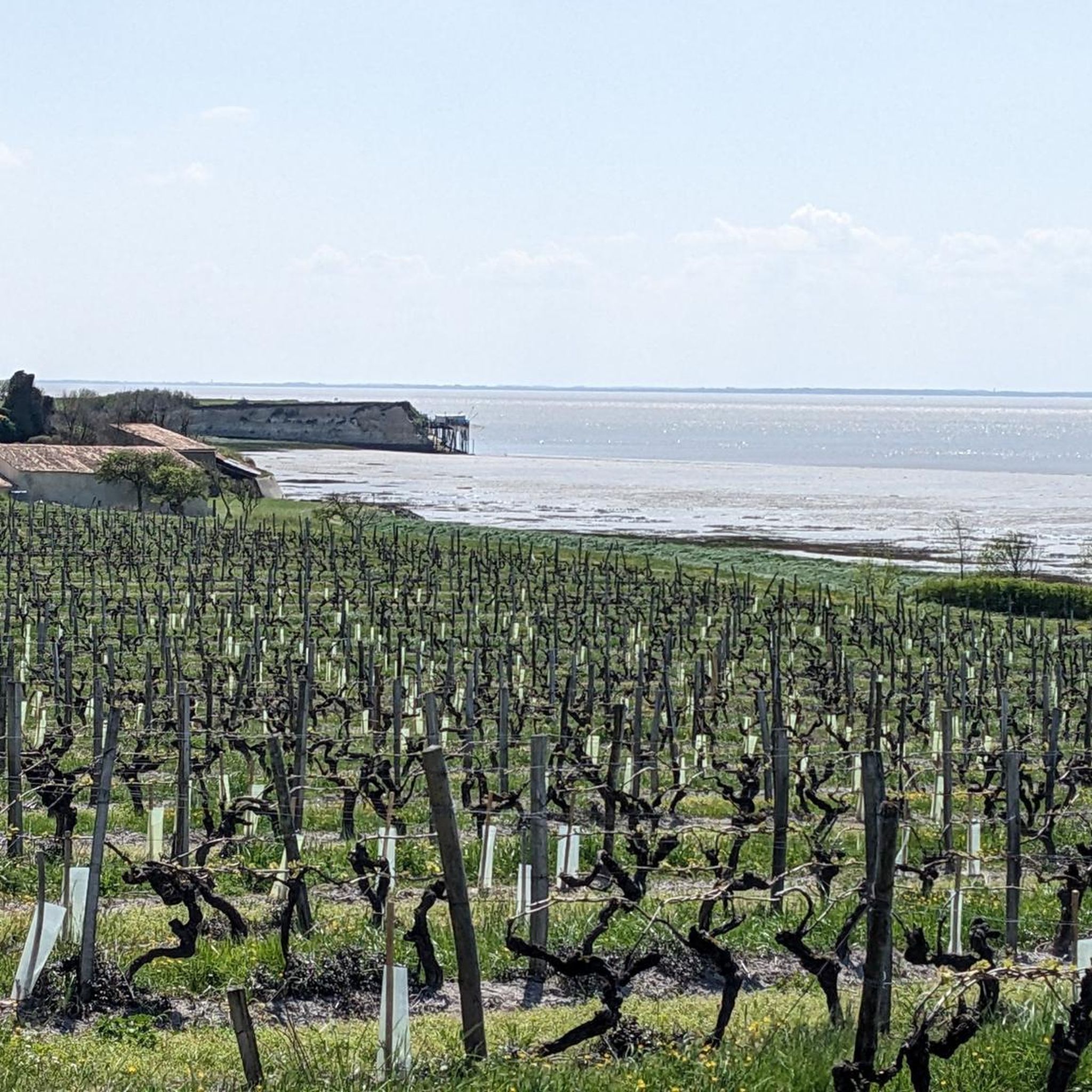
Touring cycling routes around Montpellier-De-Médillan traverse a rural landscape characterized by its hydrographic richness and gently undulating terrain. The area, part of the Saintonge region, features elevations ranging from 16m to 42m, making it generally favorable for cycling. Routes often lead through agricultural lands, past vineyards, and towards the Gironde estuary. This environment offers a tranquil setting for exploring local flora and fauna.
Best touring cycling routes around Montpellier-De-Médillan
- The most popular touring cycling route is Loop to visit 3…
Last updated: July 11, 2026
4.0
(1)
2
riders
18.8km
01:04
60m
60m
Easy bike ride. Great for any fitness level. Mostly paved surfaces. Suitable for all skill levels.
4
riders
45.5km
02:39
230m
230m
Moderate bike ride. Good fitness required. Mostly paved surfaces. Suitable for all skill levels.

Sign up for free
3
riders
63.4km
03:51
360m
360m
Moderate bike ride. Good fitness required. Mostly paved surfaces. Suitable for all skill levels.
4.0
(2)
3
riders
29.5km
01:41
110m
110m
Easy bike ride. Great for any fitness level. Mostly paved surfaces. Suitable for all skill levels.
4.0
(2)
3
riders
29.9km
01:44
100m
100m
Easy bike ride. Great for any fitness level. Mostly paved surfaces. Suitable for all skill levels.
Get access to more routes and recommendations from other explorers.
Sign up for free
Already have an account?
Our route recommendations are based on thousands of hikes, rides, and runs completed by other people on komoot.
Start today with a free account
Your next adventure awaits.
Login or Signup



Tips from the Community

Very nice walk or bike ride
0
0

Very beautiful Romanesque church and small port.
0
0

Sometimes the church is open.
0
0
Bronze and ceramic sculptures to browse and purchase
0
0

A small town lying along the Gironde estuary, between Barzan and Mortagne-sur-Gironde, it is above all famous for its fishing port, which was the "French capital of caviar" for much of the 20th century: in the mid-1950s, between three and five tonnes of this luxury commodity were still being produced, exported worldwide. However, sturgeon fishing was banned in 1982 to protect the species; now, "Gironde caviar" is obtained from aquaculture farms: nearly twelve tonnes of caviar are produced each year in the region. At the gateway to the great marshes on the north bank of the Gironde, it is now a tourist and agricultural town.
0
0

The choir, narrower than the nave, extends over two bays bounded by pointed arches supported by columns with smooth capitals. The apse, with its pure lines and semi-dome vault, has its perimeter adorned with five Romanesque arches with small columns. Double columns separate three arched windows similar to those in the choir. A few specifically Romanesque capitals, apart from those in the square, are noteworthy in this otherwise very interesting church: a head studded with birds, a child teasing a large monster's head, etc. The bell, dated 1583, has been listed in the Historical Furniture. At the end of the right transept, a large marble plaque details the numerous benevolent deeds of "a virtuous man who has been buried in the church since 1782" and who had forbidden in his will that his name be inscribed on his tomb. As the church also bears a coat of arms, that of Guy de Monconseil, who died at that time, it is not impossible to unravel the mystery of this anonymity. In 1877, a Marquis de Monconseil, among other charitable works, founded a large hospice in Tesson where the poor were received. Near the church, on the site of the old cemetery, stands a beautiful 15th-century hosanna cross.
0
0
The church of St. Gregory of Tesson dates, in its core, from the 12th and perhaps the 11th century, but what remains of the visible parts dates from the 13th century, with alterations in the 14th and 15th centuries. The current bell tower was built around 1880 in a Romanesque-Gothic style, where the abundance of pinnacles, awning windows, canted corners, and balustrades replace the absent archaeological interest. It rises on the side of the nave, in the west corner of the left transept. This building, dedicated to Saint Gregory, is built on a classical plan, with a single nave, a transept with apses, a choir, and a semicircular apse. The façade, in pure Saintonge style and with its beautiful lines, includes a vast semicircular portal flanked by two blind bays, a gallery on the first floor, and a gable. The gallery arches no longer exist; When the gable was built in the 18th century, they were removed. This façade, framed by tall, separate columns, is unfortunately obstructed, like too many churches today, by trees planted at the time of the suppression of cemeteries. These trees now obscure, here a façade, there an apse, elsewhere an interesting detail. Municipalities, aware of the honor of having such works of art on their land, should not only maintain them, but also clear them and strive to highlight them. The five arches of the portal, simply adorned with a string of diamond points, rest on columns raised on a bench. Above, unarced columns, single or double, surmounted by crocketed capitals, have very wide abacuses that form as many consoles. At each end of the solid gable wall, topped by a cross with an escutcheon, stands a statue. One did not escape mutilation. The nave has two vaulted bays with crossed ogival arches with three tori which, with the formerets, rest on two strong columns and two smaller ones topped with crocketed or foliate capitals. The smaller ones support lateral arches, each framing a semicircular window. At the top of the walls, curious little oculi of an unusual design also open—a rare detail in Saintonge; one is shaped like a crescent and fits within a circumference; another imitates a four-leaf clover. These openings were added at the time of the vaulting's restoration, that is, in the 14th century. In the square of the transept, four blocks of eight columns are connected by pointed arches. This square, now vaulted like the bays of the nave, was originally covered by a dome surmounted by the old bell tower, destroyed during the war against the English. Each side of this bell tower was adorned with two round-arched windows with stringcourses. The base of the first floor is still visible. The voluminous columns that border the square transept are remarkable. The columns of varying sizes all have capitals whose ornamentation of acanthus leaves or beaded garlands extends onto the flats of the pilasters in a frieze form. This very fine and meticulous decoration produces, despite numerous mutilations, a great artistic effect. The very deep transept gives the whole the shape of a Greek cross. The transepts, vaulted in a pointed barrel, are illuminated by round-arched windows. The apse of the one on the left features two curious small capitals that surmount the small columns of the entrance arch. Their large, well-crafted abacuses extend into a beautifully sculpted cordon around the entire half-circumference and extend into a miter, supporting the base of the semi-domed vault. This apse is externally adorned with four groups of two slender, twin columns forming light buttresses.
0
0
The church of Notre-Dame in Rioux was built in the second half of the 12th century (around 1160) on the foundations of an older and smaller sanctuary, of which some traces remain in the antechoir. The church of Saint-Eutrope in Saintes (consecrated in 1096) served as a model for the builders of Rioux. It underwent numerous and significant modifications over the following centuries, particularly in the 13th and 15th centuries. The nave, the western portal, and the apse date from the early and second half of the 12th century. The south side chapel and its portal date from the second half of the 12th century. The church originally had a bell tower above the fourth bay of the nave. Strong columns attached to pilasters attest to this original purpose. The north side chapels, former seigneurial chapels, and the north exterior door date from the late 15th and early 16th centuries. They were built by Baron de Rioux. The gable of the western façade was pierced with a round opening and topped by a square bell tower with faces adorned with twin trefoiled windows in the 15th century. The 1583 bell was replaced in 1867 by a 611 kg bell cast by Master Amédée Bollée. The nave has a lowered barrel vault in 1860. It has three bays separated by strong half-columns backed by slightly projecting pilasters. Their transoms receive the projections of large pointed arches, each framing a small, very narrow Romanesque window. The first bay houses a small gallery surmounting a porch and built between the two large masonry blocks supporting the bell tower. This bay has a ribbed vault with a large bell hole in the center. Two double chapels, to the left and right, form the transept. They connect to the nave and the choir through large pointed bays; ribbed vaults cover them. On the south arm of the transept, a second Romanesque doorway opens, on the west side, with arches decorated with stringcourses. The semicircular apse, separated from the choir by an arch resting on two columns with capitals, has a half-dome ceiling and is lit by five semicircular windows. Columns rising from the ground separate them. The upper part of the columns is broken in a zigzag pattern and they seem to buckle under a weight that overwhelms them. The columns are topped with capitals carved with acanthus leaves, on which lowered arches rest. Each corner of the windows is adorned with a small column. Two stringcourses decorated with small opposing triangles run around the apse. One runs at the height of the capitals' abacuses, the other highlights the base of the windows. In the nave and the south chapel, there are funerary urns from the 16th, 17th, and 18th centuries with coats of arms, bearing the arms of the Beaumont family and the Marquis de Monconseil, Lord of Rioux and Tesson. There once existed a crypt beneath the church. It was the object of special veneration, giving rise to an annual pilgrimage to Saint Venant (Abbot of Tours in the 5th century), venerated as a healer of the crippled. Miraculous cures were performed there. Following disturbances, this crypt was reportedly walled up around 1787. Legend has it that a considerable number of crutches were suspended from the ceiling. Excavations carried out in 1939 led to the discovery beneath the south chapel of an ossuary extensively remodeled in the 16th century, but there is no evidence that this ossuary was the pilgrimage crypt. The Notre-Dame de Rioux church has been listed as a historic monument since May 22, 1903.
0
0
Frequently Asked Questions
What kind of terrain can I expect on touring cycling routes around Montpellier-de-Médillan?
The terrain around Montpellier-de-Médillan is generally gently undulating, with elevations ranging from 16m to 42m. You'll primarily cycle through rural landscapes, agricultural lands, and vineyards, often encountering a rich hydrographic environment with creeks and small ponds. Some routes may lead towards the Gironde estuary.
How many touring cycling routes are available in Montpellier-de-Médillan?
There are over 80 touring cycling routes available around Montpellier-de-Médillan, catering to various fitness levels. This includes approximately 45 easy routes, 30 moderate routes, and 5 more challenging excursions.
Are there easy touring cycling routes suitable for beginners or families?
Yes, Montpellier-de-Médillan offers numerous easy routes perfect for beginners or families. An example is the Saint-André Church loop from Saint-André-de-Lidon, an 18.8 km path that provides a relaxed ride through the rural surroundings. Another great option is the Saint-Léonard Church – The Maison Forte of Pisany loop from Thaims, which is 30.3 km and also considered easy.
What are some notable landmarks or attractions I can see along the touring cycling routes?
Many routes offer glimpses of local heritage and natural beauty. You might pass by historical churches such as the Saint-Romain Church of Saint-Romain-de-Benet or the Notre-Dame Church of Corme-Écluse. The Maison Forte of Pisany is another interesting historical site you could encounter. The area's hydrographic richness also means you'll enjoy scenic views of creeks and ponds.
Are there any circular touring cycling routes in the area?
Yes, many of the touring cycling routes around Montpellier-de-Médillan are designed as loops, allowing you to start and end in the same location. For example, the Loop to visit 3 churches from Pisany is a moderate 38.5 km circular route that takes you through local heritage. Another is the Saint-Pierre Church of Gémozac – Donjon de Pons loop from Cravans, a 45.5 km moderate trail.
What do other touring cyclists enjoy most about cycling in Montpellier-de-Médillan?
The touring cycling routes in Montpellier-de-Médillan are highly rated by the komoot community, with an average score of 4.2 stars from over 40 reviews. Cyclists often praise the tranquil rural environment, the variety of routes through agricultural lands and vineyards, and the opportunity to explore local historical sites and natural features.
What is the best time of year for touring cycling in Montpellier-de-Médillan?
The region's climate generally favors cycling for much of the year. Spring and autumn offer pleasant temperatures and beautiful scenery, with vineyards in full bloom or displaying rich autumnal colors. Summer can also be enjoyable, especially in the mornings or late afternoons, though it's wise to be prepared for warmer weather.
Are there any longer or more challenging touring cycling routes for experienced cyclists?
While many routes are easy to moderate, there are options for more experienced cyclists seeking longer distances or more elevation. For instance, the Boulevard du Marais – View of the La Roche cliff loop from Rioux is a moderate 63.8 km route with over 360m of elevation gain, offering a good challenge and scenic views.
Can I find routes that offer viewpoints or scenic overlooks?
Yes, the gently undulating terrain and proximity to the Gironde estuary provide opportunities for scenic views. Routes that traverse higher ground or approach the estuary may offer expansive vistas of the surrounding rural landscape, agricultural fields, and the hydrographic features of the Saintonge region. The Boulevard du Marais – View of the La Roche cliff loop from Rioux specifically highlights a viewpoint.
What kind of wildlife might I encounter while cycling in this region?
Given the rural environment, agricultural lands, and hydrographic richness, you have a good chance of observing local flora and fauna. This could include various bird species, small mammals, and diverse plant life typical of the Charente-Maritime countryside.
Are there options for combining cycling with exploring nearby towns?
Absolutely. The region is well-suited for combining cycling with cultural exploration. You can cycle to nearby towns like Saintes, known for its ancient amphitheater and old town, or the picturesque village of Talmont-sur-Gironde. The routes often connect these points of interest, allowing for a rich touring experience.
Most popular routes around Montpellier-De-Médillan
Most popular attractions around Montpellier-De-Médillan

Get inspired with the komoot mobile app


Explore more
Browse the best Cycling routes in other regions.
