The best gravel rides around Montpellier-De-Médillan
4.0
(1)
12
riders
2
rides
Gravel biking around Montpellier-De-Médillan offers routes through varied landscapes, including marshlands, agricultural areas, and historical towns. The terrain features a mix of paved sections and natural paths, with some routes exploring coastal or riverine environments. Extensive forested areas such as the Forêt de Pons provide shaded trails. Elevation gains are generally moderate, providing a balance of challenging climbs and flatter sections.
Best gravel bike trails around Montpellier-De-Médillan
- The most popular gravel bike trail is Cathedral of Saintes – View of…
Last updated: July 2, 2026
6
riders
48.2km
02:55
320m
320m
Moderate gravel ride. Good fitness required. Mostly paved surfaces. Suitable for all skill levels.
2
riders
43.7km
02:38
170m
170m
Hard gravel ride. Good fitness required. You may need to push your bike for some segments of this route.

Sign up for free
4.0
(1)
2
riders
24.8km
01:34
200m
200m
Moderate gravel ride. Good fitness required. Mostly paved surfaces. Suitable for all skill levels.
2
riders
56.4km
03:24
340m
340m
Moderate gravel ride. Good fitness required. Mostly paved surfaces. Suitable for all skill levels.
Our route recommendations are based on thousands of hikes, rides, and runs completed by other people on komoot.
Start today with a free account
Your next adventure awaits.
Login or Signup


Tips from the Community

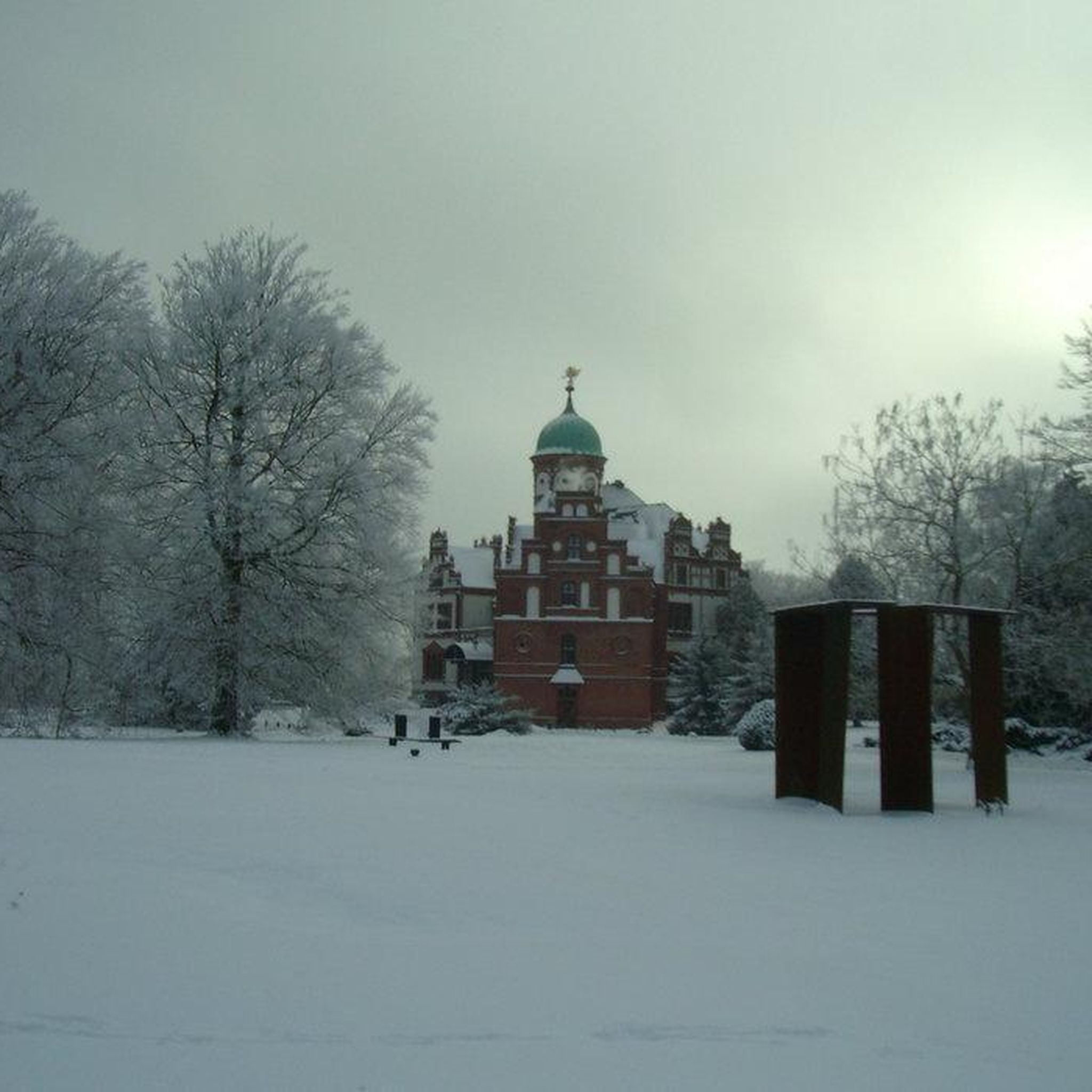
The Marquis de Sénectère at Semussac In the 18th century, the Didonne / La Touche estate in Semussac passed to Marie de Béchillon, then to her son, the Marquis de Sénectère. It was he who is said to have had the château rebuilt or largely transformed around 1730, giving rise to the residence we know today. He made Semussac an important country residence and developed his possessions in the Royan and Saintonge region. A prestigious family The Marquis de Sénectère, linked to the château of Semussac, belongs to an old French noble family: the house of Sénecterre (or Sénectère), originally from Forez and known since the Middle Ages. The Sénectère family included several renowned figures: - Henri de Senneterre (16th century), Marshal of France - François de Senneterre, a man of war under Louis XIII - Several marquises and dukes close to the royal court The name is sometimes written Senneterre, Sénectère, or Sénecterre depending on the era. End of family presence During the French Revolution, many noble properties were sold or seized, and the château of Semussac subsequently left this family. Legacy in Semussac The memory of the Marquis de Sénectère remains attached to: - the reconstruction of the château - the organization of the agricultural estate - local seigneurial prestige before 1789
0
0
Architectural features - Large residence in the classic Saintongeais style - Significant agricultural outbuildings - Preserved old cylindrical dovecote - 19th-century tree-lined park History of Semussac Castle (Château de Didonne) - Medieval origins The estate already existed in the 15th century under the name of La Touche, belonging to the lordship of Didonne. It then belonged to various local noble families before passing through alliances and sales into several hands. - Reconstruction in the 18th century The current castle was essentially built in the first half of the 18th century, around 1730, probably by Marie de Bechillon or her son, the Marquis de Sénectère. The latter made it his main country residence. He considerably enlarged his lands throughout the Royan and Saintonge region. - 19th century: transformation of the estate After the French Revolution, the property was sold as national property. It then passed to Count Alfred de La Grendière, mayor of Semussac and then mayor of Royan, who modified the castle and gave it its current appearance, with an English-style landscaped park. - 20th century: agricultural and tourist vocation In 1979, the estate was bought by the agricultural cooperative Cozes-Saujon to promote local productions, particularly wine. In 1981, a museum of agricultural equipment opened in the outbuildings and remained active until 2006. Subsequently, the site was converted into a charming hotel-restaurant. Completely renovated in 2019, the Château de Didonne opens its doors to welcome you between the charm of the old and the comfort of the modern. It has 10 air-conditioned rooms, 7 of which offer a breathtaking view of the park, allowing you to immerse yourself in a soothing natural setting from the moment you wake up. Local importance The castle bears witness to the agricultural and noble role of Semussac in old Saintonge, between Royan and the Gironde estuary.
0
0

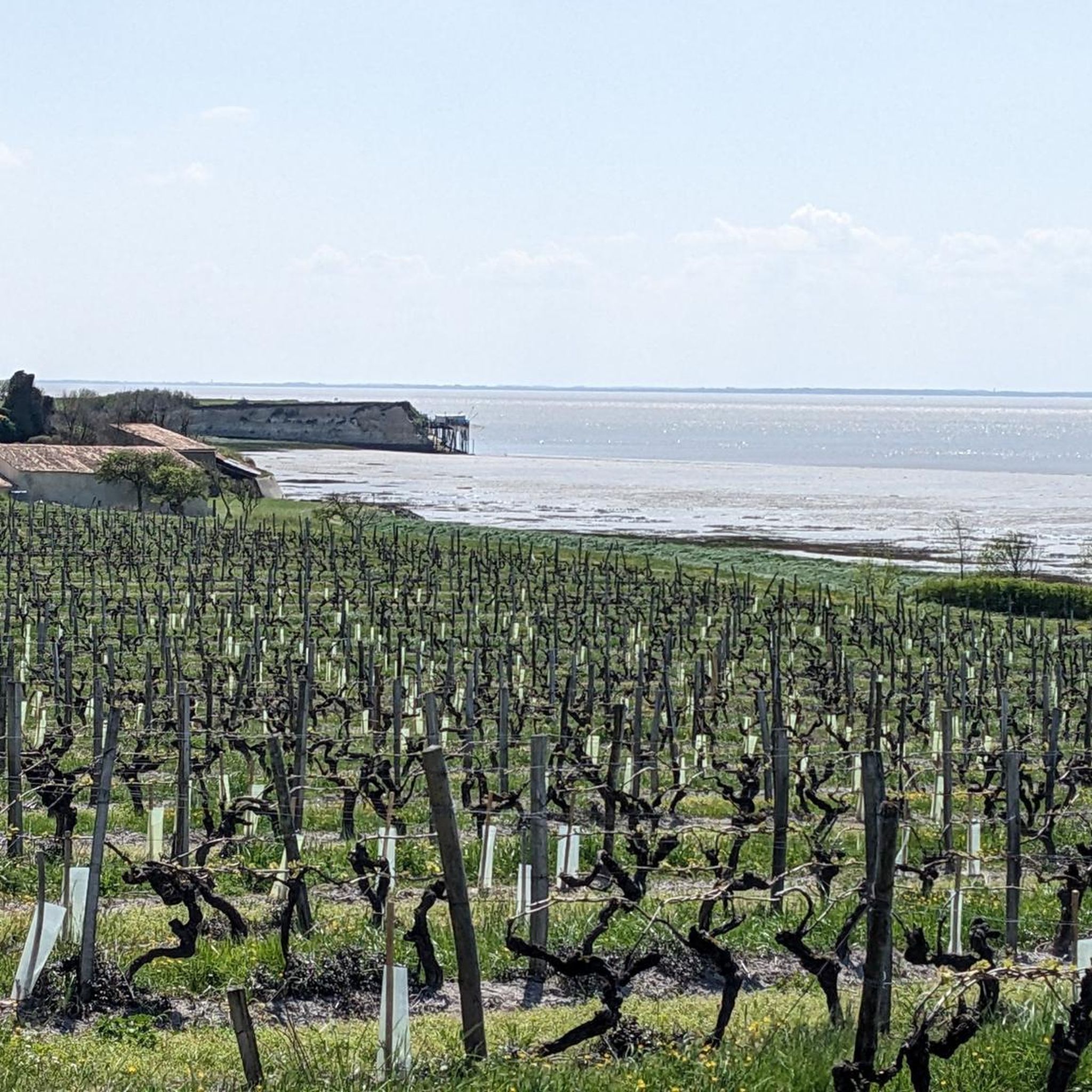
This small road ends on a white gravel track, ideal for Gravel biking
0
0

In the heart of the singles of the forest of St Leger
0
0

beautiful passages along the Charente with pretty monuments and small waterfront cafés in Port d’Envaux and Saintes.
0
0

The Gallo-Roman amphitheater of Sainte, also called the Arena of Saintes, is an elliptical monument built between 40 and 50 AD, probably during the reigns of Tiberius and Claudius. It measures approximately 126 meters by 102 meters and could accommodate between 12,000 and 15,000 spectators, making it one of the largest and oldest amphitheaters in Gaul. Located in a natural valley called the "Arènes valley," it takes advantage of the topography to limit construction work, with stands backing onto the hill. The site has two monumental gates, the "Gate of the Living" to the east and the "Gate of the Dead" to the west, and has been the subject of a major restoration project since 2021 to preserve this exceptional heritage. Accessible on foot from the city center, it offers an immersion in Roman history with an educational trail and activities for families
1
0
The current church replaces a Romanesque church that occupied the same site. Poorly maintained and dilapidated over the centuries, it was in danger of falling into ruin when the Count of Sénectère, Lord of Didonne and Semussac, proposed to the parish community that a new building be built. The issue was clearly not a priority for the inhabitants, who, meeting in assembly in February 1771, were barely more than ten people deliberating, and agreed that a simple repair of the old sanctuary would be just as suitable. A chapter assembly, held on Sunday, April 2 of the same year, resolved the situation, and it was ultimately decided to rebuild the parish church, on the condition that as many materials as possible be reused to limit costs. Work began quickly, and just three years later, on November 22, 1774, the church was blessed and opened for worship during a solemn ceremony attended by Mr. Étienne de la Sale, Prior of Semussac, Mr. Vanson, Archpriest-Parish Priest of Arvert, and the Count of Sénectère, Lord of Didonne. However, signs of weakness quickly appeared in the bell tower, which the parish trustee, Jacques Guillot, proposed be demolished in 1788 and replaced with a simple pinnacle. The growth of the Catholic population during the 19th century necessitated an expansion of the church, and a campaign of renovations began in 1877 under the direction of the architect Eustase Rullier, also the master builder of the Church of Our Lady of the Angels in Pontaillac, in Royan. The nave was extended and the current bell tower-porch was built, giving the church the appearance it retains today. The interior, very simple, consists of a single nave flanked by two small transepts and a choir covered with lowered barrel vaults. The rear of the façade houses a neo-Gothic gallery. The former presbytery, built in 1729 and which became the town hall in 1980, retains a carved stone on its façade from the old Romanesque church, which appears to date from the 11th century.
0
0
February 1771: Count de Senecterre, owner of the Château de Didonne, proposed to the people of Semussac the reconstruction of the church. Few people showed interest, and the ten who remained to deliberate thought it would be better to repair the parish church while keeping it as it was. However, they agreed to demolish it entirely, along with the bell tower, and rebuild everything from scratch according to a plan to be agreed upon. Entremondit, Lord Count de Senecterre, the said prior, and four notables from Bemuses, to whom they gave full powers for this purpose, provided that it be within the boundaries of the old church and the adjoining cemetery and that the said church could accommodate the same number of people as the current church... and that, furthermore,...usable materials from the old one would be used first. (Departmental Archives of Charente-Maritime) The Count of Senecterre considered that a decision taken by such a small number of people was unacceptable. The inhabitants gathered in a chapter assembly on Sunday, April 2, 1771, agreed that the church be demolished and replaced by a new building, which would be completed in 1774. Etienne la Sale notes in the parish registers: Today, November 22, 1774, the blessing of the new church of Saint Etienne de Semussac was held, built with the care and expense of Mr. Etienne de la Sale, Prior of Semussac, the Count of Senecterre, and the inhabitants and tenants of the said parish. This blessing was performed by Mr. Vanson, parish priest and archpriest of Arvers, and the ecclesiastical curates, who attended and signed. for a mission, having been granted by the Bishop of Saintes on November 14, 1774. (Excerpt from Frédéric Chasseboeuf's book, Le Château de Didonne)
0
0
Frequently Asked Questions
What kind of terrain can I expect on gravel bike trails around Montpellier-De-Médillan?
The gravel bike trails in the Montpellier-De-Médillan region offer a diverse mix of landscapes. You'll encounter marshlands, agricultural areas, and historical towns. The terrain typically features a blend of paved sections and natural paths, with some routes exploring coastal or riverine environments. Expect varied scenery, from wetlands and canals to vineyards and garrigues.
How many gravel bike trails are available in the Montpellier-De-Médillan area?
There are 5 gravel bike trails available around Montpellier-De-Médillan, offering a range of experiences from moderate to difficult. These routes are highly rated by the komoot community.
Are there any challenging gravel bike routes for experienced riders?
Yes, for experienced riders seeking a challenge, the region offers difficult routes with significant elevation gain. One such option is the Port Maubert – Chenac-Saint-Seurin-d'Uzet loop from Les Sorignets, a demanding 74.1 km path that features coastal views near Port Maubert. Another difficult route is the La Roche Madame Cave – La Salle Castle loop from Préguillac, covering 42.9 km.
What are some moderate gravel bike routes suitable for a good fitness level?
For those with a good fitness level looking for moderate rides, consider the Cathedral of Saintes – View of the Arch of Germanicus loop from Montpellier-de-Médillan. This 63.3 km trail explores historical landmarks and varied rural scenery. Another excellent moderate option is the Boulevard du Marais – View of the La Roche cliff loop from Cozes, which is 45.5 km long and takes you through marshlands with views of La Roche cliff.
What historical landmarks or attractions can I see along the gravel bike trails?
Many routes in the region pass by historical and natural points of interest. You might encounter sites like the Maison Forte of Pisany, a historic castle, or various charming churches such as the Saint-Romain Church of Saint-Romain-de-Benet and the Notre-Dame Church of Corme-Écluse. Some trails also offer views of ancient Roman structures like the Arch of Germanicus.
Are there any circular gravel bike routes in Montpellier-De-Médillan?
Yes, several gravel bike routes in the area are designed as loops, allowing you to start and end at the same point. Examples include the View of the Arch of Germanicus – Cathedral of Saintes loop from Thénac, which is a moderate 48.1 km ride, and the Port Maubert – Chenac-Saint-Seurin-d'Uzet loop from Les Sorignets for a more challenging experience.
What do other gravel bikers say about the trails in Montpellier-De-Médillan?
The gravel bike trails around Montpellier-De-Médillan are highly regarded by the komoot community, boasting an average rating of 4.8 stars from over 5 reviews. Users often praise the varied terrain, which includes marshland paths, historical town routes, and scenic coastal sections, offering options for different ability levels.
What natural features can I expect to see while gravel biking in this region?
The region is rich in natural beauty. You can expect to see extensive coastal lagoons and wetlands, such as the Étang de l'Or, which are protected natural sites teeming with flora and fauna, including flamingos. Inland, routes traverse rolling vineyards and Mediterranean scrubland (garrigues). Some trails offer views of unique mineral landscapes and cliffs, like the La Roche cliff.
When is the best time of year to go gravel biking around Montpellier-De-Médillan?
Montpellier enjoys a Mediterranean climate, making spring and autumn ideal for gravel biking. The weather is generally mild and pleasant, avoiding the intense heat of summer and the cooler, potentially wetter conditions of winter. These seasons also offer beautiful natural scenery, from blooming wildflowers to autumnal colors in the vineyards.
Are there any routes that offer views of the coast or water bodies?
Absolutely. Many routes in the region incorporate coastal or riverine environments. For instance, the Port Maubert – Chenac-Saint-Seurin-d'Uzet loop from Les Sorignets offers stunning coastal views. Other trails venture through marshlands and along canals, providing picturesque rides alongside lagoons and wetlands, where you might even spot local wildlife.
What is the typical elevation gain on gravel bike routes in this area?
Elevation gains on gravel bike routes around Montpellier-De-Médillan are generally moderate, providing a good balance of challenging climbs and flatter sections. For example, the Cathedral of Saintes – View of the Arch of Germanicus loop from Montpellier-de-Médillan has an elevation gain of approximately 385 meters, while the more challenging Port Maubert – Chenac-Saint-Seurin-d'Uzet loop from Les Sorignets features around 454 meters of ascent.
Most popular routes around Montpellier-De-Médillan
Most popular attractions around Montpellier-De-Médillan

Get inspired with the komoot mobile app


Explore more
Browse the best Gravel rides in other regions.
