The best walks and hikes around Saint-Chef
4.5
(490)
3,061
hikers
383
hikes
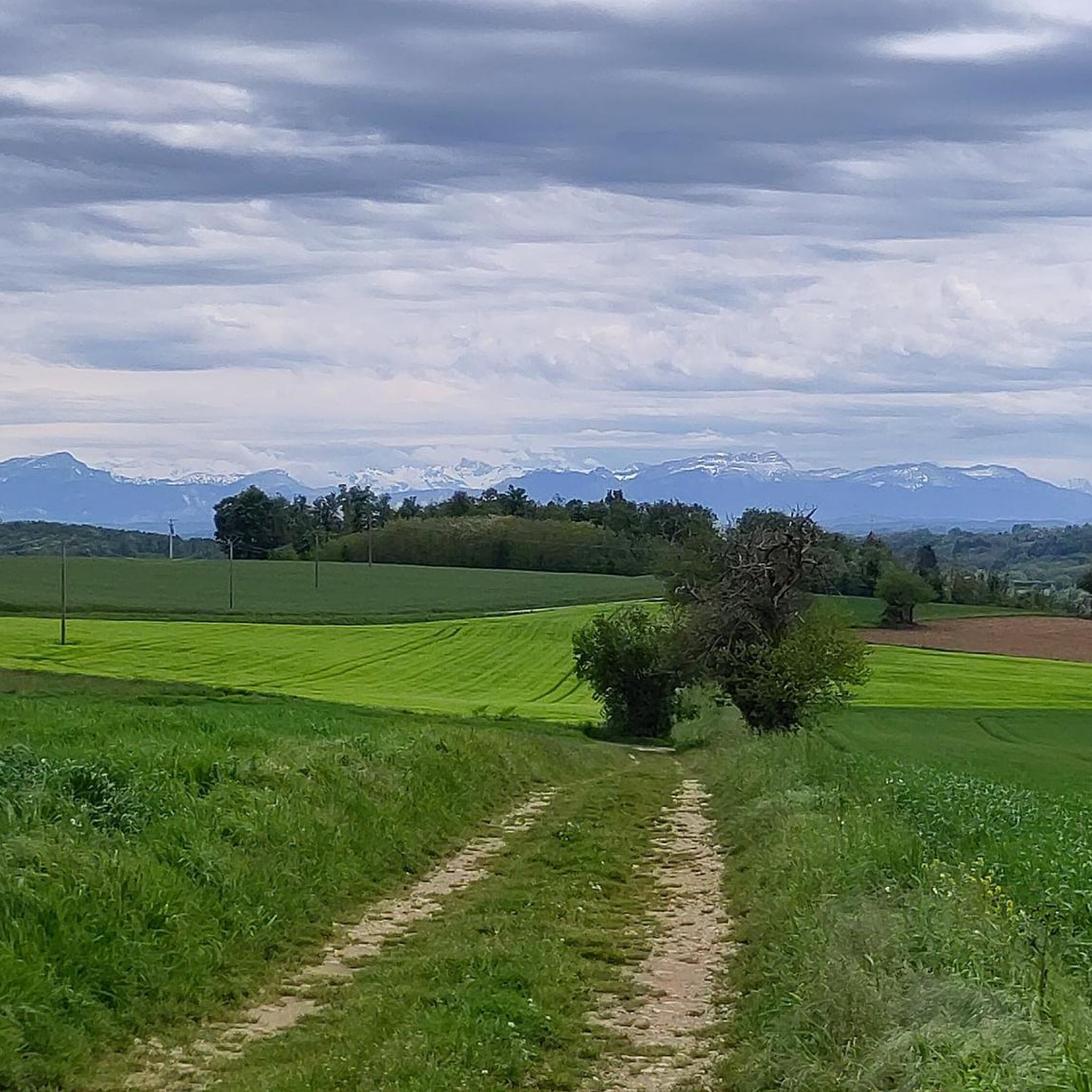
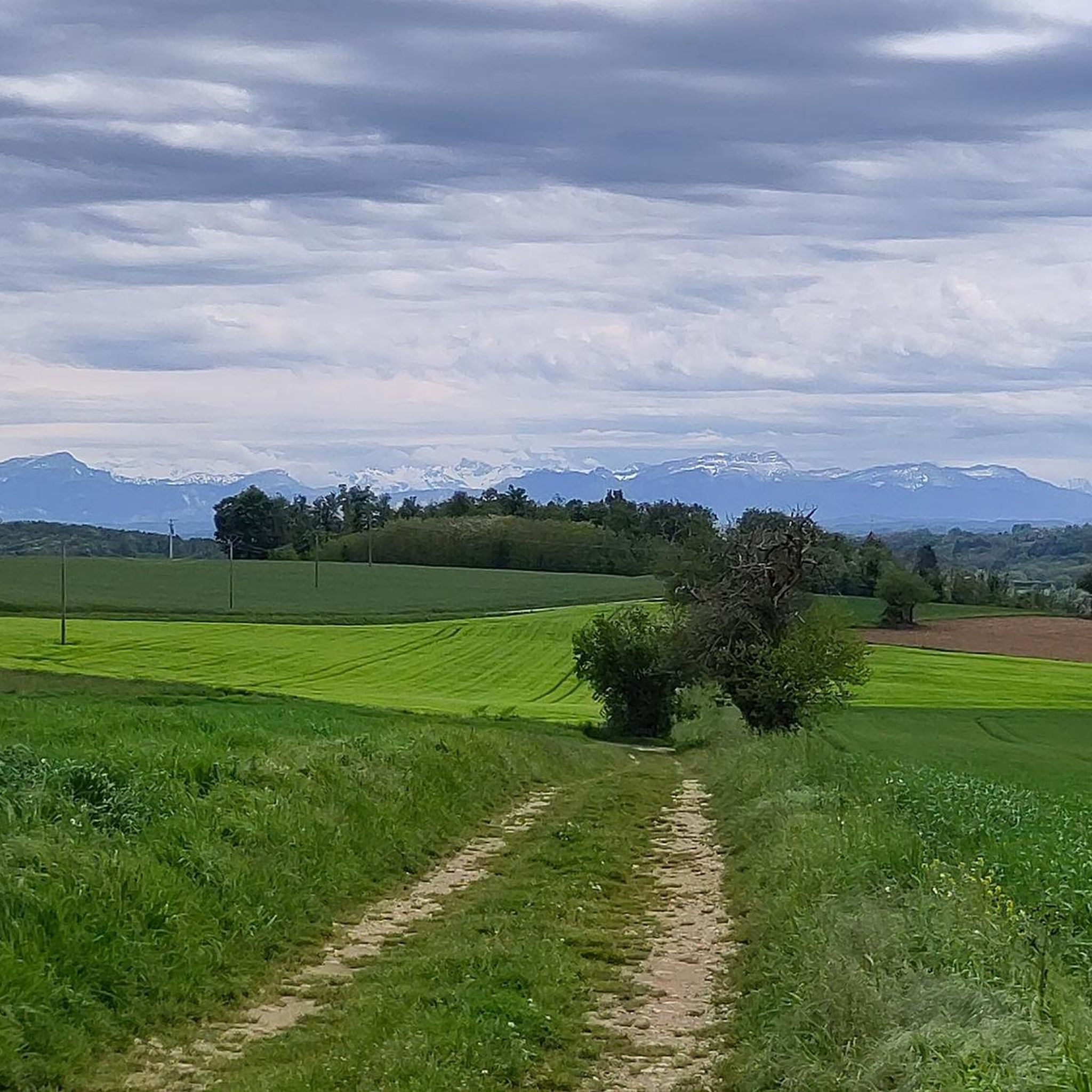
Hiking around Saint-Chef offers diverse terrain, transitioning between undergrowth, meadows, and hills. The region provides panoramic views of the Alps and features natural elements like hidden ponds and small vineyards. A distinctive characteristic of the local landscape is the presence of "rammed earth" architecture, including traditional adobe houses built from local limestone and alluvial materials. These natural features and historical structures define the hiking experience in this area.
Best hiking trails around Saint-Chef
- The most popular hiking route is Chateau de Chapeau Cornu – Poulet Tower loop from La Tour-du-Pin, a 6.7 miles (10.8 km) moderate trail that takes 3 hours 2 minutes to complete, passing by the historic Château de Chapeau Cornu.
- Another top favourite among local hikers is Poulet Tower – Chateau de Chapeau Cornu loop from Vignieu, a moderate 6.5 miles (10.5 km) path that offers views of the Château de Chapeau Cornu and surrounding countryside.
- Local hikers also love the Wooden pontoon – The Gôle Pond loop from La Tour-du-Pin, an 8.9 miles (14.4 km) trail leading through varied landscapes including the Espace Naturel Sensible Etang de Gôle, often completed in about 4 hours 0 minutes.
- Hiking around Saint-Chef is defined by varied terrain including undergrowth, meadows, and hills, along with panoramic views of the Alps and glimpses of traditional rammed earth architecture. The network offers options for different ability levels, from easy strolls to more challenging moderate routes.
- The routes in Saint-Chef are highly rated by the komoot community with an average score of 4.5 stars from over 400 reviews. More than 2,700 hikers have used komoot to explore Saint-Chef's varied terrain.
Last updated: June 25, 2026
4.3
(8)
54
hikers
Moderate hike. Good fitness required. Easily-accessible paths. Suitable for all skill levels.
4.7
(3)
10
hikers
6.10km
01:43
130m
130m
Easy hike. Great for any fitness level. Easily-accessible paths. Suitable for all skill levels.

Sign up for free
4.3
(8)
54
hikers
10.5km
02:58
220m
220m
Moderate hike. Good fitness required. Easily-accessible paths. Suitable for all skill levels.
5.0
(1)
5
hikers
13.3km
03:40
230m
220m
Moderate hike. Good fitness required. Easily-accessible paths. Suitable for all skill levels.
3.0
(1)
10
hikers
4.82km
01:16
40m
40m
Easy hike. Great for any fitness level. Easily-accessible paths. Suitable for all skill levels.
Get access to more routes and recommendations from other explorers.
Sign up for free
Already have an account?
Our route recommendations are based on thousands of hikes, rides, and runs completed by other people on komoot.
Start today with a free account
Your next adventure awaits.
Login or Signup


Tips from the Community

@Aurelie It's hidden on the side of the road behind an old wooden barrier and goes "underground" :)
1
0
2nd pontoon of the same style, still allowing you to go around the pond.
1
0
War memorial in the village center
1
0
A small, makeshift pontoon that allows you to cross the stream and make a loop around the pond.
1
0

Found somewhat by chance and at a very affordable price, this hotel restaurant is a superb stopover for a bike ride!
0
0

I couldn't find the wash house...too disappointed
1
0
Chapeau Cornu Castle was originally a fortified house built on the site of an ancient Roman camp. Between 800 and 1100, feudalism took hold. The sovereigns of Vienna and the Bishop created “rear fiefdoms” to ensure security and repel attackers. In the 12th and 13th centuries, there were two allied families: the Capellas and the Cornutis. It is by derivative of these 2 Latin names that “Chapeau Cornu” was born. In 1300, Amédée de Rossilon was governor of Chapeau Cornu. He left this property to his nephews Pierre and Louis Chapel. After Pierre's death in 1358, Louis succeeded him. Pierre will leave 2 daughters, one of whom Antonia marries the Knight Etienne Laure, Lord of Veyssillieu. The latter was killed by the English while fighting under Duguesclin. His son Jacquemont Laure avenged him and his daughter Béatrice married Imbert de Groslée, Seneschal of the King, in 1413. His sons and descendants remained in Chapeau Cornu until 1650. It was in 1601 that Chapeau Cornu took the name Château. But in 1638, the Castle fell into disuse. The last occupants, the Matthieu de Rame couple, left no children and in 1693, the property passed to Aymard Micha de Burcin. He expanded the estate through multiple purchases and died in 1755, donating all his property to his cousin Philippe Guillaume de Grammont. After the storming of the Bastille on the night of July 25 to 26, 1789, “the great fear” began. A band of rioters, determined to destroy the property of the squires, arrived in Chapeau Cornu at 1 a.m. The steward at the time had the idea of treating them as guests and opened the doors of the wine cellars to them. The damage underground is impressive: the undrinked wine is emptied but the castle remains intact. After the Revolution, the castle was purchased by Jean André Barge from the de Certeau family. He diverted the bed of the stream coming from the hill which then passed into the castle. He had the large buildings to the south-east and east built on the vault. Ruined, he sold part of the land to people from Vignolles. In 1855, the castle and 80 hectares surrounding it were bought by his son Ferdinand de Certeau. The estate remained in the family until 1891. The Bourgoin Court then ordered a judicial liquidation and had the property sold in several lots. Source: Vignieu website
1
0
Nice view of the Chapeau Cornu castle from the road.
0
0
Frequently Asked Questions
What kind of terrain can I expect on hikes around Saint-Chef?
Hiking around Saint-Chef offers a diverse landscape, transitioning between undergrowth, meadows, and hills. You'll encounter varied terrain, including panoramic views of the majestic Alps, hidden ponds like those in Crucilleux, and small vineyards. The region is also notable for its traditional "rammed earth" architecture, with adobe houses built from local limestone and alluvial materials.
Are there hiking routes suitable for all skill levels in Saint-Chef?
Yes, Saint-Chef offers a wide range of hiking options for various abilities. With over 350 routes, you can find everything from easy strolls, with 148 easy routes available, to more challenging moderate trails, which account for over 200 routes. There are also a few difficult routes for experienced hikers.
What natural features or landmarks can I discover along the hiking trails?
The trails around Saint-Chef are rich in natural beauty and historical interest. You might encounter hidden ponds, small vineyards, and traditional adobe houses. Notable natural areas include the Espace Naturel Sensible Etang de Gôle. For historical landmarks, routes often pass by sites like the Chateau de Chapeau Cornu. You can also explore the historic circuit of Saint-Chef, an interpretive trail detailing the area's nearly 15 centuries of history, covering districts with industrial buildings, the Rupéen valley, and earthen architecture.
Are there family-friendly hiking options in Saint-Chef?
Absolutely. Many of the 148 easy routes are suitable for families. For example, the Lac Clair loop from La Tour-du-Pin is an easy 4.3 km trail, and the Wooden pontoon – The Gôle Pond loop from Montcarra is another easy option at 3.3 km, perfect for a relaxed outing.
Can I bring my dog on the hiking trails in Saint-Chef?
While specific regulations can vary by trail or protected area, generally, many hiking trails in the Saint-Chef region are dog-friendly. It's always recommended to keep your dog on a leash, especially in areas with livestock or wildlife, and to clean up after them. Check local signage for any specific restrictions.
What is the best time of year to go hiking in Saint-Chef?
The Saint-Chef region, located in Isère, France, is generally pleasant for hiking from spring through autumn. Spring offers lush greenery and blooming wildflowers, while autumn provides beautiful fall foliage. Summers are also good, but it's advisable to start early to avoid the midday heat. Winters can bring colder temperatures and potentially snow at higher elevations, making some trails more challenging or inaccessible.
Are there circular hiking routes available in Saint-Chef?
Yes, Saint-Chef offers several circular hiking routes. Popular options include the Chateau de Chapeau Cornu – Poulet Tower loop from La Tour-du-Pin, a moderate 10.8 km trail, and the Wooden pontoon – The Gôle Pond loop from La Tour-du-Pin, a moderate 14.4 km loop. The "In the footsteps of Frédéric Dard" loop is another regional option that provides views of the Alps, adobe houses, and hidden ponds.
What do other hikers enjoy most about hiking in Saint-Chef?
The hiking experience in Saint-Chef is highly rated by the komoot community, with an average score of 4.5 stars from over 400 reviews. Hikers often praise the varied terrain, which includes undergrowth, meadows, and hills, as well as the panoramic views of the Alps. The presence of traditional rammed earth architecture and historical sites also adds a unique cultural dimension to the natural surroundings.
Is public transport available to reach hiking trails in Saint-Chef?
While Saint-Chef is accessible, public transport options directly to specific trailheads might be limited. It's often recommended to check local bus schedules or consider driving to reach the starting points of many routes. Some trails may be accessible from larger towns like La Tour-du-Pin, which might have better public transport connections.
Are there parking facilities near the trailheads in Saint-Chef?
Yes, for many popular hiking routes and starting points in and around Saint-Chef, you will typically find designated parking areas. It's advisable to check the specific route details or local maps for information on parking availability at your chosen trailhead.
What is the typical duration of hikes in the Saint-Chef area?
The duration of hikes in Saint-Chef varies significantly depending on the route's length and difficulty. Easy trails like the Lac Clair loop can take around 1 hour, while moderate routes such as the Chateau de Chapeau Cornu – Poulet Tower loop typically take about 3 hours. Longer moderate trails, like the Three Bell Towers Trail, can extend to 4 hours or more.
Are there any historical or cultural points of interest to explore in Saint-Chef?
Beyond the natural landscapes, Saint-Chef is rich in history and culture. You can explore the historic circuit of Saint-Chef, an interpretive trail with 25 panels detailing the area's nearly 15 centuries of history, including the Abbey and Château district. The region is also known for its distinctive "rammed earth" architecture, with traditional adobe houses. The Jardin médiéval (Medieval Garden) also adds a cultural touch.
Most popular routes around Saint-Chef
Most popular attractions around Saint-Chef

Get inspired with the komoot mobile app


Explore more
Browse the best Hikes in other regions.
