Attractions and Places To See around Blanzée - Top 20
Best attractions and places to see around Blanzée primarily focus on historical sites and memorials related to the World Wars, particularly the Battle of Verdun. The region offers a profound cultural landscape, marked by significant man-made monuments and museums dedicated to remembrance. Visitors can explore these sites to understand the area's past and its enduring legacy. Blanzée and its surroundings are home to many hidden gems for those interested in military history and solemn reflection.
Best attractions and places to…
Last updated: June 22, 2026
Douaumont Ossuary
Highlight • Monument
Let us never forget this horror!
Translated by Google •
Tip by

Monument to the Dead and the Children of Verdun
Highlight • Other
Translated by Google •
Tip by

Sign up now to discover places like this
Get recommendations on the best single tracks, peaks, & plenty of other exciting outdoor places.
Sign up for free
Verdun Memorial
Highlight • Historical Site
Translated by Google •
Tip by
Verdun War Memorial
Highlight • Monument
Translated by Google •
Tip by

Monument to Victory and the Soldiers of Verdun
Highlight • Other
Translated by Google •
Tip by

Sign up for free to discover even more attractions around Blanzée.
Sign up for free
Already have an account?
Start today with a free account
Your next adventure awaits.
Login or Signup

Tips from the Community

The Ossuary of Douaumont is an impressive memorial that holds the remains of more than 130,000 unknown French and German soldiers who died during the Battle of Verdun (1916). The bones are visible through small windows in the base – a confronting reminder of the horrors of war. In front of the ossuary is the Nécropole nationale de Douaumont, the largest French military cemetery of the First World War, with 16,142 graves, including a Muslim and Jewish plot. The complex was recognized as a UNESCO World Heritage Site in 2023.
8
0
The Mémorial de Verdun, located near the ruined village of Fleury-devant-Douaumont, is a leading museum and commemoration site for the Battle of Verdun (1916). The museum displays more than 2,000 objects and uses authentic objects, photographs and audiovisual installations to show how French and German soldiers experienced this battle – in the exact same place where they fought.
8
3
Inaugurated in 1928, this war memorial in Verdun honours the city’s inhabitants who died for France in both world wars. It was built on the remains of a military butcher’s shop, on the crescent of the Chaussée, a 17th-century fortification. The sculpture depicts five soldiers – a cavalier, an engineer, an infantryman (poilu), an artilleryman and a territorial – forming a symbolic wall under the motto of Verdun: “On ne passe pas”.
8
0

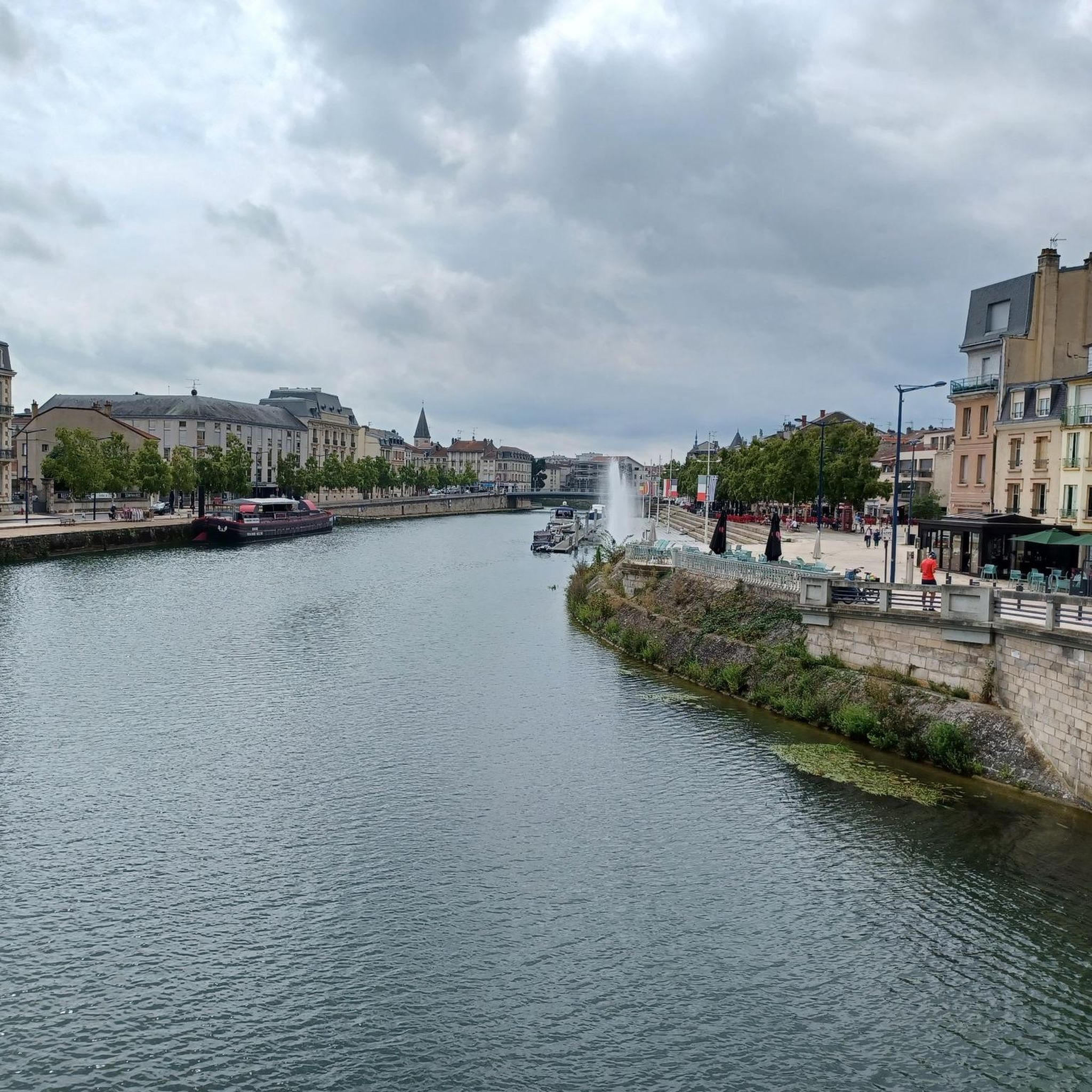
A huge monument honoring the fallen soldiers in and around Verdun. From the top, there's a magnificent view of the city.
6
0

The monument consists of five figures representing the five corps of the army involved in the 1916 battle: a horseman, an engineer, a territorial man, an infantryman and an artilleryman.
5
0
The monument to the dead and children of Verdun, built in 1928, rests on the crescent-shaped road built in the 17th century by order of Marshal Vauban. It stands on the site of the military butchery that was destroyed in 1916.
6
0
The War Memorial in Honour of the Citizens of Verdun, erected in 1928, is built in the La Chaussée demi-lune, part of the fortifications built in the 17th century by Marshal Vauban. The monument stands on the site of the former military slaughterhouse that was destroyed in 1916. The statues represent the five weapons of the French army that were involved in the battle of 1916. From left to right we can see: a cavalryman, a sapper-engineer, an infantryman, also known as a "poilu", an artilleryman and a reservist. These five soldiers form a human wall that symbolises the motto of the city: "They shall not pass". The names of the soldiers of Verdun who died in the First and Second World Wars are inscribed on the base of the monument. See also: A statue of General Sarrail opposite the monument and a bust of General Mangin on the wall of the city wall on the right. NOTE: Verdun's patriotic calendar is full and the commemorative ceremonies of 1 and 11 November take place in front of this monument. Be sure to visit in the evening, when the War Memorial Verdun is illuminated in the French national tricolour. Source: Tourism Verdun
6
0
This monument was built in 1929 in the city centre. The 73 steps lead to a crypt where the names of the soldiers were recorded in the Verdun Medal. Above the 30-metre high tower is a tower that leads east and back east. This monument is a permanent feature of the city. Beneath the warrior's feet is a crypt that is accessible to the public. From there, a soldier can search or go to the Mediterranean (from April to November). On 1 November, a ceremony was held at the Victory Monument to welcome the Holy Land under the Arc de Triomphe in Paris. This ceremony is a reflection of the sacrifices of the warlords and the desire of the incredible soldier. The anonymous soldier was killed on 10 November 1920 in the underground citadel of Verdun. Source: Tourism Verdun
6
0
Frequently Asked Questions
What is the historical significance of the attractions around Blanzée?
The attractions around Blanzée are primarily dedicated to the memory of the World Wars, especially the Battle of Verdun. They serve as profound memorials and historical sites, offering insights into the region's past and its enduring legacy of remembrance. Many sites commemorate the soldiers who fought and died in these conflicts.
Are there museums dedicated to the Battle of Verdun?
Yes, the Verdun Memorial is a comprehensive museum dedicated to the history and memory of the Battle of Verdun in 1916. It offers an immersive experience with a complete chronology of World War I, illustrating living conditions and technological advancements during the war.
What kind of monuments can I expect to see around Blanzée?
You will find several significant man-made monuments. These include the Douaumont Ossuary, a memorial housing the remains of thousands of unknown soldiers, and the Monument to Victory and the Soldiers of Verdun, a towering memorial with a crypt and a 30-meter-high viewing tower. Another notable site is the Verdun War Memorial, featuring five soldiers forming a symbolic wall.
What do visitors enjoy most about the attractions in Blanzée?
Visitors often highlight the profound sense of history and reflection these sites evoke. Many appreciate the educational value and the opportunity to pay respects to those who fell. The immersive experience at the Verdun Memorial and the panoramic views from the Monument to Victory are frequently praised.
Are the attractions around Blanzée suitable for families?
Many of the historical sites, such as the Douaumont Ossuary, Verdun Memorial, and Verdun War Memorial, are considered family-friendly. They offer educational experiences that can be impactful for older children and teenagers, providing a solemn but important understanding of history.
What is the best time of year to visit Blanzée's historical sites?
The historical sites, many of which are outdoors, are generally accessible year-round. However, visiting during spring (April-June) or autumn (September-October) offers more pleasant weather for exploring, avoiding the heat of summer and the colder, potentially wet conditions of winter. Always check specific opening hours for indoor attractions like museums.
Are there facilities like cafes or restrooms at the attractions?
Yes, the Verdun Memorial is equipped with both a cafe and other facilities, providing amenities for visitors during their visit.
Are there easy hiking trails near the historical sites in Blanzée?
Yes, there are several easy hiking trails in the vicinity. For example, you can find an easy 2.9 km loop around Fort Vaux from Douaumont-Vaux or a 5.1 km loop from Watronville. You can explore more options on the Hiking around Blanzée guide.
What outdoor activities can I do near these attractions?
Beyond visiting the historical sites, the area around Blanzée offers various outdoor activities. You can find numerous routes for hiking, gravel biking, and road cycling. For detailed routes and guides, check out the Hiking around Blanzée, Gravel biking around Blanzée, and Road Cycling Routes around Blanzée guides.
Where can I find a less-known but significant historical site in the area?
Consider visiting the Monument to the Dead and the Children of Verdun. Built in 1928 on the site of a military butchery destroyed in 1916, it stands on the east bank of the Meuse. This monument features five figures representing the different corps of the army engaged during the 1916 battle, forming a symbolic wall under Verdun's motto: 'On ne passe pas'.
Are there any circular walking routes that incorporate historical landmarks?
Yes, many of the hiking routes in the area are circular and pass by significant historical points. For instance, the 'Fort Vaux – Fort de Vaux loop from Douaumont-Vaux' is an easy circular route. You can find more such routes, including those around the Verdun Memorial and Douaumont Ossuary, in the Hiking around Blanzée guide.
Most popular routes around Blanzée
Most popular attractions around Blanzée

Get inspired with the komoot mobile app


Explore more
Still not found the Highlight you’re looking for? See guides of the top attractions in other regions:
