The best cycling routes around Blanzée
4.5
(25)
369
riders
63
rides
Touring cycling routes around Blanzée are situated within the broader Meuse department, characterized by a varied countryside and the presence of the Meuse River basin. The region offers a mix of natural and modified river sections, with landscapes that include rolling terrain and areas of historical significance. While Blanzée itself is a small commune, the surrounding area provides opportunities for cycling through diverse scenery.
Best touring cycling routes around Blanzée
- The most popular touring cycling route is Death Valley Path…
Last updated: June 21, 2026
41
riders
32.6km
03:02
610m
610m
Hard bike ride. Very good fitness required. Mostly paved surfaces. Suitable for all skill levels.
4.3
(3)
16
riders
41.7km
04:00
690m
690m
Hard bike ride. Very good fitness required. You may need to push your bike for some segments of this route.

Sign up for free
16
riders
46.8km
03:56
630m
630m
Hard bike ride. Very good fitness required. You may need to push your bike for some segments of this route.
17
riders
26.2km
02:21
390m
390m
Moderate bike ride. Good fitness required. Mostly paved surfaces. Suitable for all skill levels.
10
riders
Moderate bike ride. Good fitness required. Mostly paved surfaces. Suitable for all skill levels.
Get access to more routes and recommendations from other explorers.
Sign up for free
Already have an account?
Our route recommendations are based on thousands of hikes, rides, and runs completed by other people on komoot.
Start today with a free account
Your next adventure awaits.
Login or Signup

Tips from the Community

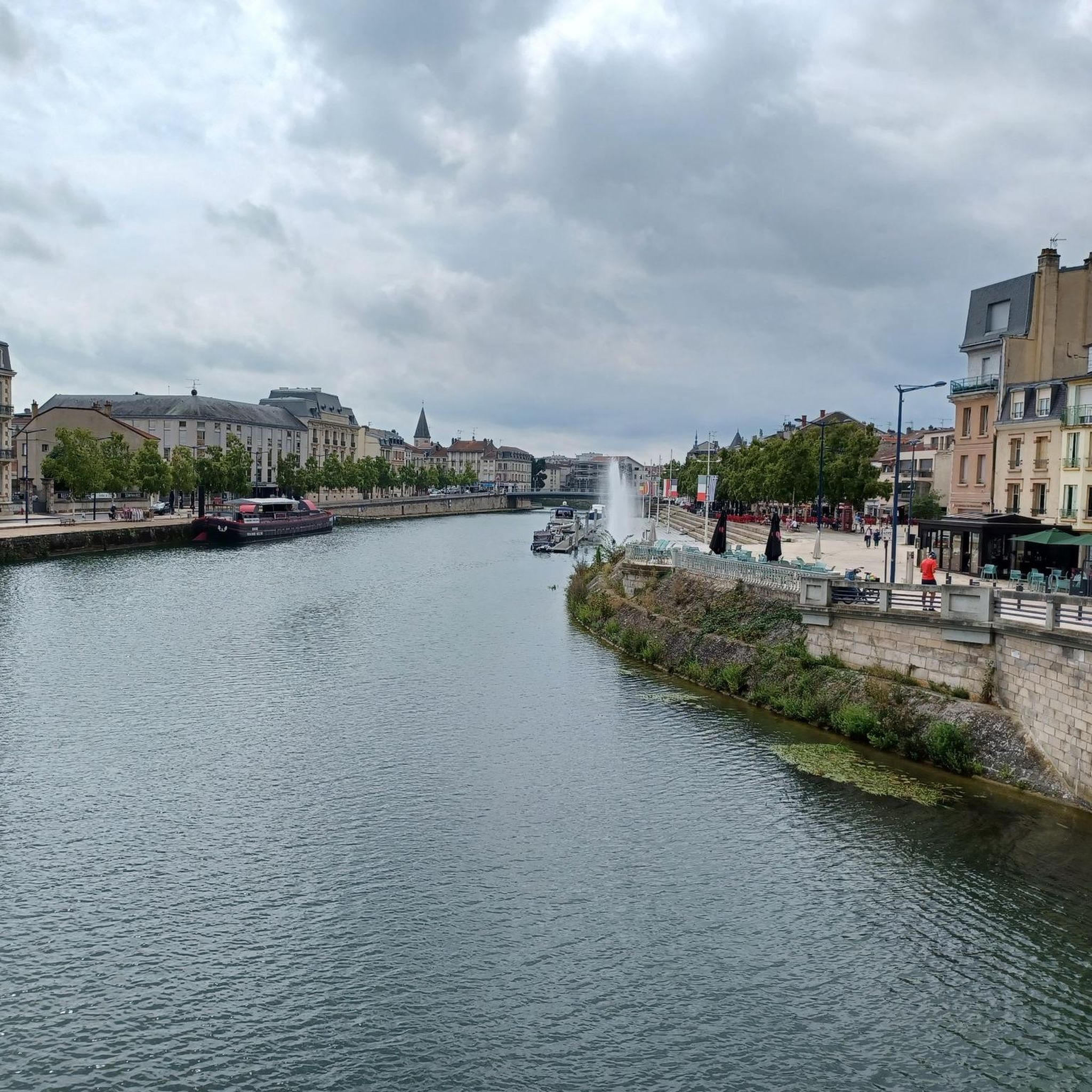
A great place to get a great view over the entire landscape around Verdun.
1
0
A very beautiful and interesting monument.
2
0

This granite memorial is part of a series of 118 monuments erected in the 1920s by artist and veteran Paul Moreau-Vauthier. They mark the exact front line of 18 July 1918, the start of the Allied counter-attack during the Second Battle of the Marne. The Haudiomont memorial recalls the fierce fighting in this region and is a tangible milestone on the route of remembrance of WWI.
8
0
Beautiful view over Verdun and the Meuse valley. On the nearby main road it is wonderful to drive downhill, but uphill is only recommended to a limited extent due to the busy traffic.
7
0
The Mémorial de Verdun, located near the ruined village of Fleury-devant-Douaumont, is a leading museum and commemoration site for the Battle of Verdun (1916). The museum displays more than 2,000 objects and uses authentic objects, photographs and audiovisual installations to show how French and German soldiers experienced this battle – in the exact same place where they fought.
8
3
The Lion of Souville Symbol of resistance at the gates of Verdun; This impressive monument, unveiled on 1 October 1922, stands on the site of the former Sainte-Fine chapel and commemorates the fallen of the 130th French Infantry Division. Designed by animal sculptor and veteran René Paris, the statue depicts a dying Bavarian lion – a powerful allegory for the defeat of the German troops and the heroic French defence during the Battle of Verdun. On 23 June 1916, the German attacks reached their peak at Fort de Souville, the last obstacle to the fall of Verdun. Thanks to the courage of a small French garrison led by Lieutenant Dupuy, the fort remained in French hands. The lion marks the extreme point of the German advance – the “last gate” to Verdun remained closed.
8
1
Monument in memory of André Maginot, a French politician who volunteered for the army in 1914. He was wounded near Verdun, but remained bravely at his post. After the war, as a minister, he committed himself to strengthening the French defense, which eventually led to the construction of the famous Maginot Line.
8
0
Built in 1881 above the Tunnel de Tavannes to reinforce the inner defensive belt of Verdun. The battery had three firing platforms and a traverse shelter, and was originally armed with two 220 mm mortars and one 22 cm smoothbore mortar. In 1900 it was disarmed and reused during the Battle of Verdun (1916) as an ammunition depot and shelter for troops. The traverse shelter is the best preserved element visible today.
9
0
Frequently Asked Questions
How many touring cycling routes are available around Blanzée?
There are over 50 touring cycling routes around Blanzée documented on komoot. These routes cater to various skill levels, with 17 easy, 26 moderate, and 14 difficult options to explore the varied countryside of the Meuse department.
What kind of terrain can I expect on touring cycling routes near Blanzée?
The touring cycling routes near Blanzée are characterized by varied countryside, including rolling terrain and landscapes along the Meuse River basin. While the routes are generally smooth, a touring bike is recommended for comfort, especially given the mix of natural and modified river sections.
Are there any family-friendly touring cycling routes around Blanzée?
While specific 'family-friendly' designations are not always explicit, the broader Meuse Cycle Route (EuroVelo 19), which passes through the Meuse department, is known for offering a relaxed cycling experience suitable for all skill levels. Look for routes categorized as 'easy' on komoot for gentler options that might be more suitable for families.
What historical landmarks can I see along the touring cycling routes?
The region around Blanzée is rich in World War I history. Many routes pass by significant historical sites. For example, the Verdun Memorial – Douaumont Ossuary loop from Eix takes you past major WWI historical sites. You can also visit attractions like the Douaumont Ossuary and the Verdun Memorial, which are often accessible from nearby routes.
Are there any circular touring cycling routes in the Blanzée area?
Yes, many of the touring cycling routes around Blanzée are designed as loops. Examples include the Death Valley Path – Tunnel Battery loop from Aérodrome Le Rozelier and the Death Valley Path – View of Verdun loop from Belrupt-en-Verdunois, offering convenient circular journeys.
What do other touring cyclists say about the routes around Blanzée?
The touring cycling routes around Blanzée are highly rated by the komoot community, with an average score of 4.5 stars from over 30 reviews. Cyclists often praise the varied countryside, the historical significance of the landscapes, and the diverse options available for different difficulty levels.
What is the best time of year to go touring cycling near Blanzée?
The Meuse department, where Blanzée is located, offers a vast and varied countryside suitable for cycling. Spring and autumn generally provide pleasant temperatures and beautiful scenery. While specific seasonal conditions for Blanzée are not detailed, the broader Meuse Cycle Route is enjoyable throughout the warmer months, from late spring to early autumn.
Are there any viewpoints along the touring cycling routes?
Yes, some routes offer scenic viewpoints. For instance, the Death Valley Path – View of Verdun loop from Belrupt-en-Verdunois provides views of Verdun, allowing cyclists to appreciate the landscape and historical context from elevated positions.
What is the typical distance and elevation gain for touring cycling routes in this area?
The routes vary significantly. For example, the Death Valley Path – Tunnel Battery loop from Aérodrome Le Rozelier is about 48.7 km (30.3 miles) with over 820 meters of elevation gain, while the Vauthier Marker; Haudiomont loop from Haudiomont covers around 41.7 km (25.9 miles) with approximately 685 meters of ascent. You'll find a range of distances and elevations to match your fitness level.
Are there any caves or shelters to explore near the cycling routes?
Yes, the area around Blanzée features several historical caves and shelters, often related to its WWI history. Notable sites include the Abri DV3 (Fort de Vaux Shelter), Douaumont Cave Shelter, and Combat Shelter - PC 118. These can offer interesting detours from your cycling journey.
Can I access the touring cycling routes using public transport?
While specific public transport links directly to trailheads in Blanzée are not detailed, the broader Meuse department is part of the extensive Meuse Cycle Route (EuroVelo 19). For information on public transport options that connect to sections of this larger route, you may need to consult local transport authorities or the official France Vélo Tourisme website for the Meuse Cycle Route.
Are there options for advanced touring cyclists?
Absolutely. The Blanzée area offers several challenging routes for experienced touring cyclists. For example, the Vaux Pond – Tunnel Battery loop from Haudiomont is a difficult 46.8 km (29.1 miles) route with over 630 meters of elevation gain, providing a demanding ride through historical landscapes.
Most popular attractions around Blanzée

Get inspired with the komoot mobile app


Explore more
Browse the best Cycling routes in other regions.
