Top 11 Castles around Hotton
Best castles around Hotton are found in a region rich in history within the Belgian Ardennes. This area is characterized by the Ourthe River and wooded hills, offering a blend of natural beauty and historical significance. The municipality of Hotton serves as a gateway to exploring numerous castles and historical sites in its vicinity. This landscape attracts visitors interested in both outdoor activities and historical exploration.
Best castles around Hotton
- The most popular castles is La Roche-en-Ardenne, a settlement…
Last updated: October 9, 2026
Durbuy — Old Town and Castle
Highlight • Settlement
Translated by Google •
Tip by

La Roche-en-Ardenne
Highlight • Settlement
Translated by Google •
Tip by
Sign up now to discover places like this
Get recommendations on the best single tracks, peaks, & plenty of other exciting outdoor places.
Durbuy
Highlight • Settlement
There are many paying car parks on the left bank.
Translated by Google •
Tip by

Chateau Radhadesh (Petite Somme)
Highlight • Castle
Translated by Google •
Tip by

Jemeppe Castle
Highlight • Castle
Translated by Google •
Tip by

Sign up for free to discover even more castles around Hotton.
Already have an account?
Start today with a free account
Your next adventure awaits.

Tips from the Community

The elegant, slightly curved steel structure was designed by the renowned Walloon engineering firm Greisch and built between 2003 and 2004. It has a total length of 80 meters and weighs around 67 tons. The bridge has an important tourist and practical function: it directly connects the historic, medieval town center of Durbuy with the green riverbank on the opposite side, where, among other things, the famous Le Parc des Topiaires (topiary park) is located. From the bridge, you also have a wonderful view of the wooded hills of the Ardennes and the historic backdrop of the town.
4
0

Today, the castle is part of the Radhadesh estate, which also includes a more recent residential center and several even more recent agricultural buildings. Openbaar Kunstbezit Vlaanderen (Flanders Public Art Agency) calls it a spiritual community, where the new residents have thoroughly restored the castle and transformed it into a true spiritual oasis where you can explore the colorful culture of Indian traditions. Specifically, the International Society for Krishna Consciousness (formerly the Hare Krishna movement) has a base and residential community there. There's also a vegan restaurant, a shop, a museum of sacred art (MOSA), and you can take a paid tour. The temple is accessible without payment. There's also a 2.8-kilometer "spiritual" walking trail. More at https://www.okv.be/museum/radhadesh-kasteel-van-petite-somme I'm not mentioning the domain's website because of a virus alert on my computer.
7
0
Built in 1888 and now in its neo-Gothic style, the castle served as a field hospital during the First World War, where the Jourda family cared for wounded and also sheltered local residents whose homes had been destroyed. During the Second World War, it housed American soldiers during the Rundstedt Offensive. From 1946 onwards, it became a holiday center, a school for people with intellectual disabilities, a youth hostel, a campsite, and a hotel-restaurant, all under the initiative of mayors Jean Andrieu of Herstal and Denis Deghaye of Oupeye. After the initiative's bankruptcy, a Brussels real estate agent, Serge Frankovich, bought the property in 1975, leaving it vacant for five years and plundering it. The Hare Krishna movement then purchased it and turned it into the Radhadesh estate. Sources: - https://www.castles.nl/petite-somme-castle - https://www.burchten-kastelen.be/provincies/luxemburg/002%20Kasteel%20van%20Petite%20Somme/Kasteel%20van%20Petite%20Somme.html - https://nl.wikipedia.org/wiki/Petite-Somme
7
0
Since 1980, the castle of Petite-Somme has housed a temple of the Hare Krishna movement, which today operates as the International Society for Krishna Consciousness. The dilapidated castle, of course, has a longer history. The current castle is also not the original and dates from 1888. The first mention of a castle on this site dates back to the eleventh century, when a certain Gozélonde Montaigu owned it. He was also the first Count of Montaigu. The County of Montaigu was quite influential for a time. It included the County of Duras in the Sint-Truiden region, the County of Clermont-sous-Huy, the Lordship of Jodoigne, and the village of Marcourt. The Counts of Montaigu were also vice-patrons of the Abbey of Sint-Truiden. Ecclesiastically, it belonged to the diocese of Liège. The castle was reportedly donated to the Abbey of Saint Hubert by the wife of Gozélon de Montaigu as penance for his husband's alleged plundering of the abbey's property. In the fourteenth century, a certain Jean de Bohême was said to have owned it, adding a tower to the castle, which became part of Luxembourg's defensive line. In 1461, the castle became the property of the de Hamal family, a Dutch-Belgian noble family that also appears in the histories of several Limburg villages and lordships (including 's Herenelderen, Grevenbroek, and the land of Vogelsanck). The de Hamal family held the lordship and castle of Petite Somme until 1774. Several noble families then succeeded one another. First came Albert Joseph de Favereau, born in 1750. De Favereau demolished the house that had served as the Hamal family's residence and built a brick manor house on its foundations. The new castle remained in the family's possession until 1877. Other sources claim that the demolition was carried out by the Count de Vaux, Aimable-Alexis de Jourda. What is certain is that the de Favereau family building was also demolished by a certain Louise Marie Eulalie, a relative of Baron Victor Albert de Favereau. And whatever the exact details are: it is certain that the current neo-Gothic castle stood there in 1888. Sources: - https://www.castles.nl/petite-somme-castle - https://www.burchten-kastelen.be/provincies/luxemburg/002%20Kasteel%20van%20Petite%20Somme/Kasteel%20van%20Petite%20Somme.html - https://nl.wikipedia.org/wiki/Petite-Somme
7
0

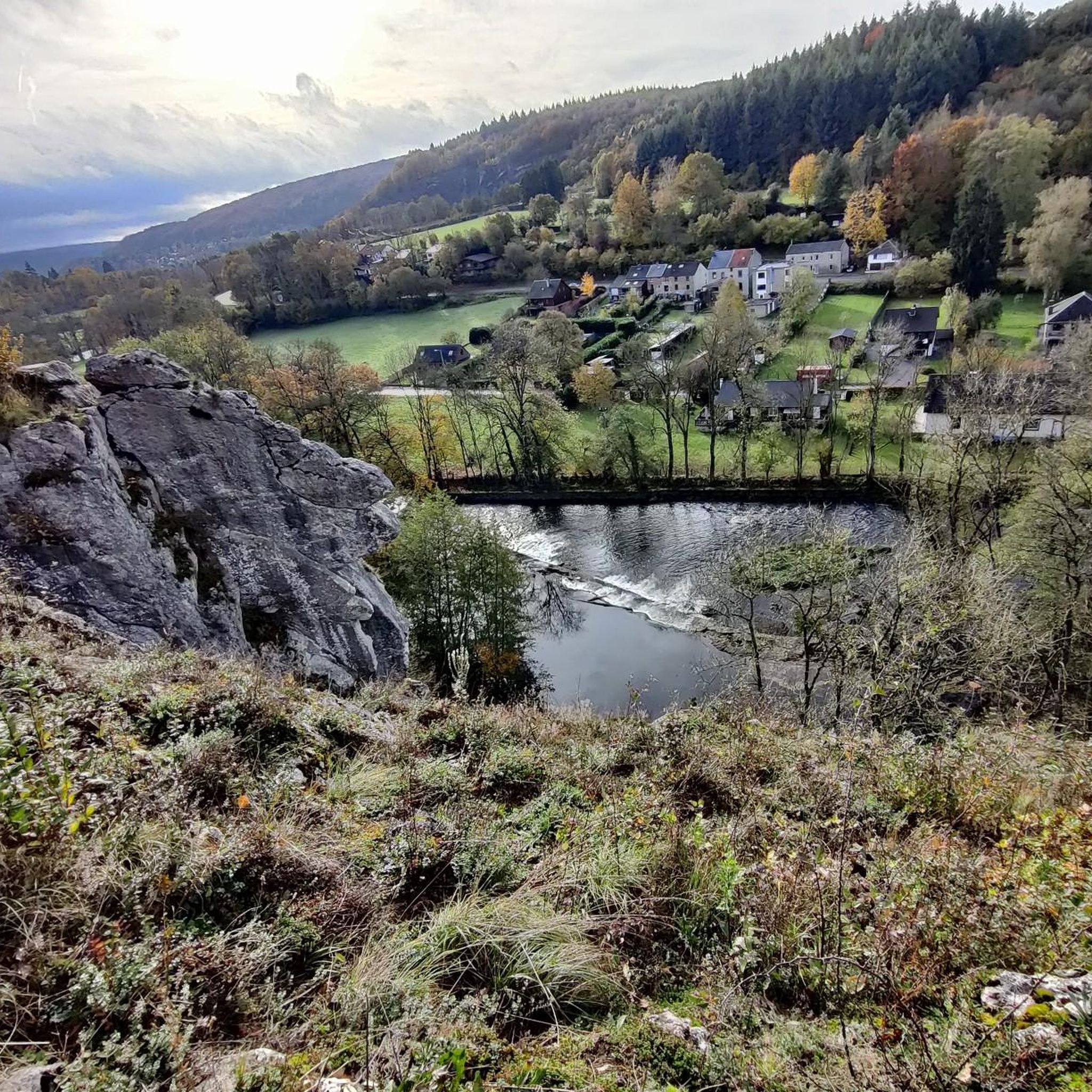
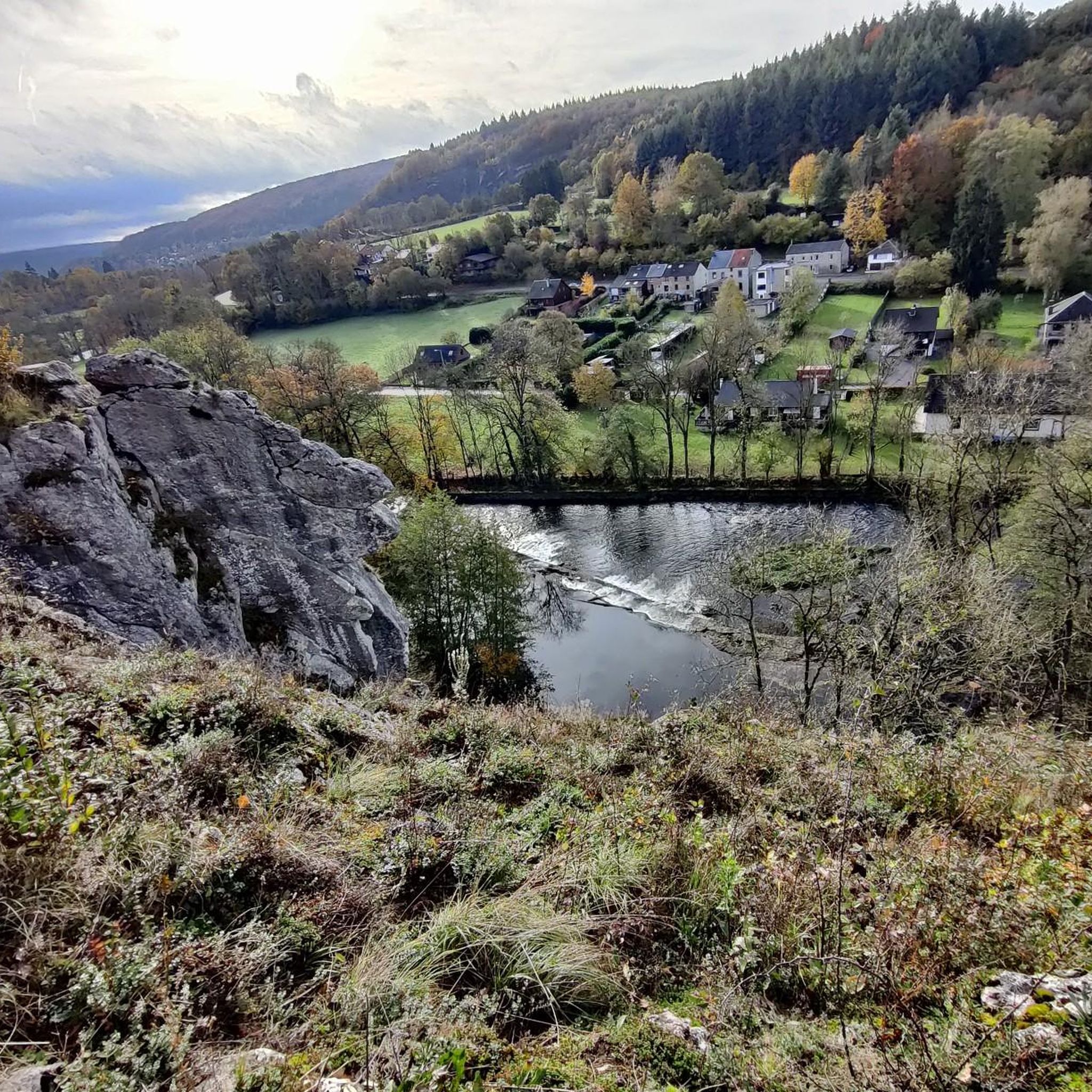
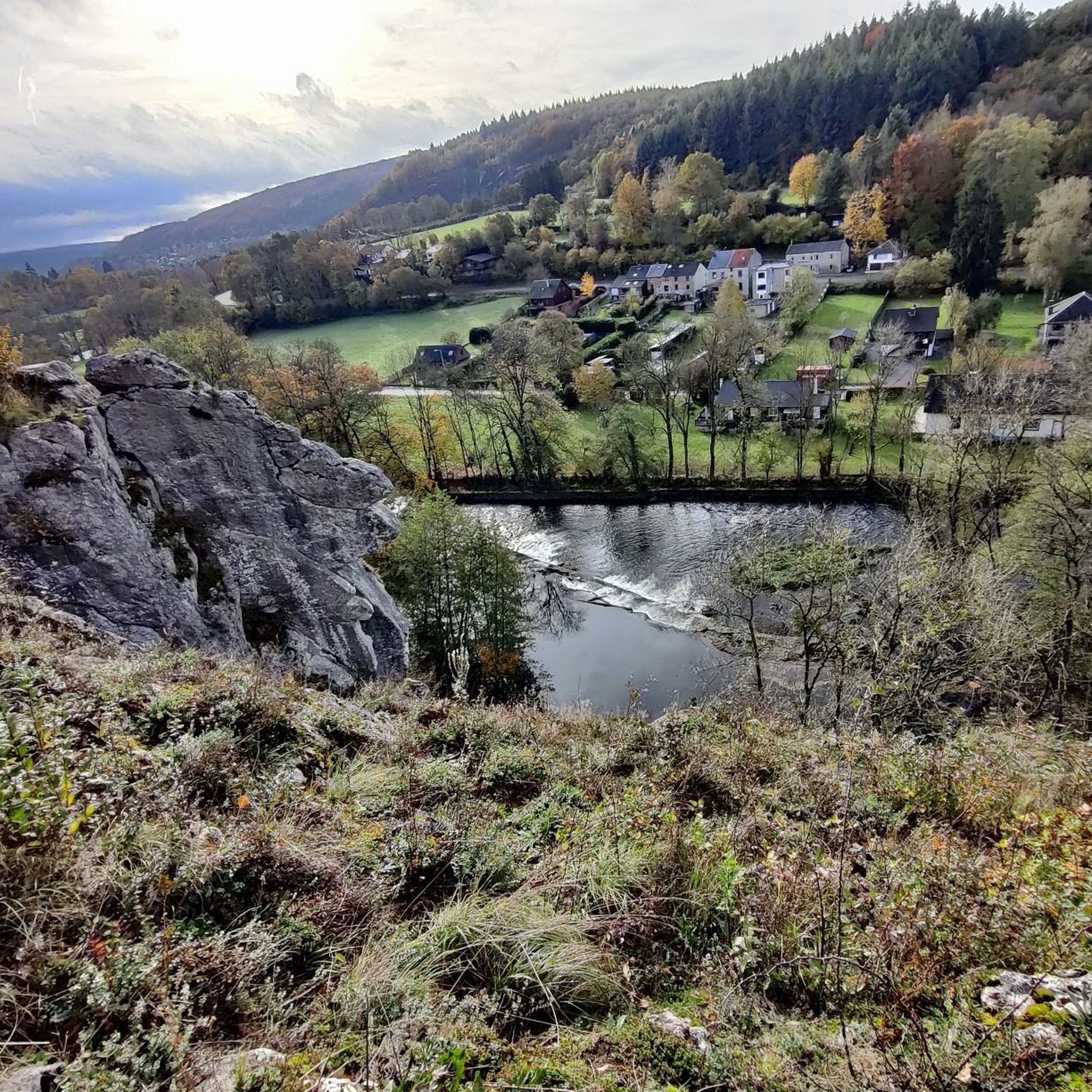
The footbridge over the Ourthe in Durbuy offers a beautiful view of the river and the surrounding nature. This pedestrian bridge connects the charming old town with the green opposite side and offers a unique perspective on the smallest town in Belgium.
1
0

Better known as Rhadhadesh Castle. Spiritual center of the Hare Khrisna community in Belgium. The entire site radiates that spiritualism to all visitors. They make delicious bread and there is an Indian-themed shop. You can also stay and eat there. You also get a tour of the castle with conversion if you want. You can further immerse yourself in the different guises of Hare Khrisna at a tower with 3 sculptures. And then there is the 'promenade' with signs everywhere with explanations and beliefs. If you do not yet know what your soul and your transcendent mind are, it is best to go back to the beginning.
0
0

Located on the banks of the Ourthe River, the village of Durby is picturesque thanks to its rich history and remarkably well-preserved architecture. It is considered the smallest village in the world. The downside is that it attracts large crowds during the summer months.
0
0

The colorful K-dolls (giant dolls) welcome us in the smallest city in the world. Streets, alleys and squares are filled with culinary bon vivants and sweet tooths. The old legendary castle is today only a shadow of a legend and appears to be passé for the occasional day tripper. New legends have taken over Durbuy and embraced it financially. Wout Bru (Chef Le Sanglier des Ardennes) enjoys his terrace while his cash register rings… Wonderful vapors swirl down in the old meander of the Ourthe. People stick together in the narrow alleys to catch a glimpse of the gingerbread house Désirée Durbuy. Roger Van Damme has taken up post at his fence and gradually allows sweet tooths into his 'Chocolate Factory'. In all this hustle and bustle, Marc Coucke (entrepreneur – multi-millionaire) tries to attract the flow of people to his tourist train with 'cookies'. Unfortunately, his honeyed talk is not for us. We leave the crumbs for what they are... It's getting too busy for us, the fence is down. Understanding, Roger nods, Wout swallows and we leave Marc, who feels like a king, at 'his Boudewijn Park'. Along the old meander we quickly seek out other and higher spheres. Want to read our full experience? Click through to https://www.komoot.com/nl-nl/tour/554840000
3
0
Frequently Asked Questions
Which castles near Hotton offer a unique cultural or spiritual experience?
For a unique experience, visit Petite-Somme Castle, also known as Radhadesh. Since 1980, this Neo-Gothic castle has housed a temple of the Hare Krishna movement, offering a blend of historical architecture and spiritual significance. You can explore the grounds, experience the peaceful atmosphere, and visit the museum of sacred art.
Are there any castles near Hotton that function as a hotel or event venue?
Yes, Jemeppe Castle, originating from the 13th century, has retained much of its feudal character despite 19th-century restorations. Today, it operates as a hotel, restaurant, and event venue on a 65-hectare private estate, offering a chance to stay or attend special occasions in a historic setting.
What kind of architecture can I expect to see at castles around Hotton?
The region showcases a range of architectural styles. For instance, Deulin Castle is an 18th-century architectural marvel, classified as an exceptional heritage site of Wallonia, renowned for its beautiful classical architecture. In contrast, Petite-Somme Castle is a Neo-Gothic structure from 1888, while Jemeppe Castle retains a strong feudal aspect from its 13th-century origins.
What outdoor activities can I do near the castles around Hotton?
The area around Hotton, with its wooded hills and the Ourthe River, is ideal for outdoor activities. You can find numerous routes for running, road cycling, and general cycling. Explore options like Running Trails around Hotton, Road Cycling Routes around Hotton, and Cycling around Hotton to combine your castle visits with active exploration.
Are there any castles that are particularly good for families with children?
Many castles in the region are family-friendly. For example, the ruins of the feudal castle at La Roche-en-Ardenne offer an engaging historical site for exploration. Similarly, the historic ambiance of Durbuy — Old Town and Castle provides a charming setting for families to stroll and discover.
What is the best time of year to visit the castles around Hotton?
The Belgian Ardennes, where Hotton is located, offers natural beauty throughout the year. Spring and autumn provide pleasant weather for exploring both the castles and the surrounding outdoor trails. Summer can be popular, especially in places like Durbuy, so visiting during shoulder seasons might offer a less crowded experience.
Where can I find information about the historical significance of the castles?
Many castles in the Hotton area have deep historical roots. For instance, Petite-Somme Castle has existed on its site since the 11th century, with the current Neo-Gothic structure dating from 1888. Jemeppe Castle's origins trace back to the early 13th century, showcasing its evolution from a fortified structure. For broader historical context on the region's heritage sites, you can refer to resources like Wikipedia's list of protected heritage sites in Hotton.
Are there any castles that are particularly scenic or offer great viewpoints?
The feudal castle ruins at La Roche-en-Ardenne are known for their rugged beauty and overlook the town, providing excellent scenic views. Similarly, Durbuy — Old Town and Castle offers picturesque views of the Ourthe River and its historic surroundings.
What are the parking options when visiting castles near Hotton?
Parking availability varies by castle. For example, Deulin Castle provides a large car park directly in front of the castle for visitors. For other locations, it's advisable to check specific visitor information or local tourist guides for details on parking facilities.
Can I find cafes or pubs near the castles in the Hotton region?
Yes, especially in the towns associated with the castles. For instance, Durbuy — Old Town and Castle is known as 'the smallest town in the world' and offers numerous charming cafes and restaurants within its medieval alleys. Similarly, La Roche-en-Ardenne, with its feudal castle ruins, also has various establishments for refreshments.
Are there any castles near Hotton that are particularly well-preserved?
Deulin Castle is an excellent example of a well-preserved 18th-century estate. It has been classified as an exceptional heritage site and is renowned for its beautiful architecture and stately appearance, including a chapel and various outbuildings that form a protected heritage ensemble.
Most popular attractions around Hotton

Get inspired with the komoot mobile app


Explore more
Looking for the best castles somewhere else? Discover other guides around Hotton:
