Top 20 Castles around Hamoir
Best castles around Hamoir offer a glimpse into centuries of history within the picturesque landscapes of the Ourthe valley. The region, known for its natural beauty, features a variety of historical sites, including fortified castles and elegant châteaux. These structures are often situated along rivers or on rocky outcrops, providing scenic views and opportunities for exploration. Hamoir serves as a central point for discovering these historical landmarks.
Best castles around Hamoir
- The most popular castles is Durbuy — Old Town and Castle, a settlement and castle known as "the smallest town in the world" with medieval alleys. It features numerous buildings from various eras.
- Another must-see spot is Palogne Estate, a facilities highlight that combines nature, adventure, and history under the walls of an authentic fortified castle. Visitors can explore the Château Fort de Logne and its archaeological museum.
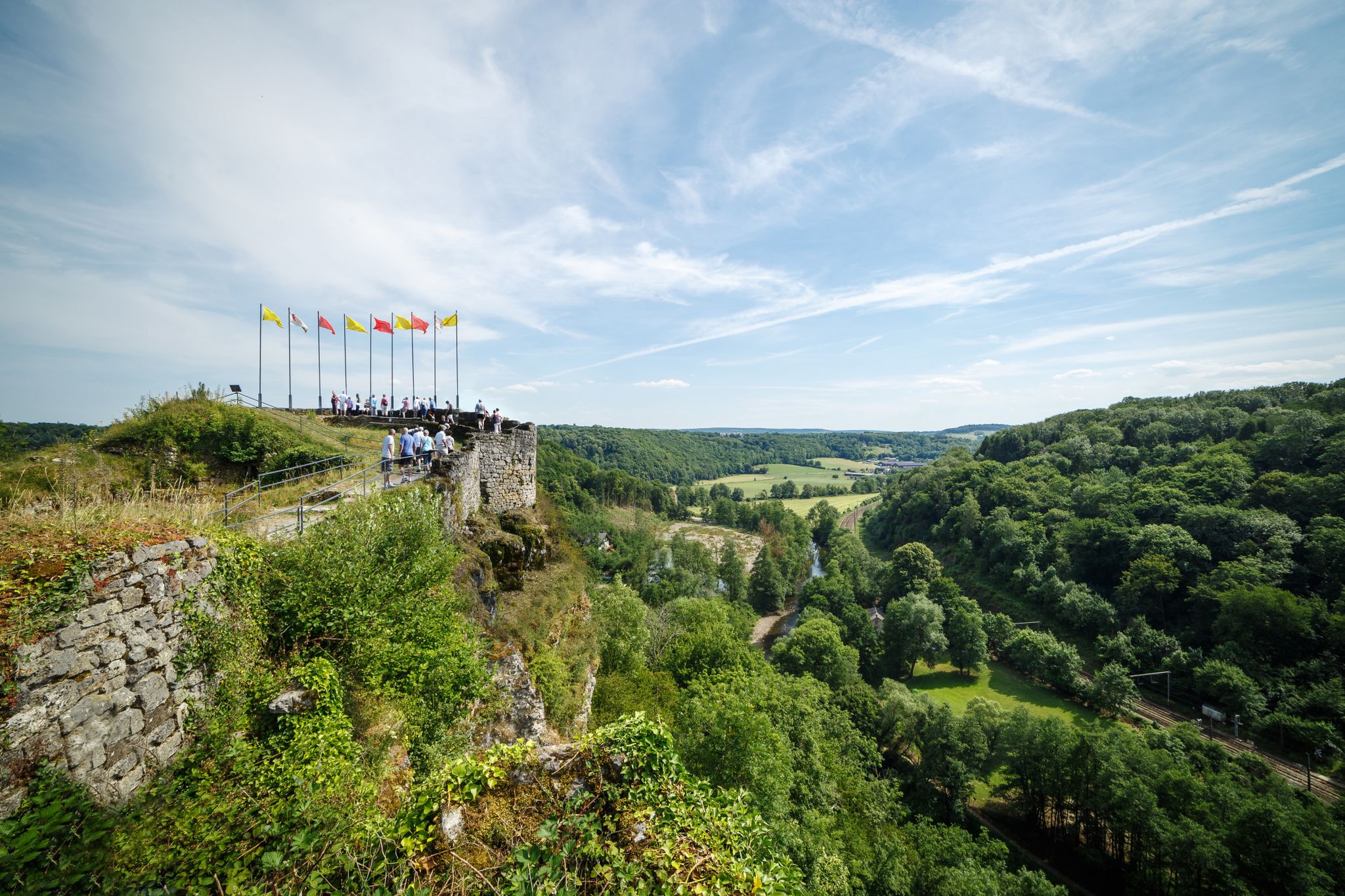
- Visitors also love Amblève Castle Ruins, a castle ruin offering a stunning view over the Amblève. The weathered stone walls and remains of towers provide an atmospheric glimpse into medieval history.
- Hamoir is known for fortified castles, classical châteaux, and medieval ruins. The region offers a variety of castles to see and explore, from well-preserved estates to historical archaeological sites.
- The castles around Hamoir are appreciated by the komoot community, with over 1300 upvotes and more than 500 photos shared by visitors.
Last updated: June 24, 2026
Durbuy — Old Town and Castle
Highlight • Settlement
Translated by Google •
Tip by

Bomal-sur-Ourthe Castle
Highlight • Castle
Info: durbuytourisme.be/hades_offre/le-chateau-de-bomal/?l=fr
Translated by Google •
Tip by

Sign up now to discover places like this
Get recommendations on the best single tracks, peaks, & plenty of other exciting outdoor places.
Sign up for free
Palogne Estate
Highlight • Rest Area
Translated by Google •
Tip by

Amblève Castle Ruins
Highlight • Castle
Tip by

Dieupart Castle Estate
Highlight • Castle
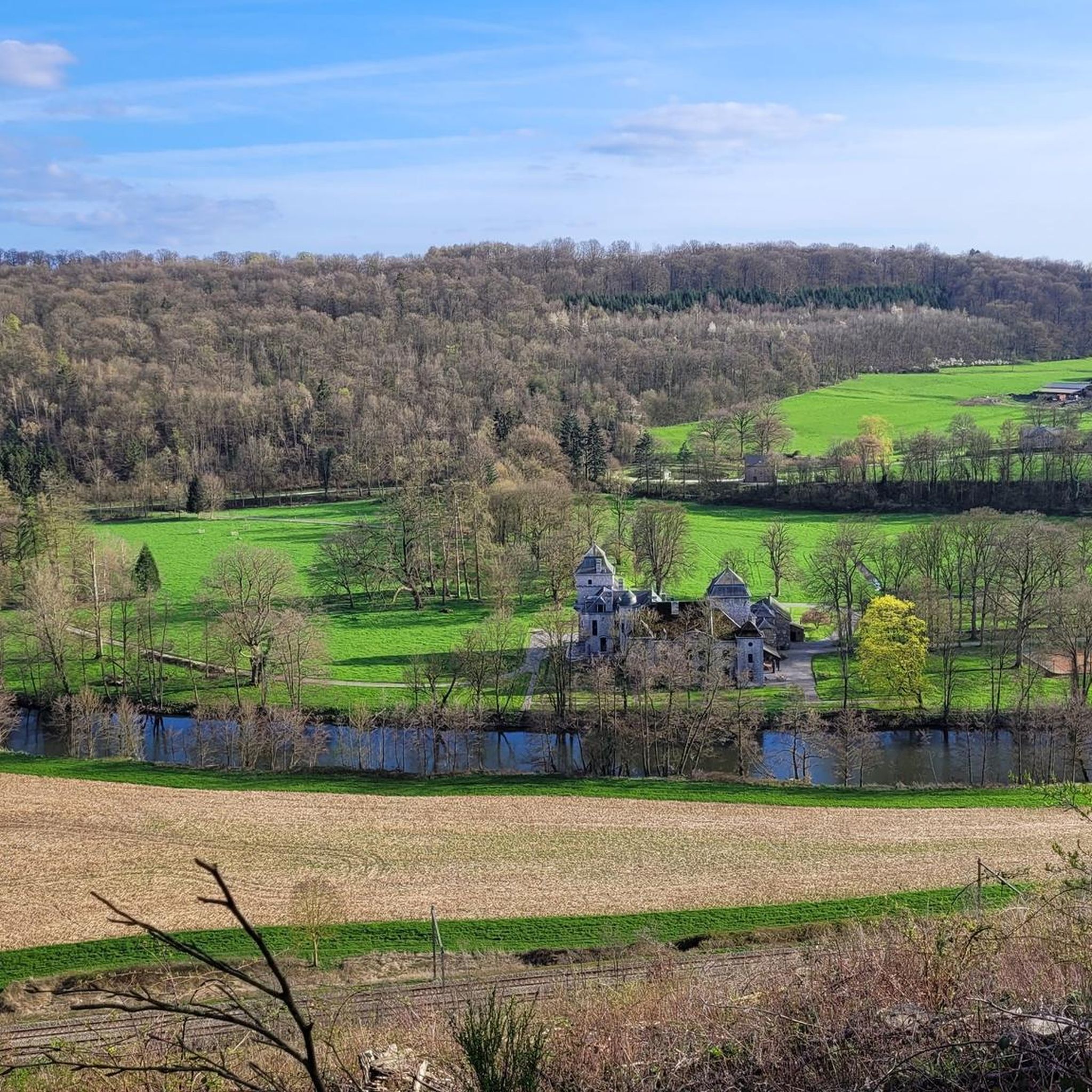
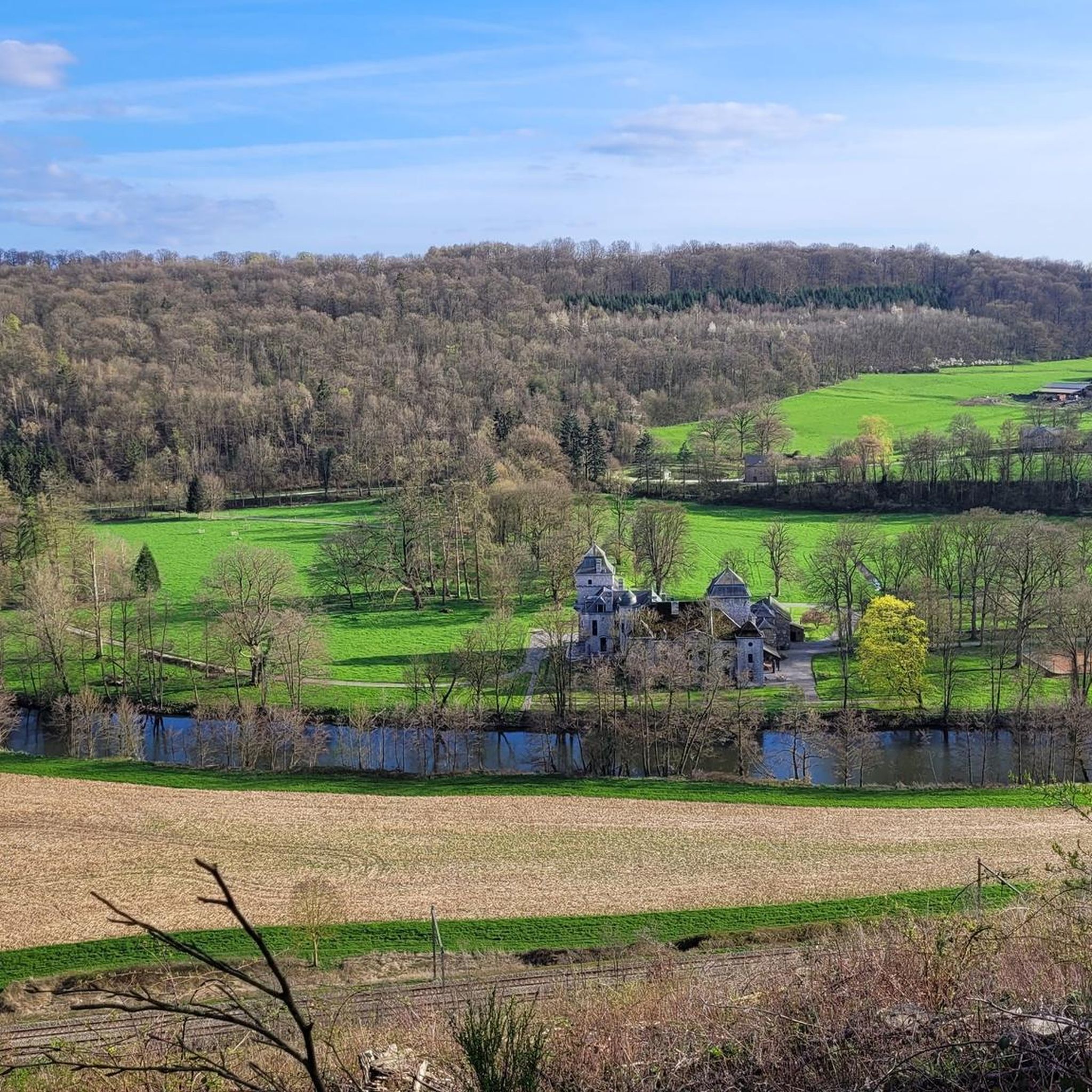
Framed by an avenue of protected purple beech trees, the Château de Dieupart presents itself in a significantly altered form today. Nevertheless, it retains an impressive late 17th-century façade on its southwest side, constructed of sandstone and limestone rubble. Some original architectural elements are still recognizable, including tall, round-arched windows on the ground floor and characteristic relieving arches.
The history of the site begins in the 15th century, when an ironworks with a blast furnace and forge developed here. In 1889, parts of these old facilities were converted into a power station. Later, the château was repurposed and transformed into a camping and caravanning center.
On the heights above Dieupart, there once stood another château, the "Vieux-Jardin" (Old Garden). This medieval structure no longer exists; it was destroyed in 1286 by John I of Brabant. According to legend, some of the limestone blocks used in the Church of Saints-Anges in Dieupart came from this former fortress. Remnants of the structure can still be found in the woods above the southern slope of Dieupart.
The Château de Dieupart has been a listed historical monument since December 11, 1986.
Translated by Google •
Tip by

Sign up for free to discover even more castles around Hamoir.
Sign up for free
Already have an account?
Start today with a free account
Your next adventure awaits.
Login or Signup
Popular around Hamoir




Tips from the Community

Ideal resting place during a longer hike.
0
0

Best to plan a whole day, the area is fantastically beautiful. Demanding - it's worth it! Every step and especially the section where the mountain goats live freely I find incredibly beautiful.
0
0

The following information is taken from an information panel on site: Framed by an avenue of protected purple beech trees, the Château de Dieupart presents itself in a significantly altered form today. Nevertheless, it retains an impressive late 17th-century façade on its southwest side, constructed of sandstone and limestone rubble. Some original architectural elements are still recognizable, including tall, round-arched windows on the ground floor and characteristic relieving arches. The history of the site begins in the 15th century, when an ironworks with a blast furnace and forge developed here. In 1889, parts of these old facilities were converted into a power station. Later, the château was repurposed and transformed into a camping and caravanning center. On the heights above Dieupart, there once stood another château, the "Vieux-Jardin" (Old Garden). This medieval structure no longer exists; it was destroyed in 1286 by John I of Brabant. According to legend, some of the limestone blocks used in the Church of Saints-Anges in Dieupart came from this former fortress. Remnants of the structure can still be found in the woods above the southern slope of Dieupart. The Château de Dieupart has been a listed historical monument since December 11, 1986.
44
0

Remains of an old medieval castle, estimated to have been built in the 10th century and destroyed in the 16th century. It is also known as the Castle of the Four Sons of Aymon (Chateau des 4 Fils Aymon). Privately owned by the lords who now live below in the new castle. From the ruins on the cliff, you have one of the most beautiful views of the Amblève River below, between Aywaille and Comblain.
0
0

mountain biking to do
0
0

Nice place for a coffee stop! The Château also has a campsite with Dutch owners, hence the fact that you will also find bitterballen on the menu of the chateau.
3
0

A lovely playground with challenging paths. Advice: walk crisscross through the vast ruins for a good fifteen minutes. Enjoy!
0
0

A local legend links the castle to the medieval story of the "Four Sons of Aymon" (Quatre Fils Aymon), in which four brothers, helped by their magical horse Bayard, flee from Charlemagne and take refuge in a fortress associated with Amblève Castle.
1
0
Frequently Asked Questions
Which castles around Hamoir are particularly suitable for families with children?
For families, the Palogne Estate is an excellent choice. It features the historic Château Fort de Logne, an archaeological museum, and offers interactive experiences like a treasure hunt. The estate also provides various outdoor activities such as hiking, cycling, and kayaking. Durbuy — Old Town and Castle, known as "the smallest town in the world," offers medieval alleys to explore, which can be fun for all ages. Bomal-sur-Ourthe Castle and Dieupart Castle Estate are also noted as family-friendly.
What historical insights can I gain from visiting castles in the Hamoir region?
The castles in the Hamoir region offer a deep dive into centuries of history. For instance, the Château de Lassus, located directly in Hamoir, dates back to the early 14th century and showcases architectural evolution from medieval origins to 18th-century grandeur. The Château de Modave, a magnificent Walloon Heritage Site, features well-preserved 17th-century interiors and a rich history of prestigious owners. The Château Fort de Logne, within the Palogne Estate, has a history stretching back to the 5th century, with an archaeological museum displaying artifacts and an interactive experience exploring medieval life.
Are there opportunities for outdoor activities near the castles?
Yes, the region around Hamoir's castles is rich in outdoor activities. The Palogne Estate, home to Château Fort de Logne, is a hub for activities like hiking, cycling, and kayaking in the Ourthe valley. You can find numerous routes for mountain biking, touring cycling, and road cycling. For example, explore the 'Anticline de Durbuy – Domaine de Palogne loop' for MTB or the 'Ourthe River – RAVeL route along the Ourthe loop' for touring bikes. More details on these routes can be found in the MTB Trails around Hamoir, Cycling around Hamoir, and Road Cycling Routes around Hamoir guides.
Which castles offer the most scenic views or natural surroundings?
Many castles in the Hamoir region are set in picturesque landscapes. The Château de Modave is perched on a rocky outcrop overlooking the Hoyoux valley, offering exceptional panoramic views from its restored terrace and is set within a vast 450-hectare nature reserve. The Amblève Castle Ruins provide a stunning view over the Amblève river. The Château Fort de Logne, located along the Ourthe River, also boasts panoramic views over the valley.
What is the best time of year to visit the castles around Hamoir?
The Château de Modave is typically open for visitors from April to October, making spring, summer, and early autumn ideal for exploring its interiors and gardens. Generally, these seasons offer pleasant weather for walking and cycling around the castle grounds and enjoying the natural beauty of the Ourthe valley. While some sites like the Palogne Estate may have year-round outdoor activities, checking specific opening hours for indoor attractions is recommended.
Are there any castle ruins to explore in the area?
Yes, the region features notable castle ruins. The Amblève Castle Ruins offer an atmospheric glimpse into medieval history with weathered stone walls and tower remains, providing a stunning view over the Amblève. The Château Fort de Logne, while largely in ruins, is a significant archaeological site within the Palogne Estate, revealing much about its past through excavations and a dedicated museum.
Can I stay overnight in or near any of the castles?
While many castles are private residences or museums, parts of the Château de Lassus (Hamoir-Lassus) offer holiday rentals in its outbuildings, allowing visitors a unique opportunity to stay in a historic setting. For other options, the Dieupart Castle Estate has been repurposed into a camping and caravanning center, offering accommodation along the Amblève river. The Palogne Estate also offers accommodation options nearby.
Which castle is known for its well-preserved interiors and furnishings?
The Château de Modave is particularly celebrated for its well-preserved historic interiors and furnishings. It features remarkable 17th-century stucco work on its ceilings, carved paneling, tapestries, and large painted canvases. Visitors can explore over 25 furnished rooms, predominantly with exceptional 18th and 19th-century pieces, providing a luxurious glimpse into the past.
Is there public transport available to reach the castles?
While specific public transport routes to each castle can vary, Hamoir serves as a central point. For detailed information on reaching specific castles like Modave, it's best to check local public transport schedules. The official website for Modave Castle may provide guidance on accessibility.
Are there any castles that are less known but worth visiting?
Beyond the more prominent sites, the Château de Lassus in Hamoir offers a unique experience as a largely private residence with parts available for rental, providing a more intimate encounter with history. Its architectural evolution from medieval to 18th-century styles is fascinating. The Dieupart Castle Estate, while now a camping center, still retains an impressive late 17th-century façade and a rich history, including remnants of an older medieval structure nearby.
What unique historical features can be found at these castles?
The castles in the Hamoir region boast several unique historical features. Château de Lassus has an internal chapel from 1633 and a chapel dedicated to Saint Peter from 1396. Château de Modave is notable for a room dedicated to a 17th-century hydraulic wheel, believed to have served as a model for the Machine de Marly at Versailles. The Château Fort de Logne at Palogne Estate offers an interactive treasure hunt called "Gatte d'Or" and displays hundreds of artifacts from archaeological excavations.
Can I find cafes or restaurants near the castles?
Yes, visitors can find dining options near some of the castles. The Palogne Estate, which encompasses the Château Fort de Logne, features a tavern-restaurant. The Dieupart Castle Estate also has a cafe on site. Additionally, the nearby town of Durbuy, home to Durbuy — Old Town and Castle, is known for its numerous cafes and restaurants.
Most popular routes around Hamoir
Most popular attractions around Hamoir

Get inspired with the komoot mobile app


Explore more
Looking for the best castles somewhere else? Discover other guides around Hamoir:
