Attractions and Places To See around Hamoir - Top 20
Best attractions and places to see around Hamoir include a blend of historical landmarks, natural beauty, and cultural points of interest. The region is defined by the Ourthe Valley and the Néblon Valley, offering a lush environment rich in flora and fauna. Visitors can explore historical structures, geological formations, and scenic river paths. Hamoir also features cultural sites tied to its heritage and arts.
Best attractions and places to see around Hamoir
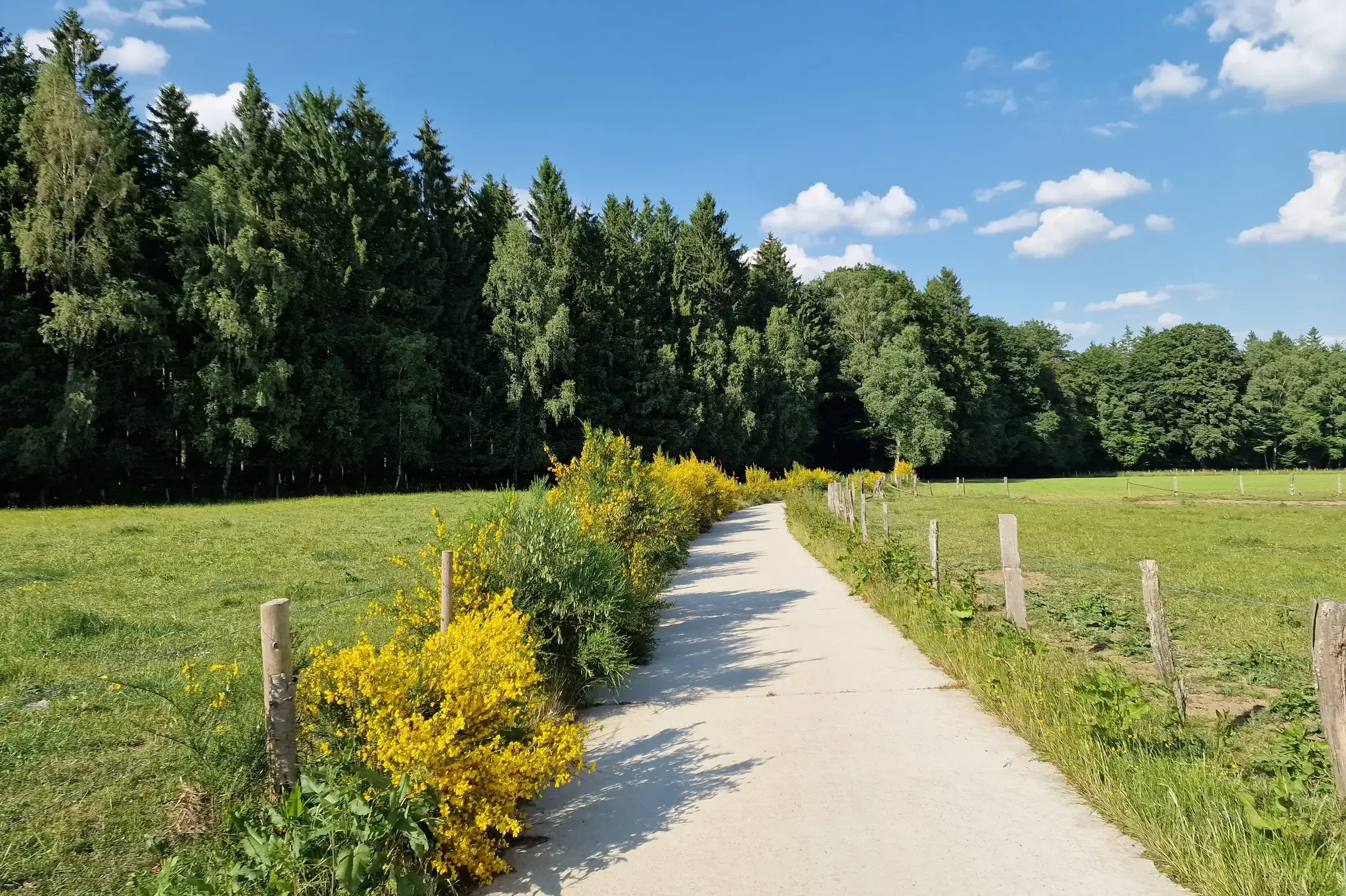
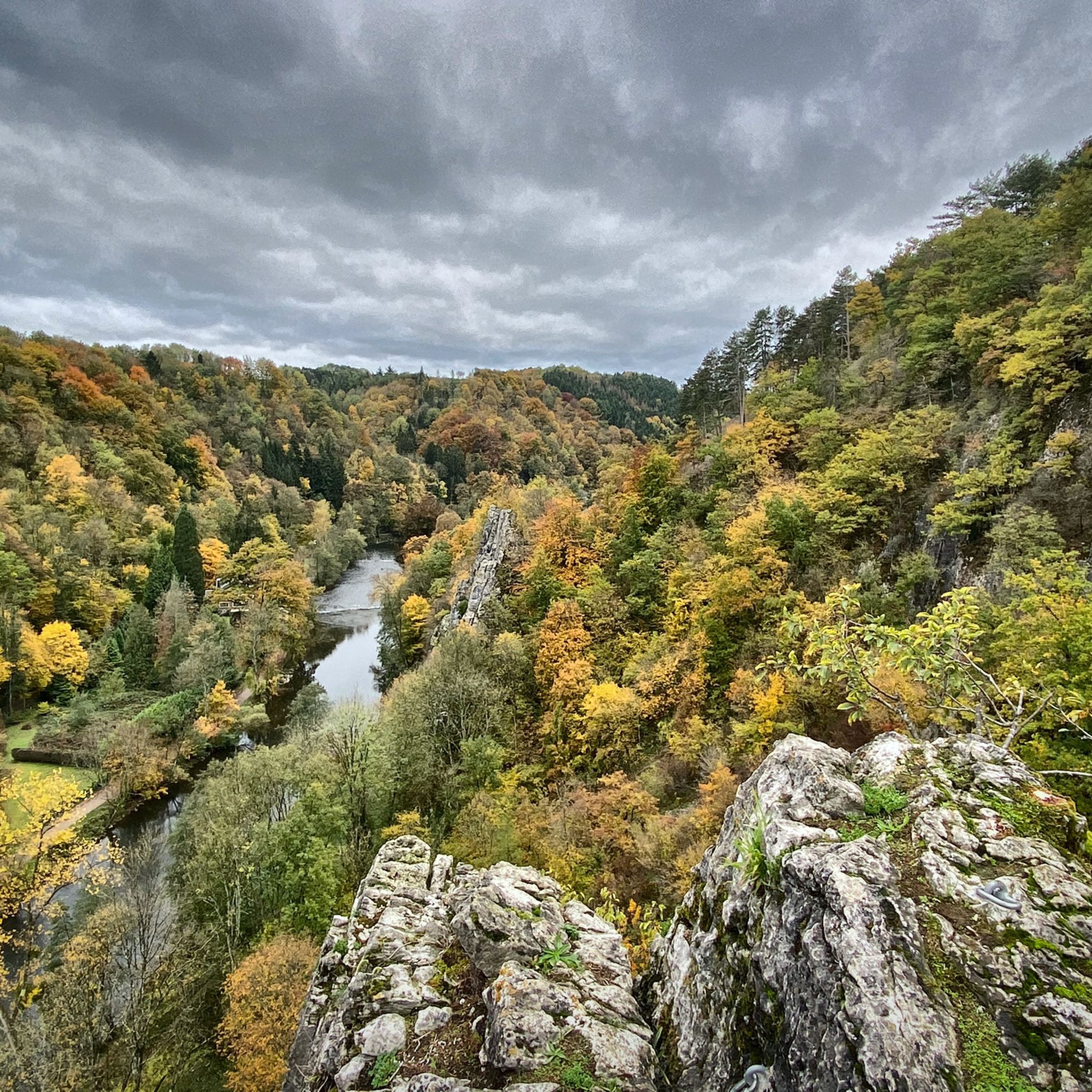
- The most popular attractions is Ninglinspo Valley, a gorge that offers impressive hiking opportunities in a beautiful landscape. It is considered one of the most scenic hikes in the Ardennes.
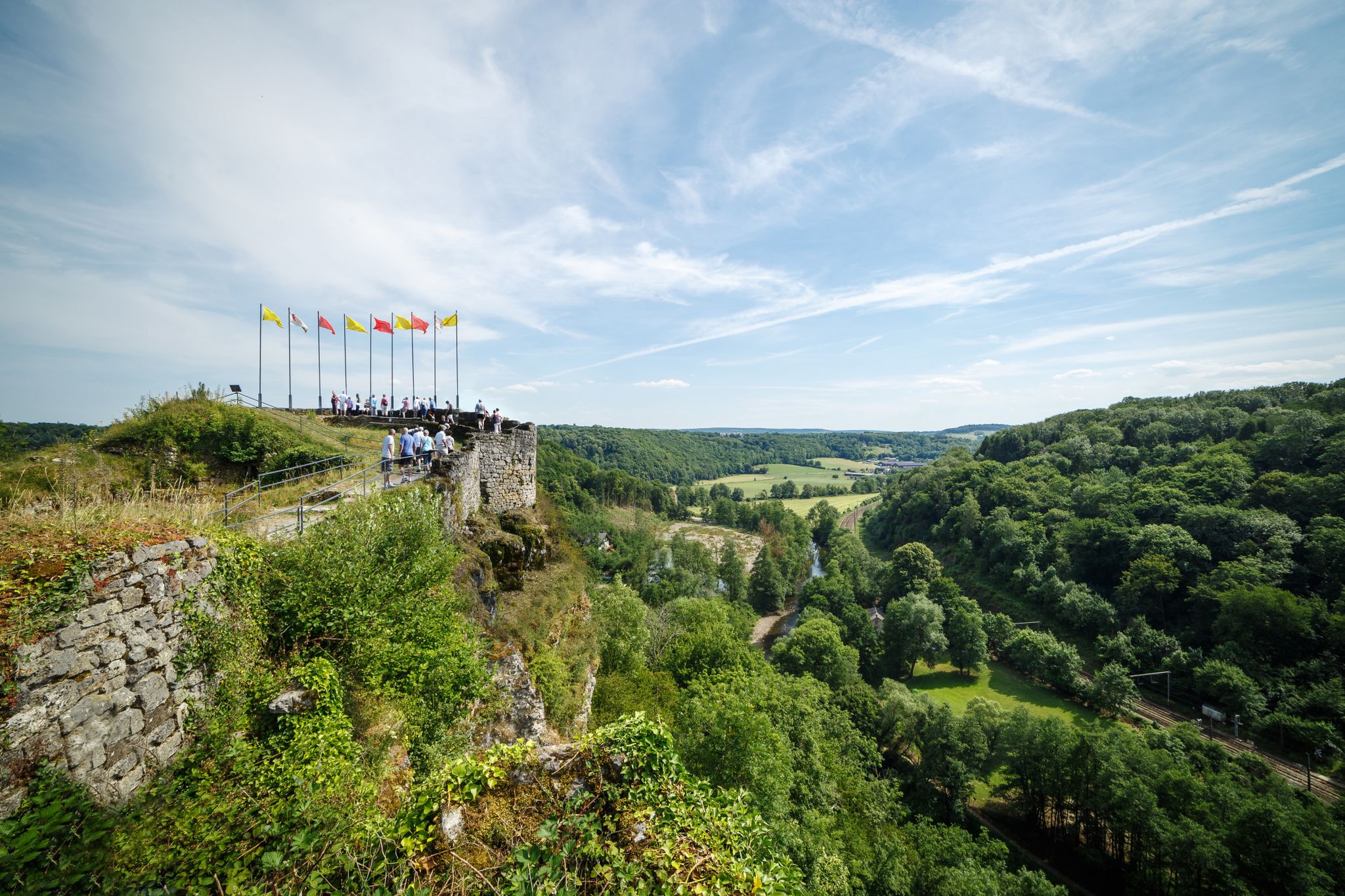
- Another must-see spot is Durbuy — Old Town and Castle, a settlement nicknamed "the smallest town in the world". This location features medieval alleys and a castle, offering a glimpse into history.
- Visitors also love Chaudière Waterfall, a natural monument where water flows over smooth grooves into a lower basin. This small waterfall is part of a series of streams and cascades.
- Hamoir is known for its historical landmarks, natural features, and cultural sites. The area offers a variety of attractions to see and explore, from ancient churches to geological formations and scenic river valleys.
- The attractions around Hamoir are appreciated by the komoot community, with more than 1300 upvotes and over 500 photos shared by visitors.
Last updated: October 10, 2026
Ninglinspo Valley
Highlight (Segment) • Gorge
Tip by

Durbuy — Old Town and Castle
Highlight • Settlement
Translated by Google •
Tip by

Sign up now to discover places like this
Get recommendations on the best single tracks, peaks, & plenty of other exciting outdoor places.
Durbuy Bridge - 1725
Highlight • Bridge
The bridge and the mill disappear in 1909. A new, wider bridge is built, but it is destroyed in 1940 by the Belgian army.
The current bridge dates from 1954. Three construction dates are engraved on the bronze cross in the middle of the bridge.
Translated by Google •
Tip by

The Anticline
Highlight • Natural Monument
The imposing rock is located on the water and is surrounded by a fountain. Right opposite the rock, you will find a cozy square where you can have a drink or rest.
Source: Itineraries
Translated by Google •
Tip by

Chaudière Waterfall
Highlight • Waterfall
Source: mini-ardenne.be/poi.card.php?language=fr&id=5458
Translated by Google •
Tip by

Sign up for free to discover even more attractions around Hamoir.
Already have an account?
Start today with a free account
Your next adventure awaits.
Popular around Hamoir




Tips from the Community

A beautiful bridge with a view of the castle
1
0


On the side of the bridge, you'll find a four-language (FR/NL/DE/UK) information board with the information about the bridge Herwig mentions. It could use replacing. Other interesting facts about the bridge with visible remains: the metal cross, surmounted by a cast and painted iron statue of Christ on the railing, dates from the eighteenth century. As mentioned, the limestone base inscribes the construction years of the various successive bridges: 1725, 1909, and 1954. The base of the cross itself has also been replaced. The previous one, also part of the city's small heritage, stands on the side of the church next to the old graves. This stone stood there between 1909 and 1940 and was blown up during the war. It was replaced in 1954, just like the bridge. If you go down the stairs towards the parking lot on the other side of the bridge (the side with the information board), you will see another reminder, remains and information about the mill.
6
0
At approximately 37 meters, the top of the Anticline, also known as the Homalius Rock and especially the Falize Rock, is literally the highest point in Durbuy. It has been a highlight for many visitors for years, thanks in part to the surroundings and beautiful water features. The rock is somewhat older than the average visitor. It's said to be more than 300 million years old. However, the rock layers are much older: around 375 million years old. The name Anticline comes from the geological phenomenon known as an anticline. It's the opposite of a syncline. While the former is a fold formed over many years, with the innermost layers being the oldest and the folds running downwards, synclines have folds running downwards. Such folds can form for various reasons and range from very small to large, as seen here. Originally, everything was, of course, horizontal. The inverted U-shape created by uplift in Durbuy is not only beautiful to see but also special. And Durbuy has beautifully highlighted this. Another beautiful anticline can be found in Han-sur-Lesse, also in the Famenne-Ardenne region, albeit in the province of Namur (here we are in Luxembourg), where it has been given the name "Tête de bouc" (Tick of the Rock). There's a waterfall and a large water feature at the end of the expansive pond in front of the rock, which you can also climb. And everywhere there's space to admire it all while sitting and relaxing—or enjoying the water. Don't forget the many smaller works of art and curiosities, and take a look in the water.
8
0

A city with a lot of charm 🤩 I fell in love with this city. We'll be back 😊
2
0

This impressive geological formation consists of a succession of dolomitic limestone layers that were pushed up by earthquakes of the earth's crust. Quite impressive. A location to take a photo.
4
1

Impressive natural phenomenon. Exposed in the old bed of the Ourthe. On the town square there is still a small anticline visible on which the castle is partly built.
3
0
Impressive town, actually one big highlight.
3
0
Frequently Asked Questions
What natural attractions can I explore around Hamoir?
The region is rich in natural beauty. You can visit the stunning Ninglinspo Valley, known for its impressive hiking opportunities and scenic landscape. Another highlight is the Chaudière Waterfall, where water flows over smooth grooves into a lower basin. The Ourthe and Néblon Valleys themselves offer lush environments, and you can also discover the unique geological formation of The Anticline, also known as the Homalius rock or Falize, an over 300-year-old inverted 'u' shaped rock formation.
Are there historical sites or cultural landmarks to visit in Hamoir?
Yes, Hamoir and its surroundings boast a rich historical and cultural heritage. You can explore the charming Durbuy — Old Town and Castle, often called 'the smallest town in the world,' with its medieval alleys. Significant religious sites include the Saint-Pierre of Xhignesse Church and the Hamoir church, both featuring works by the renowned Baroque sculptor Jean Del Cour. Other historical buildings include the Castle of Insegotte, Courtyard of Renne Castle, Castle of Lassus, and the Château de Vieux Fourneau.
What kind of outdoor activities can I do near Hamoir's attractions?
The Hamoir region is perfect for outdoor enthusiasts. You can enjoy various activities like hiking, cycling, and running. The running trails offer routes like the 'Hamoir Bridge – View of Hamoir loop.' For mountain hikes, consider routes around the Sy Rocks. Cyclists can explore the 'Ourthe River – RAVeL route along the Ourthe loop' or 'The Ourthe Valley' via cycling routes. Kayaking on the Ourthe River is also a popular option.
Are there family-friendly attractions around Hamoir?
Absolutely! Many attractions are suitable for families. Durbuy — Old Town and Castle is a great place for families to stroll through medieval alleys. The Anticline geological formation and the Durbuy Bridge - 1725 are also listed as family-friendly. Additionally, activities like geocaching and treasure hunts are available in the region for interactive discovery.
Where can I find scenic viewpoints in the Hamoir area?
Several spots offer beautiful views. The Ninglinspo Valley provides impressive vistas during its hikes. Durbuy itself, with its elevated castle, offers panoramic views of the town and river. The Anticline is not only a geological wonder but also a viewpoint, and the Chaudière Waterfall area provides picturesque natural scenery.
What is unique about Durbuy, near Hamoir?
Durbuy is famously nicknamed 'the smallest town in the world.' It's an open-air history book with well-preserved medieval alleys and a castle, offering a charming glimpse into the past. Despite its small size, it attracts many visitors due to its picturesque setting on the banks of the Ourthe River and its rich history.
Are there any notable geological formations in the region?
Yes, the region is home to fascinating geological features. The most prominent is The Anticline, also known as the Homalius rock or Falize, which is an over 300-year-old anticline formation with a distinctive inverted 'u' shape. The Ourthe River valley also features geological curiosities like 'Les Tartines' and various quarries.
What is the Ravel de l'Ourthe?
The Ravel de l'Ourthe is a picturesque path that runs along the Ourthe River. It's an excellent route for walking and cycling, allowing visitors to admire the natural beauty of the valley, including geological curiosities and rocky massifs like the Rochers du Bout du Monde. It's part of the broader RAVeL network of greenways.
What is the legacy of Jean Del Cour in Hamoir?
Jean Del Cour, a celebrated Baroque sculptor, was born in Hamoir, and his legacy is deeply embedded in the area. His works can be found in local churches, including the Saint-Pierre of Xhignesse Church and the Hamoir church. A bronze Virgin and Child sculpture, attributed to his influence, is also located on Place Del Cour.
What do visitors enjoy most about the attractions around Hamoir?
Visitors frequently praise the natural beauty and the impressive hiking opportunities, especially in the Ninglinspo Valley, often described as one of the most scenic hikes in the Ardennes. The charm of Durbuy — Old Town and Castle, with its historic atmosphere, is also highly appreciated. Many enjoy the unique geological formations and the overall picturesque scenery of the Ourthe Valley.
Can I find charming villages to explore near Hamoir?
Yes, the commune of Hamoir encompasses several charming villages and hamlets, each offering unique discoveries. These include Comblain-la-Tour, Fairon, Filot, Xhignesse, Tabreux, Lassus, Comblinay, Lawé, Spârmont, Chirmont, and Insegotte, all worth exploring for their local character and traditions.
Most popular routes around Hamoir
Most popular attractions around Hamoir

Get inspired with the komoot mobile app


Explore more
Still not found the Highlight you’re looking for? See guides of the top attractions in other regions:
