Attractions and Places To See around Biddobrana/Villaurbana - Top 20
Best attractions and places to see around Biddobrana/Villaurbana, a town in the province of Oristano, Sardinia, offers a mix of historical, cultural, and natural attractions. The region is characterized by its position between Monte Arci and Monte Grighine, with cultivated fields, olive groves, and vineyards. It features ancient Nuraghe structures, the Tirso River, and significant Roman historical sites. This area provides diverse points of interest for visitors.
Best attractions and places to see around Biddobrana/Villaurbana
- The most popular attractions is…
Last updated: May 11, 2026
Fordongianus Roman Baths
Highlight • Historical Site
Translated by Google •
Tip by

Casa Aragonese
Highlight • Historical Site
Translated by Google •
Tip by

Sign up now to discover places like this
Get recommendations on the best single tracks, peaks, & plenty of other exciting outdoor places.
Sign up for free
Tirso River and Stone Bridge in Fordongianus
Highlight • River
It rises as Riu de su Campo north of Bitti, in the province of Nuoro on the east side of the island, …
Translated by Google •
Tip by

Monte Arci - Beda Manca Viewpoint (approx. 600 m a.s.l.)
Highlight • Viewpoint
Translated by Google •
Tip by

Church of San Lussorio
Highlight • Religious Site
Translated by Google •
Tip by

Sign up for free to discover even more attractions around Biddobrana/Villaurbana.
Sign up for free
Already have an account?
Start today with a free account
Your next adventure awaits.
Login or Signup

Tips from the Community

It's worth a visit, the architecture is interesting and the audio guide gives you detailed information about what you see. Entrance to the baths is included in the price (or vice versa). So if you see one you can also see the other as they are just a few minutes drive or probably 5-10 minutes walk away
1
0
The Tirso is the longest river in Sardinia. It rises as Riu de su Campo north of Bitti, in the province of Nuoro on the east side of the island, flows through the Lago Omodeo reservoir and flows into Oristano on the west side of the island. In the middle reaches it is spanned by the Ponte Ezzu, an old Roman bridge, near Illorai. It is 150 km long and is only navigable in the last few kilometers. The fertile plain north of Oristano through which it flows is called the Tirso plain.
1
0

The pretty church was built from red trachyte. It is named after San Lussorio, a Roman soldier who was converted to Christianity. He suffered his martyrdom here during the persecution of Christians under Diocletian. In the 4th century, an underground tomb was built in his honor, which today forms the church's crypt. The Romanesque-style church was built in the 12th century by Vittorini monks who made it their mission to enhance the sites of martyrs. The church was actually closed, but after a call a nice lady came by and opened the small area for us.
0
0

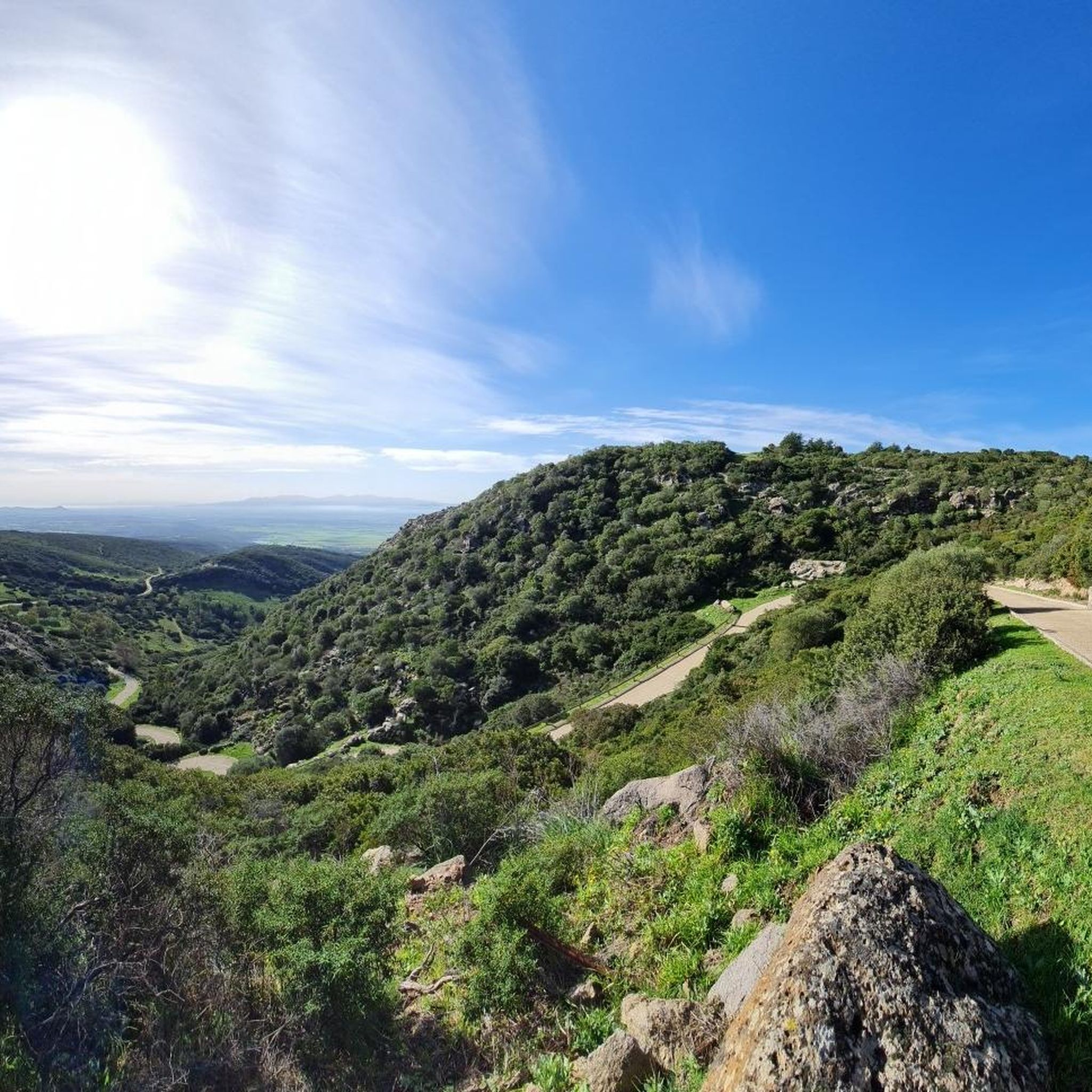
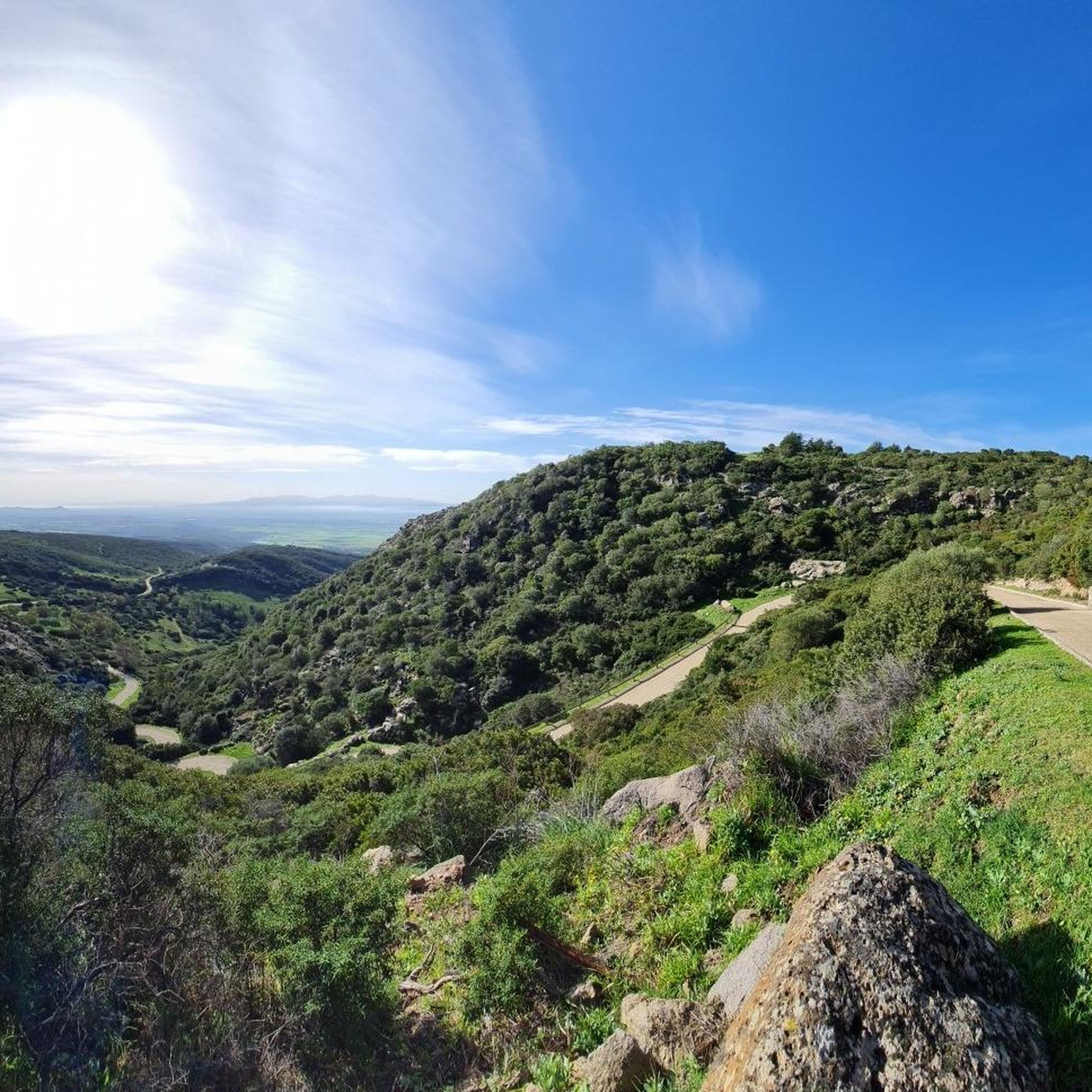
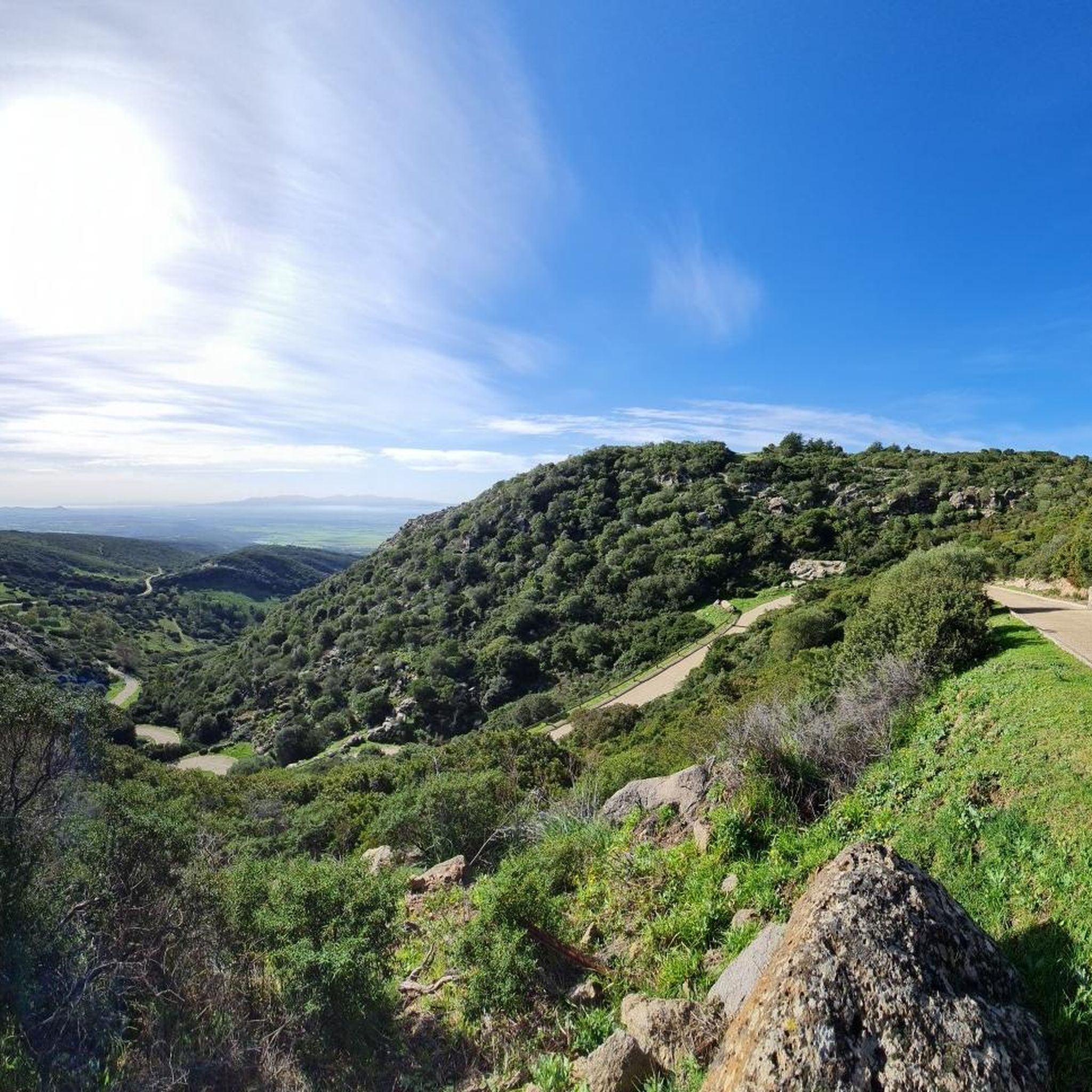
The view of the Oristano valley from Monte Arci is spectacular
1
0

The Aragonese House is a splendid example of stately architecture dating back to around the 16th-17th century. The house is divided into two parts and one of these houses a museum. Not far from here stands the church of San Pietro Apostolo.
1
0
The pretty Casa Aragonese is a typical residence of the country gentry and was built in the 16th century from red trachyte stone. The windows and door frames built in the Spanish-Aragonese style, which also gave the house its name, are striking. Admission to Casa Aragonese is included in the Roman Baths ticket. Attention: closed on Mondays! Current information is available here: https://www.forumtraiani.it/casa-aragonese/
0
0
The thermal baths are managed by the Cooperative Forum Traiani. Current opening times can be found here: https://www.forumtraiani.it/what-to-see/?lang=en
0
0
It was once the Forum Traiani, the most important Roman city in the island's hinterland, founded in the late Republic and becoming a marketplace between the inland communities and the Romanized population of the Gulf of Oristano under Emperor Trajan. Today Fordongianus is a small town of less than a thousand inhabitants in the Barigadu area, a renowned wellness center thanks to a thermal facility that uses saline and thermoactive water springs that flow at 56 degrees all year round and have beneficial effects on the body. A feature known to the Romans: the city is situated on the left bank of the fertile and lush valley of the Tirso, home to the warm and healing Aquae Ypsitanae, Roman baths from the 1st century AD, now an archaeological site. Two facilities can be visited, one retains a rectangular porticoed swimming pool, originally with a barrel vault, the other includes the changing room. The floor was in mosaic (you will see traces of it) and the ceiling in blue glass paste. The supply was ensured by a network of canals and a system of wells and cisterns. The importance of the thermal baths is confirmed by two statues of the god Bes, deity of health cults, and by a sacred space dedicated to the nymphs. Source: https://www.sardegnaturismo.it/en/discover/fordongianus
0
0
Frequently Asked Questions
What historical sites can I explore around Biddobrana/Villaurbana?
The region is rich in history. You can visit the Fordongianus Roman Baths, a significant Roman town and marketplace with well-preserved ruins and naturally flowing warm waters. Another notable site is Casa Aragonese, an impressive 16th-17th century architectural example, part of which houses a museum. Additionally, the area boasts over 50 ancient Nuraghe structures, such as Bau Menda and Turriu, and several Tombs of Giants.
Are there any natural viewpoints or scenic spots in the area?
Yes, for panoramic views, head to the Monte Arci - Beda Manca Viewpoint (approx. 600 m a.s.l.). From here, you can enjoy vistas that encompass the entire Gulf of Oristano. The region is also characterized by the Tirso River, Sardinia's longest, and the picturesque valley between Monte Arci and Monte Grighine, filled with cultivated fields, olive groves, and vineyards.
What outdoor activities are available near Biddobrana/Villaurbana?
The landscape around Biddobrana/Villaurbana is ideal for various outdoor activities. You can find numerous routes for road cycling, trekking, hiking, and mountain biking. For cycling enthusiasts, explore options like the 'Nuraghe Bau Mendula – On quiet country roads loop' or the 'Monte Arci viewpoint loop'. Mountain bikers can tackle trails such as 'Picnic Area in the Shade – singletrack Pau (S0) loop'. You can find more details and routes on the Cycling around Biddobrana/Villaurbana, MTB Trails around Biddobrana/Villaurbana, and Road Cycling Routes around Biddobrana/Villaurbana guide pages.
Where can I see the Tirso River and its historical bridge?
The Tirso River, Sardinia's longest, flows through the region. You can see it and the ancient Roman bridge, Tirso River and Stone Bridge in Fordongianus, near Fordongianus. This area offers an idyllic setting, with the river flowing under a bridge made of reddish trachyte blocks.
Are there any family-friendly attractions in the Biddobrana/Villaurbana area?
Yes, several attractions are suitable for families. The Casa Aragonese, with its museum, offers an engaging historical experience. The Tirso River and Stone Bridge in Fordongianus is also considered family-friendly, offering a pleasant natural setting. Exploring some of the less strenuous Nuraghe structures can also be an interesting outing for families.
What cultural experiences can I find in Villaurbana?
In Villaurbana, you can visit the Parish Church of Santa Margherita, a Baroque-style church built in 1717. The town also hosts the Casa-museo del Pane (House-Museum of Bread), which showcases traditional and industrial bread-making processes and often holds tasting workshops, especially during the Sagra de Su Pani Fattu in Domu (Bread Festival) at the end of October.
Is there a museum dedicated to obsidian nearby?
Yes, the Museo dell'Ossidiana (Obsidian Museum) is located in Pau, which is a short distance from Villaurbana. This museum offers insights into the history and uses of obsidian, a volcanic glass found in the region.
What is the Santa Giusta Pond and what can I see there?
The Santa Giusta Lagoon is the third-largest pond in Sardinia, situated between Oristano and Santa Giusta. It's a significant natural feature where you can observe various nesting bird species like mallards, coots, and gray herons. The pond's waters are also home to fish such as mullet, eels, and crabs.
What is the best time of year to visit Biddobrana/Villaurbana for outdoor activities?
The region's climate, characterized by its position between Monte Arci and Monte Grighine, makes it suitable for outdoor activities for much of the year. Spring and autumn generally offer pleasant temperatures for hiking, cycling, and exploring historical sites. Late October is notable for the Sagra de Su Pani Fattu in Domu (Bread Festival) in Villaurbana.
Are there any specific hiking trails recommended for beginners or easy walks?
While specific beginner hiking trails are not detailed in the provided data, the region's diverse landscape offers various terrains. You can explore the areas around the Tirso River for easier walks or consider the lower slopes of Monte Arci. For more detailed trail information, refer to the Cycling around Biddobrana/Villaurbana, MTB Trails around Biddobrana/Villaurbana, and Road Cycling Routes around Biddobrana/Villaurbana guide pages, which often include routes with varying difficulty levels.
What do visitors particularly enjoy about the attractions in Biddobrana/Villaurbana?
Visitors appreciate the blend of history and nature. For instance, the Fordongianus Roman Baths are loved for their ancient remains enriched by warm waters. The Monte Arci - Beda Manca Viewpoint (approx. 600 m a.s.l.) is highly rated for its spectacular views of the Oristano valley and Gulf. The Casa Aragonese is noted for its interesting architecture and informative audio guides, offering deep insights into the region's past.
Are there any ancient Nuraghe structures I can visit near Villaurbana?
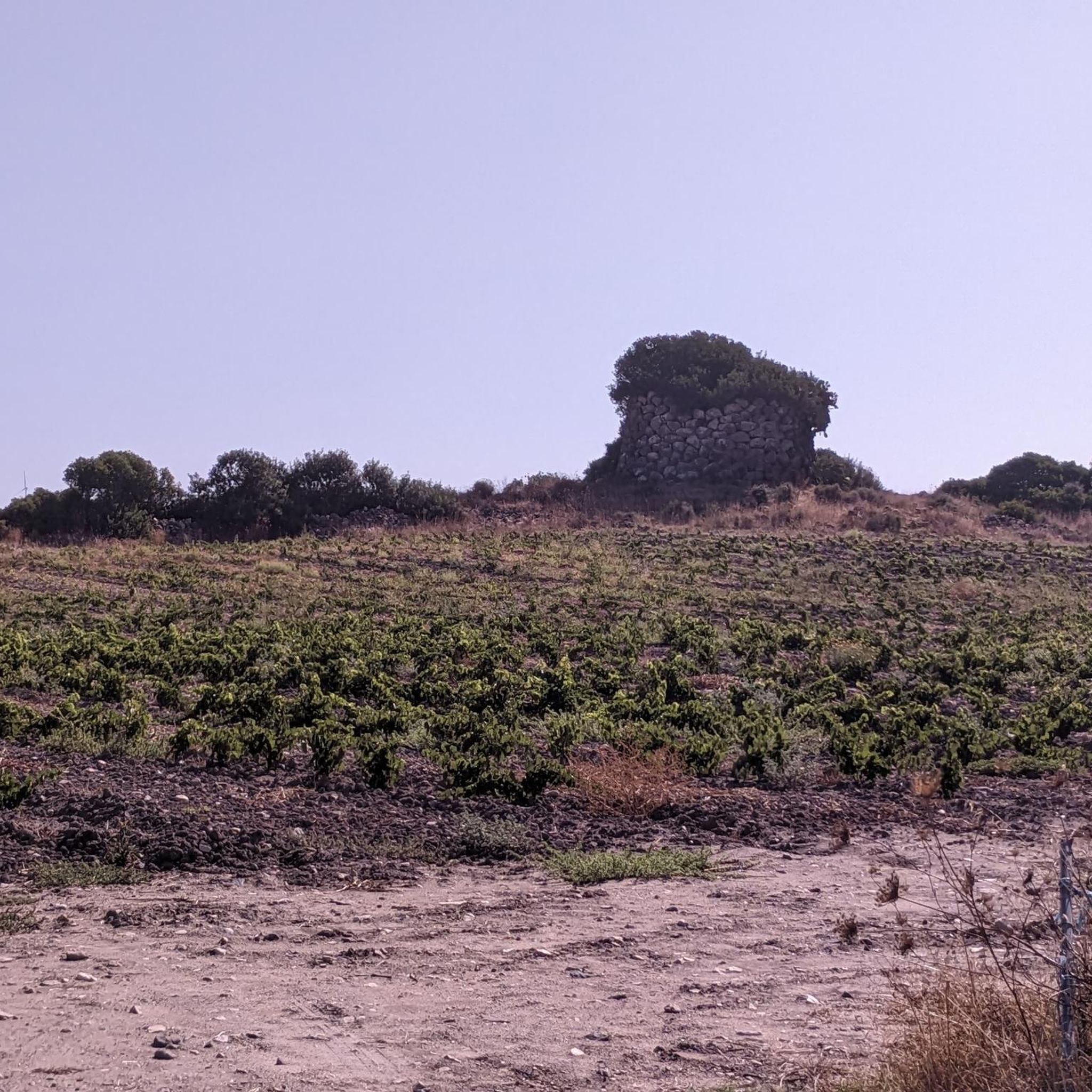
Yes, the territory around Villaurbana is dotted with over 50 ancient Nuraghe structures. Several are well-preserved and accessible, including Bau Menda, Bidella, Cabras Crannaxiu, Porcilis, and Turriu. These megalithic edifices offer a fascinating glimpse into Sardinia's ancient civilizations.
Most popular routes around Biddobrana/Villaurbana
Most popular attractions around Biddobrana/Villaurbana

Get inspired with the komoot mobile app


Explore more
Still not found the Highlight you’re looking for? See guides of the top attractions in other regions:
