Attractions and Places To See around Pertosa - Top 20
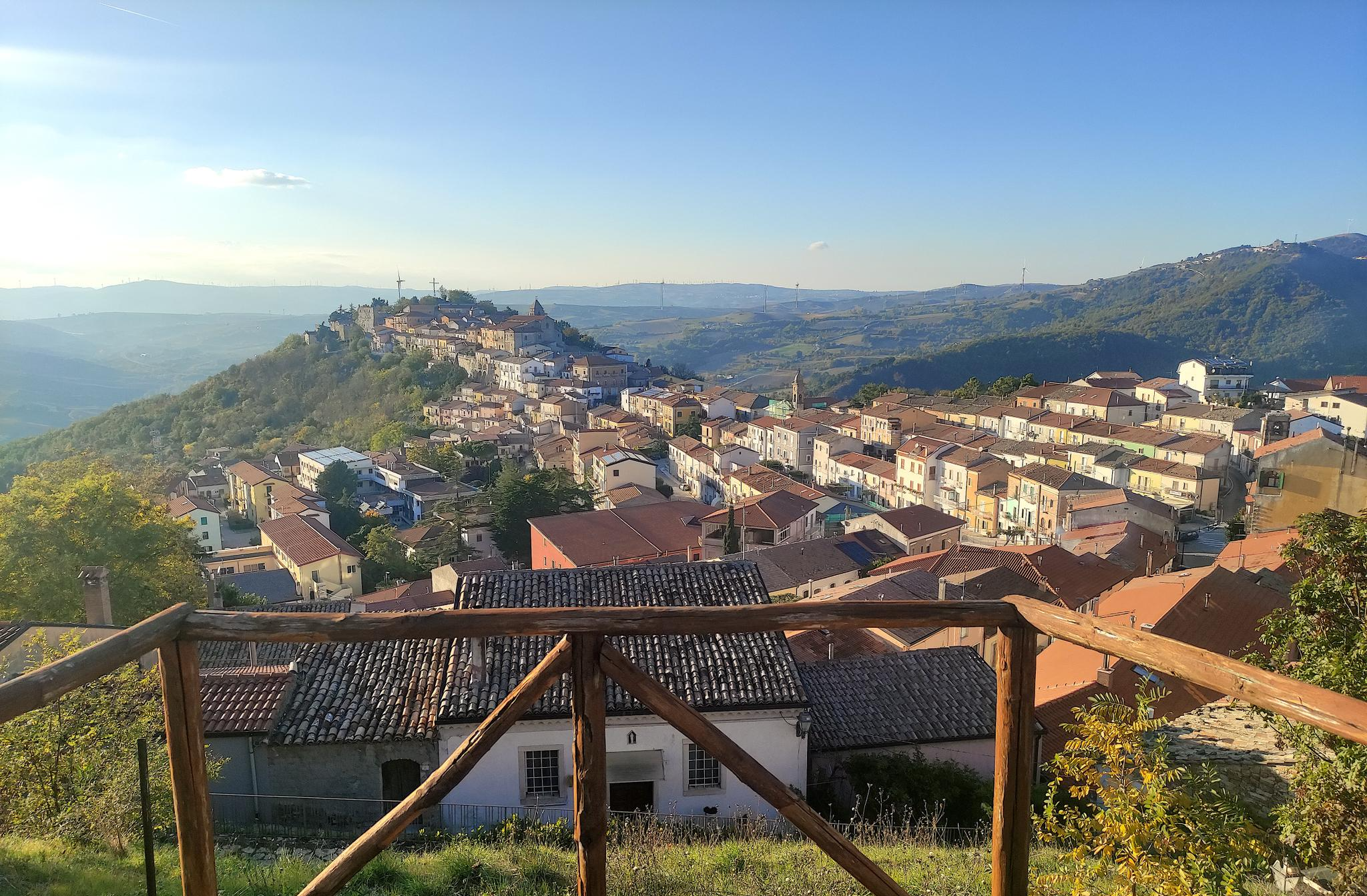
Best attractions and places to see around Pertosa include a blend of natural wonders and historical sites. This village, situated in the green Alburni Mountains of Campania, Italy, is known for its extensive karst caves and the Tanagro River. The area offers diverse landscapes, from mountain peaks to river valleys, providing a range of exploration opportunities.
Best attractions and places to see around Pertosa
- The most popular attractions is Summit of Monte Panormo, a summit located at an altitude of 1,742 meters. From its peak, visitors can experience wide views of the surrounding woods and other peaks.
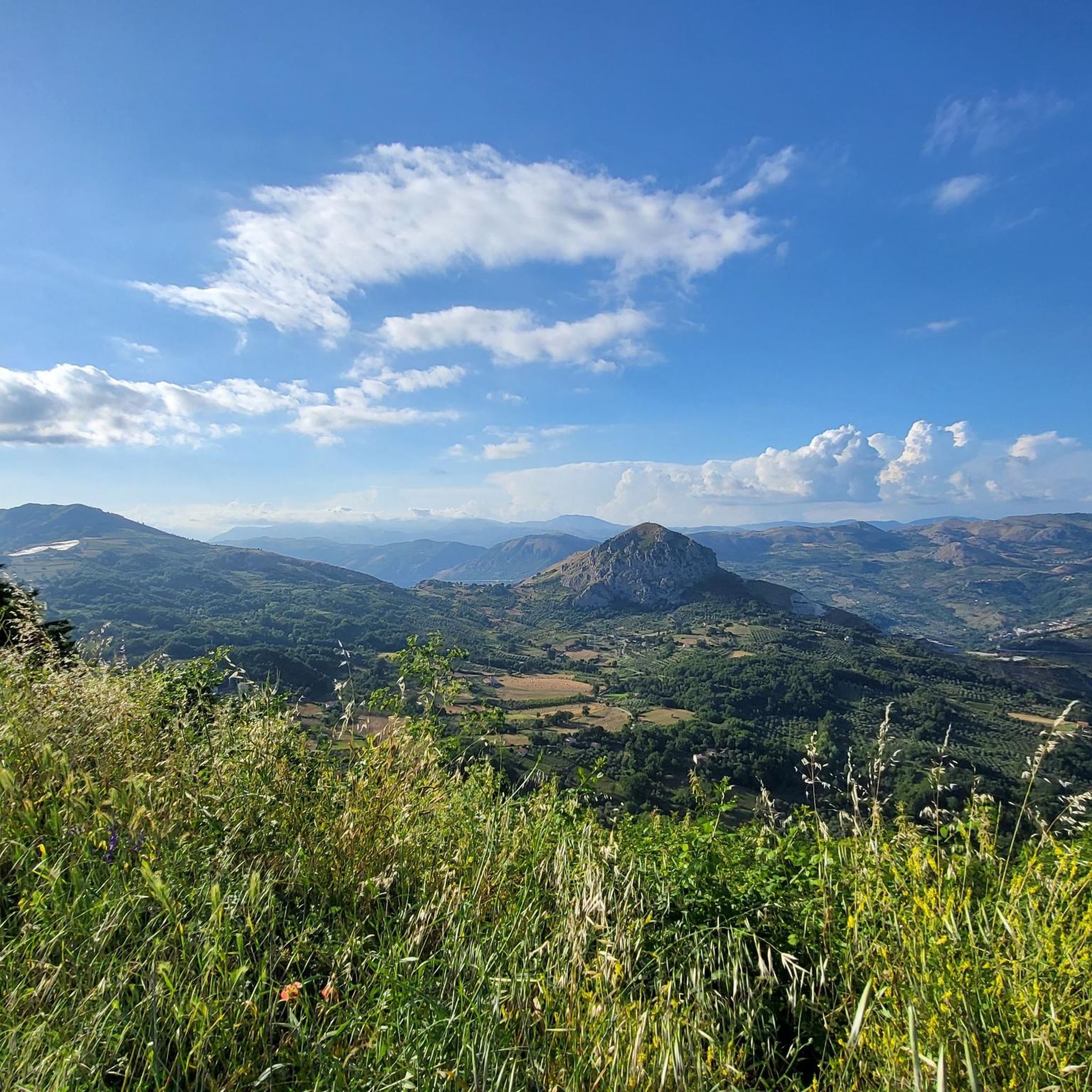
- Another must-see spot is Il Figliolo Summit, a rocky spur. Reaching the summit offers a 360-degree view, marked by a statue of the Madonna.
- Visitors also love Aresta di Petina Astronomical Observatory, an other man-made attraction. This observatory is located on top of the Alburni, at 1300 meters above sea level, within the Cilento and Vallo di Diano National Park.
- Pertosa is known for its natural features like mountains and valleys, as well as historical and cultural sites. Visitors can explore caves, historical centers, and various viewpoints.
- The attractions around Pertosa are appreciated by the komoot community, with 10 upvotes and 31 photos shared by visitors.
Last updated: July 2, 2026
Il Figliolo Summit
Highlight • Summit
WARNINGS for those who want to reach the summit of Figliolo (see photo!)
For the more adventurous you can climb to the top of Figliolo, to do so go around the wall towards SE climbing on a gravelly trail up to a crack between the rocks. You will find a huge boulder stuck between the walls, you have to go beyond it and you have to climb in this crack between the rocks (you need a bit of agility and caution especially when going down). You climb up reaching the summit ridge, paying attention to a slightly exposed section and avoiding the side where more friable rock is visible (yellow color). From the Madonna on the summit you can read Monte Figliolo 1337 m. The view is phenomenal and worth the little "climb" but, it is NOT for everyone, you need good mountaineering experience and you must not suffer from vertigo.
Translated by Google •
Tip by

Summit of Monte Panormo
Highlight • Summit
Translated by Google •
Tip by

Sign up now to discover places like this
Get recommendations on the best single tracks, peaks, & plenty of other exciting outdoor places.
Sign up for free
Antece – Costa Palomba
Highlight • Monument
ilborghista.it/dettaglio-da-fare-antece--patrimonio-unesco--sant-angelo-a-fasanella-sa-202
Translated by Google •
Tip by
Aresta di Petina Astronomical Observatory
Highlight • Structure
The Aresta di Petina astronomical observatory is located on top of the Alburni, at 1300 meters above sea level, in the Cilento and Vallo di Diano National Park.
cielomareterra.org/node/163
Translated by Google •
Tip by
Scenic road overlooking the Tanagro Valley
Highlight • Mountain Pass
Translated by Google •
Tip by

Sign up for free to discover even more attractions around Pertosa.
Sign up for free
Already have an account?
Start today with a free account
Your next adventure awaits.
Login or Signup
Other adventures around Pertosa

Tips from the Community

Near the large rocky spur of Figliolo it is necessary to climb to reach the summit, where the statue of the Madonna marks the highest point. From here you can enjoy a spectacular 360 degree view. WARNINGS for those who want to reach the summit of Figliolo (see photo!) For the more adventurous you can climb to the top of Figliolo, to do so go around the wall towards SE climbing on a gravelly trail up to a crack between the rocks. You will find a huge boulder stuck between the walls, you have to go beyond it and you have to climb in this crack between the rocks (you need a bit of agility and caution especially when going down). You climb up reaching the summit ridge, paying attention to a slightly exposed section and avoiding the side where more friable rock is visible (yellow color). From the Madonna on the summit you can read Monte Figliolo 1337 m. The view is phenomenal and worth the little "climb" but, it is NOT for everyone, you need good mountaineering experience and you must not suffer from vertigo.
2
0
Images from the summit of Mount Panormo (1742 meters) Good mountaineering experience required.
3
0

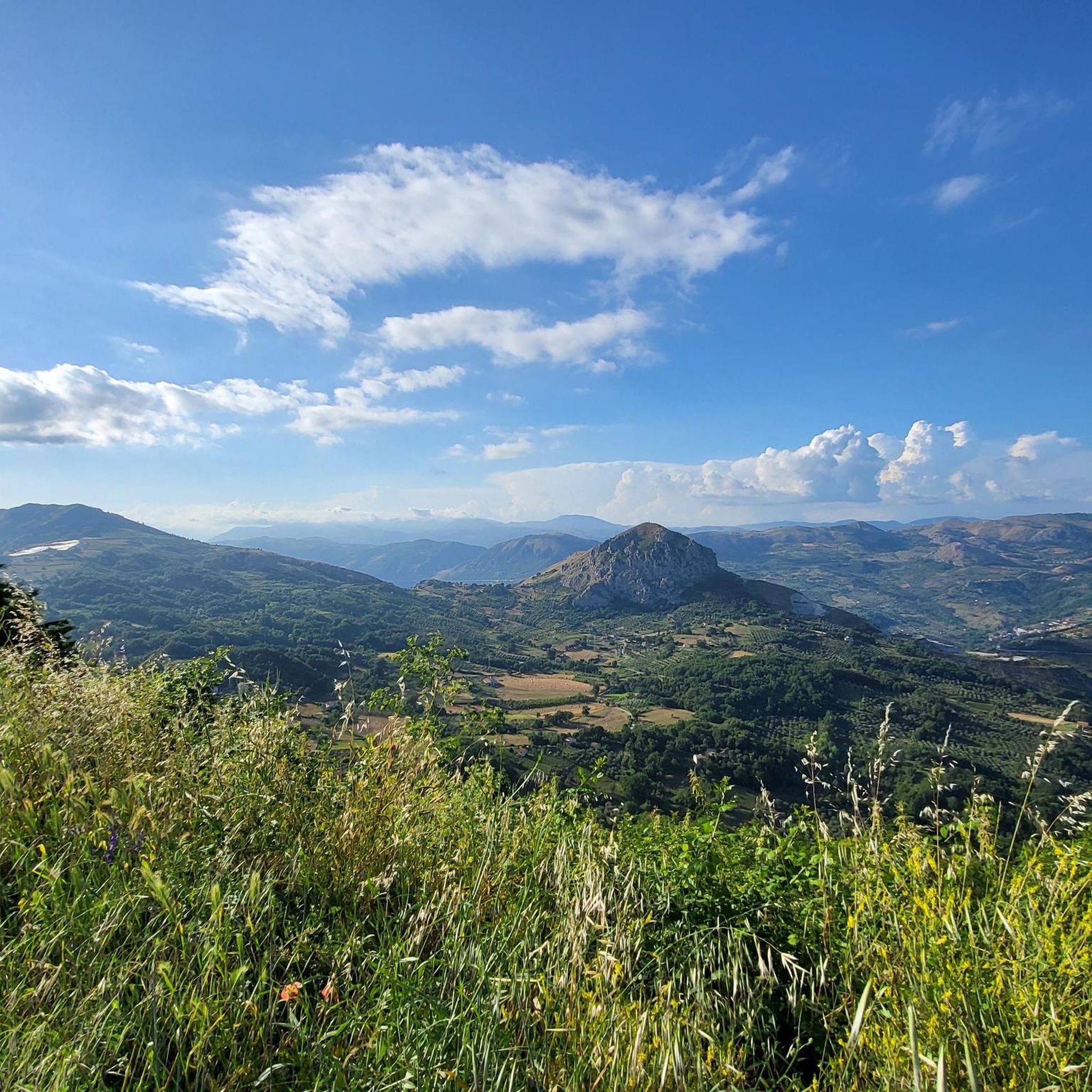
Cima Il Figliolo is a rocky outcrop in the municipality of Petina. At more than 1300 meters above sea level, it offers a splendid view of Monte Panormo, the highest peak of the Alburni Mountains, and of the Tanagro valley.
0
0
On the summit of Costa Palomba there are remains dating back to more than 2000 years ago. According to scholars, the large sculpture is a funerary monument to celebrate a warrior hero, but there is also a basin used as a sacrificial altar and the remains of fortification walls.
2
0

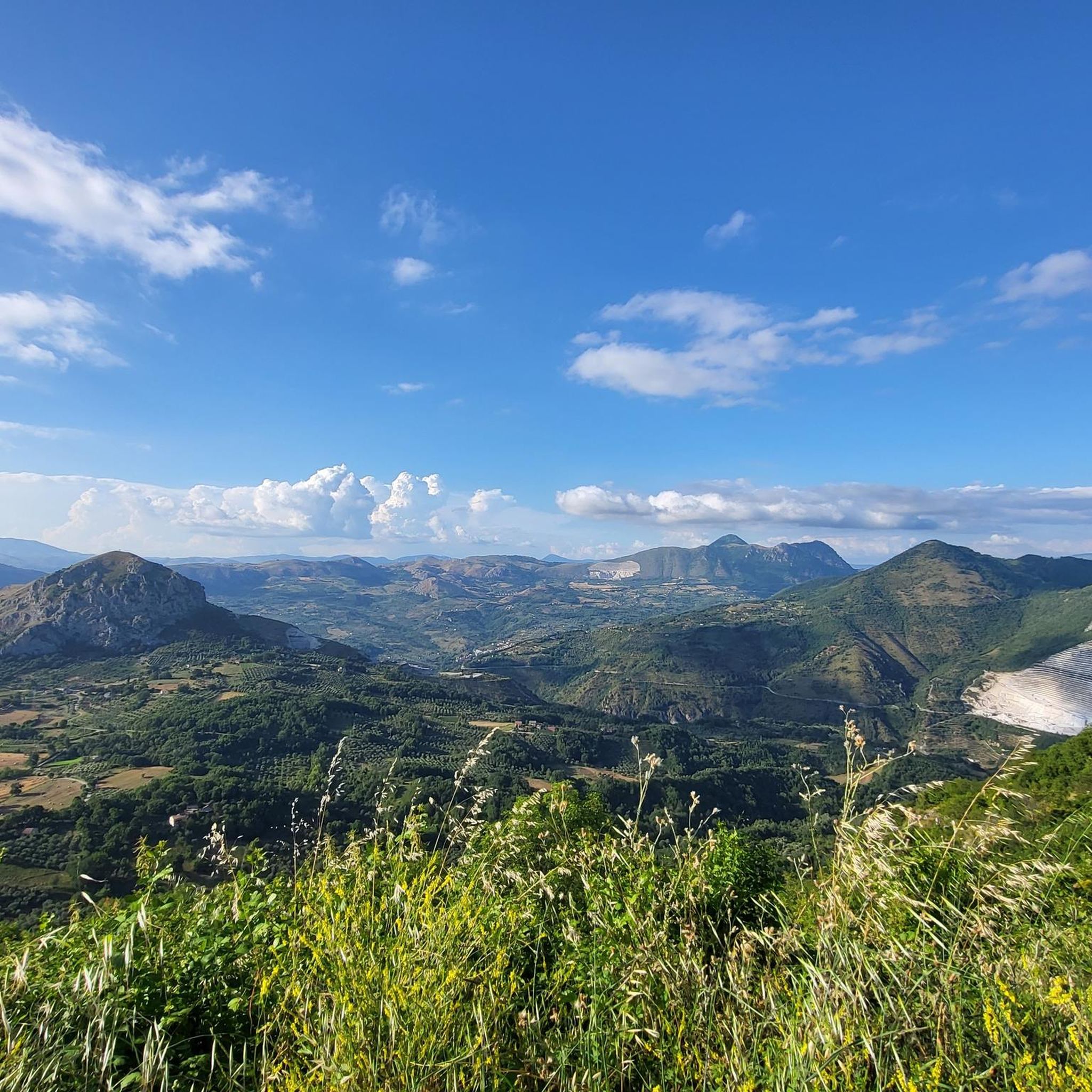
Monte Panormo is located at an altitude of 1,742 metres. It is also often known by the name of Monte Alburno. From its peak you can enjoy a breathtaking view of the surrounding woods and peaks.
2
0
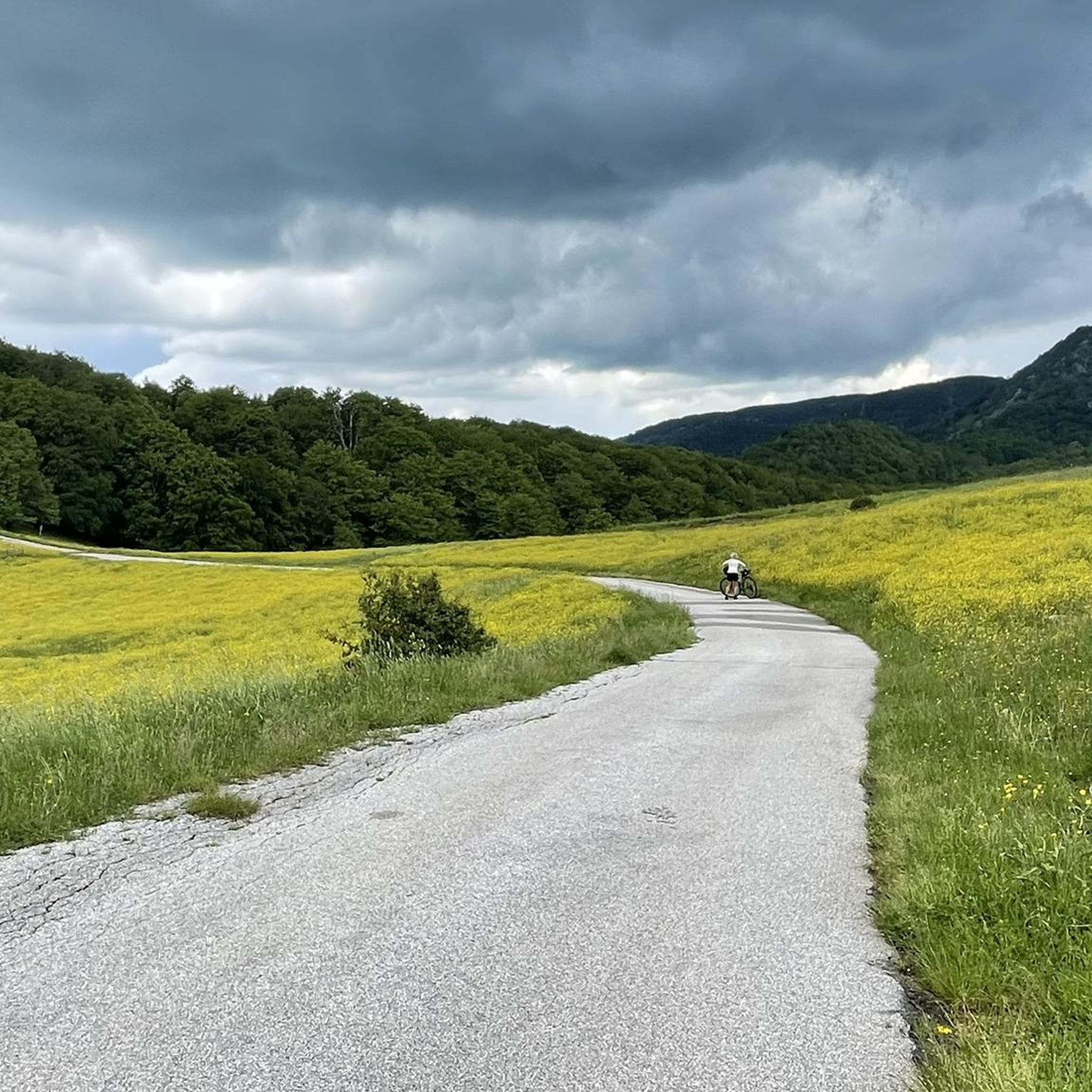
The climb to the Alburni pass is long and with challenging slopes, but the road is spectacular and the effort is amply rewarded. After the hairpin bends, you cross one of the most beautiful beech woods in the Cilento Vallo di Diano and Alburni National Park.
3
0
Aresta di Petina astronomical observatory The Aresta di Petina astronomical observatory is located on top of the Alburni, at 1300 meters above sea level, in the Cilento and Vallo di Diano National Park. http://www.cielomareterra.org/node/163
2
0
This is the Costa Palomba peak where you can admire the Antece. https://www.ilborghista.it/dettaglio-da-fare-antece--patrimonio-unesco--sant-angelo-a-fasanella-sa-202
5
0
Frequently Asked Questions
What are the most significant natural attractions in Pertosa?
Pertosa is renowned for its natural wonders. The most famous are the Grotte di Pertosa-Auletta (Angel's Caves), unique in Italy for their underground river boat tour. You can also explore the picturesque Summit of Monte Panormo, offering breathtaking views, and the Il Figliolo Summit with its 360-degree panorama. The Tanagro River, Maremanico Waterfall, and Campostrino Gorges also contribute to the area's natural beauty.
What historical and cultural sites can I visit in Pertosa?
Pertosa offers a rich historical and cultural experience. Explore the ancient pile-dwelling settlement within the Grotte di Pertosa-Auletta, dating back to the 2nd millennium B.C. The historical center of Pertosa features narrow streets and brightly colored buildings. You can also visit the 17th-century Santa Maria delle Grazie Church and the San Benedetto Church. Don't miss the Antece – Costa Palomba, an ancient rock sculpture of a warrior.
Are there opportunities for hiking and cycling around Pertosa?
Yes, the Alburni Mountains surrounding Pertosa provide excellent opportunities for outdoor activities. For hiking, consider routes like the Il Figliolo Loop Trail or challenging ascents to the Summit of Monte Panormo. You can find more hiking options on the Hiking around Pertosa guide. Cyclists can enjoy routes like 'La Via Silente: Monti Alburni Loop' or the 'Caves of Pertosa-Auletta and Valle del Tanagro' tour. Discover more cycling routes on the Cycling around Pertosa guide.
What is unique about the Grotte di Pertosa-Auletta?
The Grotte di Pertosa-Auletta are unique in Italy because a significant portion of the visit involves a boat tour along an underground river, the Negro River. This allows visitors to navigate through immense chambers filled with stalactites and stalagmites. The caves also house an ancient pile-dwelling settlement and were historically used as places of worship.
What is the Aresta di Petina Astronomical Observatory?
The Aresta di Petina Astronomical Observatory is a man-made attraction located on top of the Alburni Mountains, at 1300 meters above sea level. It is situated within the Cilento and Vallo di Diano National Park and offers a unique viewpoint for stargazing and observing the surrounding landscape.
Are there any local culinary specialties in Pertosa?
Yes, Pertosa is known for its unique local specialty, the White Artichoke of Pertosa. This variety of artichoke is characterized by its very light green to silvery-white color and lack of thorns. It is celebrated annually with the Sagra del Carciofo Bianco di Pertosa (White Artichoke Festival) in May.
What kind of views can I expect from the mountain summits near Pertosa?
From the mountain summits near Pertosa, you can expect spectacular panoramic views. The Summit of Monte Panormo (1,742 meters) offers breathtaking wide views of the surrounding woods and other peaks. The Il Figliolo Summit provides a 360-degree view, marked by a statue of the Madonna.
Is there a scenic drive or road with good views in the area?
Yes, the Scenic road overlooking the Tanagro Valley offers a spectacular drive. While the climb to the Alburni pass can be challenging, the road itself is rewarding, passing through one of the most beautiful beech woods in the Cilento Vallo di Diano and Alburni National Park.
What is the best time of year to visit Pertosa?
The best time to visit Pertosa largely depends on your interests. For exploring the Grotte di Pertosa-Auletta, they are generally accessible year-round. If you're interested in the White Artichoke Festival, plan your visit for May. For hiking in the higher Alburni Mountains, be aware that peaks like Monte Panormo can be covered with snow from early December to mid-April, making late spring to early autumn ideal for trekking.
Are there any museums in Pertosa?
Yes, Pertosa is home to the Museo Speleo Archeologico (Speleo-Archaeological Museum), which documents the unique archaeological site found within the Grotte di Pertosa-Auletta. Additionally, the Musei Integrati dell'Ambiente focuses on the period after the 1980 earthquake.
What kind of experience do visitors have at Il Figliolo Summit?
Visitors to Il Figliolo Summit describe it as a very scenic rocky spur. Reaching the summit, marked by a statue of the Madonna, offers a spectacular 360-degree view. It requires good mountaineering experience and agility for the final climb, but the effort is highly rewarded by the phenomenal panorama.
Can I find information about trekking routes like the 'Cammino dell'Alleanza'?
Yes, the area around Pertosa offers several trekking paths. One notable route is the 'Cammino dell'Alleanza,' which runs from Pertosa to Petina via Auletta. For more detailed information and other hiking routes, you can refer to the Hiking around Pertosa guide.
Most popular attractions around Pertosa

Get inspired with the komoot mobile app


Explore more
Still not found the Highlight you’re looking for? See guides of the top attractions in other regions:
