Attractions and Places To See around Filadelfia - Top 20
Attractions and places to see around Filadelfia offer a range of experiences in the heart of Calabria, Italy. This region is characterized by its diverse landscapes, from mountainous terrain to coastal views. Visitors can explore historical settlements and natural features that reflect the area's rich heritage and geography. The area provides opportunities for outdoor activities and cultural discovery.
Best attractions and places to see around Filadelfia
- The most popular attractions is Monte Covello, a summit that is crossed by…
Last updated: October 11, 2026
Monte Covello
Highlight • Summit
Translated by Google •
Tip by

Chiesetta di Piedigrotta of Pizzo
Highlight • Religious Site
Around 1880, a local artist, Angelo Barone, who had a small stationery shop in the center of the village, decided to dedicate his life …
Translated by Google •
Tip by

Sign up now to discover places like this
Get recommendations on the best single tracks, peaks, & plenty of other exciting outdoor places.
Girifalco
Highlight • Settlement
Translated by Google •
Tip by

Church of the Rosary, Girifalco / Kirche des Rosenkranzes
Highlight • Religious Site
It is adjacent to the Matrice Church and dates back to the 18th or 19th century. However, it is not mentioned in the inventory of …
Translated by Google •
Tip by
Monterosso
Highlight • Settlement
Translated by Google •
Tip by
Sign up for free to discover even more attractions around Filadelfia.
Already have an account?
Start today with a free account
Your next adventure awaits.


Tips from the Community

Located a little outside of Pizzo. A well-maintained staircase leads down to the grotto.
0
0

Chiesa Santa Maria delle Nevi, Girifalco Mother Church of Santa Maria delle Nevi The Mother Church of Santa Maria delle Nevi in Girifalco, in the province of Catanzaro, is the town's most important parish church. Its origins date back to the 16th century, when it was originally dedicated to the Madonna delle Nevi, a title inherited from the previous mother church in the Pioppi Vecchi district. After the devastating earthquake of 1783, the building was rebuilt on the site of the Church of Santa Maria delle Grazie, part of the old Dominican monastery founded by Bishop Lauro in 1548. The reconstruction was entrusted to the architect Ermenegildo Sintes, a pupil of Luigi Vanvitelli. However, the original design was modified and reduced in size during the construction phase. The facade of the church, originally built in the Baroque style, underwent several renovations, especially after the 1905 earthquake, giving it a more modern appearance. It has a large stone portal flanked by two niches and a double access staircase. The secondary entrance, framed by an ashlar portal, is located at the foot of the bell tower, which houses three bells and a clock. The interior of the church is characterized by the color white, a symbol of both the Marian title and the Dominican Order. The nave is decorated with arches with friezes and gilded capitals. On the left side is the Altar of Paradise, with an ancient sculptural group depicting the Ascension of Christ from the Convent of San Antonio of the Reformed. The presbytery is dominated by a large painting of the Madonna delle Nevi, protecting the snow-covered village of Girifalco from above, a work by Domenico Cefaly (1932-2003), a descendant of the painter Andrea Cefaly. Other works of art housed in the church include a 17th-century polychrome statue of Saint Rocco from Montpellier, a painting of the Madonna della Neve by Luciano Ricchetti, and the 17th-century Madonna del Garofano. The Mother Church of Santa Maria delle Nevi represents an important spiritual and cultural center for the community of Girifalco, testifying to centuries of history, art, and religious devotion. Text / Source: visitgirifalco.com / Municipality of Girifalco https://visitgirifalco.com/trip/chiesa-matrice-santa-maria-delle-nevi/
14
0
Girifalco lies in the center of the Isthmus of Catanzaro. Girifalco lies in the center of the Isthmus of Catanzaro, the narrowest point of the Italian peninsula, at the foot of Monte Covello (848 m above sea level), a subrange of Monte Serralta in the northern Serre region, at an altitude of 456 m above sea level. As some finds in the Caria district show, there were settlements in the upper reaches of the Alessi stream before Magna Graecia. In the early 17th century, Girifalco was a fief of the Caracciolo family and then belonged to the Ravaschieri family. After a few years, the fief returned to the Caracciolo family thanks to the marriage between Duchess Ravaschieri of Girifalco and a certain Annibale Caracciolo. From them was born Fabrizio Caracciolo, second Duke of Girifalco, the creator of a very prosperous period for the feud during his duchy, which lasted from 1634 to 1683 and consolidated the socioeconomic development of the city with the presence of the university and the feudal institution. Duke Caracciolo had the Reformed Convent built in 1635 and donated it to the Friars Minor, who erected a statue in his gratitude and placed it near the convent itself. Mayor Carlo Pacino commissioned important works such as the first municipal hall around the mid-1600s, the extension of the Church of San Rocco, and a few decades later, in 1663, the monumental Baroque fountain. In the 17th century, the inhabited center expanded more and more, and there were several churches (the ones of San Rocco and the matrix of the Pioppi district being the most important), two important monasteries, the Municipal House, the Ducal Palace (the Duke's residence), and even the city's coat of arms was built. At the end of the 18th century, another earthquake struck Calabria and the town of Girifalco, the one of March 28, 1783. The center was destroyed or severely damaged, as was the Pioppi district, including the mother church (already severely damaged in the 1638 earthquake and subsequently renovated), which would never be rebuilt. Its functions were transferred to the church of the Dominican convent, which thus became the new mother church. Text / Source: Comunicazione Girifalco https://unsic.it/comunicazione/girifalco/
15
0
The Village of Girifalco The village of Girifalco lies at the foot of Monte Covello, between the Gulf of Squillace and the Gulf of Sant'Eufemia, and in the heart of the Isthmus of Catanzaro, the narrowest point of the Italian peninsula. Girifalco owes its origins to the destruction of the two older villages of Toco and Caria by the Saracens in 836. The villagers sought refuge on the rock known as the "Pietra dei Monaci" ("Monk's Stone"). Text / Source: turiscalabria.it http://www.turiscalabria.it/website/?lang=de&categoria=/wo/paesi/&view_type=s&id=639&title=.html
15
0

A unique little church built directly on the beach. Legend has it that it was built by Neapolitan coral traders who survived a shipwreck. Inside, various sculptures, statues, and decorations carved directly into the rock face are featured. There's an entrance fee (and there's also a nearby parking lot if you arrive by car).
1
0

The small church of Piedigrotta is a Catholic place of worship, completely dug into the tuff rocks, located one kilometer north of Pizzo, in the locality of "La Madonnella". Inside, it is decorated with several groups of sculptures, also made of tuff. The church borders the beach and faces west. An afternoon visit is very suggestive, when the sun's rays penetrate the depths of the caves, highlighting the colors of the mineral salts that cover the walls. Source and info: https://it.m.wikipedia.org/wiki/Chiesetta_di_Piedigrotta
4
0

Beautiful rock church on the sea, a beautiful suggestive and characteristic place, one of the most visited places in Pizzo
3
1

Mandatory stop at the kiosk for a brasilena (Calabrian coffee drink produced here in Monte Covello)! If you are lucky you will find several locals ready to give you advice on the mountain routes.
0
0
Frequently Asked Questions
What are some family-friendly attractions around Filadelfia?
For families, the settlement of Monterosso is a great option. It features a magnificent historic center and is located near the nature reserve of Lake Angitola, which offers a pleasant cycle path. The area around Lake Angitola is also suitable for nature walks and spotting local wildlife.
Are there historical sites to visit near Filadelfia?
Yes, the region is rich in history. You can explore Girifalco, a village known for its historical sites like the "Devil's Fountain" and its fabric laboratory. Another unique historical site is the Chiesetta di Piedigrotta of Pizzo, a church entirely carved into tuff rock with intricate sculptures.
What kind of outdoor activities can I do around Filadelfia?
The area offers various outdoor activities, especially cycling. Monte Covello is popular with local cyclists. You can find numerous routes for road cycling, touring, and mountain biking. For example, explore the "Monterosso Calabro – Lake Angitola loop" for road cycling, or the "View of the sea in Pizzo – Bridge over the Angitola loop" for a touring bicycle experience. You can find more routes in the Cycling around Filadelfia guide.
Are there any good hiking trails or viewpoints near Filadelfia?
While Monte Covello is forested at its summit and not a traditional lookout point, its lush greenery makes for a beautiful environment for trails, including a section of the "Alta Via Parchi Calabria." For scenic views, the settlement of Monterosso offers splendid panoramas, often referred to as the "balcony delle Calabrie" for its views overlooking the Tyrrhenian Sea.
Where can I find information about local culture and traditions?
The settlement of Monterosso Calabro is home to the Museum of Peasant and Artisan Civilization of Calabria, offering insights into the region's heritage. Additionally, the village of Girifalco has a fabric laboratory where you can see traditional crafts, including work with broom fiber.
What do visitors enjoy most about the attractions around Filadelfia?
Visitors particularly appreciate the diverse landscapes, from the lush greenery of Monte Covello to the historic charm of settlements like Monterosso. The unique cultural and historical sites, such as the carved Chiesetta di Piedigrotta, also receive high praise for their distinctiveness.
Are there any cycling routes suitable for different skill levels?
Yes, there are cycling routes for various skill levels. For mountain biking, you can find easy routes like the "Magic Life Calabria Gardens – Lake Angitola loop" or moderate ones such as the "Rocca Angitola Ruins – View of Lake Angitola loop." Road cyclists can choose from moderate routes like the "Bicycle Dismount Point loop from Bretti" to more difficult ones like the "Monterosso Calabro – Lake Angitola loop." Explore more options in the Road Cycling Routes around Filadelfia guide and MTB Trails around Filadelfia guide.
Can I find natural reserves or areas for wildlife observation?
Absolutely. The nature reserve of Lake Angitola, near Monterosso, is recognized as a "wetland of international value." It's an excellent spot for nature walks and observing local flora and fauna.
What is the best time to visit Filadelfia for outdoor activities?
The region of Calabria, where Filadelfia is located, generally enjoys a Mediterranean climate. Spring and autumn offer pleasant temperatures ideal for cycling and exploring historical sites without the intense heat of summer. However, the lush greenery of Monte Covello makes it appealing throughout many seasons.
Are there any unique or 'hidden gem' attractions?
The Chiesetta di Piedigrotta of Pizzo stands out as a truly unique attraction. This church, entirely carved into the tuff rock by local artists over generations, features intricate sculptures and a fascinating history, making it a memorable visit.
What kind of landscapes can I expect to see around Filadelfia?
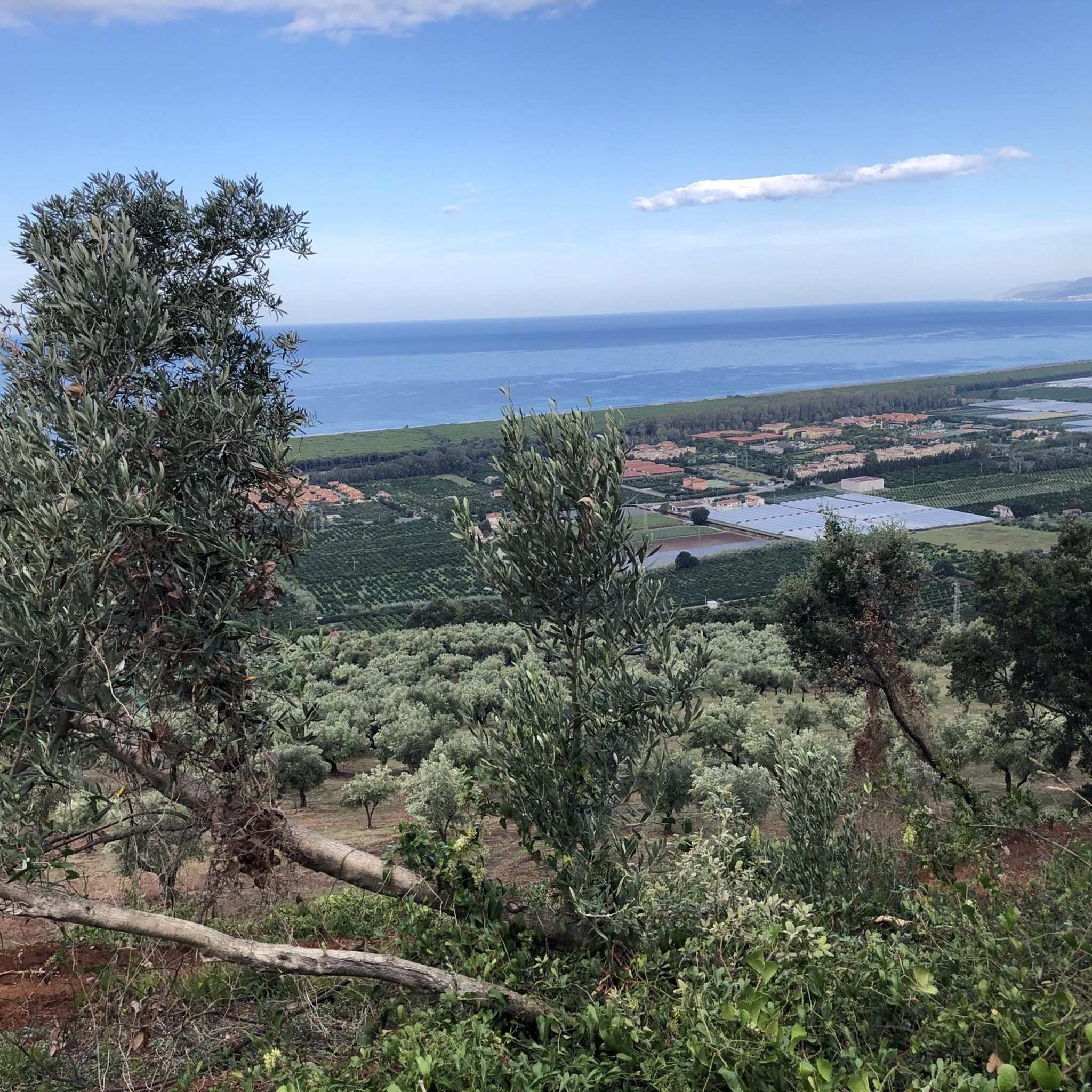
The area around Filadelfia offers diverse landscapes. You'll encounter mountainous terrain, such as Monte Covello with its lush forests, and coastal views, particularly from settlements like Monterosso which overlooks the Tyrrhenian Sea. The region also features olive groves and the natural beauty of Lake Angitola.
Most popular attractions around Filadelfia

Get inspired with the komoot mobile app


Explore more
Still not found the Highlight you’re looking for? See guides of the top attractions in other regions:
