Attractions and Places To See around Brallo Di Pregola - Top 20
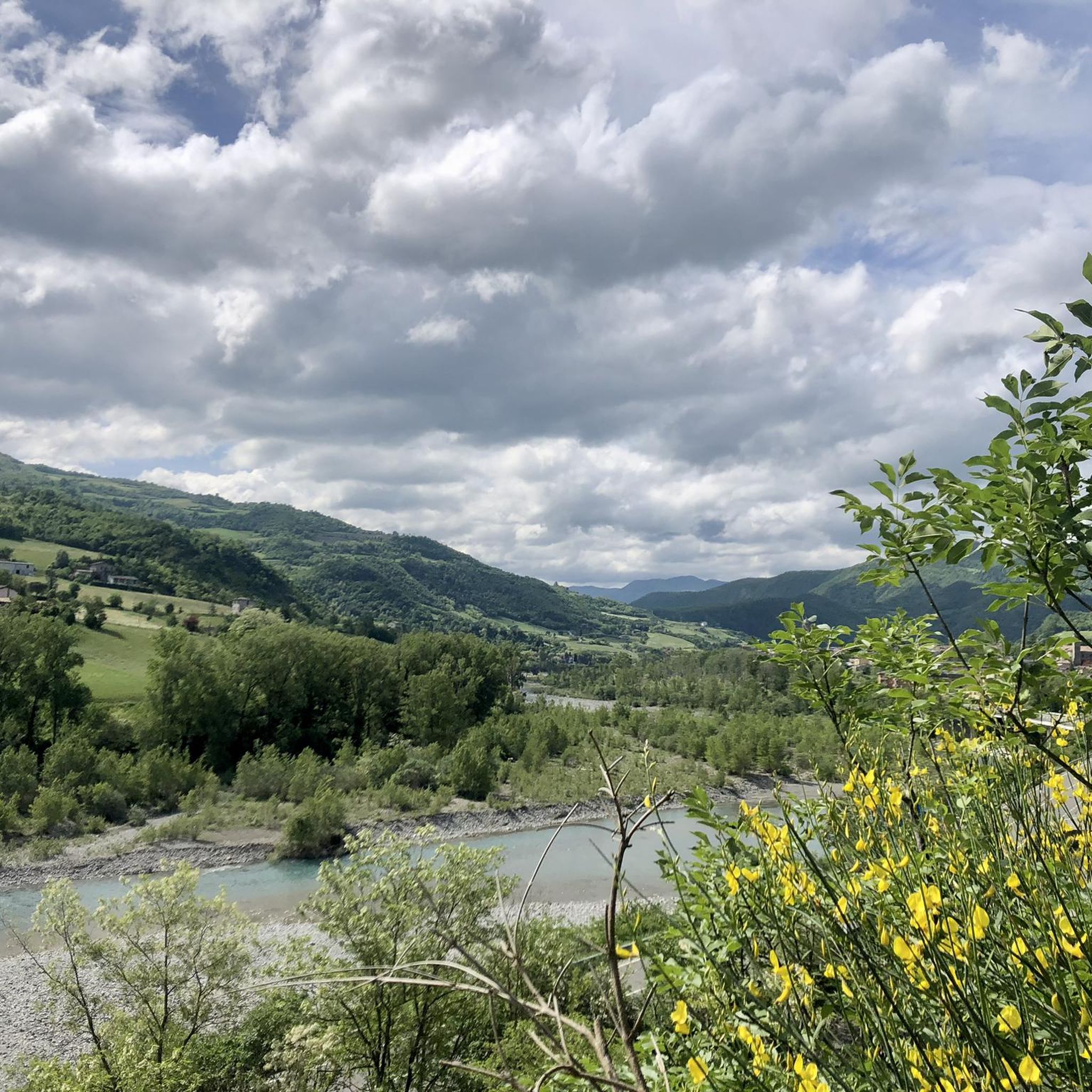
Best attractions and places to see around Brallo Di Pregola include a blend of historical sites, natural landscapes, and cultural experiences in the Oltrepò Pavese region. Situated at the crossroads of four provinces, this area features prominent mountains like Monte Lesima and Monte Ebro, offering diverse trekking opportunities. The region is characterized by suggestive valleys, forests, and waterways, providing a rich natural environment. Visitors can explore ancient landmarks and unique cultural points of interest.
Best attractions and places to see…
Last updated: July 6, 2026
Monte Lesima and the ENAV radar
Highlight • Summit
Translated by Google •
Tip by

Monte Ebro
Highlight • Summit
Translated by Google •
Tip by
Sign up now to discover places like this
Get recommendations on the best single tracks, peaks, & plenty of other exciting outdoor places.
Sign up for free
Statue of Christ the Redeemer on Monte Giarolo
Highlight • Monument
Translated by Google •
Tip by

Ponte Gobbo (Devil's Bridge) of Bobbio
Highlight • Bridge
Translated by Google •
Tip by

Ponte Gobbo (Bobbio)
Highlight • Bridge
In the Middle Ages, the construction of a bridge was considered a miraculous feat. For this reason, the construction of such structures gave rise to …
Translated by Google •
Tip by

Sign up for free to discover even more attractions around Brallo Di Pregola.
Sign up for free
Already have an account?
Start today with a free account
Your next adventure awaits.
Login or Signup
Tips from the Community

Each of these crosses, which travelers often encounter in the fields or, as here, on mountain peaks, is a reminder of the crucifixion and resurrection of Jesus Christ. “Here on earth, His memory exists, but in the Kingdom of Heaven is His presence: this presence is the joy of those who have already attained salvation. Remembrance is our comfort, we who are still wanderers, traveling toward our homeland.” (Saint Bernard of Clairvaux, c. 1090–1153)
0
0

Hunchback Bridge or Devil's Bridge In the Middle Ages, the construction of a bridge was considered a miraculous feat. For this reason, the construction of such structures gave rise to many legends, often involving the devil: joining two places that God had wanted separated was seen by many as a "diabolical" work. According to an ancient legend, Saint Columbanus, a 7th-century Irish monk, was eager to bring the word of God to the people living on the other bank of the Trebbia River, near the town of Bobbio. The devil promised to build the bridge in a single night, in exchange for the first mortal soul to cross it. The saint accepted. That night, the devil summoned several little devils who assisted him in the construction work, holding up the bridge's arches. The demons were of different heights, and thus the various arches of the bridge were of varying sizes. In the morning, the devil stationed himself at the end of the bridge to demand his payment. But Saint Columbanus outwitted him by having his poor, suffering and very sick dog (some say it was a bear) cross the bridge instead of a man. The enraged devil returned to hell, but not before kicking his handiwork, which has been crooked ever since. It is said that the footprints of the unfortunate animal that served as a guinea pig still remain in the crypt of the Church of Saint Columbanus. The Hunchback Bridge, also known as the Ponte Vecchio or, more precisely, the Devil's Bridge, is a Roman structure that has undergone numerous renovations over the centuries. The structure above dates back to the 7th century, but traces of an older bridge, dating back to before Columbanus' arrival, have been found underneath. The bridge, characterized by its undulating shape, irregular arches, and relatively narrow carriageway, is 280 meters long and connects the two banks of the river through a complicated succession of 11 irregular spans, varying in span and height, creating an undulating path from one end to the other. The Bobbio Bridge, now used only as a pedestrian crossing, is the very symbol of the city of San Colombano, as well as one of the strangest and most original architectural structures in Italy. Source: Emilia-Romagna Region
2
0
Up here, on Monte Giarolo, the hiker won't find the classic summit cross that crowns many mountains. Instead, on a pedestal divided into two sections, stands the figure of the Risen Christ, adorned with a cross. Christ raises one arm in greeting—or rather, in blessing—and with the other, he embraces the cross, that gruesome symbol of suffering and death, which, through his resurrection, he transformed into a glorious symbol of victory over death.
0
0

At 1,473 meters above sea level, the peak of Mount Giarolo is on the so-called Ligurian Apennines but in the province of Alessandria, Piedmont. It is the northernmost point of the Antola chain and divides the Borbera and Curone valleys. On the summit there is a statue of Christ the Redeemer.
1
0

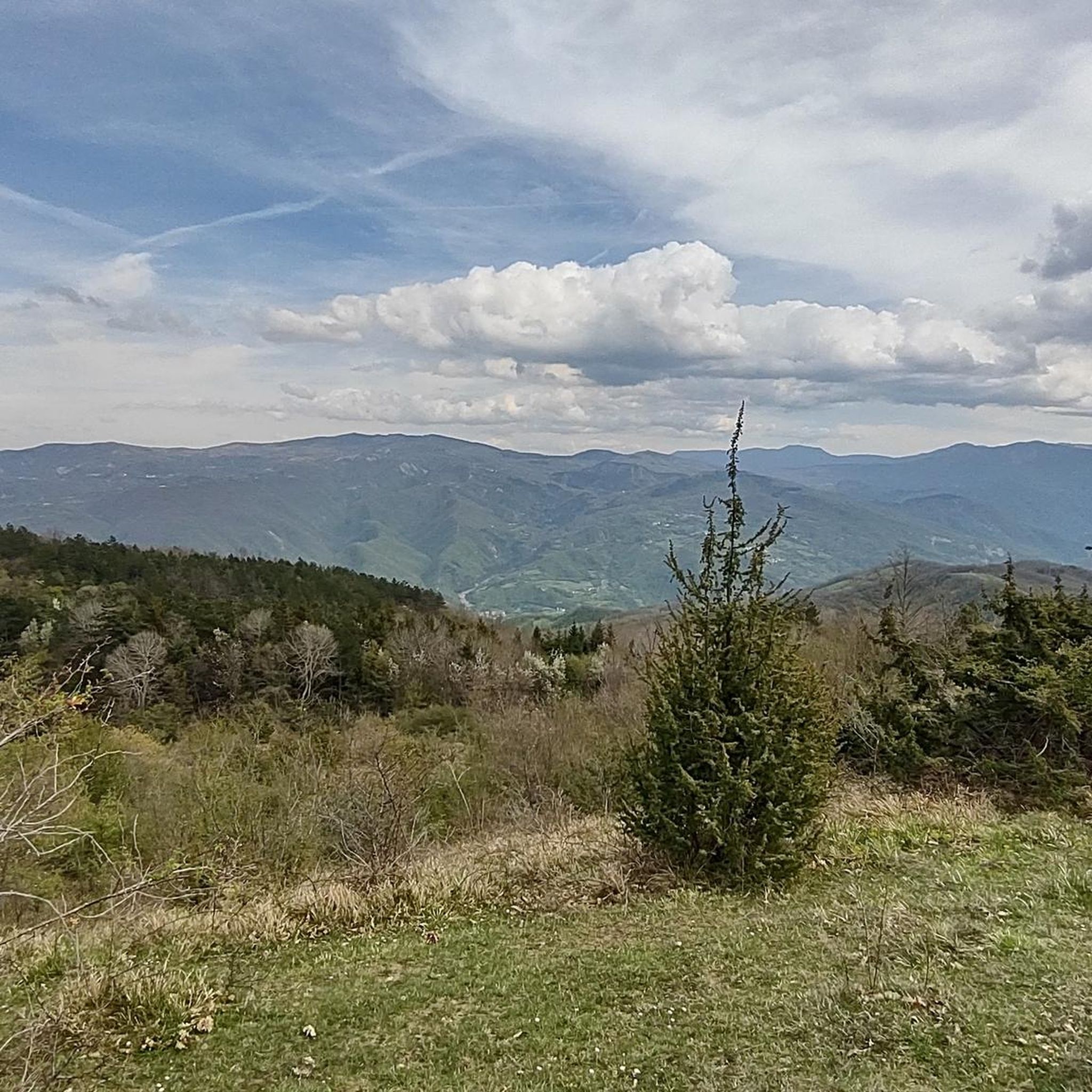
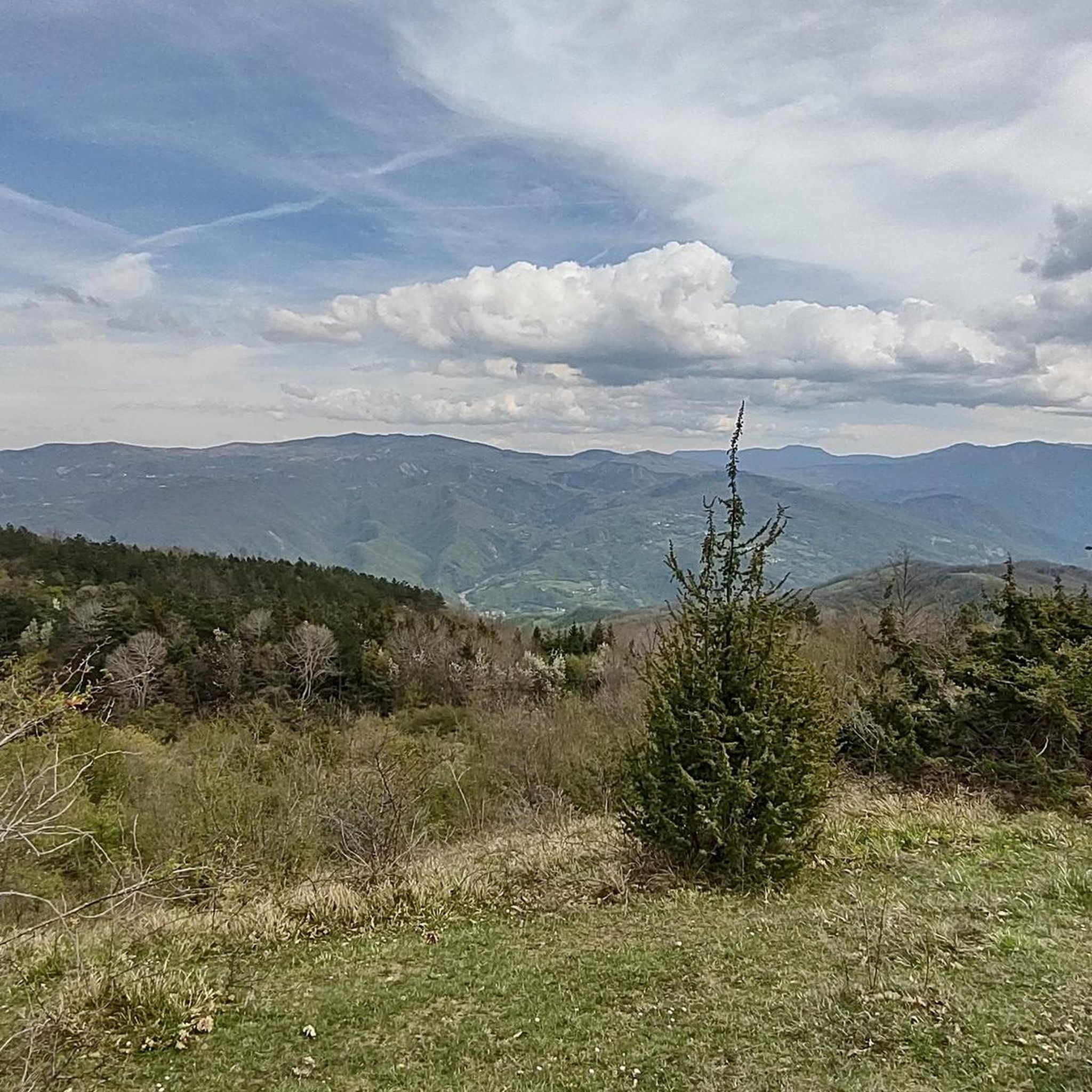
Mount Ebro (1700 m above sea level) is the most beautiful and panoramic mountain of the entire Ántola chain, and one of the most beautiful and panoramic of the entire Ligurian Apennines. It is a gigantic pyramid, mostly grassy, that rises on the watershed between Borbera and Curone, a short distance from the important node of Mount Chiappo. The slopes of the mountain are generally wide and slightly sloping, covered by thick woods at lower altitudes, and meadows above 1400-1500 meters. The imposing southern slope is an exception, which towers, very high and steep, over the village of Aie di Cósola.
4
0
The Feast of the Redeemer has been celebrated on Mount Giarolo since the beginning of the last century, when the first statue of the Redeemer was erected on August 11, 1901 (replaced with the new one exactly one hundred years later) in order to celebrate the 19th centenary of the birth of Christ. It was inaugurated by the Bishop of Tortona who, for the occasion, promoted a diocesan pilgrimage in which approximately 12,000 faithful participated. Since then, every year on the first Sunday of August tourists and faithful go to the top of the mountain to renew the tradition.
3
0

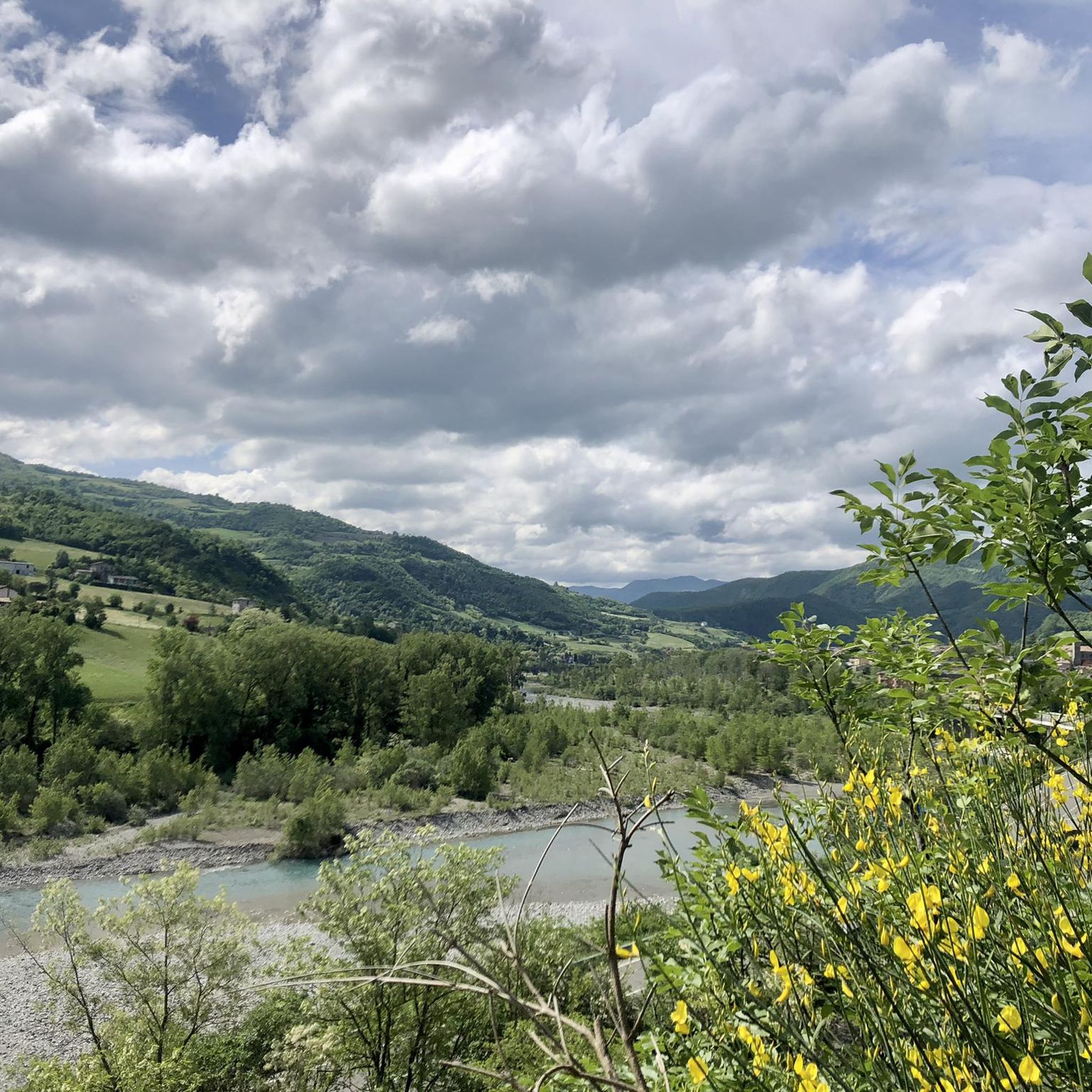
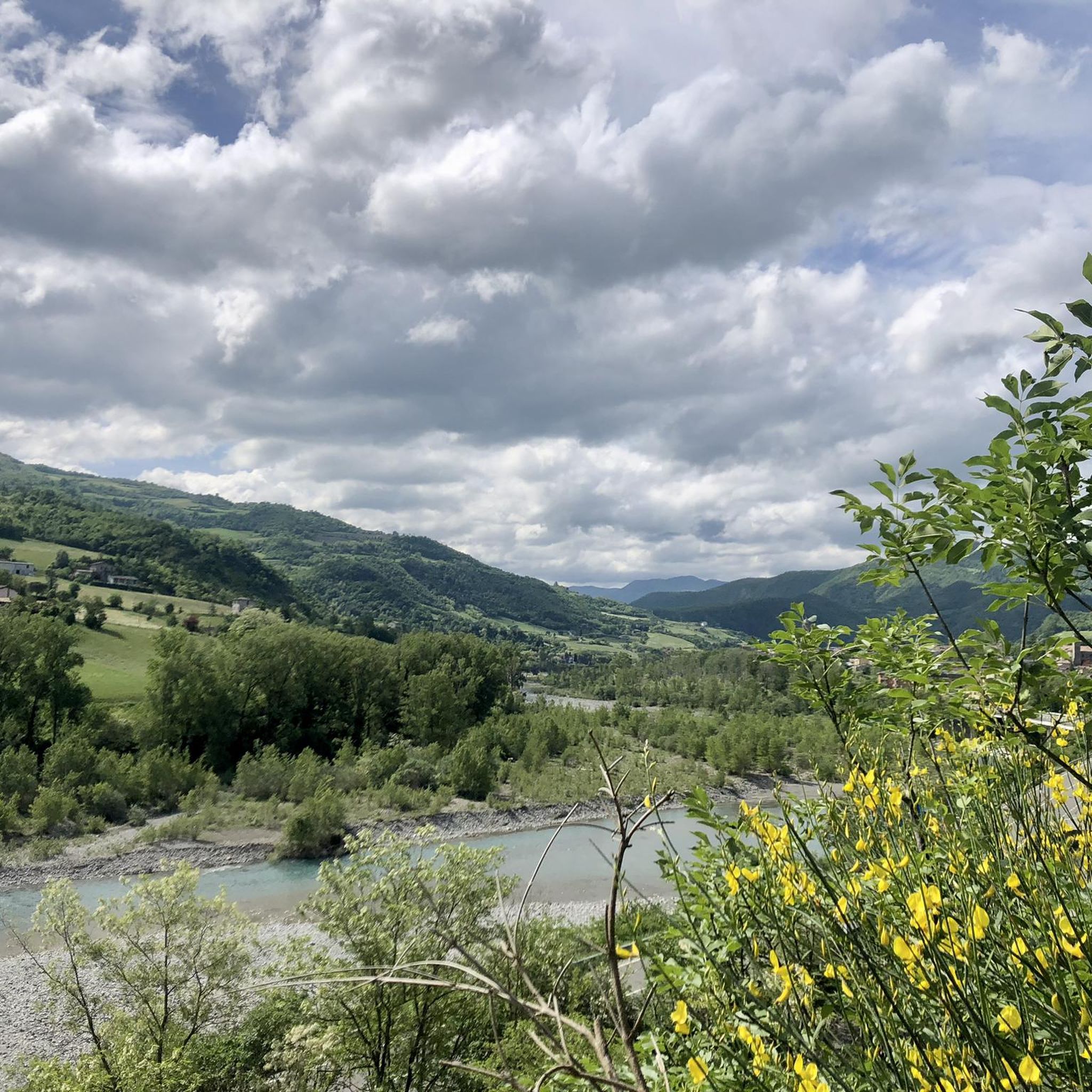
Very panoramic view of the Curone valley and the plain. Access is easy even if the last stretch is quite steep
1
0
Beautiful peak, the last stretch of path to get there from the Chiappo side is quite steep but you can get around it by following a hidden path on the right. From the top you can enjoy a beautiful view of the Curone valley and the entire Alpine range if the weather permits
1
0
Frequently Asked Questions
What natural landmarks offer the best panoramic views in Brallo di Pregola?
For breathtaking panoramic views, consider visiting Monte Lesima and the ENAV radar, the highest peak in the Pavia Apennines at 1,724 meters. From its summit, you can see across the Oltrepò Pavese to Liguria, and even the snow-capped Alps on clear days. Another excellent choice is Monte Ebro, described as one of the most beautiful and panoramic mountains of the entire Ligurian Apennines.
Are there any historical sites or ancient ruins to explore in Brallo di Pregola?
Yes, Brallo di Pregola is rich in history. You can visit the Chiesa dei Santi Gervasio e Protasio in Someglio, built in 1600 on older ruins and featuring a Romanesque bell tower. Explore the fascinating Borgo Fantasma di Rovaiolo Vecchio, a significant abandoned village on the slopes of Mount Lesima, though entering the houses is not recommended due to instability. The perimeter of the Antica Cappella di Sant'Agata, documented since the 9th century, also holds historical value. Further afield, the ancient Ponte Gobbo (Bobbio), also known as the Devil's Bridge, offers a unique historical experience with its legendary origins.
What kind of outdoor activities can I do near Brallo di Pregola's attractions?
Brallo di Pregola is an excellent base for various outdoor activities. You can find numerous hiking trails, including the challenging 'Ghost Town Trail to Rovaiolo Vecchio' or the easier 'Sentiero della Muscarella to Monte Penice'. For cycling enthusiasts, there are routes like the 'Monte Penice Summit – Penice Pass (Bobbio) loop'. Mountain biking is also popular, with trails such as 'Via del Mare - Via del Sale to Monte Lesima'. You can explore more options on the dedicated guides for Hiking around Brallo Di Pregola, Cycling around Brallo Di Pregola, and MTB Trails around Brallo Di Pregola.
Are there any unique cultural sites or museums in Brallo di Pregola?
Yes, the Museo dei Ricordi (Museum of Memories) in the hamlet of Ponti offers a unique cultural experience. This open-air museum preserves testimonies of historical trades like charcoal burning, featuring a water mill, a charcoal pit, an ice house, and 'U Balu,' a traditional community gathering space. Additionally, the characteristic Stone Houses of Colleri and Corbesassi reflect the area's rural cultural heritage.
What are the best places for hiking and trekking in Brallo di Pregola?
The region offers diverse trekking opportunities, especially around its prominent mountains. Monte Ebro features thick woods at lower altitudes and meadows higher up, while Monte Lesima and the ENAV radar provides challenging ascents with rewarding views. The ancient 'Hannibal's Road' is also a notable path for hikers. For specific routes and their difficulties, refer to the Hiking around Brallo Di Pregola guide.
Are there any family-friendly attractions or activities in Brallo di Pregola?
While specific 'family-friendly' highlights aren't explicitly listed, the natural beauty of Brallo di Pregola offers many opportunities for families to enjoy the outdoors. Easy hiking trails like the 'Tre Fontane Loop' or 'Sentiero della Muscarella to Monte Penice' (found in the Hiking around Brallo Di Pregola guide) can be suitable for families. Exploring the Museo dei Ricordi can also be an engaging educational experience for children.
What winter activities are available in Brallo di Pregola?
Brallo di Pregola is known as a significant center for winter sports. Facilities at Cima Colletta offer skiing with ski-lifts and slopes. You can also enjoy snowmobile excursions in the Piano di Prodongo area. For those who prefer a quieter winter experience, snowshoeing is a popular activity in the snowy landscapes.
Where can I find unique natural features like waterfalls or distinctive valleys?
Brallo di Pregola is situated between the picturesque Valle Staffora and Val Trebbia, known for their suggestive landscapes, beech and chestnut forests, and crystal-clear waterways. These valleys foster rich biodiversity and are ideal for nature lovers. The Sant'Ettore Waterfalls are also a notable natural feature, being one of the very few river waterfalls in the Pavia territory.
What is the significance of the Statue of Christ the Redeemer on Monte Giarolo?
The Statue of Christ the Redeemer on Monte Giarolo is a significant man-made monument located at 1,473 meters above sea level. It stands on a pedestal and is the site of an annual celebration, the Feast of the Redeemer, which has been observed since 1901. This statue serves as a spiritual landmark and offers expansive views from its high vantage point.
Are there any trails related to historical figures or events?
Yes, the region has historical connections. A path known as 'Hannibal's Road' in the mountains is believed to have been used by Hannibal during the Second Punic War. Additionally, legend suggests that Pian dell'Armà was where the Carthaginians, led by Hannibal, camped before the Battle of Trebbia.
What are the best times of year to visit Brallo di Pregola for outdoor activities?
Brallo di Pregola offers activities year-round. Spring and summer are ideal for trekking, mountain biking, horseback riding, and climbing, when the forests and meadows are vibrant. In winter, the area transforms into a hub for skiing, snowboarding, and snowshoeing. The changing colors of the forests in autumn also make it a beautiful time for exploration.
Can I find information about the local flora and fauna in the valleys?
The Valle Staffora and Val Trebbia, which flank Brallo di Pregola, are characterized by rich biodiversity. These valleys feature extensive beech and chestnut forests and crystal-clear waterways, providing habitats for various local flora and fauna. Exploring these areas on foot or by bike is an excellent way to observe the natural environment.
Most popular routes around Brallo Di Pregola
Most popular attractions around Brallo Di Pregola

Get inspired with the komoot mobile app


Explore more
Still not found the Highlight you’re looking for? See guides of the top attractions in other regions:
