The best road cycling routes in Burdinale-Mehaigne Natural Park
4.0
(23)
488
riders
63
rides
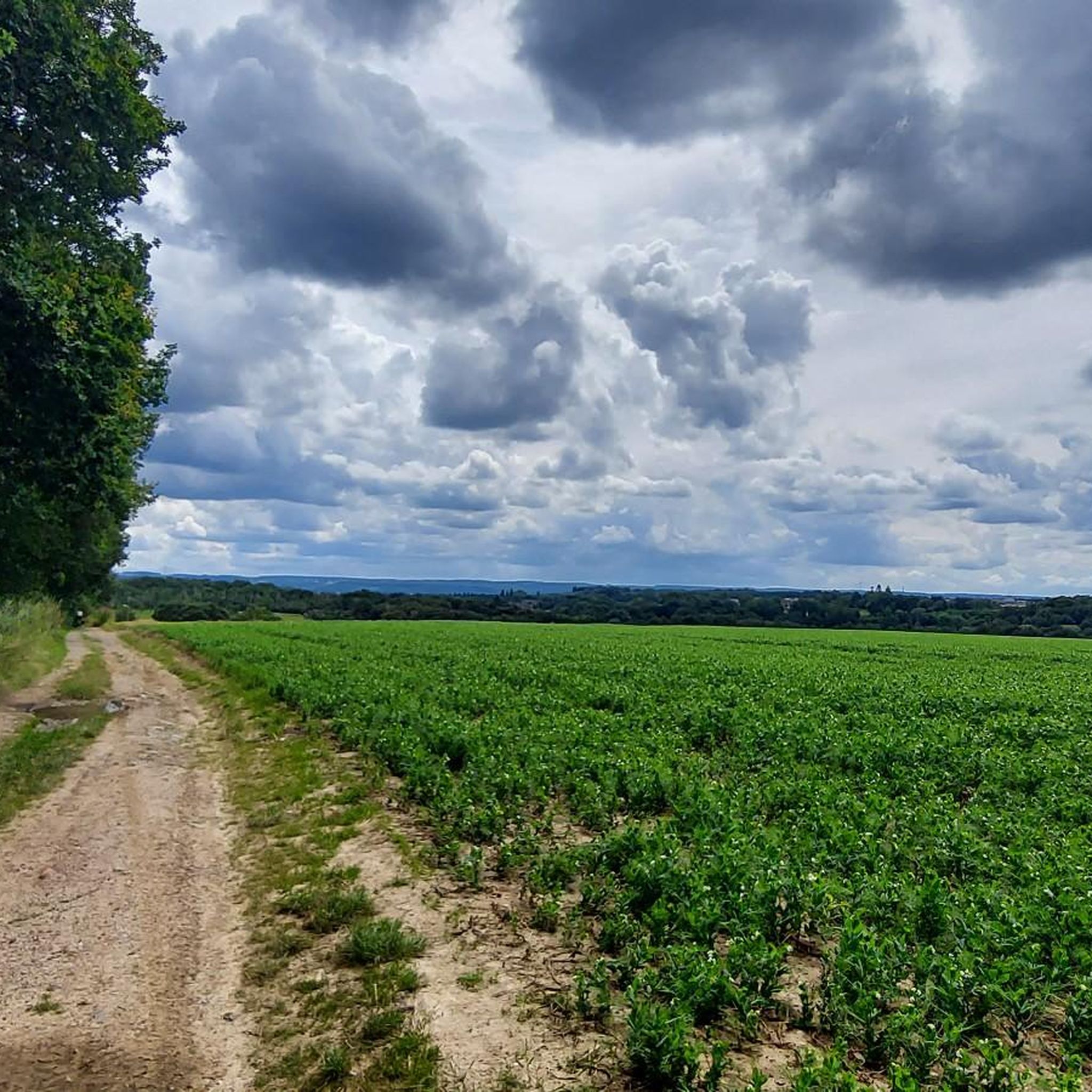
Road cycling in Burdinale-Mehaigne Natural Park features a diverse landscape where the agricultural plains of Hesbaye meet the wooded Condroz region. The terrain offers a harmonious blend of open fields, gently rolling hills, and intimate river valleys carved by the Burdinale and Mehaigne rivers. Cyclists will encounter varied scenery, from expansive farmlands to more sheltered, wooded sections, providing a dynamic riding experience. The park's topography includes both flat stretches and challenging, hilly sections, catering to different fitness levels.
Best road…
Last updated: July 4, 2026
38
riders
43.0km
01:54
320m
320m
Moderate road ride. Good fitness required. Some segments of this route may be unpaved and difficult to ride.
1.0
(1)
18
riders
22.0km
00:55
120m
120m
Easy road ride. Great for any fitness level. Mostly well-paved surfaces and easy to ride.

Sign up for free
4.5
(2)
12
riders
49.6km
02:13
280m
280m
Moderate road ride. Good fitness required. Mostly well-paved surfaces and easy to ride.
13
riders
103km
04:58
1,100m
1,100m
Hard road ride. Very good fitness required. Mostly well-paved surfaces and easy to ride.
23
riders
53.5km
02:19
410m
410m
Moderate road ride. Good fitness required. Mostly well-paved surfaces and easy to ride.
Get access to more routes and recommendations from other explorers.
Sign up for free
Already have an account?
Our route recommendations are based on thousands of hikes, rides, and runs completed by other people on komoot.
Start today with a free account
Your next adventure awaits.
Login or Signup
Popular around Burdinale-Mehaigne Natural Park

Other adventures in Burdinale-Mehaigne Natural Park

Tips from the Community

Excavations are conducted year-round at Moha Castle, making it unique in Belgium. When I visited, two archaeologists were uncovering a wall that runs beneath the visible castle and likely dates back to the 12th century.
2
0
The castle is free to visit. At the foot of the rock, there's a visitor center where you can pick up a badge to open the gate. For €4, you can also get a brochure with information about the most important points. The castle is only open to visitors starting in April, but the friendly man at the visitor center let me in on February 27th... as far as you can even call it "inside" at this ruin ;-)
2
0
Since 1965, the Oteppe castle and its surrounding estate (65 ha) have been run as a holiday centre ("L'Hirondelle") with a hotel, campsite, holiday chalets and bungalows, swimming pools, playground and fishing ponds; as a result, the village's population has almost doubled during the summer months.
2
0

The exact origins of the medieval County of Moha remain unknown. It is likely that the county was formed during the fragmentation of the Carolingian Empire and the Hesbaye region at the end of the 9th century. The first known count, Albert of Moha, is mentioned in a document dated 1026 or 1028. The first defensive stone walls also date from the first half of the 11th century. Having no male heir, Albert of Moha married his daughter to Henry I of Dasbourg around 1050, thus linking the county's destiny to that of this powerful family of Alsatian origin. Initially, it is highly unlikely that the Counts of Dasbourg regularly resided in Moha, entrusting the county's administration to trusted men and a small garrison. However, the situation changed with Hugh II (1130-1180) and his son Albert II (d. 1212), who decided to become more involved in the region's politics. Albert II, in particular, chose to align his interests with those of his nephew, Duke Henry I of Brabant, whose policies he would follow until the end of the 12th century. In 1204, Count Albert III, having lost hope of having a son, chose the Prince-Bishop of Liège as his heir. But the late birth of his daughter Gertrude would jeopardize these agreements. Quickly betrothed to Thibaut of Lorraine, who died in 1219, she then married Thibaut of Champagne, who repudiated her, and subsequently Simon of Linange. At 19, she died childless. On March 19, 1225, the Prince-Bishop of Liège, Hugues de Pierrepont, took possession of Moha. Under the Prince-Bishops, Moha became a prison for political prisoners and a fortification tasked with controlling the city of Huy and blockading merchants. This policy was deeply unpopular and led to reprisals: the people of Huy besieged Moha in 1255. The fortress of Moha was considered impregnable. It was therefore through trickery that the people of Huy, taking advantage of a request for a truce, seized the castle on May 6, 1376. After the attack on the castle, the site's history is largely unknown. Mass is still celebrated twice a year in the castle chapel. During the 18th century, the ruins served as a refuge for a hermit. The castle's stones were gradually plundered, notably to build the surrounding houses. In 1889, the ruins of the castle were purchased by the Belgian state. Source: https://chateaumoha.be/histoire
6
0

The "Rocher du Château de Moha" is a limestone outcrop rising from the Mehaigne valley. It was a strategically important site in the Middle Ages, when more castles were built on rocks. This made the site difficult to besiege, and it was well-placed as a control point over the valley. The rock is very recognizable in the landscape. The ruins on the rock are still clearly visible, and the medieval structures are still easily recognizable.
7
0
The Château de Moha is a medieval feudal castle in Wanze, built on a rock at the confluence of the Mehaigne and Fosseroule rivers. Dating back to the 7th century, the castle served as a defense for the region. It became the property of the Prince-Bishops of Liège, who used it as a fortress and prison. In 1376, the castle was captured by the inhabitants of Huy through deception, marking the end of its military function. The castle subsequently fell into disrepair, but the ruins have been preserved and are open to the public.
7
0


Frequently Asked Questions
What kind of terrain can I expect when road cycling in Burdinale-Mehaigne Natural Park?
The Burdinale-Mehaigne Natural Park offers a varied road cycling experience. You'll encounter a harmonious blend of expansive agricultural plains, gently rolling hills, and intimate river valleys carved by the Burdinale and Mehaigne rivers. The landscape transitions from open farmlands in the Hesbaye plateau to more sheltered, wooded sections and defined valleys closer to the Meuse, providing dynamic scenery throughout your ride.
Are there road cycling routes suitable for beginners in Burdinale-Mehaigne Natural Park?
Yes, the park offers routes suitable for various ability levels. For beginners, there are easy options such as the Château de Fallais – Braives Railway Path loop from Braives, which covers 22.1 km with moderate elevation changes, making it a good choice for those new to road cycling.
What historical landmarks or attractions can I see along the road cycling routes?
Road cycling routes in the Burdinale-Mehaigne Natural Park often pass by significant historical sites. You can explore the ancient fortress of Moha Castle, dramatically situated on a rocky outcrop, or the picturesque Château de Fallais. Other notable castles include Château de Fumal. These sites add a rich cultural dimension to your ride.
What natural features are prominent along the road cycling routes?
The park is defined by its two rivers, the Burdinale and Mehaigne, which create scenic valleys with unique ecosystems, including wetlands and meadows. You'll also cycle through vast agricultural plains and more wooded areas, such as the significant nature reserve of Champia Wood, known for its biodiversity. The Tree Frog Fountain in Hosdent is another notable natural highlight.
Are there any challenging road cycling routes for experienced riders?
Yes, for experienced riders seeking a challenge, routes like the Côte du Prâle – Wall of Huy loop from Oteppe offer significant elevation gain, including challenging climbs. Another option is the Côte du Prâle – Oteppe Hill loop from Hannêche, which covers nearly 60 km with over 660 meters of ascent.
What do other road cyclists say about their experience in Burdinale-Mehaigne Natural Park?
The road cycling routes in Burdinale-Mehaigne Natural Park are highly rated by the komoot community, with an average score of 4.0 stars from over 18 reviews. Cyclists often praise the diverse terrain, the blend of open fields and wooded sections, and the well-marked trails that allow for exploration of both natural beauty and cultural heritage.
Is it possible to find circular road cycling routes in the park?
Yes, many of the road cycling routes in Burdinale-Mehaigne Natural Park are designed as loops, allowing you to start and finish at the same point. Examples include the Mur de Huy – Wall of Huy loop from Hannêche and the Côte de Vezin – Moha Castle Ruins loop from Les Bruyeres, providing convenient options for exploring the region.
What is the best time of year for road cycling in Burdinale-Mehaigne Natural Park?
The Burdinale-Mehaigne Natural Park is enjoyable for road cycling throughout much of the year. Spring and autumn offer pleasant temperatures and beautiful scenery, with blooming fields or vibrant fall foliage. Summer is also suitable, though it can be warmer, while winter cycling is possible but may require more preparation for colder conditions.
Are there options for parking near the road cycling trailheads?
While specific parking areas for each trailhead are not always explicitly listed, the villages and towns within and around the Burdinale-Mehaigne Natural Park, such as Hannêche, Les Bruyeres, Oteppe, and Braives, typically offer public parking facilities. It's advisable to check local parking options when planning your starting point.
Can I reach Burdinale-Mehaigne Natural Park by public transport for cycling?
The Burdinale-Mehaigne Natural Park is primarily accessible by car, but public transport options exist to nearby towns. While direct train stations within the park are limited, you can often reach larger towns in the vicinity by train or bus, and then cycle into the park. Planning your route in advance with local transport schedules is recommended.
Are there any family-friendly road cycling routes in the Burdinale-Mehaigne Natural Park?
Yes, the park offers easier routes that are suitable for families. The Château de Fallais – Braives Railway Path loop from Braives is an easy 22.1 km route with minimal elevation, making it a good choice for families with children or those looking for a more relaxed ride.
Where can I find places to eat or drink near the cycling routes?
The charming villages and hamlets throughout the Burdinale-Mehaigne Natural Park, such as Fumal, Hosdent, Lavoir, Envoz, Marsinne, and Ferrières, often have local cafes, restaurants, or pubs where you can stop for refreshments. These establishments provide opportunities to experience local cuisine and take a break during your ride.
Most popular routes in Burdinale-Mehaigne Natural Park
Most popular attractions in Burdinale-Mehaigne Natural Park

Get inspired with the komoot mobile app


Explore more
Browse the best Road cycling routes in other regions.
