The best cycling routes around Mörschwil
4.5
(1631)
16,307
riders
381
rides
Touring cycling routes around Mörschwil, a municipality in the canton of St. Gallen, Switzerland, are situated between the Steinach and Goldach rivers, offering views of Lake Constance. The region is characterized by diverse terrain, including forested areas and open landscapes, with many routes featuring paved sections. It provides options for various fitness levels, from moderate paths to more challenging routes with significant elevation gains.
Best touring cycling routes around Mörschwil
- The most popular touring cycling route is View of the…
Last updated: July 1, 2026
4.9
(13)
98
riders
49.4km
03:10
510m
510m
Hard bike ride. Very good fitness required. Mostly paved surfaces. Suitable for all skill levels.
5.0
(1)
29
riders
11.0km
00:50
170m
170m
Moderate bike ride. Good fitness required. Mostly paved surfaces. Suitable for all skill levels.

Sign up for free
4.0
(2)
24
riders
13.2km
00:56
250m
250m
Moderate bike ride. Good fitness required. Mostly paved surfaces. Suitable for all skill levels.
5.0
(2)
13
riders
Hard bike ride. Very good fitness required. Mostly paved surfaces. Suitable for all skill levels.
16
riders
29.0km
01:58
460m
460m
Hard bike ride. Very good fitness required. Mostly paved surfaces. Suitable for all skill levels.
Get access to more routes and recommendations from other explorers.
Sign up for free
Already have an account?
Our route recommendations are based on thousands of hikes, rides, and runs completed by other people on komoot.
Start today with a free account
Your next adventure awaits.
Login or Signup
Tips from the Community

The Dreisparten-Theater St. Gallen (opera, operetta, musical, drama, children's theater and dance) is considered the oldest existing professional theater in Switzerland. An initial amateur theater emerged here as early as the Middle Ages around the year 900; the driving forces were the monks Tutilo and Notker Balbulus. Because the dominant church in the monastery town was opposed to the theater, no regular theater operations could gain a foothold until the beginning of the 19th century. A permanent theater was not established until 1801. The new theater building by Claude Paillard was inaugurated in 1968. The consistently implemented architectural basic idea is the regular hexagon and thus the 120-degree angle. From 2020 to 2023, the theater building was completely renovated for 48.6 million Swiss francs (a good 53 million euros). Since 2000, the Symphony Orchestra St. Gallen and the former Stadttheater St. Gallen have been operating under "Konzert und Theater St. Gallen".
11
0
Since 1983, the Collegiate Church and Cathedral of St. Gallen (actually Collegiate Church of St. Gallus and Otmar) and the entire Abbey District have been part of the UNESCO World Heritage Site. The baroque new building of the Benedictine monastery church, built between 1755 and 1766, stands where Saint Gallus is said to be buried. From 720 onwards, Abbot Otmar organised the construction work around the crypt, and his successor Gozbert began the construction of the new monastery church from 820 onwards. The construction of the Collegiate Church in its present form - it is one of the last monumental sacred buildings of the late Baroque period - was planned by Gabriel Loser and Johann Caspar Bagnato. Its two 68-metre-high towers tower above the old town of St. Gallen.
8
0
The St. Gallen reformer, mayor, doctor and historian Joachim von Watt, called Vadian, is the only person in St. Gallen who is honored with a larger-than-life monument. Since 1904, the monumental, 3.75-meter-high bronze statue of the reformer, who lived from 1484 to 1551, has stood at this location. It was created by the sculptor Richard Kissling. Previously, the old town hall stood here, which was demolished in 1877.
10
0
In the old town, the artistically decorated oriel windows stand out, bearing witness to the travels of the St. Gallen textile merchants of the 18th and 19th centuries all over the world. They are a reminder of St. Gallen's importance in the linen and embroidery trade. There are more than a hundred such oriel windows in the old town. Some are multi-story, painted, or carved from wood.
10
0

Cathedral, St. Gallen Several earlier structures preceded the monumental church. Originally, the chapel of Saint Gallus stood on this site, where the saint was buried around 640. Later buildings incorporated Gallus's tomb. Around 720 (the founding of the monastery), a stone church was built. By the 9th century, the church had already reached its present length. In the 15th century, a new choir in the Gothic style was constructed. In 1756, the monks embarked on the final phase of the church's reconstruction, which was completed in 1766. The renowned architect Johann Kaspar Bagnato played a significant role in the design, while Johann Michael Beer oversaw the construction. The patrons were Abbots Cölestin Gugger von Staudach and Beda Angehrn. After the dissolution of the monastery, the church became a cathedral (bishop's church) in 1824. The church underwent interior renovations from 1961 to 1967 and exterior renovations from 2000 to 2003. The church has an elongated, rectangular floor plan. Within this plan, a rotunda (round structure) is inserted, resembling a transept. On the eastern end, the striking twin-tower facade rises as a dominant feature, the emblem of the Diocese, City, and Canton of St. Gallen. The facade's sculptural decoration includes figures of Saints Maurice and Desiderius and a relief depicting the Coronation of the Virgin Mary by the Holy Trinity. The interior of the church is a three-aisled, free-pillared structure with a central dome (rotunda). High-quality stucco work, vault paintings, altars, and the choir stalls are among the highlights of the interior. The concept of harmoniously coordinated art forms is the work of Christian Wentzinger, sculptor and painter. Text / Source: City of St. Gallen, Town Hall, 9001 St. Gallen https://www.stadt.sg.ch/home/freizeit-tourismus/stgallen-entdecken/stiftsbezirk-unesco-weltkulturerbe.html
16
1


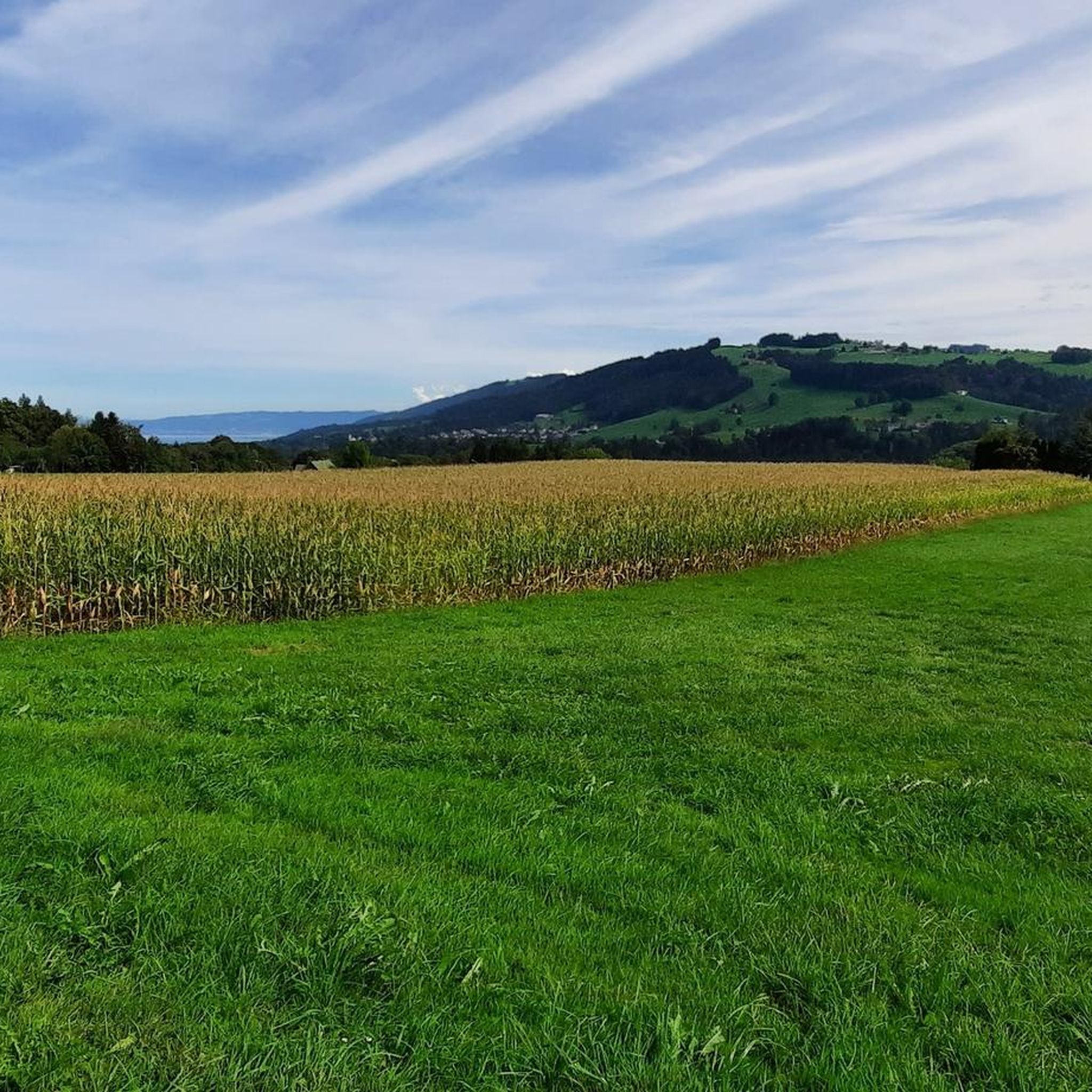
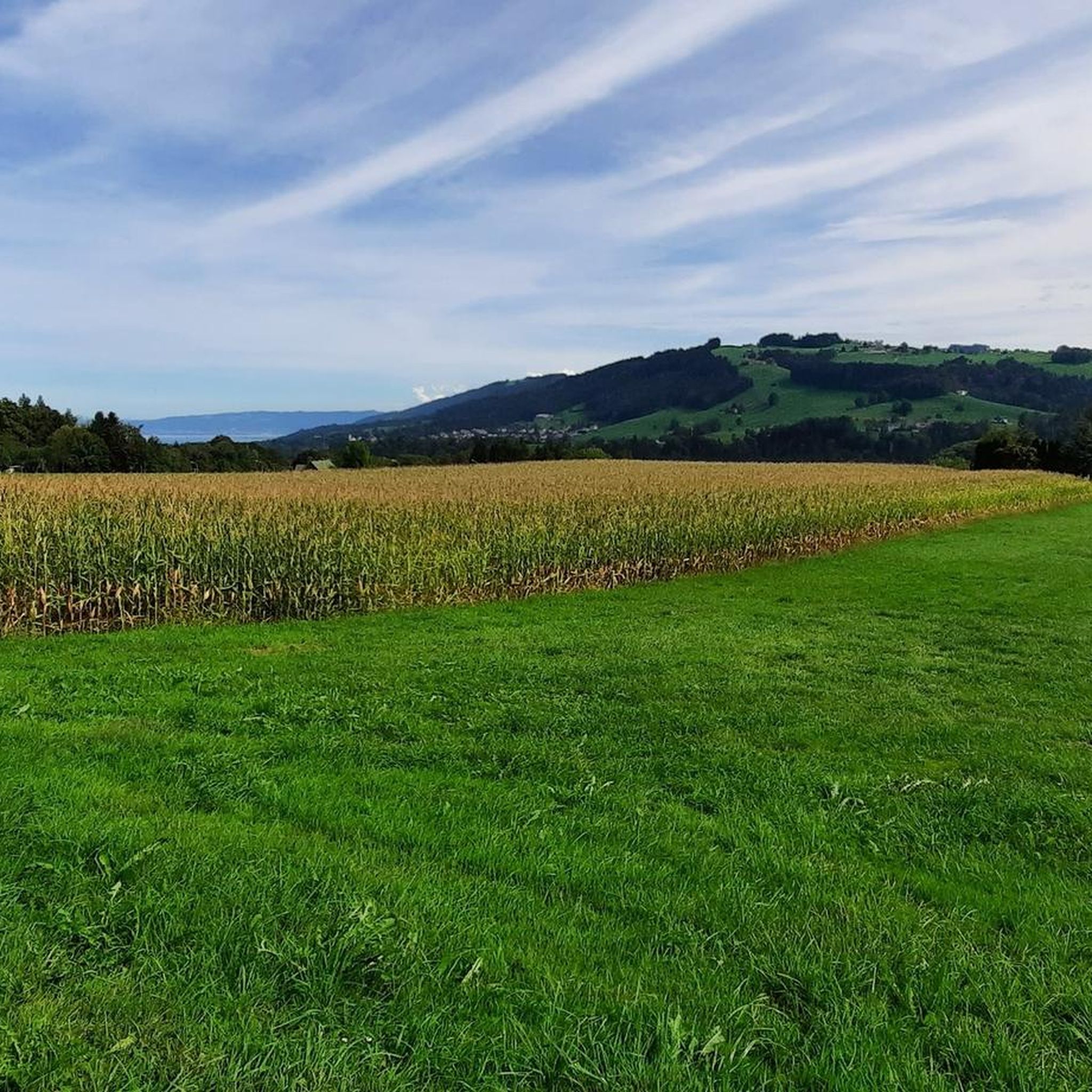
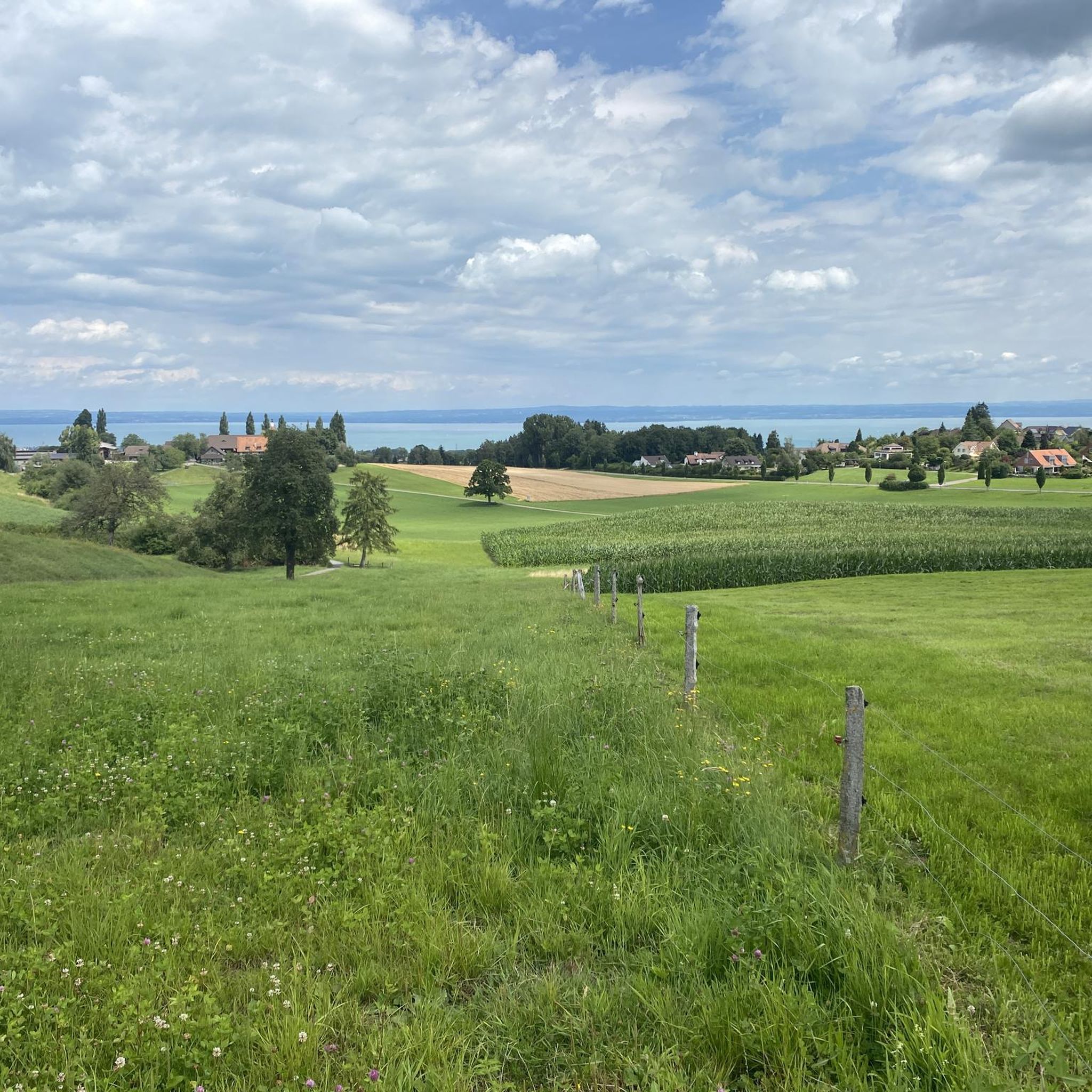
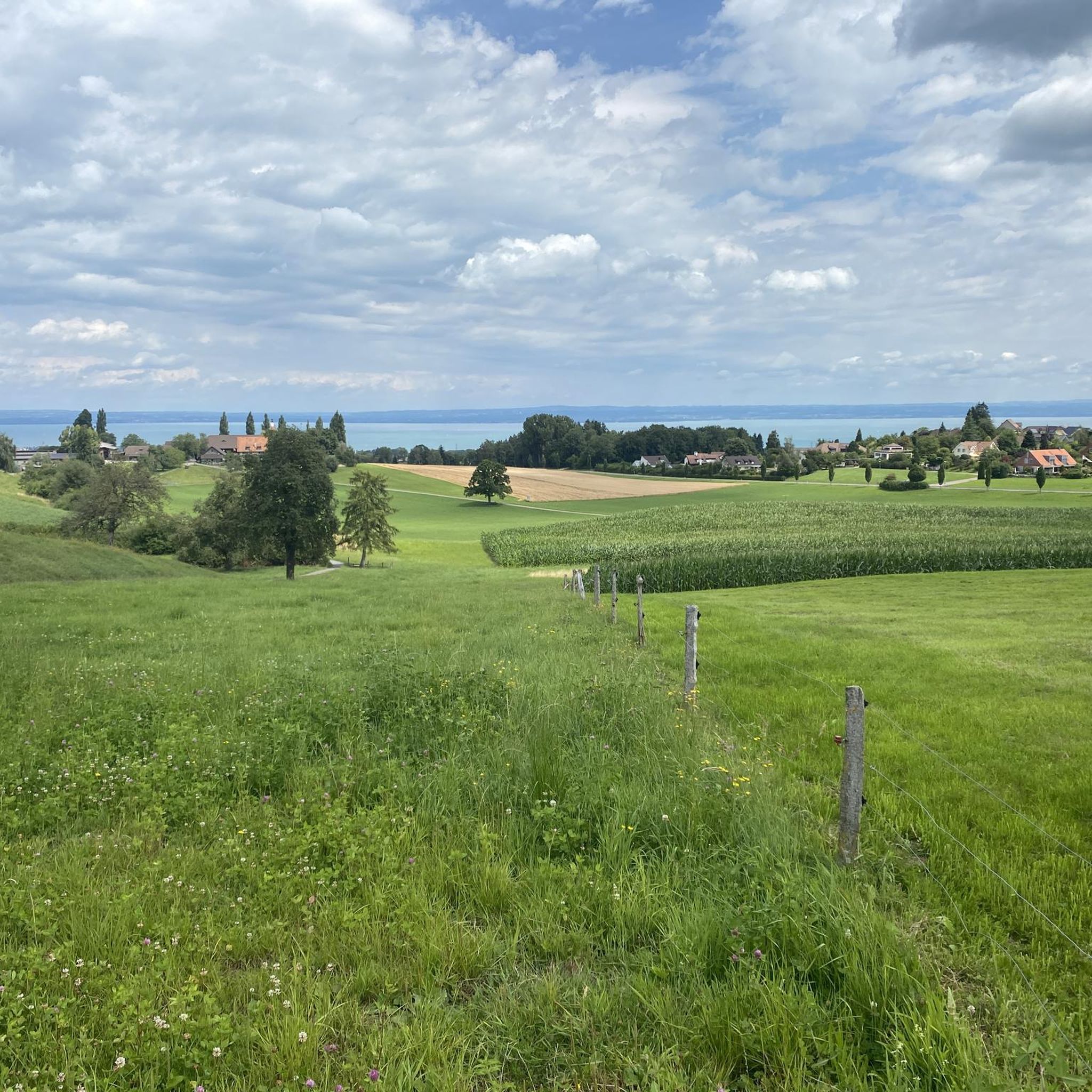
There's so many great views around the lake, and this is one of them! On a clear day, you can see very far in the distance. But even with less-than-perfect weather, there's still a lot of natural beauty to enjoy.
1
0

The Vadian Monument commemorates the life and work of the reformer of the city of St.Gallen, Joachim von Watt.
1
1
Frequently Asked Questions
How many touring cycling routes are available around Mörschwil?
There are over 400 touring cycling routes around Mörschwil. These routes cater to various skill levels, with approximately 50 easy, 170 moderate, and 180 difficult options to explore.
Are there any easy touring cycling routes suitable for beginners in Mörschwil?
Yes, Mörschwil offers around 50 easy touring cycling routes. These paths are generally less demanding, making them ideal for beginners or those looking for a relaxed ride. For example, the Restaurant Guggenbühl SC – View of Lake Constance loop from Mörschwil is a moderate 11 km route with manageable elevation, offering scenic views.
What kind of scenery can I expect on touring cycling routes in Mörschwil?
Touring cycling routes in Mörschwil offer diverse scenery, including picturesque views of Lake Constance, paths along the Steinach and Goldach rivers, and sections through forested areas. The region's location between these rivers and its proximity to the lake provide a varied and pleasant touring environment.
Are there any circular touring cycling routes in the Mörschwil region?
Yes, many touring cycling routes around Mörschwil are designed as loops, allowing you to start and end in the same location. Examples include the challenging View of the Sitter Viaduct – St. Gallen Cathedral loop from Mörschwil and the scenic View of Lake Constance – Gallus Square loop from Mörschwil.
What are some notable attractions or landmarks I can visit while cycling near Mörschwil?
While cycling near Mörschwil, you can explore several interesting landmarks. Consider visiting the historic Arbon Old Town, enjoy the Arbon Harbor and Lakeside Promenade, or take in the views from the Lake promenade Rorschach. The nearby city of St. Gallen also hosts the UNESCO World Heritage Site, the Abbey of Saint Gall, which is accessible via cycling routes from Mörschwil.
Are there any routes that offer views of Lake Constance?
Absolutely. Many touring cycling routes in the Mörschwil area provide excellent views of Lake Constance. A popular moderate option is the Restaurant Guggenbühl SC – View of Lake Constance loop from Mörschwil, which leads through areas with direct lake views. Another route, Schloss Watt – View of Lake Constance loop from Horn, also offers beautiful vistas of the lake.
What do other touring cyclists say about the routes in Mörschwil?
The touring cycling routes in Mörschwil are highly regarded by the komoot community, holding an average rating of 4.5 stars from over 1,500 reviews. Cyclists often praise the diverse terrain, the scenic views of Lake Constance, and the well-maintained paths that cater to various fitness levels.
Are the touring cycling routes in Mörschwil suitable for e-bikes?
Yes, the Mörschwil region is well-suited for e-bikes. The availability of e-bikes makes more challenging sections and routes with significant elevation gains accessible to a wider range of cyclists, allowing more people to enjoy the diverse landscapes.
Can I find longer touring cycling routes around Mörschwil?
For those seeking longer rides, Mörschwil offers several extended touring cycling routes. The Leutswil Bridge (Sitter River) – Arbon Old Town loop from Mörschwil is a challenging 71 km route that provides extensive exploration opportunities and connects to other notable towns.
What is the best time of year for touring cycling in Mörschwil?
While specific recommendations vary, the cycling season in Mörschwil generally extends from April to September. During these months, local groups often organize regular bike outings, indicating favorable weather conditions for touring cycling.
Are there any family-friendly attractions near the cycling routes in Mörschwil?
Yes, for families, Mörschwil features a unique 18-hole family golf course located on an ostrich farm, offering a fun and unusual outdoor activity that can be combined with a cycling trip.
Most popular routes around Mörschwil
Most popular attractions around Mörschwil

Get inspired with the komoot mobile app


Explore more
Browse the best Cycling routes in other regions.
