The best family-friendly hikes and walks around powiat legnicki
4.8
(152)
1,677
hikers
66
hikes
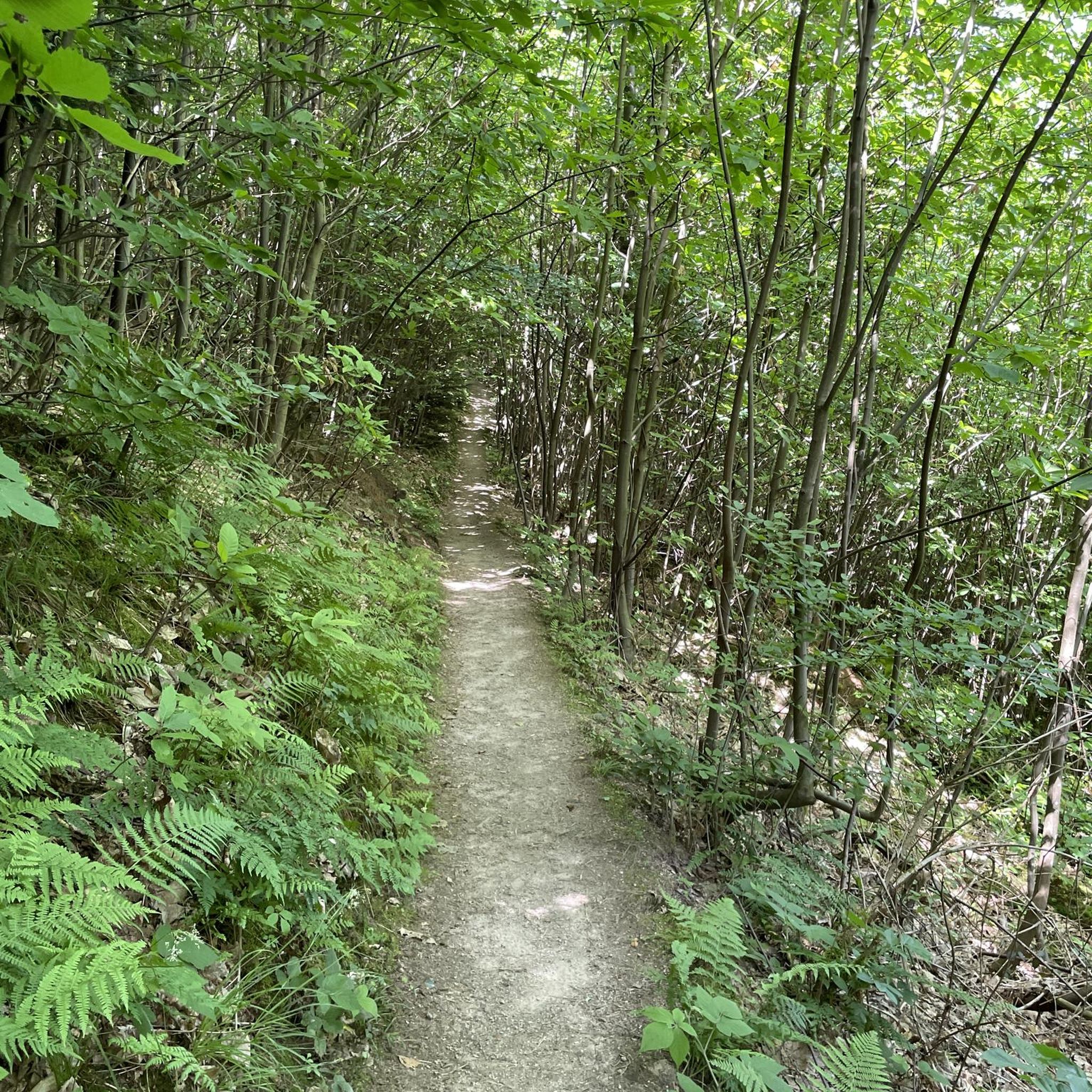
Family friendly hiking trails around powiat legnicki traverse a landscape characterized by diverse natural features, including unique post-glacial lakes and protected natural areas. The region offers a predominantly rural setting, providing tranquil routes through deciduous forests and marshy alder carrs. Hikers can explore areas within the "Land of Extinct Volcanoes," featuring unique volcanic formations and scenic hills in the Kaczawskie Foothills.
Best family friendly hiking trails around powiat legnicki
- The most popular family friendly hiking route is Julek Statue –…
Last updated: July 10, 2026
4.7
(3)
60
hikers
7.40km
01:53
20m
20m
Easy hike. Great for any fitness level. Easily-accessible paths. Suitable for all skill levels.
4.8
(14)
32
hikers
Moderate hike. Good fitness required. Easily-accessible paths. Suitable for all skill levels.

Sign up for free
14
hikers
7.25km
01:53
40m
40m
Easy hike. Great for any fitness level. Easily-accessible paths. Suitable for all skill levels.
5.0
(1)
13
hikers
7.37km
01:52
20m
20m
Easy hike. Great for any fitness level. Easily-accessible paths. Suitable for all skill levels.
5.0
(1)
13
hikers
5.19km
01:19
10m
10m
Easy hike. Great for any fitness level. Easily-accessible paths. Suitable for all skill levels.
Get access to more routes and recommendations from other explorers.
Sign up for free
Already have an account?
Our route recommendations are based on thousands of hikes, rides, and runs completed by other people on komoot.
Start today with a free account
Your next adventure awaits.
Login or Signup



Other adventures around powiat legnicki

Tips from the Community

Legnica's Old Town Hall (Stary Ratusz) is an architectural gem located on the central market square (Rynek) and one of the oldest surviving buildings in the city. Here are the key details: 🏛️ Historical Overview Built: Originally in the 14th century, rebuilt and expanded several times. Style: A blend of Gothic, Renaissance, and Baroque styles, with later Neoclassical elements. Function: Served for centuries as the seat of the city council, a court, and an administrative center. 🎨 Architecture & Features Facade: With arcades that formerly served as market halls. Tower: The distinctive clock tower was added in the 16th century. Interiors: Historic council chamber with vaulted ceiling and wall paintings. Former courtrooms and administrative offices. Restorations: Renovated several times, most recently extensively in the 1990s. 📍 Location & Current Use Directly on the Rynek, opposite the Neptune Fountain and close to the Galeria Sztuki (Sculpture Gallery). Today, the building houses cultural institutions, exhibitions, and occasional municipal events. A popular meeting place for city tours and history buffs. 🏙️ Cityscape Context Surrounded by restored town houses, cafés, and landmarks such as the Cathedral of St. Peter and Paul, the Church of Our Lady, and the Copper Museum. Together with the New Town Hall on Plac Słowiański, it forms an exciting architectural duo combining tradition and modernity.
0
0
The New Town Hall in Legnica (Nowy Ratusz) is an impressive Neo-Renaissance building and a significant testament to the city's development at the beginning of the 20th century. 🏛️ Architecture & Origin Built: Between 1902 and 1905 according to plans by Paul Öhlmann, originally designed by Lothar Schönfelder. Style: Neo-Renaissance with Baroque elements, richly decorated facades with sandstone cladding and granite bases. Planned concept: A four-wing complex with two courtyards and a monumental tower – however, only part of it was built. 📍 Location & Function Located at what is now Plac Słowiański (formerly Friedrichsplatz), south of the Cathedral of St. Peter and Paul. After World War II, the building became the seat of the Polish city administration in 1947. It has been a listed building since 1981. 🏢 Use & Interiors Ground floor: Police, fire department, detention cells. 1st floor: Tax office, tax offices, cash registers. 2nd floor: Mayor's office, municipal council meeting room, council library. 3rd floor: Building department. Attic: City archives. 🛠️ Technical equipment (at the time of construction) Two independent heating systems: hot water and low-pressure steam. Gas lighting in most rooms, electric lighting in representative areas such as the mayor's office and the meeting room.
0
0
The Julek statue in Legnica is a charming yet controversial public sculpture that is part of a larger artistic project: 🧒 Who is "Julek"? Depiction: A young boy with an oversized backpack, from which a proca (slingshot) protrudes. On his head, he wears a newspaper cap – a typical accessory of childhood in the 1950s. Symbolism: Embodies a cheeky, curious child from Legnica, representing the city's generations. 🎨 Artist & Concept Author: Edward Mirowski, a sculptor from Legnica. Unveiling: On May 30, 2014, directly on the market square, next to the Galeria Sztuki. Part of the "Dzieci Legnicy" (Children of Legnica) cycle: Several sculptures are planned, depicting children from different eras – from the 1950s to the present. Goal: To reflect the city's identity and history through childhood figures. 🗣️ Reactions & Discussion The sculpture sparked controversial discussions: Some saw it as a loving tribute to the city's history, while others criticized it as kitsch. The sculpture's placement between the cathedral and the gallery was also debated. 📍 Location Right on Legnica's Rynek (Market Square), next to the Galeria Sztuki – easily accessible and a popular photo opportunity.
0
0
The Cathedral of St. Peter and Paul in Legnica (Katedra Świętych Apostołów Piotra i Pawła) is a significant sacred building with a rich history and impressive architecture. Here are the key details: 🏰 Historical Overview First church built: Already mentioned in 1208, originally dedicated to the Apostle Peter. Gothic Rebuilding: Built between 1328 and 1378 under master builder Wiland, modeled on St. Elizabeth's Church in Breslau. Consecration: On September 20, 1342, by Bishop Wacław; St. Paul was added as a second patron. Reformation: From 1522/23, the church served as a Protestant church under Duke Frederick II. Fire & Reconstruction: After a fire in 1835, it was rebuilt in the Neo-Gothic style according to designs by Karl Friedrich Schinkel. 🛐 Catholic Cathedral Return to Catholics: After 1945, following the transfer to Poland. Elevation to cathedral status: On March 25, 1992, by Pope John Paul II, the main church of the newly established Diocese of Legnica. Visit of the Pope: John Paul II visited the cathedral on June 2, 1997. 🎨 Architecture & Furnishings Three-aisled hall church with cross vaults in the side aisles and a ribbed presbytery. Northwestern main portal: Around 1370, with a Gothic statue of the Madonna and Child (ca. 1340) – a masterpiece of stonemasonry. West portal: Scenes from the Adoration of the Magi. Interior: Renaissance pulpit (1586/88) Baroque high altar Bronze baptismal font in the shape of a Gothic chalice Gravestone of Duke Ludwig II of Brieg and Elisabeth of Brandenburg. 📍 Location & Surroundings Directly on Liegnitz Square, centrally located in the old town. In the immediate vicinity: Church of Our Lady, Liegnitz Castle, Copper Museum, and Modrzejewska Theater.
0
0
The Church of Our Lady in Legnica (German: Liegnitz, Polish: Kościół Marii Panny) is one of the oldest and most historically significant churches in Lower Silesia. Here is a comprehensive overview of its heritage:🏰 Origins & Architecture Founded: Around 1170 by Duke Bolesław I the Long, originally as a wooden, single-nave church near his castle. Reconstruction: In 1192, a Romanesque sandstone church replaced the wooden structure. It featured a short chancel and a semicircular apse. Destruction & Gothic Revival: After a devastating fire in 1338, the church was rebuilt between 1362 and 1386 as a three-nave Gothic basilica, incorporating earlier foundations. 🛐 Religious Significance Evangelical Conversion: In 1522, the first Protestant sermon in Legnica took place here, marking the transition to Lutheran worship. After World War II: The church continued to serve the German Protestant minority until 1962, when Pastor Wolfgang Meißler was expelled. He later founded the "Schlesienhilfe PWM" foundation to support the church's preservation. Interior & Restoration Neo-Gothic Renovation: After a fire caused by lightning in 1822, the church was rebuilt (1824–1829) as a hall church with a neo-Gothic interior. Redesign 1905–1906: Interior decorated with Moorish geometric patterns by Prof. Detkana of Berlin. Stained-glass windows by August Oetken. Addition of a chapel on the south side and restoration of the towers. Artistic Highlights: A neo-Gothic altarpiece depicting the "Adoration of the Shepherds" (1770). Stained-glass windows depicting biblical scenes such as the Baptism of Jesus and the Conversion of Paul. Renaissance and Baroque epitaphs embedded in the walls. 🏛️ Structure & Style Built of brick with sandstone foundations. Dimensions: 50.5 m long, 20 m wide, with two towers reaching 62 m. The interior features cross-ribbed vaulted ceilings and octagonal columns with Moorish motifs. 📍 Heritage & Recognition A square in front of the church was named Plac Pastora Wolfgang Max Meißler after its last German pastor in 2009. Today, it stands as a symbol of Legnica's multifaceted history—Polish, German, Catholic, and Protestant.
0
0

The pergola and its immediate surroundings are a gem in Legnica's People's Park, offering a perfect photo opportunity or simply a place to take a break.
0
0
Julek is a schoolboy with a slingshot and a newspaper cap. Rumor has it that he didn't go to school, preferring to earn some money instead. This is apparently just the beginning of a series called "Children of Legnica." It remains to be seen whether there will be other similar characters. As usual, there are supporters and opponents of this idea. A comparison with the Wrocław dwarves isn't really appropriate, as the reason for their creation is very different.
0
0
The Baroque-style Old Town Hall was last used as a town hall in 1905. It is located at the southeast end of the row of buildings on Legnica's market square, very close to the Church of St. Peter and St. Paul. The basement now houses a restaurant, known in Germany as the Ratskeller.
0
0
Frequently Asked Questions
How many family-friendly hiking trails can we explore in Powiat Legnicki?
Powiat Legnicki offers a wonderful selection of over 50 family-friendly hiking routes. The majority of these, around 40, are classified as easy, making them perfect for outings with children.
Are there trails suitable for families with young children or strollers?
Yes, many trails in Powiat Legnicki are designed with accessibility in mind, featuring easy paths suitable for young children and even strollers. Routes like the Pergola in Volkspark Legnica loop offer gentle terrain within green spaces, ideal for a relaxed family walk.
What kind of natural attractions can we expect to see on these family hikes?
The region boasts diverse natural beauty. You can discover unique post-glacial lakes, such as Jezioro Kunickie, which provide picturesque settings for walks. The area is also part of the "Land of Extinct Volcanoes," offering interesting geological formations and scenic hills within the Kaczawskie Foothills. Protected areas like "Dolina Czarnej Wody" also provide beautiful forest and water landscapes.
Are there any historical landmarks or points of interest along the family-friendly routes?
Absolutely! Powiat Legnicki is rich in history. You can explore significant sites like the Piast Castle (Zamek Piastowski) in Legnica, one of Poland's oldest princely castles, or the New Town Hall in Legnica. Some routes, like the Filip Statue – Głogów Gate Tower loop, will lead you past historical monuments and through charming parts of the city.
What do other hikers say about the family-friendly trails in Powiat Legnicki?
The komoot community highly rates the trails in this area, with an average score of 4.7 stars. Hikers often praise the well-maintained paths, the peaceful natural surroundings, and the variety of easy routes perfect for family outings.
Are there any circular routes suitable for families?
Yes, many of the family-friendly trails are circular, making them convenient for day trips. For example, the Julek Statue – Filip Statue loop from Legnica is an easy circular hike that allows you to start and end at the same point without needing to arrange transport back.
Can we bring our dog on these family hikes?
While specific regulations can vary by protected area, generally, dogs are welcome on most public hiking trails in Powiat Legnicki, provided they are kept on a leash and owners clean up after them. It's always a good idea to check local signage for any specific restrictions in nature reserves.
Is public transport available to reach the trailheads?
Many trails, especially those starting in and around Legnica, are accessible via public transport. For routes further afield, it's advisable to check local bus schedules or consider driving, as public transport options might be less frequent.
Are there trails that offer viewpoints or scenic overlooks?
Yes, the region, particularly around the "Land of Extinct Volcanoes" and areas like Ostrzyca, offers hills and elevated spots that provide rewarding views. The St. Peter’s Tower at Piast Castle also offers an observation deck for panoramic views of Legnica.
What is a good easy hike for a family looking for a shorter walk?
For a shorter, easy walk, consider the Cycling Path in Poland loop from Iwaszkiewicza - Sikorskiego. It's just over 5 km and has minimal elevation gain, making it perfect for a quick and enjoyable family outing.
Are there any trails that combine nature with urban exploration?
Certainly. Routes like the New Town Hall in Legnica – Pergola in Volkspark Legnica loop offer a blend of city sights and green spaces. You can enjoy the historical architecture of Legnica before transitioning into the peaceful environment of Volkspark.
Most popular routes around powiat legnicki
Most popular attractions around powiat legnicki

Get inspired with the komoot mobile app


Didn’t find what you were looking for?
Check out more Hikes throughout powiat legnicki below and find the perfect route in your destination.
Explore more
Browse the best Hikes in other regions.
