The best hikes from bus stations in Bistrița-Năsăud
4.7
(107)
1,014
hikers
3
hikes
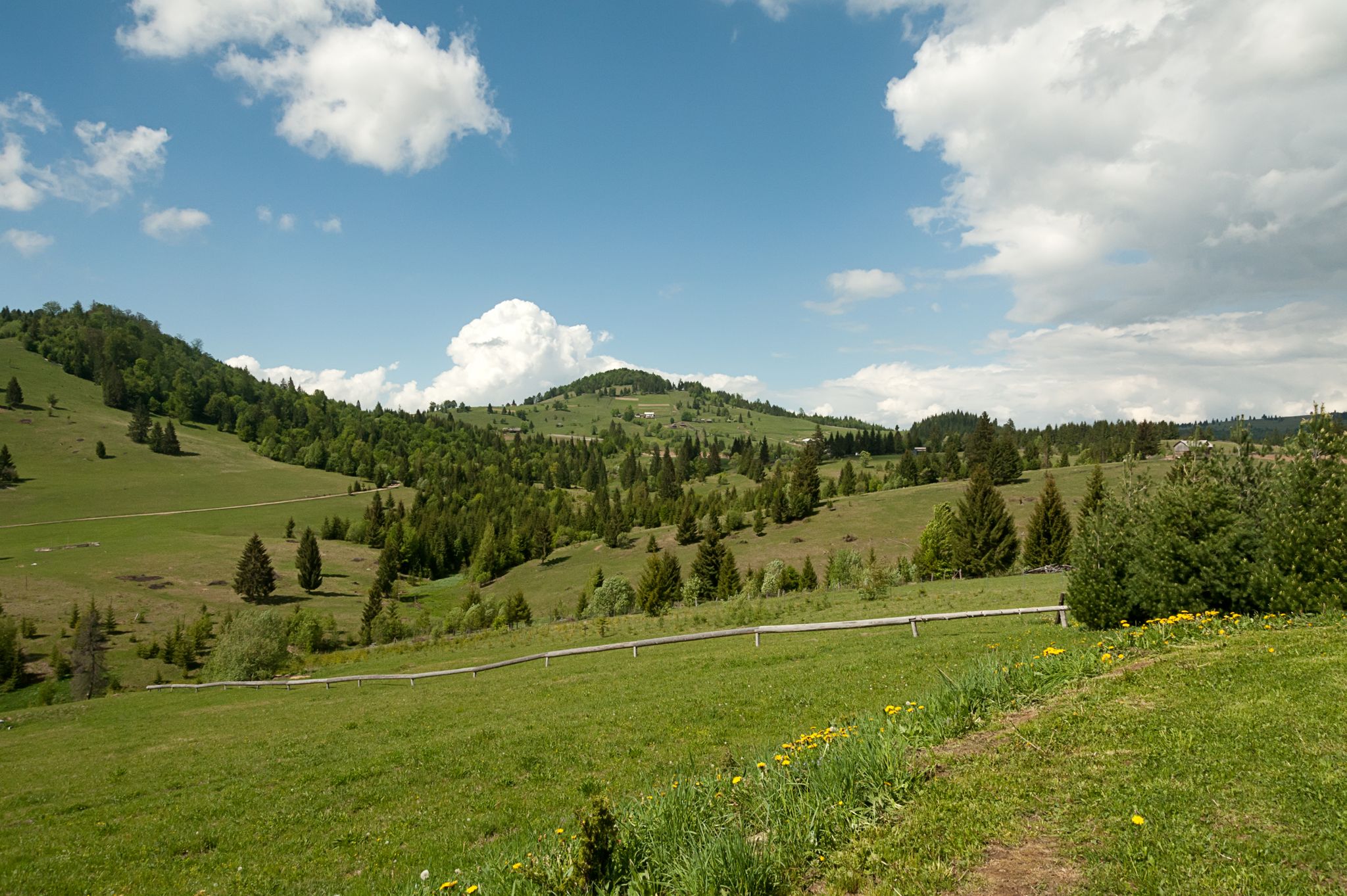
Hiking in Bistrița-Năsăud, located in northern Transylvania, Romania, offers diverse landscapes for outdoor activities. The region is characterized by a confluence of mountain ranges, including the Rodnei Mountains and Călimani Mountains, alongside wide valleys and picturesque hills. Hikers can explore alpine and subalpine zones, dense forests of beech, spruce, and fir, and areas featuring glacial lakes and waterfalls. The terrain varies from gentle valley paths to challenging mountain ascents.
Best bus station hiking trails in Bistrița-Năsăud
- The most popular bus…
Last updated: June 28, 2026
4.6
(14)
69
hikers
8.65km
03:19
540m
540m
Moderate hike. Good fitness required. Mostly accessible paths. Sure-footedness required.
10
hikers
19.7km
07:45
1,120m
1,120m
Hard hike. Very good fitness required. Mostly accessible paths. Sure-footedness required.

Sign up for free
7
hikers
Easy hike. Great for any fitness level. Easily-accessible paths. Suitable for all skill levels.
Our route recommendations are based on thousands of hikes, rides, and runs completed by other people on komoot.
Start today with a free account
Your next adventure awaits.
Login or Signup
Popular around Bistrița-Năsăud
Other adventures in Bistrița-Năsăud

Tips from the Community

The Evangelical Church dominates the city views in the center of Bistriţa. The city's main landmark is a popular photo subject.
12
0
The Roman Catholic church, formerly the church of the Piarist monastery, dates back to the 18th century. The gymnasium founded in Bistriţa in 1717 was the first Piarist school in Transylvania. In that year, General Stephan Steinville bought the land previously owned by the Dominicans and brought the Piarists to the city. The church was built by the Piarists from 1781 onwards on the site of a building that was destroyed by fire in 1758 and demolished in 1779. The church was built in the Viennese Baroque style according to plans by the master engineer Paul Schmidt with financial support from the Viennese imperial court, which wanted to strengthen Catholicism in Transylvania. The work was led by the architect Anton Türk and completed in the spring of 1787, as evidenced by the inscription on the façade.
14
0
At the northern corner of the roundabout where Strada Gării meets Strada Gheorghe Șincai stands the imposing building of the "Old Post Office" of Bistrita. The prominent corner bay window with its turret is striking. The building is now used as a residential and commercial building.
13
0
On June 11, 2008 at 7 p.m., a fire broke out at the base of the church tower. Due to the fir wood framework with which the tower was covered during renovation work, the flames quickly spread to the top of the tower. In less than half an hour, the roof of the tower and the roofs of three of the small turrets collapsed. The fire was probably started by three children aged between 12 and 15 who were collecting scrap metal.
13
0
The Evangelical Church is an architectural monument from the second half of the 14th century, representing the transition from Gothic to Renaissance in Transylvania. The church tower is 75 meters high and is the highest medieval tower in Romania, only a few centimeters higher than the tower of the Evangelical Cathedral in Sibiu. An elevator takes you to the top of the tower and you can enjoy the view over the city. Under the walls of the current church are the foundations of the early 14th century church built by the first Saxon settlers. The Roman Catholic church, originally dedicated to Saint Nicholas, became Lutheran when the congregation converted to the Protestant faith during the Reformation.
13
0
Since 1983, the city administration under the current mayor Ioan Turc of the liberal-conservative PNL has resided in this building directly opposite the Evangelical Church.
12
0
Alexandru Roșu, born on January 9, 1854, was the most famous Romanian photographer of the turn of the 19th and 20th centuries. In his 59 years of life, he left many valuable photographic documents to posterity. For example, he took the famous photo of the signatories of the "Transylvanian Memorandum", which demanded more rights for the Romanian population of Transylvania from Emperor Franz Josef in Vienna in 1892. Since December 2015, the bronze statue of the master photographer has stood in the city's central square.
14
0
A bronze model in a passage between Strada Vasile Alecsandri and Strada Liviu Rebreanu commemorates the eastern gate of the medieval town of Bistriţa, which once stood on this spot and probably looked like this in the 14th century. The Citadel of Bistriţa was one of the strongest fortifications in Transylvania. In the 19th century, a large part of the city walls were demolished, only the Dogarilor Tower and a few remains of the walls remained.
12
0
Frequently Asked Questions
How many bus station accessible hiking trails are available in Bistrița-Năsăud?
There are currently 3 curated hiking routes in Bistrița-Năsăud that are easily accessible from bus stations. These routes offer a range of difficulties, from easy urban walks to challenging mountain treks.
What types of landscapes can I expect on bus-accessible hikes in Bistrița-Năsăud?
The bus-accessible hikes in Bistrița-Năsăud offer diverse landscapes. You can find routes that explore the urban charm of Bistrița itself, as well as more challenging trails leading into the Rodnei Mountains, featuring alpine and subalpine zones, dense forests, and impressive natural features like waterfalls.
Are there any easy, family-friendly hikes accessible by bus?
Yes, for an easy and family-friendly option, consider the Bistrița City Hall – Evangelical Church of Bistrița loop from Bistrița. This 4.3 km urban walk is mostly flat and takes about an hour, perfect for a relaxed stroll to explore the city's historical center.
Can I find circular routes that start and end at a bus station?
All the bus-accessible routes featured in this guide are circular, meaning they start and end at the same point, making them convenient for public transport users. For example, the View of Borșa – Horses' Waterfall loop from Complex turistic Borșa is a moderate circular trail.
Are there any hikes that feature waterfalls?
Absolutely! The Rodnei Mountains are home to impressive waterfalls. You can experience the stunning Cailor Waterfall in Rodnei Mountains National Park on routes like the View of Borșa – Horses' Waterfall loop from Complex turistic Borșa or the more challenging Gărgălău Shelter – Horses' Waterfall loop from Complex turistic Borșa.
What is the best time of year for bus-accessible hiking in Bistrița-Năsăud?
The best time for hiking in Bistrița-Năsăud, especially in the higher Rodnei Mountains, is generally from late June through early September. During this period, the weather is more stable, though afternoon thunderstorms can occur. Lower elevation and urban walks can be enjoyed for a longer season, from spring to autumn.
What do other hikers enjoy most about hiking in Bistrița-Năsăud?
The komoot community highly rates the hiking experiences in Bistrița-Năsăud, with an average score of 4.65 stars from 105 ratings. Reviewers often praise the region's diverse natural beauty, from the dramatic mountain peaks and glacial lakes of the Rodnei Mountains to the picturesque valleys and historical towns.
Are there any challenging bus-accessible routes for experienced hikers?
Yes, for experienced hikers seeking a challenge, the Gărgălău Shelter – Horses' Waterfall loop from Complex turistic Borșa is a difficult 19.7 km route with over 1100 meters of elevation gain, offering a strenuous but rewarding mountain experience.
What natural features or landmarks can I see on these bus-accessible trails?
Depending on the trail, you can encounter various natural features and landmarks. Mountain routes might lead you towards peaks like Ineu Peak or Gârgălău Peak, or past the impressive Cailor Waterfall. Urban trails in Bistrița will showcase historical buildings like the Ovidenia Orthodox Church Bistrița.
Are there any shelters or huts along the bus-accessible mountain routes?
On some of the more challenging mountain routes, you may find shelters. For instance, the difficult Gărgălău Shelter – Horses' Waterfall loop specifically mentions the Gărgălău Shelter in its name, providing a potential resting point on longer treks. Another notable shelter in the region is La Cărți Shelter.
Most popular attractions in Bistrița-Năsăud

Get inspired with the komoot mobile app


Explore more
Browse the best Hikes in other regions.
