The best family-friendly hikes and walks in Bistrița-Năsăud
4.7
(107)
1,014
hikers
5
hikes
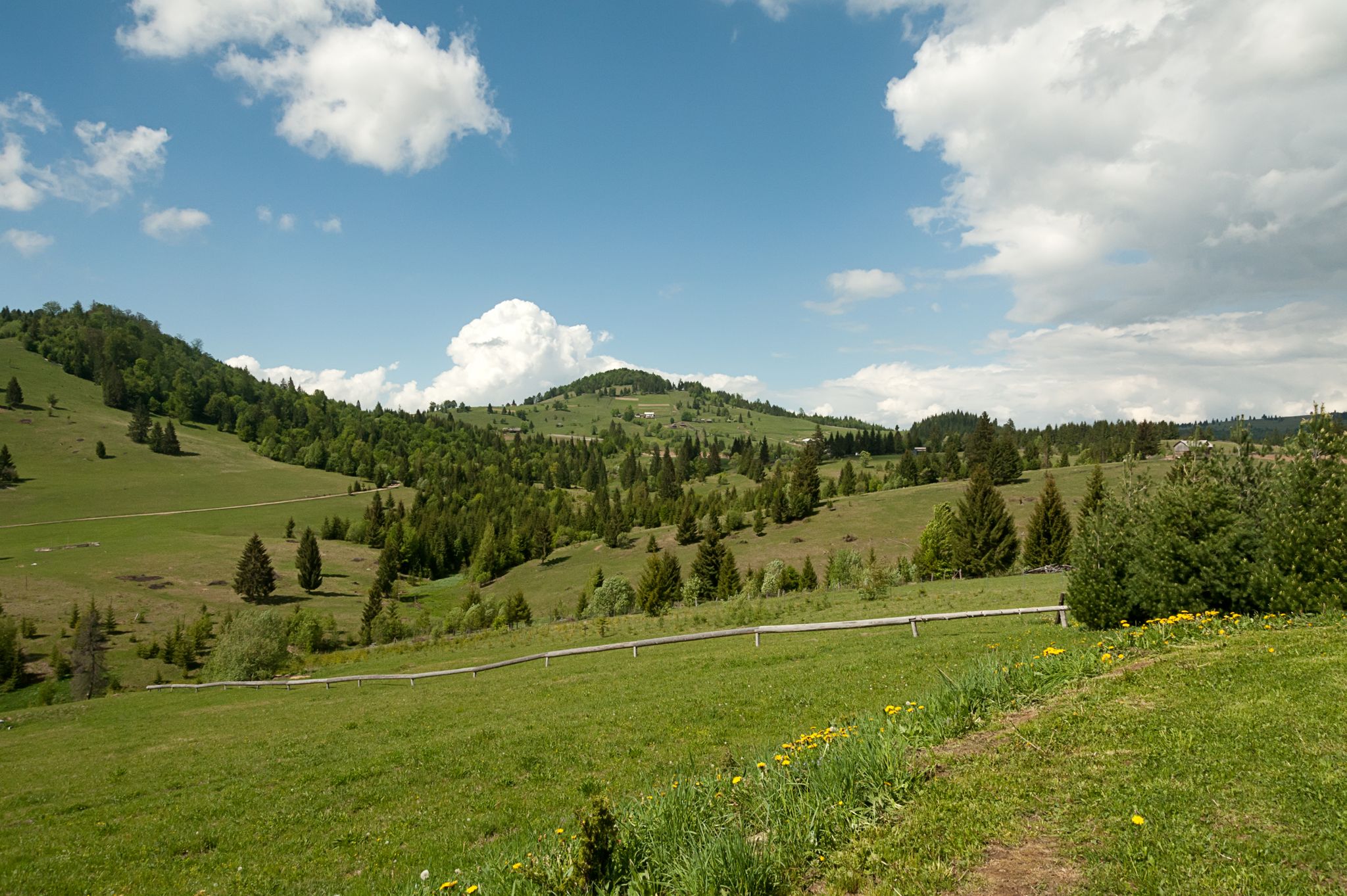
Family friendly hiking trails in Bistrița-Năsăud are set within the Transylvanian region of Romania, offering diverse landscapes for outdoor exploration. The terrain encompasses parts of the Eastern Carpathians, including the Rodna and Călimani Mountains, alongside plateaus from the North-Eastern Transylvanian Plateau. This varied geography features dense forests, alpine meadows, glacial lakes, and unique volcanic formations, providing a range of natural environments for hikers.
Best family friendly hiking trails in Bistrița-Năsăud
- The most popular family friendly hiking route is Bistrița City Hall – Evangelical Church of Bistrița loop from Bistrița, an easy 2.7 miles (4.3 km) trail that takes about 1 hour 6 minutes to complete, exploring the city's historical center.
- Another top favourite among local hikers is Old Post Office, Bistrița – Bistrița City Hall loop from Bistrița, an easy 3.8 miles (6.2 km) path. This route offers a gentle urban walk through Bistrița, highlighting local architecture.
- Local hikers also love the Schullerwald Park – View of Bistrița loop from Bistrița Nord, an easy 2.0 miles (3.2 km) trail leading through parkland and offering city views, often completed in about 55 minutes.
- Hiking in Bistrița-Năsăud is defined by the high peaks of the Rodna and Călimani Mountains, glacial lakes, and extensive forests, with options ranging from easy urban walks to more challenging mountain trails. The region offers routes suitable for various ability levels, including many family friendly options.
- The routes in Bistrița-Năsăud are highly rated by the komoot community with an average score of 4.7 stars from over 100 reviews. More than 900 hikers have used komoot to explore Bistrița-Năsăud's varied terrain.
Last updated: July 11, 2026
5.0
(8)
61
hikers
13.7km
04:24
480m
480m
Moderate hike. Good fitness required. Mostly accessible paths. Sure-footedness required.
4.5
(4)
25
hikers
16.9km
05:27
590m
580m
Hard hike. Very good fitness required. Sure-footedness, sturdy shoes and alpine experience required.

Sign up for free
7
hikers
Easy hike. Great for any fitness level. Easily-accessible paths. Suitable for all skill levels.
2
hikers
6.19km
01:34
10m
10m
Easy hike. Great for any fitness level. Easily-accessible paths. Suitable for all skill levels.
7
hikers
Easy hike. Great for any fitness level. Easily-accessible paths. Suitable for all skill levels.
Our route recommendations are based on thousands of hikes, rides, and runs completed by other people on komoot.
Start today with a free account
Your next adventure awaits.
Login or Signup
Popular around Bistrița-Năsăud
Other adventures in Bistrița-Năsăud

Tips from the Community

Ovidenia is the old name of the holiday in the Orthodox calendar on November 21, which corresponds to the Entry of the Mother of God into the Church. The main Orthodox church of Bistrița is dedicated to this day. The building was originally the church of the Minorite Monastery of "St. Andrei", also called the Crown Church, which dates back to the 13th century. It is a hall church with cross vaults and pointed arches, representative of the early Transylvanian Gothic of Cistercian origin. The church was bought by the United Romanian Parish (Greek Catholic) in 1895. In 1948, with the proscription of the United Romanian Church by the communist regime, the entire complex (church and monastery) was handed over to the Romanian Orthodox Church.
12
0
The Romanian Orthodox Church in the Bistriţa area is managed by the archdiocese located in this building complex. The archpriest since September 2001 has been Rev. Alexandru Vidican from Căianu Mic. The building dates back to the former Minorite monastery from the 13th century, to which the church next door also belonged.
12
0
In the small park of Piața Uniri stands a bust of Alexandru Ioan Cuza, a work by the sculptor Mircea Mocanu. Alexandru Ioan Cuza (or Alexandru Ioan I) was the first ruler of the United Principalities and the nation state of Romania. His election as ruler of Moldova on January 5, 1859, and of Romania on January 24, 1859, brought about the union of the two principalities. His committed political and diplomatic efforts enabled the formation of the modern Romanian unified state in January 1862, with Bucharest as its capital.
18
0
Under the protection of the Hungarian Queen Elisabeth, the inhabitants of Bistriţa became the most important merchants in the region in the 15th century. They handled trade between Transylvania and Moldavia. The city was declared a "royal free city", a status that gave it economic, legal and political autonomy. The proud town houses, many of which are still well preserved, bear witness to this heyday.
14
0
Bistrița is located in a wide depression, surrounded by rolling hills that dominate the landscape. The settlement was founded when the region in the north-eastern corner of Transylvania, which at the beginning of the Middle Ages lay between the royal possessions, was settled by settlers from Hungary, but above all by groups of Flemish, Walloons, Saxons and Bavarians, who were later grouped together under the name "Transylvanian Saxons". Through the Golden Bull of the Saxons of 1224, they were endowed with a number of rights and freedoms that brought them high social status and economic privileges. The first mention of the place dates back to 1241, when in the codes of the Echternach monastery, between the settlements destroyed by the Mongols, "oppidum Nosna" is mentioned, the name given by the settlers to the settlement founded on the banks of the Bistrita river.
14
0
The Evangelical Church dominates the city views in the center of Bistriţa. The city's main landmark is a popular photo subject.
12
0
The Roman Catholic church, formerly the church of the Piarist monastery, dates back to the 18th century. The gymnasium founded in Bistriţa in 1717 was the first Piarist school in Transylvania. In that year, General Stephan Steinville bought the land previously owned by the Dominicans and brought the Piarists to the city. The church was built by the Piarists from 1781 onwards on the site of a building that was destroyed by fire in 1758 and demolished in 1779. The church was built in the Viennese Baroque style according to plans by the master engineer Paul Schmidt with financial support from the Viennese imperial court, which wanted to strengthen Catholicism in Transylvania. The work was led by the architect Anton Türk and completed in the spring of 1787, as evidenced by the inscription on the façade.
14
0
At the northern corner of the roundabout where Strada Gării meets Strada Gheorghe Șincai stands the imposing building of the "Old Post Office" of Bistrita. The prominent corner bay window with its turret is striking. The building is now used as a residential and commercial building.
13
0
Frequently Asked Questions
What kind of terrain can families expect on hikes in Bistrița-Năsăud?
Bistrița-Năsăud offers a diverse landscape, from the alpine character of the Rodna Mountains with glacial lakes and extensive meadows to the volcanic formations and dense forests of the Călimani Mountains. You'll find a mix of gentle paths suitable for younger children and more challenging routes for active families. Many trails traverse picturesque hills, forests, and open areas, providing varied scenery.
Are there any easy, short hikes suitable for families with young children or strollers?
Yes, there are several easy routes perfect for families. For a very gentle stroll, consider the Bistrița City Hall – Evangelical Church of Bistrița loop from Bistrița, which is just over 4 km with minimal elevation gain. Another easy option is the Schullerwald Park – View of Bistrița loop from Bistrița Nord, a pleasant 3.1 km walk. These routes are generally suitable for strollers, depending on the specific path conditions on the day.
What natural attractions or landmarks can we see on family-friendly trails?
Bistrița-Năsăud is rich in natural beauty. You can discover stunning features like the impressive Cailor Waterfall in Rodnei Mountains National Park, one of Romania's most beautiful cascades. The region also boasts significant peaks such as Ineu Peak and Gârgălău Peak, offering panoramic views. For unique geological formations, the Călimani Mountains feature sites like the '12 Apostles' and 'Red Stones'.
Are there any circular hiking routes for families in Bistrița-Năsăud?
Absolutely! Circular routes are great for families as they bring you back to your starting point. A moderate option is the Izvorul Bistriței Lake – Horses' Waterfall loop from Prislop Pass, which is about 13.7 km long and offers beautiful scenery including the famous waterfall. For shorter, easier loops, consider the city walks like the Old Post Office, Bistrița – Bistrița City Hall loop from Bistrița.
What is the best time of year for family hiking in Bistrița-Năsăud?
The best time for family hiking in Bistrița-Năsăud is generally from late spring to early autumn (May to October). During these months, the weather is milder, trails are more accessible, and the natural scenery is at its most vibrant. Early summer brings the spectacular daffodil meadows on Mount Saca, while autumn offers beautiful foliage. Always check local weather conditions before heading out.
Are the family-friendly hiking trails in Bistrița-Năsăud dog-friendly?
Many trails in Bistrița-Năsăud are suitable for dogs, especially those outside national park strict protection zones. However, it's always recommended to keep dogs on a leash, especially in areas with wildlife or livestock. When hiking in national parks like Rodna Mountains National Park or Călimani National Park, be sure to check specific regulations regarding pets to ensure a pleasant and responsible experience for everyone.
What are the parking options like near family hiking trails in the region?
Parking availability varies by trail. For routes starting in or near towns like Bistrița, you'll typically find designated parking areas. For trails in more remote mountain areas, such as those near Prislop Pass, there are often informal parking spots or small lots at trailheads. It's advisable to research specific trailheads beforehand to confirm parking facilities.
Can we find places to eat or stay near the family hiking routes?
Yes, Bistrița-Năsăud offers various options for refreshments and accommodation. In towns like Bistrița, you'll find numerous cafes, restaurants, and hotels. In more rural or mountain areas, you might encounter traditional guesthouses, agrotourism farms, or mountain huts like La Cărți Shelter or Cabana Croitor. Colibița Lake also has many accommodation and dining options.
What do other hikers say about the family-friendly trails in Bistrița-Năsăud?
The komoot community highly rates the trails in Bistrița-Năsăud, with an average score of 4.65 out of 5 stars. Reviewers often praise the stunning natural beauty, the variety of landscapes, and the peaceful atmosphere. Many highlight the well-maintained paths and the opportunity to discover hidden gems away from crowded tourist spots, making it ideal for a family adventure.
Are there any specific trails around Colibița Lake suitable for families?
Colibița Lake, often called the 'Sea in the Mountains,' is a fantastic hub for family activities. While specific komoot routes are not listed in this guide for Colibița, the area offers numerous easy walks along the lake shore and through surrounding forests. These trails are generally well-suited for families, providing beautiful lake views and opportunities for other activities like kayaking or fishing.
Are there any trails that offer views of the Rodna Mountains or Călimani Mountains?
Many trails in the region offer spectacular views of these majestic mountain ranges. For instance, the Rodna Mountains feature peaks like Gârgălău Peak, which provides views extending to Maramureș and even Ukraine. The Călimani Mountains, with their volcanic landscape, also offer trails with panoramic vistas, especially around formations like the '12 Apostles' and Pietrosul Călimanilor Peak.
Most popular attractions in Bistrița-Năsăud

Get inspired with the komoot mobile app


Explore more
Browse the best Hikes in other regions.
