The best traffic-free bike rides around Dreiheide
4.2
(6)
27
riders
4
rides
Gravel biking around Dreiheide offers diverse landscapes within the Dübener Heide Nature Park, featuring dense forests, tranquil pond landscapes, and wide moorland expanses. The region's terrain includes gently undulating hills shaped by the Ice Age, providing varied elevation changes suitable for gravel riding. Many cycling paths, including dedicated no traffic gravel bike trails, lead through meadows, forests, and fields, ensuring a quiet and immersive outdoor experience.
Best no traffic gravel bike trails around Dreiheide
- The most popular no traffic gravel…
Last updated: July 11, 2026
3.0
(1)
4
riders
54.0km
03:28
280m
280m
Moderate gravel ride. Good fitness required. Mostly paved surfaces. Suitable for all skill levels.
2
riders
46.5km
02:53
230m
230m
Moderate gravel ride. Good fitness required. Mostly paved surfaces. Suitable for all skill levels.

Sign up for free
5.0
(2)
2
riders
49.8km
03:01
120m
120m
Moderate gravel ride. Good fitness required. Mostly paved surfaces. Suitable for all skill levels.
5.0
(1)
1
riders
24.0km
01:32
130m
130m
Hard gravel ride. Great for any fitness level. You may need to push your bike for some segments of this route.
3.0
(1)
8
riders
8.93km
00:27
10m
10m
Easy gravel ride. Great for any fitness level. Mostly paved surfaces. Suitable for all skill levels.
Our route recommendations are based on thousands of hikes, rides, and runs completed by other people on komoot.
Start today with a free account
Your next adventure awaits.
Login or Signup
Popular around Dreiheide
Tips from the Community

The interior has a flat, dark wooden beamed ceiling. The triumphal arches to the choir area under the tower and to the apse are Romanesque with lateral imposts. The three-sided galleries are in light gray and the entire room is kept in simple white. The altar stands in the apse and, as the altarpiece, shows a crucifixion scene between columns decorated with carvings, surrounded by irregularly framed images of angels. In the center of the choir stands the sandstone baptismal font. The pulpit is made of wood. On its basket, it shows the images of the Evangelists and on its ascent, Jacob with the ladder to heaven. The church has three bells, the oldest from 1662. A bronze bell of the same age had to be handed over for armament purposes in the First World War and was replaced in 1922 by a steel bell with the inscription "Glory to God in the highest". Finally, in 1985, a third bell with the inscription "Dona nobis pacem" was added from a private donation. Source https://de.wikipedia.org/wiki/Kirche_Mockrehna
1
0
The church is a Romanesque choir tower church built of fieldstones, approximately 24 m long and 10 m wide. The shaft of the rectangular tower and the adjoining round apse with a conical roof are exposed stone. The tower has a saddle roof running in a north-south direction with two dormers with bull's-eye windows. The gables on the tower and the nave are plastered. The tower has a copper-covered Baroque dome with an octagonal lantern and ends with the spire, in which the Pumphut axe is embedded, the tower globe, and the weather vane. The gables of the tower show a clock face of the tower clock on the north and south sides respectively. The bell storey of the tower has round-arched twin windows with a central column, two on the broad side facing east, and one on each of the narrow sides. The nave has round-arched windows, whose high position is determined by the gallery inside. A shortening of the gallery on the south side allows for a larger window there. Segmental arch windows at ground floor level mark former, partly bricked-up doors. The door and window surrounds are made of bog iron ore. Access to the church is through an extension with a hip roof on the west side, which also contains the staircase to the gallery. Source https://de.wikipedia.org/wiki/Kirche_Mockrehna
1
0
The Mockrehna church was built around the year 1208. Until the first Lutheran church visitation in 1525, it had its own parish post, which then went to the larger Wildenhain. From 1925 to 2001, Mockrehna was once again an independent church community.[4] Since 1945, Catholic services have also been held in the church. In 1705, the church was fundamentally rebuilt. The tower was demolished to a height of six meters, and the new construction acquired its present baroque form. The doors on the north and south sides gave way to a sandstone portal on the west gable, which was later replaced by an extension. The church was completely plastered. The church interior acquired its present form. The axe from the Pumphut legend was first attached as a wooden one to the tower, which was replaced by an iron one in 1835. In 1956, the apse and tower were freed from plaster, but this was reapplied to the tower gables in the 2010s. In 1976/77, the weather vane, tower globe, and axe were renewed, and the slate covering of the hood was replaced with copper sheet. The church received its tower clock in 1982. Source: https://de.wikipedia.org/wiki/Kirche_Mockrehna
1
0
The Mockrehna church is a sacred building of the Evangelical Church in Central Germany in the center of Mockrehna near Torgau in the Nordsachsen district.[1] It belongs to the parish of Audenhain[2] and is a listed building.[3] It is – also because of the broad axe allegedly thrown into the spire by Pumphut – the landmark of the place. Source https://de.wikipedia.org/wiki/Kirche_Mockrehna
1
0
Very beautiful old church
1
0

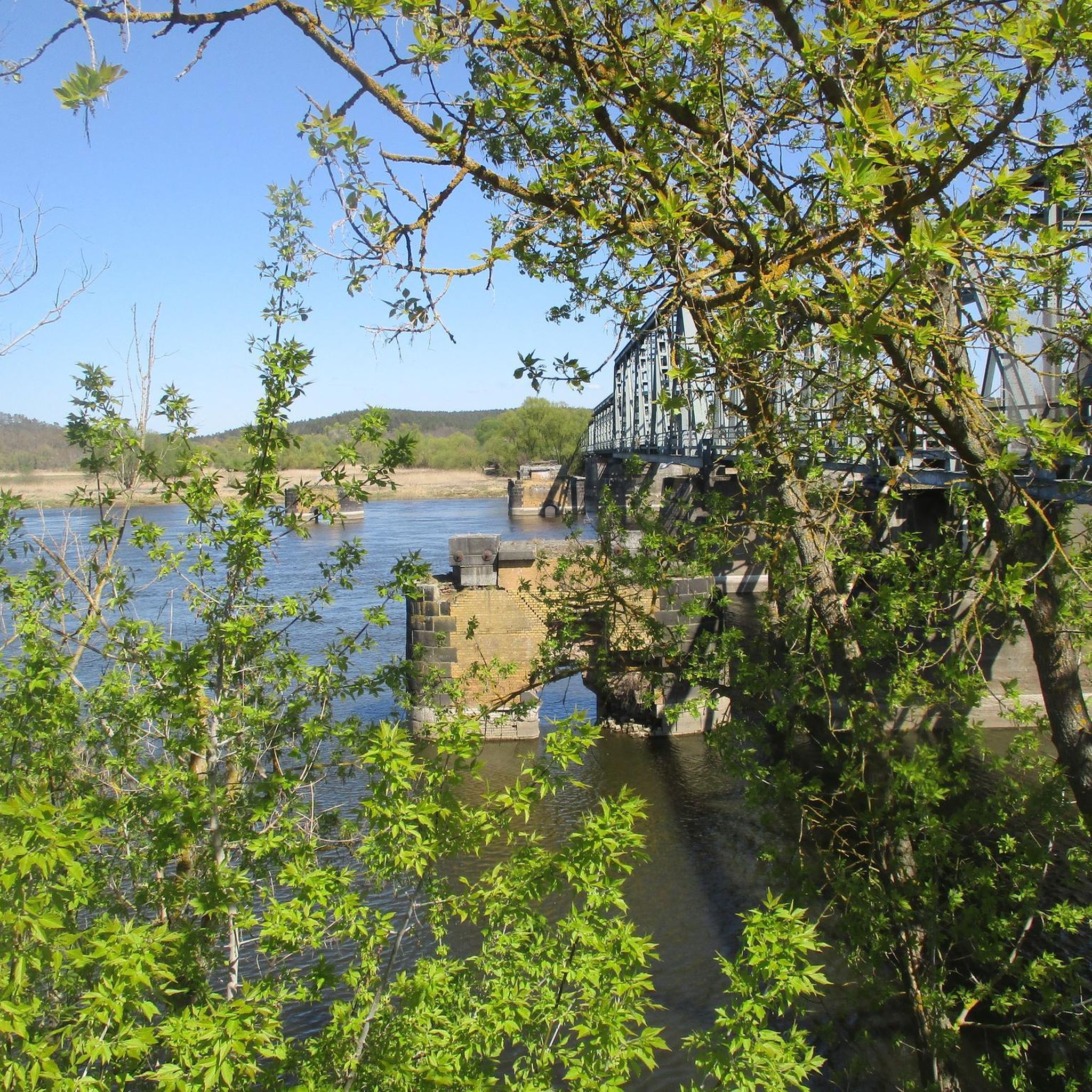
already filled with water, natural monument
2
0

The lake is used for fish farming, nature conservation, local recreation and flood protection.
0
0

Very friendly staff. Especially the groundskeeper was helpful and accommodating in all respects. The site itself meets modern standards and there are restaurants and shops nearby. All in all, would gladly come again. LG
0
0
Frequently Asked Questions
How many no-traffic gravel bike trails are available in Dreiheide?
There are 4 dedicated no-traffic gravel bike trails around Dreiheide featured in this guide. These routes offer a mix of easy and moderate options, perfect for exploring the region's quiet landscapes.
What kind of terrain can I expect on no-traffic gravel bike trails in Dreiheide?
The no-traffic gravel bike trails in Dreiheide primarily traverse the diverse landscapes of the Dübener Heide Nature Park. You can expect a mix of dense forests, tranquil pond landscapes, and wide expanses of moorland. The terrain includes unpaved paths, forest roads, meadows, and fields, with gently undulating sections shaped by the Ice Age, providing engaging climbs and descents suitable for gravel biking.
Are there any easy no-traffic gravel routes suitable for beginners or families in Dreiheide?
Yes, for an easier ride, consider the Zum Goldenen Anker, Wörblitz – Wildflower Meadow loop from Wörblitz. This route is rated easy and offers a pleasant experience through the local scenery, ideal for those looking for a relaxed, car-free gravel adventure.
What can I see along the no-traffic gravel bike trails in Dreiheide?
Many routes offer glimpses of the region's natural beauty and historical sites. For example, routes near Torgau might bring you close to significant landmarks. You can explore highlights such as Hartenfels Castle, its impressive Elbe Gate, and the Elbe bridge Torgau. The Bear enclosure at Hartenfels Castle is also a unique attraction nearby.
Are there any circular no-traffic gravel bike routes in Dreiheide?
Yes, all the no-traffic gravel bike routes listed in this guide are circular, allowing you to start and end your ride at the same point. A great option is the Great Pond, Torgau – Großer Teich Promenade loop from Torgau, which offers a scenic loop around the area.
What is the best time of year for no-traffic gravel biking in Dreiheide?
The region is beautiful year-round, but spring and autumn are particularly recommended for gravel biking. Spring offers fresh greenery and blooming landscapes, while autumn provides vibrant colors in the dense forests of the Dübener Heide. Summer offers shade on forest paths, and winter can be magical, though trail conditions may vary.
What do other gravel bikers enjoy most about no-traffic gravel biking in Dreiheide?
The komoot community highly rates the no-traffic gravel biking experience in Dreiheide, with an average score of 4.33 out of 5 stars. Reviewers often praise the quiet, car-free paths, the immersive natural beauty of the Dübener Heide, and the varied terrain that keeps rides interesting without being overly challenging.
Are there any longer no-traffic gravel routes for experienced riders?
For a longer, more challenging ride, consider the Port of Torgau – Benkenteich loop from Torgau. This route covers over 46 km and is rated moderate, offering a substantial gravel biking experience through varied landscapes.
Can I connect to other cycling networks from the no-traffic gravel trails in Dreiheide?
Yes, Dreiheide benefits from an extensive cycling network that connects to significant regional routes. You can find connections to routes like the Torgische Weg and even the popular Elbe Cycle Route, allowing for broader regional exploration and extended tours beyond the immediate no-traffic trails.
Are there any routes that explore the moorland areas of Dübener Heide?
Absolutely. The Bicycle Road – Dübener Heide moorland loop from Kobershain is an excellent option for exploring the unique moorland landscapes within the Dübener Heide Nature Park. This moderate route offers a deep dive into the natural features of the region.
Most popular attractions around Dreiheide

Get inspired with the komoot mobile app


Explore more
Browse the best Gravel rides in other regions.
