The best hikes from bus stations around Llanrhian
4.7
(356)
2,856
hikers
28
hikes
Hiking around Llanrhian offers access to the Pembrokeshire Coast National Park, characterized by its dramatic and varied coastal scenery. The landscape features rugged cliffs, volcanic headlands, and expansive beaches, providing diverse terrain for outdoor activities. Trails often trace the Pembrokeshire Coast Path, revealing historic harbors and unique natural formations. This region is known for its coastal paths and offers routes suitable for various fitness levels.
Best bus station hiking trails around Llanrhian
- The most popular bus station hiking route is…
Last updated: August 31, 2026
4.8
(9)
56
hikers
6.08km
01:40
90m
90m
Easy hike. Great for any fitness level. Easily-accessible paths. Suitable for all skill levels.
26
hikers
Easy hike. Great for any fitness level. Easily-accessible paths. Suitable for all skill levels.

Sign up for free
4.0
(1)
10
hikers
Easy hike. Great for any fitness level. Easily-accessible paths. Suitable for all skill levels.
5.0
(1)
5
hikers
Easy hike. Great for any fitness level. Easily-accessible paths. Suitable for all skill levels.
2
hikers
Easy hike. Great for any fitness level. Easily-accessible paths. Suitable for all skill levels.
Get access to more routes and recommendations from other explorers.
Sign up for free
Already have an account?
Our route recommendations are based on thousands of hikes, rides, and runs completed by other people on komoot.
Start today with a free account
Your next adventure awaits.
Login or Signup
Other adventures around Llanrhian


Tips from the Community

Beautiful old pub! Stopped here after a hike & it was fascinating inside, plenty of locals, of course a lot of tourists (as I was!) But I'd love to come back here sometime & go there for the evening, it just looks like it gets a bit loose!
0
0

Visit this interesting historical site & see how Porthgain used to be
1
0

Porthgain, a small coastal village in Pembrokeshire, became an industrial hub in the 19th and early 20th centuries. The quarrying activities in Porthgain primarily focused on slate and later on roadstone. The harbour, constructed in 1851, was essential for exporting slate from nearby quarries. Initially, slate was transported to the harbour by horse-drawn tramways and later by steam-powered machinery. By the late 19th century, the industry expanded to include brickmaking using slate waste. The demand for roadstone led to the development of steam-powered crushers and large storage hoppers, which are still visible today. Despite its industrial success, the Great Depression in the inter-war period led to a decline in trade, and by 1931, the quarrying activities had ceased. Today, Porthgain is a conservation area, preserving its rich industrial heritage and attracting visitors to its historical sites and scenic beauty
1
0
Porthgain is known for its picturesque harbour and rich industrial history. The village was once a bustling industrial port in the early 1900s, primarily involved in the export of slate, bricks, and crushed roadstone. Quarry History: • Slate Quarrying: Slate was the primary industry in Porthgain from around 1850 to 1910. The slate was quarried from nearby locations like Abereiddi and Trwynllwyd and transported to Porthgain via a tramway. • Brickmaking: From 1889 to 1912, bricks were manufactured using waste from the slate operations. The large brick hoppers that dominate the harbour today were used to store crushed dolerite before shipment. • Roadstone Production: After the decline of the slate industry, Porthgain turned to producing crushed roadstone from 1889 until 1931. Today, Porthgain is a conservation area, attracting visitors with its historical charm, scenic views, and local seafood. The harbour remains active, primarily serving local fishermen and recreational boaters.
1
0

Popular pub for young and old with delicious food. For fans of Game of Thrones: Jerome Flynn also stops here when he is in the area.
1
0

Remnants from a time gone by then ships used to be loaded with quarried materials via the structures that still remain.
1
0

The ruins of Aberfelin Corn Mill stand over Aberdraw Bay. They probably date from the fifteenth century. On the western gable was a wheel driven by a mill pond. The mill probably stopped operating in 1918. The place inspired Crwys (William Williams) to write the poem "Felin Trefin".
0
0
Carreg Samson, a dolmen, lies over Abercastle Bay, near Fishguard. The capstone is approximately 4 1/2 m long and 2.7 m wide. It lies on three of the seven upright support stones. The dolmen was previously covered by a mound of earth or stone. At the beginning of the 20th century, the gaps between the stones were closed so that the dolmen could be used as a sheepfold. The Carreg Samson is a so-called Scheduled Monument.
1
0
Frequently Asked Questions
How many bus station hiking trails are available around Llanrhian?
There are over 25 hiking routes around Llanrhian that are easily accessible from bus stations, allowing you to explore the stunning Pembrokeshire Coast National Park without a car. These include a mix of easy, moderate, and some more challenging options.
Are there easy or beginner-friendly hiking routes accessible from Llanrhian bus stops?
Yes, many of the trails accessible by bus are suitable for beginners or those looking for an easier walk. For example, the Trefin, Pwll Olfa route is an easy option, offering gentle coastal views. There are 15 easy routes in total starting from bus stations.
Can I find family-friendly walks starting from Llanrhian bus stops?
Absolutely. Many of the easier routes are perfect for families. The coastal paths often feature relatively flat sections and offer plenty of opportunities for wildlife spotting and exploring rock pools. Consider routes like Porthgain / Trefin, which connects charming villages and harbors.
Are the bus-accessible trails around Llanrhian suitable for dogs?
The Pembrokeshire Coast Path, which many of these bus-accessible trails follow, is generally dog-friendly. However, it's always best to keep dogs on a lead, especially near cliff edges, livestock, and during nesting seasons for birds. Always check local signage for any specific restrictions. The Trefin – Pembrokeshire Coast National Park route is a great option for a walk with your canine companion.
What natural features can I expect to see along these bus station hiking trails?
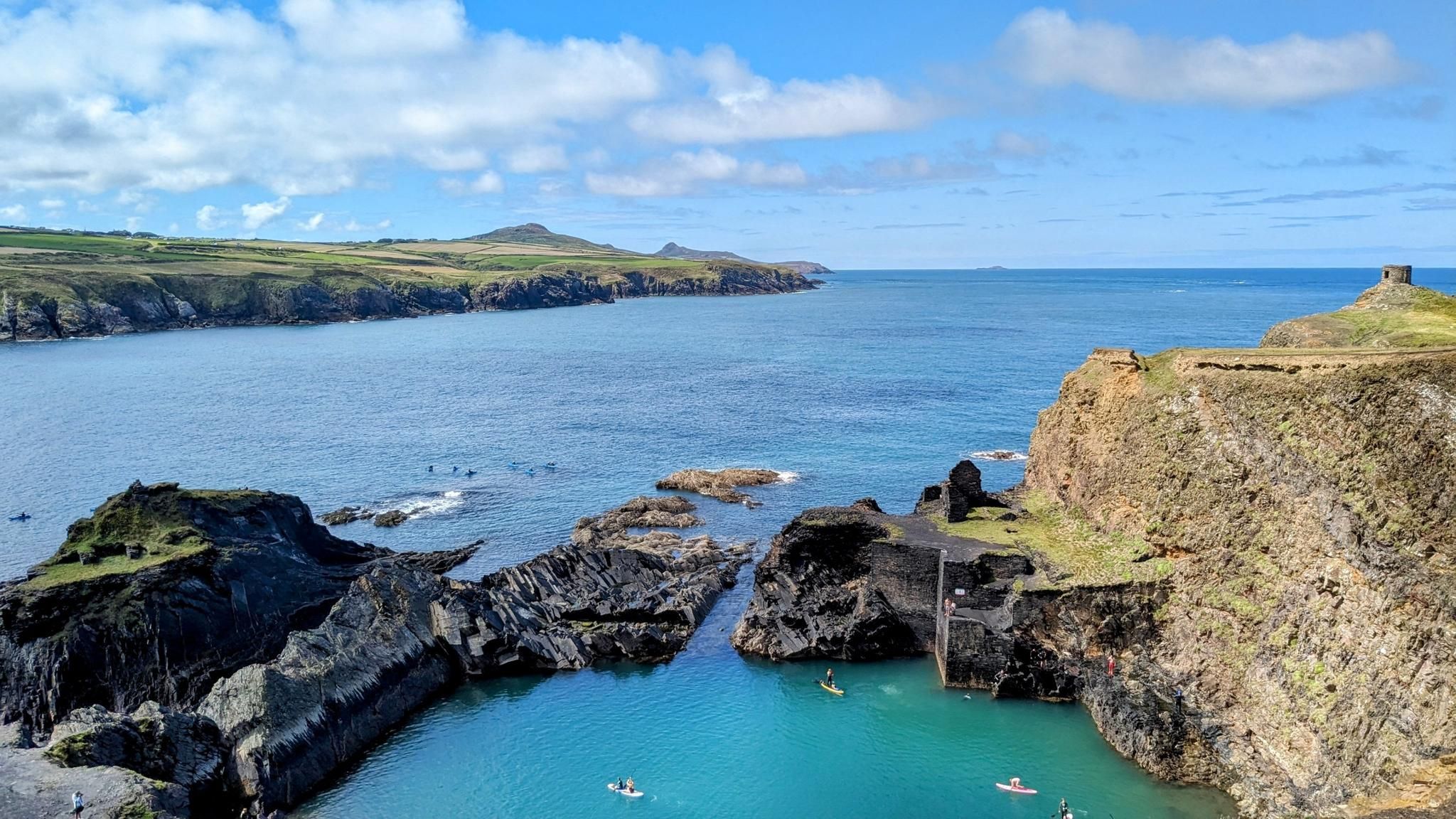
The trails offer dramatic and varied coastal scenery, including rugged cliffs, volcanic headlands, and secluded coves. You might encounter unique flooded glacial valleys and expansive beaches. Notable features include the striking Blue Lagoon at Abereiddy and the picturesque Abereiddy Beach.
Are there any interesting landmarks or historical sites along the bus-accessible routes?
Yes, the area is rich in history. You can explore historic harbors like Porthgain Harbour, which retains interesting industrial ruins from its past. Further afield, but still accessible by public transport, you can visit significant sites such as St David's Cathedral and the ruins of Bishop's Palace.
What do other hikers enjoy most about hiking from bus stations in Llanrhian?
The komoot community highly rates the trails around Llanrhian, with an average score of 4.8 stars. Reviewers often praise the stunning coastal views, the convenience of car-free access, and the variety of routes that cater to different fitness levels. The ability to explore charming villages like Trefin and Porthgain directly from bus stops is also a frequently highlighted benefit.
Are there any circular walks from Llanrhian bus stops?
While many coastal paths are linear, several routes can be combined or are designed as loops. For instance, the Trefin Quarries and Trwyn Llwyd route offers a shorter circular experience starting from Trefin, a village well-served by local buses.
What is the best time of year to hike these bus-accessible trails?
The Pembrokeshire Coast is beautiful year-round. Spring and autumn offer pleasant temperatures and fewer crowds, with vibrant wildflowers in spring and dramatic skies in autumn. Summer is popular but can be busy. Winter walks can be invigorating, but be prepared for potentially wet and windy conditions. Always check weather forecasts before heading out.
Are there any pubs or cafes near the bus stops or along the routes?
Yes, the charming villages along the coast, such as Trefin and Porthgain, often have welcoming pubs and cafes where you can refuel. These are typically located conveniently close to bus stops and the coastal path, making them perfect spots for a break during your hike. For example, the Porthgain Brickworks and Porthgain route takes you right through Porthgain, which has amenities.
What should I wear for coastal path walks near Llanrhian bus stops?
Given the coastal environment, it's advisable to wear layers, as the weather can change quickly. Sturdy, waterproof walking boots are essential, as paths can be uneven and muddy. A waterproof and windproof jacket is highly recommended, even on sunny days. Don't forget sun protection, as coastal exposure can be high.
Most popular routes around Llanrhian
Most popular attractions around Llanrhian

Get inspired with the komoot mobile app


Explore more
Browse the best Hikes in other regions.
