The best traffic-free bike rides in Volkenrodaer Forst
4.6
(1538)
6,044
riders
97
rides
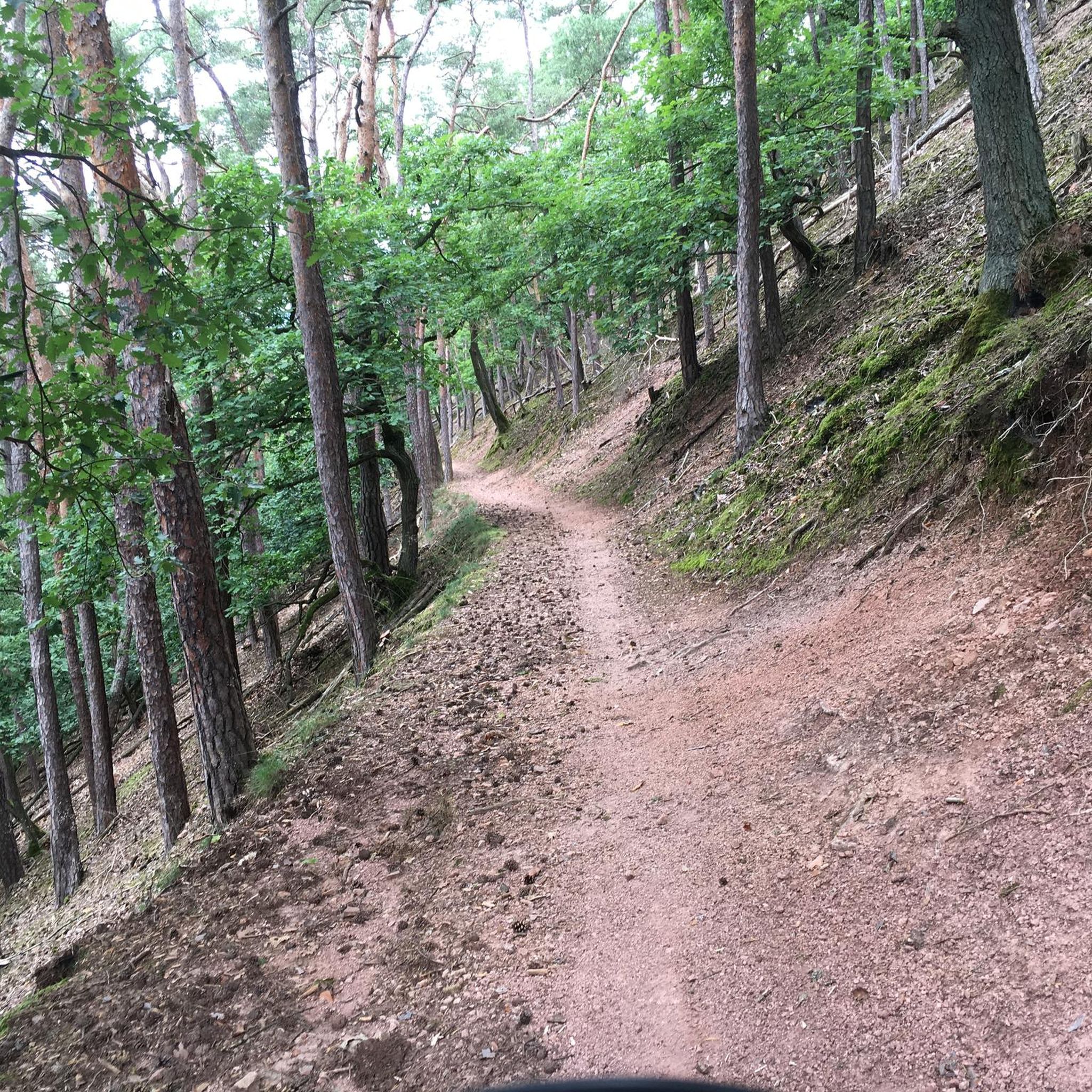
No traffic touring cycling routes in Volkenrodaer Forst offer a diverse landscape characterized by gently sloping gravel roads and varied terrain. The region features flat to slightly hilly routes through forests and lowlands, providing accessible riding experiences. Tranquil spots like the Kälberteich (Calf Pond) and natural spectacles such as the Märzenbecherblüte (snowdrop bloom) in the Schafbachtal are present. Cyclists can expect a mix of surfaces, including gravel and asphalt, suitable for touring.
Best no traffic touring cycling routes in Volkenrodaer…
Last updated: July 6, 2026
4.7
(33)
156
riders
29.0km
01:44
140m
140m
Easy bike ride. Great for any fitness level. Mostly paved surfaces. Suitable for all skill levels.
5.0
(4)
28
riders
Easy bike ride. Great for any fitness level. Mostly paved surfaces. Suitable for all skill levels.

Sign up for free
5.0
(5)
14
riders
34.6km
02:05
270m
270m
Moderate bike ride. Good fitness required. Mostly paved surfaces. Suitable for all skill levels.
3.5
(2)
11
riders
7.43km
00:25
20m
20m
Easy bike ride. Great for any fitness level. Mostly paved surfaces. Suitable for all skill levels.
4.5
(23)
38
riders
25.7km
01:38
160m
160m
Moderate bike ride. Good fitness required. Mostly paved surfaces. Suitable for all skill levels.
Get access to more routes and recommendations from other explorers.
Sign up for free
Already have an account?
Our route recommendations are based on thousands of hikes, rides, and runs completed by other people on komoot.
Start today with a free account
Your next adventure awaits.
Login or Signup
Popular around Volkenrodaer Forst

Tips from the Community

Top cycle path, beautiful area
0
0

The inner, oldest city wall of Mühlhausen was almost 2.8 kilometers long (of which 2.2 kilometers are preserved to this day) and enclosed an area of around 50 hectares. This area had the shape of a slightly rounded and not entirely regular rectangle, whose maximum east-west extent is almost twice as long (1000 meters) as its maximum north-south extent (500 meters). Its original structure included the four main gates, namely the Görmartor in the northeast, the Erfurter Tor in the southeast, the Felchtaer Tor in the southwest, and the Frauentor, named after the Marienkirche (=Frauenkirche), in the northwest, as well as probably four posterns: the Eselspforte and the Burgpforte on the north side, and the - unnamed - postern at the exit of Brunnenkreßstraße and another, only inferred, postern to Spielbergstraße on the south side. It is unclear whether the original main access to the castle via Breitenstraße was already closed with the construction of the wall between the castle and the city before 1251 or only after the demolition of the castle from 1256 onwards. As material for the inner (and later also outer) city wall, including the gates and towers, the travertine found in Mühlhausen and quarried here was used, a geologically young freshwater limestone. The inner city wall was constructed as a double-shell masonry. Its thickness up to the height of the rampart varies between approximately 1.5 meters and - reached only exceptionally - a maximum of 2 meters. Source: https://www.muehlhausen.de/tourismus/erkunden/sehenswuerdigkeiten/besondere-baudenkmaeler/stadtmauer/
1
0
The Inner Frauen Gate (Innere Frauentor) in Mühlhausen is an important relic of the medieval city fortifications and one of the city's most significant historical structures. It is located in the northwest of the old town and formerly served as one of the central entrances to the city. Merchants, travelers, and visitors entered the city through this gate, thus playing an important role both economically and militarily. The Frauen Gate owes its name to the street that led directly to St. Mary's Church, the so-called Frauenkirche (Church of Our Lady). Architecturally, it is a so-called double gate system, consisting of a high gate tower and a gatehouse situated in front of it. Between these two parts was a narrow, specially secured area known as the zwinger. This construction method served defensive purposes, as attackers could be trapped between the gates in an emergency and repelled more easily. The original gate was built in the Middle Ages, presumably in the 13th century. After a city fire, it was rebuilt in 1655 in the form in which it can still be seen today. Over time, the city structure changed, and parts of the fortifications were demolished or added to. For example, another Frauen Gate disappeared in 1830, the outline of which is still indicated in the street paving today. Today, the Inner Frauen Gate is the only preserved gate of Mühlhausen's inner city wall and thus a particularly valuable testimony to the city's history. It is part of one of the best-preserved medieval city fortifications in Germany and attracts many visitors. Together with the remaining sections of the wall, it provides a vivid impression of how strongly fortified and organized medieval cities once were.
1
0
Mühlhausen is known as "Muhlhusia turrita," the tower-adorned Mühlhausen, which once boasted 59 towers adorning its churches and city walls. Eleven medieval churches and a preserved inner city wall with numerous defensive towers allow visitors to experience the tower-adorned Mühlhausen of the modern era. They will find not only sacred spaces but also the unique secular uses of church buildings, such as the city library, museums, and theaters. The old town is the second largest area monument in Thuringia, which observant visitors can identify by its red street signs. Besides the numerous churches and museums, visitors can discover lovingly restored half-timbered houses and townhouses, remarkable architectural monuments, and former mills. Source: https://www.muehlhausen.de/tourismus/sehenswuerdigkeiten/
1
0

Here, the promenade is a lovely place to stroll, and on weekdays, there's also a wide selection of good snacks. At the end, the highlight, St. Mary's Church, awaits.
0
0

The green trees and the Gothic facade of the church provide a wonderful contrast in summer.
0
0
The very well-preserved Frauentor (Women's Gate) in the city wall is also worth seeing.
0
0

Unfortunately, there was a padlock on it when I passed through.
0
0
Frequently Asked Questions
How many no-traffic touring cycling routes are available in Volkenrodaer Forst?
There are nearly 100 dedicated no-traffic touring cycling routes in Volkenrodaer Forst, offering a wide range of options for peaceful exploration. These include 33 easy routes, 34 moderate, and 29 more challenging options.
What kind of terrain can I expect on these no-traffic routes?
You can expect a varied terrain, often featuring gently sloping gravel roads and stretches of asphalt. The routes generally range from flat to slightly hilly, making them accessible for touring cyclists seeking a relaxed ride away from traffic. The region's infrastructure is well-suited for touring.
Are there any family-friendly no-traffic cycling routes in Volkenrodaer Forst?
Yes, Volkenrodaer Forst offers numerous family-friendly routes, particularly among the easy and moderate categories. These paths are designed to be safe and enjoyable for all ages, often passing through scenic, quiet areas. A good example is the short, easy Playground in Grabe loop from Körner, which is just over 7 km long.
What are some notable natural attractions I can see along the no-traffic touring routes?
The region boasts several beautiful natural spots. You might encounter tranquil places like the Calf Pond, an idyllic stop for a break. In March, the Snowdrop Bloom in Schafbachtal offers a stunning natural spectacle with hundreds of meters of blooming snowdrops.
Are there any cultural landmarks or points of interest on the no-traffic cycling routes?
Absolutely. A significant cultural attraction is the Pilgrim Monument “Beginning and End” in Volkenroda, a sculptural work marking the start and end of the Loccum-Volkenroda pilgrimage route. Many routes also pass through or near historic towns like Mühlhausen, offering glimpses of old town architecture.
What is the best season for touring cycling in Volkenrodaer Forst?
The best seasons for touring cycling are generally spring and autumn, when the weather is mild and the natural scenery is particularly vibrant. Spring offers the unique snowdrop bloom, while autumn provides beautiful foliage. Summer is also pleasant, though it can be warmer. Winter cycling is possible, but conditions may vary, and some paths might be less accessible.
Are there any circular no-traffic touring routes available?
Yes, many of the no-traffic touring routes in Volkenrodaer Forst are circular, allowing you to start and end at the same point. For example, the Mühlhausen Old Town – Outer Frauentor loop from Volkenroda is a popular circular option, covering nearly 29 km.
What do other touring cyclists enjoy most about the no-traffic routes in Volkenrodaer Forst?
The area is highly rated by the komoot community, with an average score of 4.6 stars. Reviewers often praise the peacefulness of the routes, the varied natural landscapes, and the opportunity to explore cultural landmarks away from busy roads. The well-maintained paths and scenic views are frequently highlighted.
Can I bring my dog on these no-traffic cycling routes?
Many of the no-traffic routes in Volkenrodaer Forst are suitable for cycling with dogs, provided they are well-behaved and kept on a leash where necessary, especially in nature protection areas or near wildlife. Always ensure your dog is comfortable with the distance and terrain, and carry enough water for both of you.
Are there any longer, more challenging no-traffic touring routes?
Yes, for those seeking a longer ride, there are several moderate and difficult routes. The Unstrut Viaduct – Reiser Viaduct loop from Menteroda is a good example, covering over 50 km with significant elevation gain, offering a more extensive exploration of the region without traffic.
Where can I find places to rest or take a break along the routes?
The region is equipped with rest areas, often offering scenic views. You might find shelters, like the Shelter in Schafbachtal, or even rustic huts such as the Rustic Stick Hut. These spots provide ideal places to pause, enjoy the surroundings, and refuel.
Are there routes that connect to other major cycling paths?
Yes, some routes in Volkenrodaer Forst connect to larger cycling networks. For instance, a stage of a bike tour passes through Volkenroda, linking to the Unstrut-Werra bike path. This allows for extended touring opportunities beyond the immediate forest area, often leading through charming towns like Mühlhausen.
Most popular routes in Volkenrodaer Forst
Most popular attractions in Volkenrodaer Forst

Get inspired with the komoot mobile app


Explore more
Browse the best Cycling routes in other regions.
