Top 20 Natural Monuments in Chko Lužické Hory
Best natural monuments in Chko Lužické Hory encompass a protected landscape area in the Czech Republic, characterized by diverse geological formations and unique ecosystems. The region features basalt and phonolite domes, alongside sandstone rock formations. It preserves natural forest stands and moist mountain meadows, offering varied natural features for exploration.
Best natural monuments in Chko Lužické Hory
- The most popular natural monuments is Jedlová (Tannenberg) with Observation Tower, a viewpoint that offers extensive views over the Lusatian Mountains and…
Last updated: July 5, 2026
Lausche Summit and Observation Tower
Highlight • Summit
Translated by Google •
Tip by

Falkenstein
Highlight • Climb
Translated by Google •
Tip by

Sign up now to discover places like this
Get recommendations on the best single tracks, peaks, & plenty of other exciting outdoor places.
Sign up for free
Hochwald Summit and Lookout Tower
Highlight • Summit
Translated by Google •
Tip by

Jedlová (Tannenberg) with Observation Tower
Highlight • Viewpoint
Translated by Google •
Tip by

Naděje Reservoir
Highlight • Lake
Translated by Google •
Tip by

Sign up for free to discover even more natural monuments in Chko Lužické Hory.
Sign up for free
Already have an account?
Start today with a free account
Your next adventure awaits.
Login or Signup
Popular around Chko Lužické Hory
Other adventures in Chko Lužické Hory

Tips from the Community


The Naděje Dam, formerly known as the Hoffnung Dam or Hammer Dam, is a water reservoir in the Czech Republic. It is located at an altitude of 455 metres above sea level, about 1.5 kilometres north of the village of Naděje in the municipality of Cvikov in the Lusatian Mountains. The dam is located in the deep, wooded valley of the Hamerský potok (Hammer Stream) below the Suchý vrch (Dürrberg). The dam was built between 1937 and 1938 by the Teplitz master builder A. Niklas. The 91.57 metre long and 9.5 metre high dam is made of phonolite rock from the nearby Suchý vrch. The dam crest is 1.7 metres wide and has an overflow over a length of 33 metres. The dam originally served as a water reservoir for the hammer mill and the sawmill in the Hamr settlement. In addition, a chain of bunkers of the Czechoslovak Wall has been running south of the dam since 1936, reminding us of the historical importance of the region.
1
0

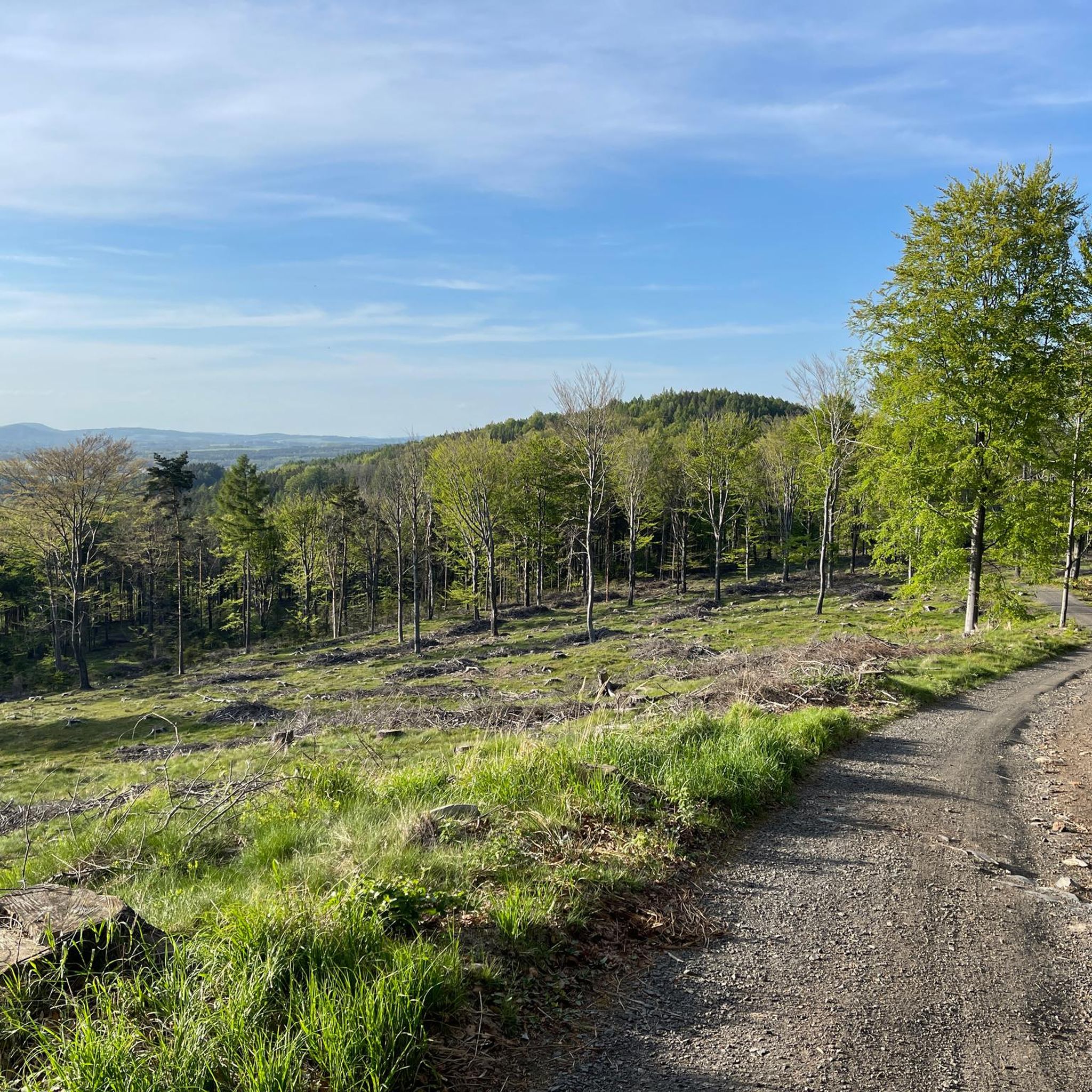
A beautiful place - unfortunately not easy to reach by bike. The way there is just about OK. The chosen path is a steep route through the forest.
1
0

Small reservoir, beautiful landscape.
1
0


Jedlová (German: Tannenberg) is a mountain in the north of the Czech Republic, in the Ústí Region, in the eastern part of the Děčín district as the second highest peak of the Děčín district, in the south of the Šluknov ridge, in the cadastral territory of the municipality of Jiřetín pod Jedlovou. It is located 7 km southwest of Varnsdorf and 2 km southwest of the center of Jiřetín.
6
0

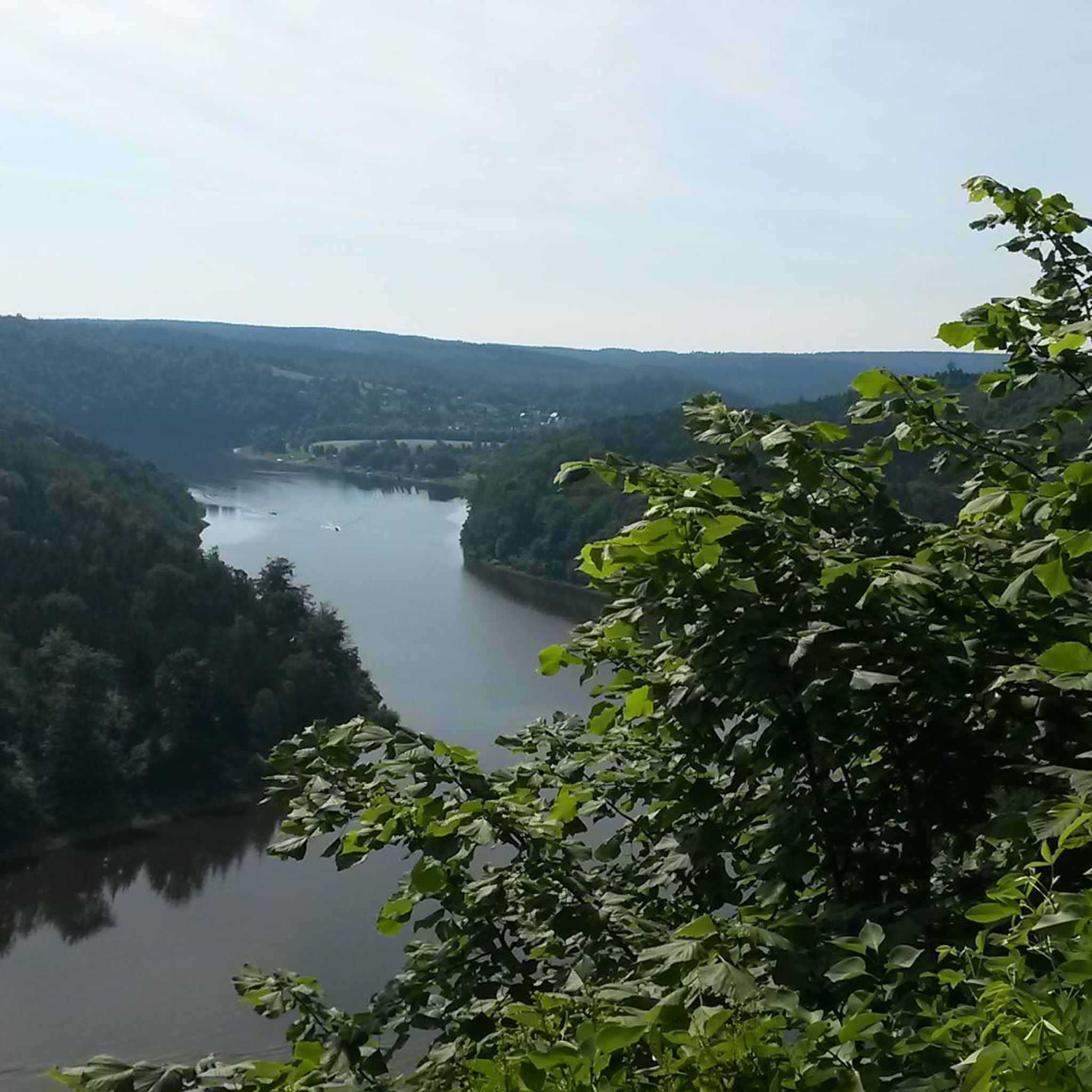
The dam is idyllically situated in the forest.
3
0

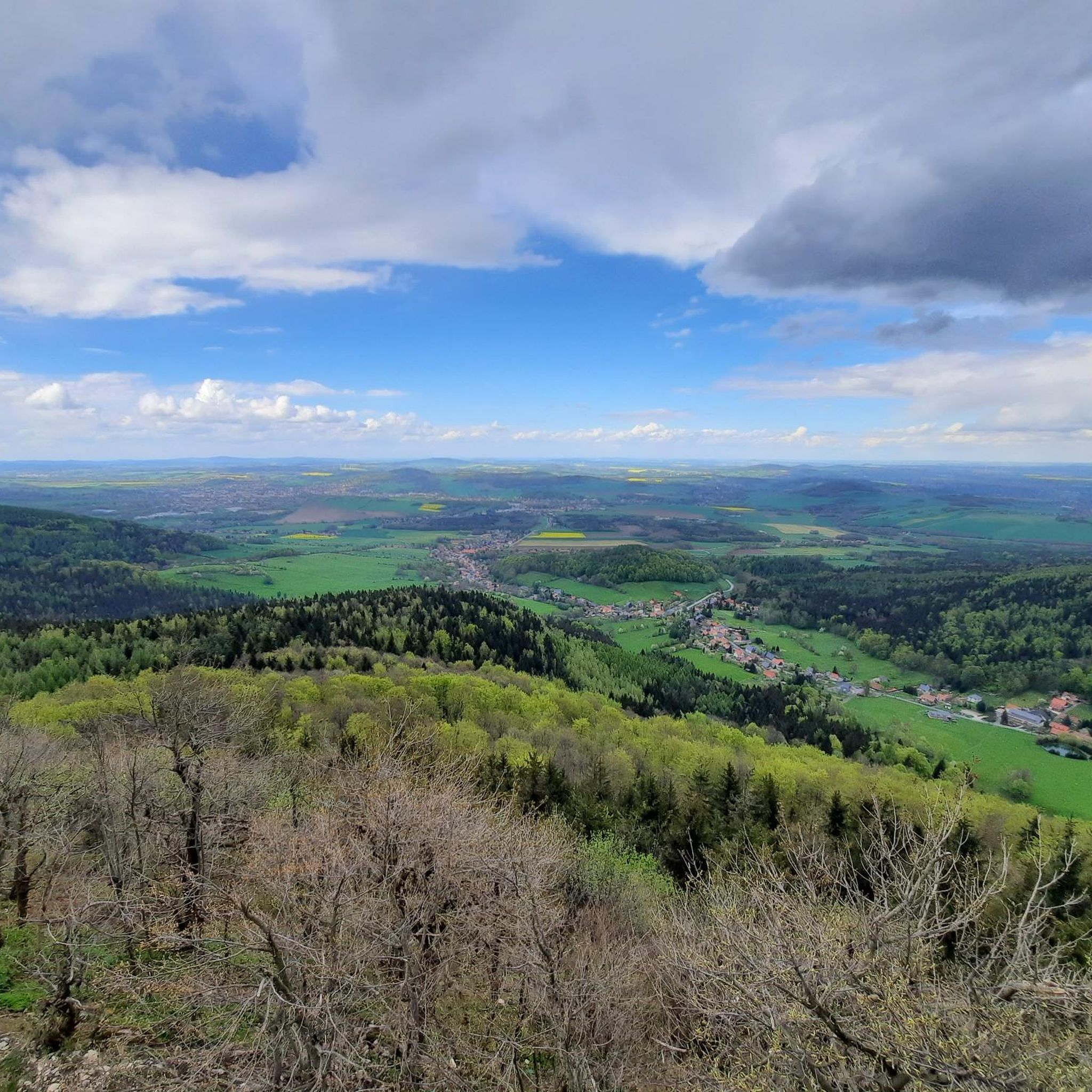
The view from up here is fantastically beautiful.
7
0
Frequently Asked Questions
Which natural monuments in Chko Lužické Hory offer the best panoramic views?
For breathtaking panoramic views, consider visiting Lausche Summit and Observation Tower, the highest peak in the Zittau Mountains at 793 meters. Another excellent spot is Jedlová (Tannenberg) with Observation Tower, which provides extensive views over the Lusatian Mountains, Bohemian-Saxon Switzerland, and other ranges. Johannisstein summit and rock formations also offers good views, particularly towards Oybin.
Are there any unique geological features to explore in Chko Lužické Hory?
Yes, the region is known for its diverse geology. A notable unique feature is the Ice Cave near Naděje, which is the only ice cave in the Czech part of the Lužické Hory. You can also find distinctive rock formations like the 'rock gate' at Skalní brána near Milštejn, and the unusual horizontal basalt columns of Pustý zámek.
What kind of hiking trails can I find near the natural monuments?
The area around the natural monuments offers a variety of hiking trails. For those seeking easier walks, you can find routes like the 'Lausche trig point – View from Lausche loop' or the 'Oybin Rock and Castle Ruins – Kelchstein (Chalice Rock) loop'. More challenging mountain hikes are also available, such as the 'Monk's Pulpit Viewpoint – Shell Hall loop'. You can explore more options on the Easy hikes in Chko Lužické Hory and Mountain Hikes in Chko Lužické Hory guide pages.
Are there family-friendly natural monuments or activities in the area?
Yes, some natural monuments are suitable for families. Naděje Reservoir is considered family-friendly and offers a serene setting in the forest. The region also features numerous educational trails that allow families to appreciate the diverse natural beauty and cultural heritage, including picturesque Lusatian folk architecture.
What is the best time of year to visit the natural monuments in Chko Lužické Hory?
The best time to visit largely depends on your preferred activities. Spring and autumn offer pleasant temperatures for hiking and enjoying the changing foliage. Summer is ideal for longer days and exploring, though some areas like Naděje Reservoir can be wonderfully quiet in winter for a different experience. Always check local conditions before your visit.
What types of ecosystems and forests can be found in Chko Lužické Hory?
Chko Lužické Hory is characterized by well-preserved remnants of natural forest stands, especially in its highest elevations. These forests feature a diverse mix of trees including beech, fir, maple, elm, and oak. You can also find moist mountain and sub-mountain meadows that host rare plant species, as well as river floodplains.
Can I go cycling near the natural monuments?
Yes, the region offers opportunities for cycling. For instance, you can find gravel biking routes like the 'Krásná Lípa Town Square – Kirnitzsch Valley Cycle Path loop' or the 'Jetřichovice – Jetrichovice Gorge loop'. More details on cycling routes can be found on the Gravel biking in Chko Lužické Hory guide page.
What do visitors enjoy most about the natural monuments in Chko Lužické Hory?
Visitors frequently highlight the impressive panoramic views from summits like Lausche and Jedlová. The unique geological formations, such as the imposing rock of Falkenstein, are also highly appreciated. Many enjoy the peaceful, natural settings, especially around places like Naděje Reservoir, and the chance to train their fitness on the climbs.
Are there any protected areas within Chko Lužické Hory?
Yes, the CHKO Lužické Hory encompasses nineteen small-scale protected territories. These include national natural reserves, natural reserves, national natural monuments, and natural monuments. One of the best-known places is the Jezevčí vrch National Nature Reserve (NPR Jezevčí vrch), which protects significant ecosystems and geological formations.
What is the highest point in the Lužické Hory region?
The highest peak in the Lužické Hory is Luž Mountain, which stands at 793 meters above sea level. It is a popular hiking destination and even features a restaurant at its summit, offering commanding views of the surrounding landscape.
What kind of wildlife can be observed in Chko Lužické Hory?
While specific wildlife sightings are not guaranteed, the diverse ecosystems of Chko Lužické Hory, including its well-preserved forests, moist mountain meadows, and river floodplains, provide habitats for a variety of species. Visitors might encounter typical Central European forest animals and a range of bird species. The protected status of the area helps preserve its biodiversity.
Are there any historical elements or cultural heritage sites near the natural monuments?
Beyond the natural beauty, the region is interwoven with cultural heritage. You can find picturesque Lusatian folk architecture, characterized by its distinctive timbered houses. Some sites, like the area around Skalní brána near Milštejn, also feature ancient trees, adding to the historical landscape. The Schiller Monument on Tannenberg near Sankt Georgenthal is another historical point of interest.
Most popular routes in Chko Lužické Hory
Most popular attractions in Chko Lužické Hory

Get inspired with the komoot mobile app


Explore more
Extend your search for the best caves by checking out these guides of the top ones in Chko Lužické Hory:
