Top 6 Natural Monuments around Findhorn And Kinloss
Best natural monuments around Findhorn And Kinloss are found along Scotland's Moray Firth coast, offering diverse landscapes and unique geological features. The area is characterized by coastal environments, forests, and river gorges. These sites provide opportunities to experience dynamic ecosystems and historical landmarks. The region's natural heritage includes significant habitats for wildlife and geological formations.
Best natural monuments around Findhorn And Kinloss
- The most popular natural monuments is Sueno's Stone, a historical site that features an impressive 7 m…
Last updated: August 24, 2026
Sueno's Stone
Highlight • Historical Site
Translated by Google •
Tip by

Sueno's Stone and Witches Stone, Forres
Highlight • Historical Site
The seven-metre high Pictish stone monolith the Sueno's Stone confirms this ancient history …
Tip by

Sign up now to discover places like this
Get recommendations on the best single tracks, peaks, & plenty of other exciting outdoor places.
Sign up for free
Rock Formations at Covesea
Highlight • Viewpoint
Translated by Google •
Tip by

Grant Park Floral Sculptures
Highlight • Structure
Forres has a proud history of …
Tip by
St. Aethan's Well
Highlight • Natural Monument
Translated by Google •
Tip by
Sign up for free to discover even more natural monuments around Findhorn And Kinloss.
Sign up for free
Already have an account?
Start today with a free account
Your next adventure awaits.
Login or Signup
Tips from the Community


Difficult to appreciate how impressive this is from the description and numbers. Great that this amazing piece of ancient history is being well looked after now.
0
0


Impressive 7 m high Pictish stone monolith from the 5th-9th century under a glass case.
3
0

Have visited the stone 1991 - there it was not behind glass yet. I had put up my tent at the edge of the meadow near the stone. ---------------------------------------------------- Sueno's Stone is a Picto-Scottish standing stone on the north-easterly edge of Forres in Moray and is the largest surviving Pictish style cross-slab stone of its type in Scotland, standing 6.5 metres in height. It is situated on a raised bank on a now isolated section of the former road to Findhorn. The stone is named after Sweyn Forkbeard, but this association has been challenge and it has also been associated with the killing of King Dubh mac Ailpin in Forres in 966. The stone was erected c. 850–950 but by whom and for what, is unknown. https://en.wikipedia.org/wiki/Sueno%27s_Stone --------------------------------------------------- About 5 km south of the Sueno's Stone stands another similar stone. The Cross-Slab from Altyre House. https://www.komoot.com/de-de/highlight/1336285
0
0

At (almost) low tide you can see unusually shaped rocks protruding above the water. The turrets are miniatures of the larger rock formations on the Moray coast.
1
0
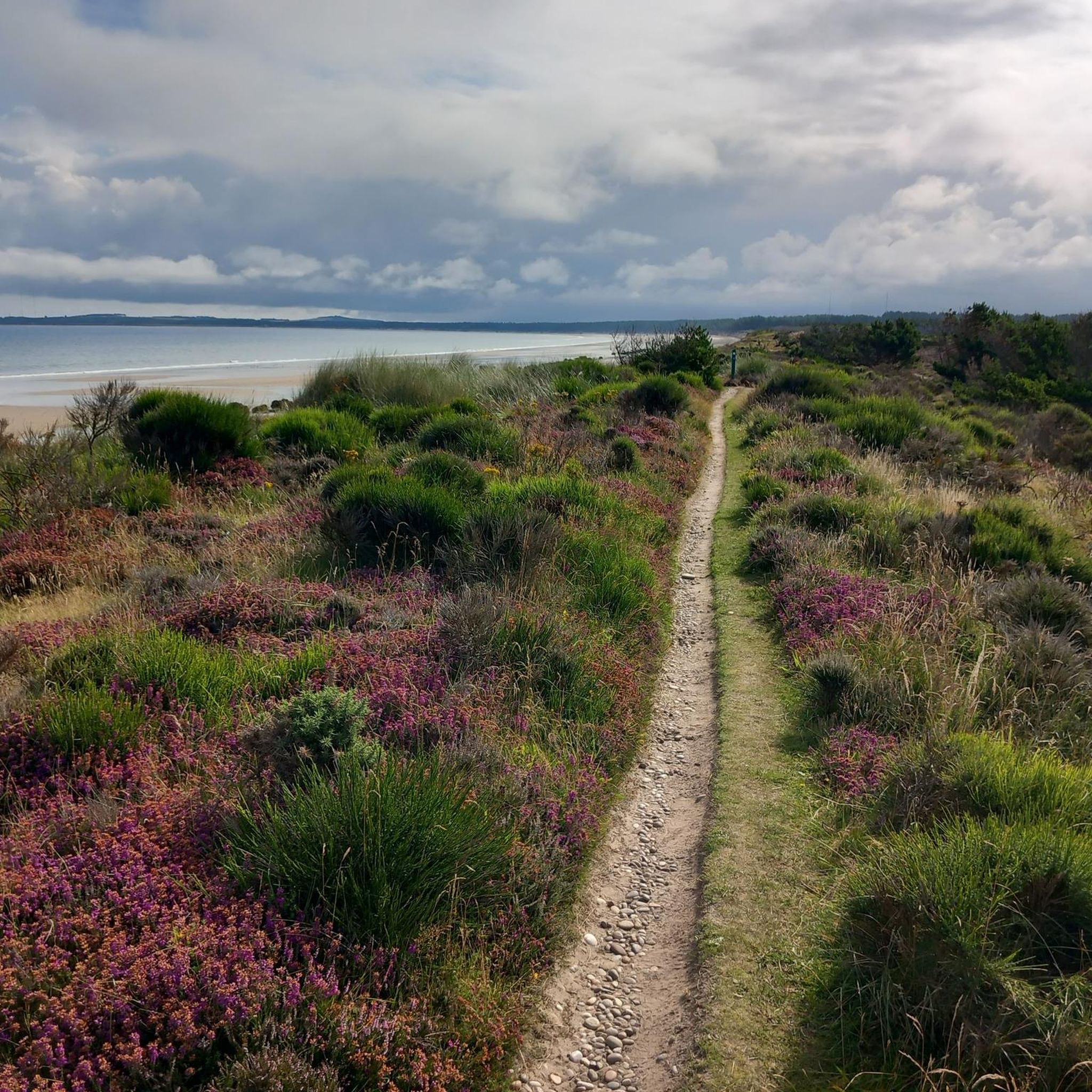
A small spring with two picnic benches and a view of the sea. The source is located on a former track that has now been asphalted into a walking and cycling path.
1
0

Really interesting piece of Pictish sculpture dating probably from 9th century depicting battle scenes. Well worth a visit if you’re in Forres.
0
0
Frequently Asked Questions
What are some popular natural monuments to visit around Findhorn and Kinloss?
The area boasts a diverse range of natural monuments. You can explore the expansive Findhorn Bay Nature Reserve, known for its intertidal mudflats and rich birdlife. Another popular spot is Culbin Forest, a unique coastal forest with miles of tracks and panoramic views from Hill 99. For a dramatic geological experience, visit the River Findhorn Gorge, particularly Randolph's Leap, where the river cascades through rock formations.
What unique geological features can I explore in the Findhorn and Kinloss area?
The region is rich in geological interest. The Culbin Forest was originally planted to stabilize vast shifting sand dunes, which were once the largest in Britain. The Moray Firth coastline features Old Red Sandstone formations, creating rugged cliffs and sea caves. The River Findhorn Gorge showcases dramatic rock formations carved by the river, especially at Randolph's Leap.
What kind of wildlife can I expect to see at the natural monuments?
The natural monuments are havens for wildlife. Findhorn Bay Nature Reserve is internationally recognized for its migrant wildfowl and waders, including pink-footed geese and whooper swans in winter, and a mixed colony of grey and common seals. Culbin Forest is an RSPB reserve, home to breeding crested tits and the rare Kentish glory moth. The Moray Firth is famous for bottlenose dolphins, seals, porpoises, and various seabirds, with ospreys also found along the coast.
Are there family-friendly natural monuments around Findhorn and Kinloss?
Yes, several natural monuments are suitable for families. Sueno's Stone, a historical Pictish monolith, is an interesting stop for all ages. St. Aethan's Well offers a small spring with picnic benches and sea views. The tracks within Culbin Forest are generally easy to navigate, making it great for family walks and cycling.
Are there historical sites among the natural monuments in Findhorn and Kinloss?
Yes, the area blends natural beauty with ancient history. Sueno's Stone is an impressive 7-meter high Pictish stone monolith from the 5th-9th century, depicting battle scenes. Another significant historical landmark is Quarrelwood Henge, located within a forest clearing, with an information board detailing its past features. St. Aethan's Well also has historical significance as a former track.
What outdoor activities can I do near these natural monuments?
The region offers excellent opportunities for outdoor activities. You can enjoy hiking and walking along the Findhorn Bay Trail or through the extensive tracks of Culbin Forest. Cycling is also popular, with various routes available, including those suitable for touring bicycles and road cycling. The shallow, sheltered waters of Findhorn Bay are popular for amateur sailing and windsurfing, and the River Findhorn is renowned for white-water kayaking.
Are there hiking trails near these natural monuments?
Absolutely. The Findhorn Bay Nature Reserve offers scenic coastal walking paths. Culbin Forest provides miles of tracks suitable for walking. For specific hiking routes, you can explore options like the Findhorn Beach loop or the Roseisle Forest trails, which are part of the easy hikes around Findhorn and Kinloss guide.
What cycling opportunities are available around the natural monuments?
Cyclists will find plenty to explore. Culbin Forest has numerous tracks suitable for cycling. There are also various routes connecting different points of interest, such as the 'Findhorn Loading Bank – Sueno's Stone loop from Findhorn' for an easy ride, or the 'Culbin Forest Cycle Route – Sueno's Stone loop from Kinloss' for a moderate challenge. More options can be found in the cycling around Findhorn and Kinloss and road cycling routes guides.
What is the best time of year to visit the natural monuments in Findhorn and Kinloss?
The best time to visit largely depends on your interests. For birdwatching, the winter months are ideal at Findhorn Bay Nature Reserve when large numbers of migrant wildfowl arrive. Spring and summer offer pleasant weather for walking and cycling through Culbin Forest and along the Moray Firth coastline, with opportunities for dolphin watching. Autumn provides beautiful foliage and cooler temperatures for outdoor activities.
Are the natural monuments in Findhorn and Kinloss dog-friendly?
Many areas are dog-friendly, but it's always best to check specific regulations for each site. Quarrelwood Henge, for example, is noted as dog-friendly. When visiting nature reserves like Findhorn Bay or areas with sensitive wildlife, dogs should generally be kept on a lead to protect ground-nesting birds and other animals.
What do visitors enjoy the most about the natural monuments in Findhorn and Kinloss?
Visitors frequently praise the peaceful natural environment and the rich opportunities for wildlife observation, especially birdwatching at Findhorn Bay and dolphin spotting along the Moray Firth. The extensive tracks in Culbin Forest are popular for walking and cycling, and the panoramic views from Hill 99 are a highlight. The dramatic scenery of the River Findhorn Gorge, particularly Randolph's Leap, is also highly appreciated for its visual impact and sense of wildness.
Most popular routes around Findhorn And Kinloss
Most popular attractions around Findhorn And Kinloss

Get inspired with the komoot mobile app


Explore more
Extend your search for the best caves by checking out these guides of the top ones around Findhorn And Kinloss:
