Top 4 Natural Monuments around Santiago Maior
Natural monuments around Santiago Maior are concentrated in the Alentejo region of Portugal, near Monsaraz. This area is characterized by its historical significance, featuring numerous ancient megalithic structures. The landscape includes open plains and the vast Alqueva Reservoir, providing a blend of cultural heritage and natural features. The region offers opportunities to explore ancient sites and expansive water bodies.
Best natural monuments around Santiago Maior
- The most popular natural monuments is Cromlech of Xerez, a man-made monument that consists…
Last updated: June 29, 2026
Cromlech of Xerez
Highlight • Monument
Translated by Google •
Tip by

Menir da Bulhoa
Highlight • Monument
Translated by Google •
Tip by
Sign up now to discover places like this
Get recommendations on the best single tracks, peaks, & plenty of other exciting outdoor places.
Sign up for free
Menhir of Outeiro
Highlight • Monument
Translated by Google •
Tip by
Anta da Candeeira
Highlight • Monument
Translated by Google •
Tip by

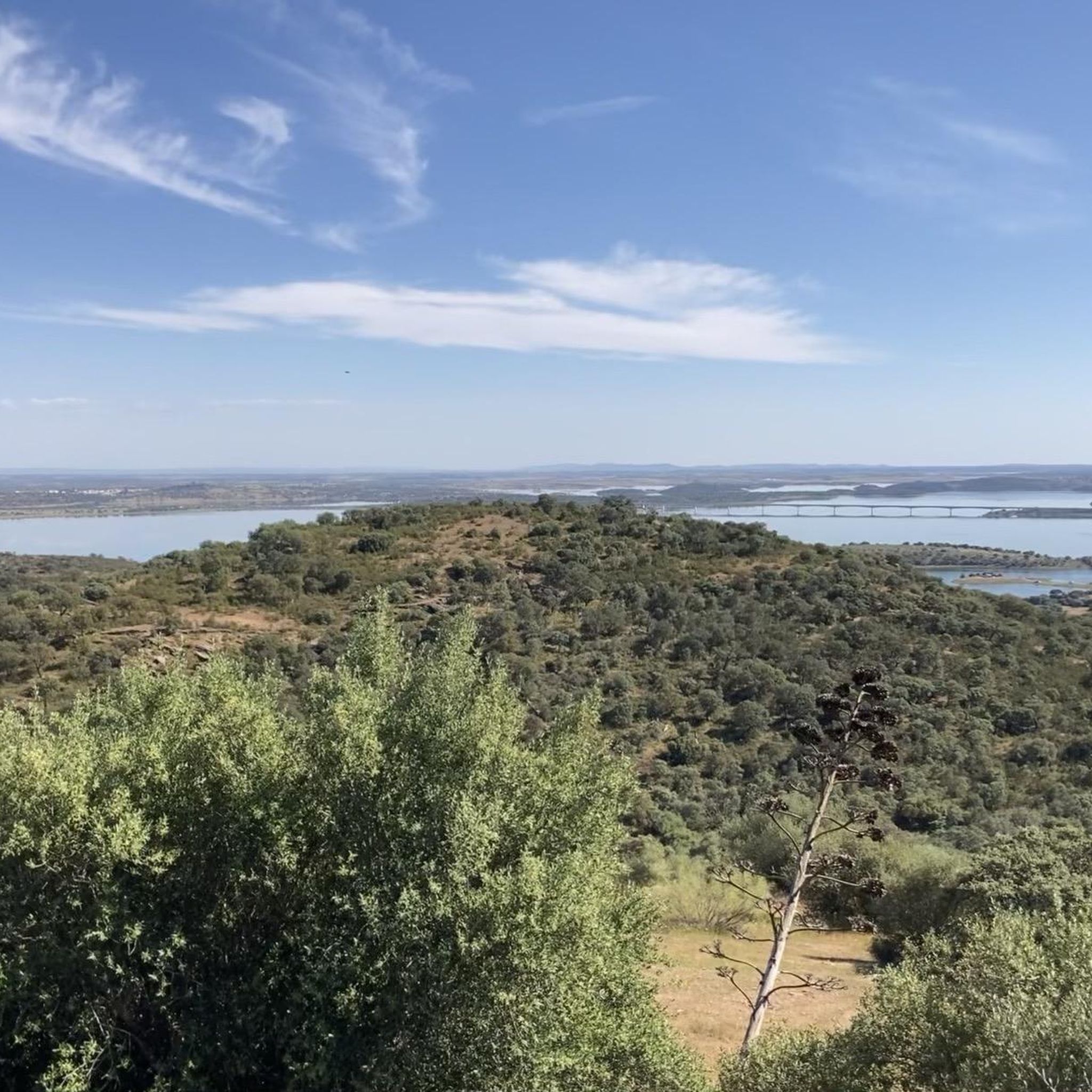
View of the Alqueva Reservoir
Highlight • Lake
Tip by
Start today with a free account
Your next adventure awaits.
Login or Signup

Tips from the Community

The oldest menhirs (standing stones) were erected in Portugal between 5000 and 4000 BC. The age of this menhir is unclear.
2
0
What's particularly interesting about the Xerez stone group is its square shape. The menhir is located in the center, surrounded by smaller stones. A concrete path leads from the Orada Monastery to it—is this really necessary? A regular path would certainly have sufficed. The entire area appears very neglected.
4
2

The Anta da Candeeira, or Anta da Herdade da Candeeira, is one of the many megalithic remains that dot the Alentejo, more precisely in the district of Évora. In the Portuguese lexicon, “anta” refers to the approximately five thousand megalithic monuments (or dolmens) spread across the west of the Iberian Peninsula. These enigmatic stone structures were built during the Neolithic period by communities that inherited the Cardial or Impressa cultures. Silent testimonies of a distant past, they continue to fascinate those who venture into these lands of history and stone.
2
0

The Xerez Cromlech stands on open land, close to the Convent of Orada, and with a view of the walls of Monsaraz. It is the second "home" to prevent it from being submerged by the Alqueva dam. The 55 granite menhirs of the Xerez Cromlech have already been to other places because they were moved here, to the vicinity of the village of Telheiro, in 2004, to prevent submersion by the Alqueva dam. The cromlech was in front of Monte Xerez, close to a dolmen, about 5km from Monsaraz.
8
0
The Alqueva Dam, located in the heart of the Alentejo, is one of Europe’s largest dams. Constructed on the Guadiana River and completed in 2002, it creates the Alqueva Reservoir, Western Europe’s largest artificial lake. The dam plays a crucial role in regional irrigation, water supply, and hydroelectric power generation. Additionally, it supports local tourism and wildlife habitats and exemplifies a completely transformational engineering achievement.
2
0
The Menhir do Outeiro (in Portuguese: Menir do Outeiro), also known as Menhir no Sítio do Penedo Comprido, is a megalith located halfway between the villages of Outeiro and Barrada, in the municipality of Reguengos de Monsaraz, in the district of Évora, in the Alentejo region of Portugal, just a few kilometres from the Portuguese-Spanish border. This menhir was discovered in 1969 by Henrique Leonor Pina and José Pires Gonçalves and, on their initiative, it was raised again around 1970. The menhir was classified as a Portuguese National Monument in 1971.
5
0
The Menhir of Abelhoa, also known as Menhir of Bulhoa, is a granite menhir located near Monsaraz, in the municipality of Reguengos de Monsaraz, district of Évora, in Portugal. In 1971 it was classified as a National Monument.
7
0

Easy to find and what a surprise a square stone circle! The center stone has interesting markings. I really enjoyed my time here and would highly recommend a visit.
3
0
Frequently Asked Questions
What types of natural monuments can I explore around Santiago Maior?
The area around Santiago Maior, located in the Alentejo region of Portugal near Monsaraz, is rich in ancient megalithic structures. You can explore various cromlechs, menhirs, and dolmens, which are considered natural monuments due to their historical and geological significance. Notable examples include the Cromlech of Xerez, Menir da Bulhoa, and Menhir of Outeiro. Additionally, the vast Alqueva Reservoir offers significant natural features and expansive water bodies.
Are there any family-friendly natural monuments in the Santiago Maior area?
Yes, several natural monuments around Santiago Maior are suitable for families. The Cromlech of Xerez, with its 55 granite menhirs, offers an interesting photo opportunity and is easy to access. The ancient Menir da Bulhoa is also family-friendly. For a natural landscape experience, the View of the Alqueva Reservoir provides beautiful scenery and is a great spot for a rest.
What historical significance do the natural monuments around Santiago Maior hold?
The natural monuments in this region are deeply rooted in history, primarily dating back to the Neolithic period. Structures like the Menir da Bulhoa, also known as Menhir of Abelhoa, were erected between 5000 and 4000 BC and are classified as National Monuments. The Menhir of Outeiro and Anta da Candeeira (a dolmen) are further examples of these ancient megalithic remains, offering silent testimonies of distant past communities.
Can I go hiking near the natural monuments of Santiago Maior?
Absolutely! The area around Santiago Maior offers various hiking opportunities. You can find easy hikes like the Monsaraz Historic Village – Cromlech of Xerez loop, or explore moderate trails such as the Escritas de Pedra e Cal (PR 1) and the Monsaraz Menhirs and Churches Route. For more details and routes, you can check out the easy hikes around Santiago Maior and general hiking guide for Santiago Maior.
What is the <a href="https://www.komoot.com/highlight/3909927" target="_blank" rel="noopener">Cromlech of Xerez</a> and why was it moved?
The Cromlech of Xerez is a significant man-made monument consisting of 55 granite menhirs. It was relocated in 2004 to its current position near the village of Telheiro to prevent it from being submerged by the waters of the Alqueva dam, which created Western Europe's largest artificial lake.
Are there any viewpoints to enjoy the natural landscape around Santiago Maior?
Yes, the View of the Alqueva Reservoir is a prominent natural feature and an excellent viewpoint. The Alqueva Dam created Western Europe's largest artificial lake, offering expansive views of the water and surrounding landscape. It's a beautiful spot to relax and take in the scenery.
What kind of wildlife can be found near the Alqueva Reservoir?
The Alqueva Reservoir, as Western Europe's largest artificial lake, plays a crucial role in supporting local wildlife habitats. While specific species are not detailed, large bodies of water like this typically attract a variety of birdlife and aquatic species, contributing to the region's biodiversity.
What other outdoor activities are available besides hiking near Santiago Maior's natural monuments?
Beyond hiking, the region around Santiago Maior also offers excellent opportunities for road cycling. You can find routes like the Serra d'Ossa Cycling Loop or the Redondo and Castelo de Valongo Loop, which vary in difficulty from moderate to difficult. For more information on cycling routes, refer to the Road Cycling Routes around Santiago Maior guide.
What do visitors particularly enjoy about the natural monuments in this region?
Visitors appreciate the historical depth and unique character of the natural monuments. For instance, the Cromlech of Xerez is often highlighted for its interesting square stone circle and the markings on its central stone, making it a highly recommended visit and a great photo opportunity. The overall blend of cultural heritage and natural features, especially around the Alqueva Reservoir, is also a major draw.
How accessible are the menhirs like <a href="https://www.komoot.com/highlight/7243420" target="_blank" rel="noopener">Menir da Bulhoa</a> and <a href="https://www.komoot.com/highlight/7243428" target="_blank" rel="noopener">Menhir of Outeiro</a>?
The menhirs in the region, such as Menir da Bulhoa (Menhir of Abelhoa) and Menhir of Outeiro, are generally accessible for visitors interested in exploring these ancient standing stones. They are classified as National Monuments and are located in the Alentejo landscape, often requiring a short walk from nearby roads. Their historical significance makes them rewarding to visit.
What is the <a href="https://www.komoot.com/highlight/7508160" target="_blank" rel="noopener">Anta da Candeeira</a>?
The Anta da Candeeira, also known as Anta da Herdade da Candeeira, is a megalithic monument (dolmen) located in the district of Évora. These 'antas' are ancient stone structures built during the Neolithic period by early communities in the Iberian Peninsula. They are enigmatic and offer a glimpse into a distant past, fascinating those who explore the historical landscapes of the Alentejo.
Most popular attractions around Santiago Maior

Get inspired with the komoot mobile app


Explore more
Extend your search for the best caves by checking out these guides of the top ones around Santiago Maior:
