Top 10 Natural Monuments around Saint-Georges-De-Luzençon
Best natural monuments around Saint-Georges-De-Luzençon include a variety of geological features and historical sites within the Grands Causses Regional Natural Park. The area is characterized by limestone plateaus, deep gorges like the Gorges du Tarn, and significant prehistoric megalithic structures. These natural landmarks near Saint-Georges-De-Luzençon offer diverse landscapes for exploration. The region provides opportunities to observe unique geological formations and ancient human constructions.
Best natural monuments around Saint-Georges-De-Luzençon
- The most popular natural monuments is Cap de Coste Viewpoint, a…
Last updated: October 5, 2026
The Creissels waterfalls
Highlight • Waterfall
Translated by Google •
Tip by

Cap de Coste Viewpoint
Highlight • Viewpoint
Showing Translation
Tip by

Sign up now to discover places like this
Get recommendations on the best single tracks, peaks, & plenty of other exciting outdoor places.
The Three Crosses – View of the Millau Viaduct
Highlight • Viewpoint
Showing Translation
Tip by
Cascade des Raspes du Tarn
Highlight • Waterfall
Translated by Google •
Tip by

The Rock Engraved with Two Crosses
Highlight • Natural Monument
Translated by Google •
Tip by

Sign up for free to discover even more natural monuments around Saint-Georges-De-Luzençon.
Already have an account?
Start today with a free account
Your next adventure awaits.
Popular around Saint-Georges-De-Luzençon

Tips from the Community

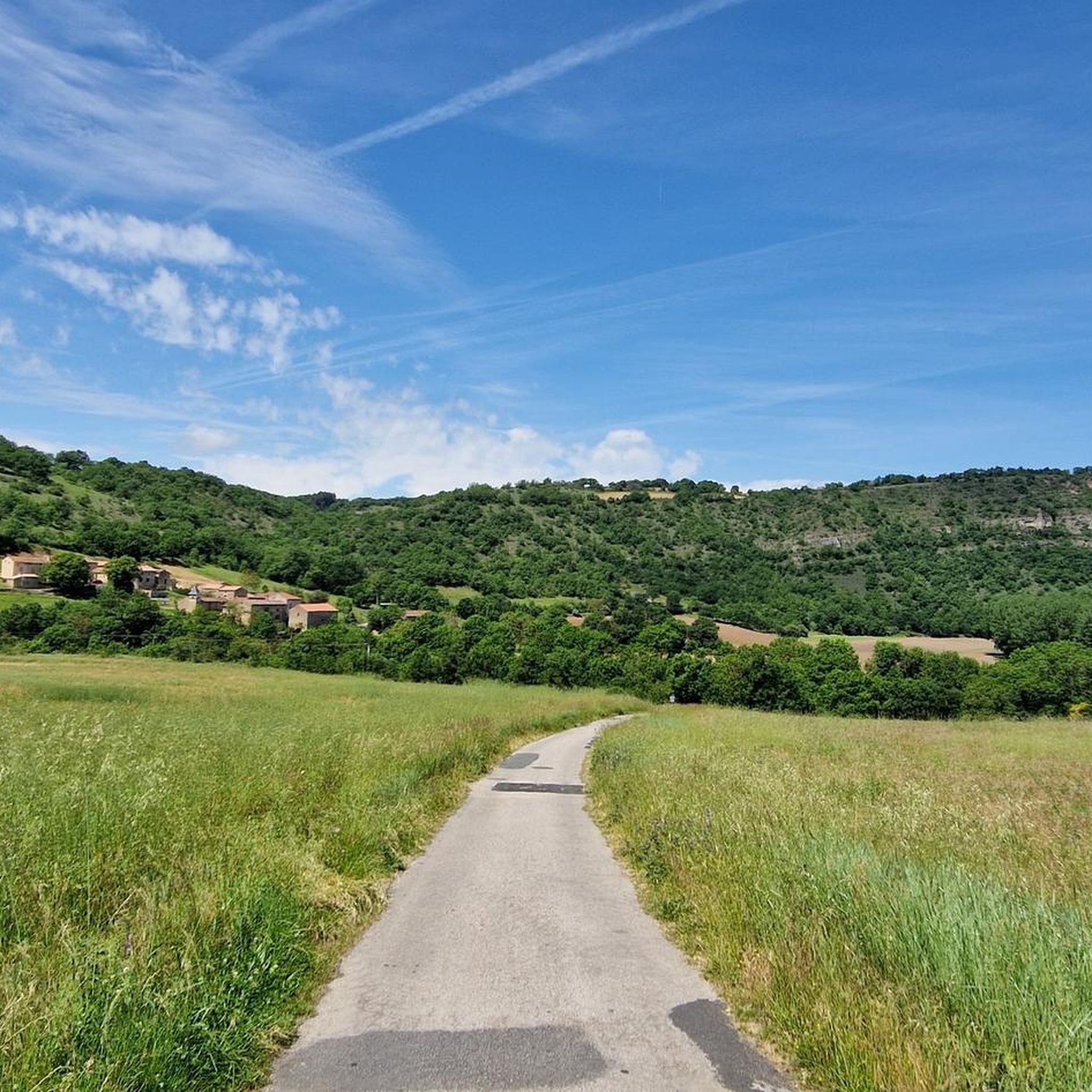
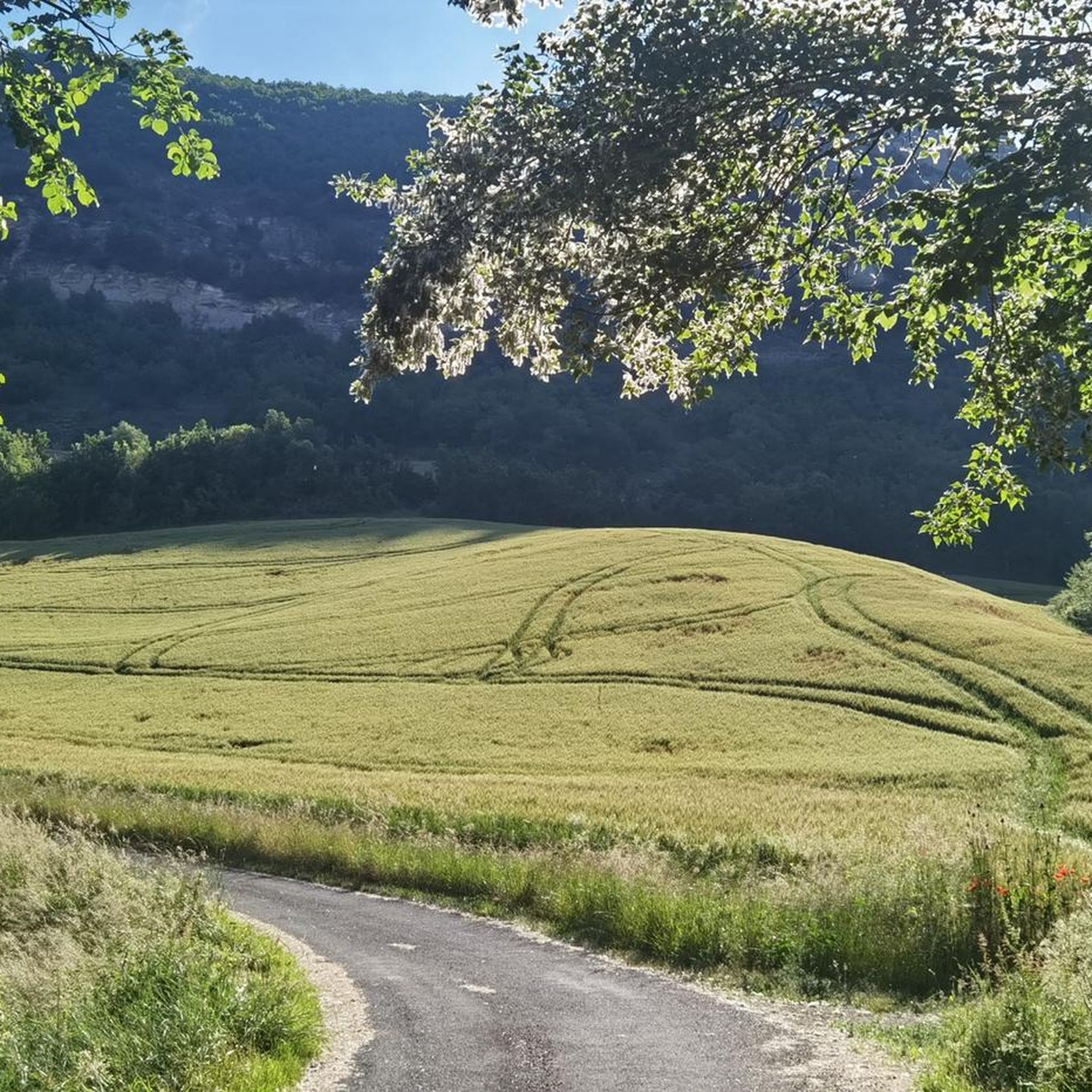
Three stone crosses, erected in a line on this small rise above Creissels, give the place its name, but in reality there are five in total: a fourth is hidden below, a fifth watches further on at a crossroads, on the side of the old Tournal mill. This marking, inherited from centuries-old rural piety, perhaps outlined an ancient processional path now fallen into oblivion. The panorama unfolds in 360°: to the west, the Tarn valley and the Millau viaduct with its fine suspended line and its seven pylons. To the south, the landscape closes in on the Boundoulaou cirque, from which one can distinguish, on the right, the limestone outcrop of Puech de Fayssel which closes the natural amphitheater carved into the edge of the causse. To the north, the town of Millau unfolds almost entirely below, dominated in its center by the massive silhouette of Puech d'Andan, whose summit plateau is divided into two distinct parts. Further to the right stands the Pouncho d'Agast, a pyramid-shaped promontory that marks the beginning of the Causse Noir at an altitude of 841 m.
3
0
Perché at an altitude of approximately 730 meters, the Cap de Coste viewpoint overlooks the eastern end of the Boundoulaou cirque. It reveals a vast panorama of the Millau basin and its surrounding massifs. To the left, the easily recognizable Millau Viaduct spans the Tarn valley, connecting the Larzac to the Causse Rouge. Further to the right stretches the latter: a large limestone plateau whose undulations dominate the valley. Then, the Puech d’Andan stands out with its wooded silhouette, cut in two by a clear central notch. Finally, further away, the Pouncho d’Agast, an emblematic relief of the Causse Noir, is easily recognized by its profile like a true limestone pyramid.
2
0

The name "Montagne de Trois Croix" already hinted at it, and so it's no real surprise to find more than just a summit cross up here, which – as is common in many places – crowns the mountain peak. The central cross, standing in the middle, points the observer to the execution of the incarnate Son of God, Jesus of Nazareth. According to biblical tradition, however, he was not condemned to death and crucified alone, but together with two criminals. Pope Francis, who died on Easter Monday, once composed the following prayer on this subject: "Help us, Son of Man, to free ourselves from the arrogance of the thief, the robber on your left, and of the short-sighted and the corrupt (...) Instead, we ask you, Son of God, to identify us with the good thief who looked at you with eyes full of shame, repentance, and hope; who, with the eyes of faith, saw divine victory in your apparent defeat and thus knelt before your mercy and grace and stole paradise with honesty and integrity.
0
1

History and nature an ideal mix
0
0

The Creissels waterfall is a true natural gem! It is a resurgence that flows constantly throughout the year, with a flow that varies. What makes this place so special is that it is loaded with calcium carbonate, which has allowed the formation of a magnificent tuff rock. In winter, when temperatures drop, the waterfall transforms into a magical spectacle. The icy concretions that form are simply magnificent, and it is fascinating to see how the waterfall can completely petrify at times. It is an ideal place for nature lovers and photographers in search of enchanting landscapes. I highly recommend visiting the Creissels waterfall, whether to admire its peaceful flow in summer or its incredible transformation in winter!
1
1

Magnificent panorama to be seen absolutely
0
0

Insanely beautiful view from the plateau.
0
1

Great view of the waterfall
0
0
Frequently Asked Questions
What kind of natural landscapes can I expect to see around Saint-Georges-De-Luzençon?
The region around Saint-Georges-De-Luzençon is nestled within the Grands Causses Regional Natural Park, offering diverse landscapes. You'll find vast limestone plateaus, deep river canyons like the Gorges du Tarn and Gorges de la Jonte, and wooded hills. These areas are rich in unique geological features and offer stunning panoramic views.
Are there any notable viewpoints for panoramic scenery?
Yes, several spots offer exceptional views. The Cap de Coste Viewpoint provides a spectacular panorama of Millau, its viaduct, and the Tarn valley. Another excellent spot is Puech du Ménascle, a limestone promontory with 360-degree views of the Lévézou plateau, the Gorges du Tarn entrance, and the Causse du Larzac. Additionally, Rocher de Caylus offers a superb view of the Sorgues valley.
Where can I find impressive geological formations?
The area is renowned for its geology. The Gorges du Tarn and Gorges de la Jonte feature dramatic cliffs and unique rock formations. Within the wider Grands Causses Regional Natural Park, you can discover remarkable sites such as the Chaos de Montpellier-le-Vieux (a vast rock labyrinth), the Aven Armand (an impressive cave), the Abîme de Bramabiau (a chasm), and the Cirque de Vissec (a natural amphitheatre). The Cascade des Raspes du Tarn also features a unique pierced rock formation.
Are there any waterfalls to visit near Saint-Georges-De-Luzençon?
Yes, you can visit the Cascade des Raspes du Tarn, which is a beautiful waterfall known for its unique pierced rock formation. Another picturesque spot is the Cascade de Creissels, located approximately 6.4 km from Saint-Georges-De-Luzençon, offering tranquil natural beauty.
What historical natural monuments are there to explore?
The region has a rich prehistoric past. You can explore several megalithic structures, including four dolmens (like the Crottes dolmen and Puech del Pous dolmens) and three menhirs (those of the Côte de Labro, the Crottes, and the Puech del Pous). There's also The Rock Engraved with Two Crosses, a large block with ancient cross engravings. For a unique historical natural monument, visit the Dinosaur Footprints of Peyre.
Are there natural monuments suitable for families with children?
Yes, the Dinosaur Footprints of Peyre are easy to access and suitable for children, with clear panels guiding the way. The Cascade des Raspes du Tarn is also considered family-friendly, offering a magical and picturesque setting.
What outdoor activities can I do near these natural monuments?
The area is excellent for various outdoor activities. You can enjoy hiking and walking through the Grands Causses Regional Natural Park and the Gorges du Tarn. For cycling enthusiasts, there are numerous road cycling routes, such as the "Tour du Viala-du-Pas-de-Jaux" loop, and gravel biking options. Mountain biking trails are also available, including the "Navas Mountain Bike Loop." You can find more details on these activities in the Road Cycling Routes, Gravel Biking, and MTB Trails guides for Saint-Georges-De-Luzençon.
What do visitors enjoy most about the natural monuments in this region?
Visitors frequently praise the spectacular panoramic views, especially from spots like the Cap de Coste Viewpoint, which offers a magnificent perspective of the Millau Viaduct and Tarn valley. The unique geological features, such as the pierced rock at the Cascade des Raspes du Tarn, are also highly appreciated for their beauty and magical atmosphere. The blend of history and nature, as seen at sites like Rocher de Caylus with its medieval castle remains and botanical garden, is a recurring highlight.
What is the best time of year to visit the natural monuments around Saint-Georges-De-Luzençon?
Spring and autumn are generally ideal for visiting, as the weather is pleasant for outdoor activities like hiking and cycling, and the landscapes are vibrant. Summer offers warm temperatures, perfect for water activities in the Gorges du Tarn, though it can be busier. Winter can be beautiful with a different atmosphere, but some higher-altitude or less accessible sites might be challenging to reach due to conditions.
Are there any less crowded natural spots to discover?
While the Gorges du Tarn are popular, the Gorges de la Jonte, though equally beautiful, can sometimes be less frequented, offering a more tranquil experience. Exploring some of the smaller, less-known megalithic sites or venturing deeper into the Grands Causses Regional Natural Park away from the main tourist hubs can also lead to discovering hidden gems and quieter natural areas.
Are there options for public transport to reach some of these natural monuments?
Access to many natural monuments in the Grands Causses Regional Natural Park often requires personal transport due to their remote nature. However, some larger towns in the vicinity, like Millau, may have limited bus services that could connect to areas closer to certain sites. For specific monuments, checking local transport schedules or considering a combination of public transport to a nearby town and then walking or cycling is advisable.
Most popular routes around Saint-Georges-De-Luzençon
Most popular attractions around Saint-Georges-De-Luzençon

Get inspired with the komoot mobile app


Explore more
Extend your search for the best caves by checking out these guides of the top ones around Saint-Georges-De-Luzençon:
