Top 3 Castles around Parc Natural del Cap de Creus
Best castles around Parc Natural del Cap de Creus are found in a region where the Pyrenees meet the Mediterranean, offering a landscape of natural beauty and historical significance. The area features various fortifications and ruins that provide insight into its strategic past. These sites are often perched on high points, offering panoramic views of the Cap de Creus peninsula and the Empordà plain. Exploring these landmarks reveals the region's historical tapestry and its role as a defensive stronghold.
Best…
Last updated: July 10, 2026
Sant Pere de Rodes Monastery
Highlight • Religious Site
Translated by Google •
Tip by

Sant Salvador de Verdera Castle Ruins
Highlight • Castle
Translated by Google •
Tip by

Sign up now to discover places like this
Get recommendations on the best single tracks, peaks, & plenty of other exciting outdoor places.
Sign up for free
Quermançó Castle
Highlight • Castle
Translated by Google •
Tip by

View of Quermançó Castle
Highlight • Viewpoint
Translated by Google •
Tip by

Start today with a free account
Your next adventure awaits.
Login or Signup
Popular around Parc Natural del Cap de Creus
Road Cycling Routes around Parc Natural del Cap de Creus
Hiking around Parc Natural del Cap de Creus
Running Trails around Parc Natural del Cap de Creus
Cycling around Parc Natural del Cap de Creus
MTB Trails around Parc Natural del Cap de Creus

Gravel biking around Parc Natural del Cap de Creus

Mountain Hikes around Parc Natural del Cap de Creus
Tips from the Community

If you don't want to go about 400 m along the National Road, there is a path, although it is only for mountain bikes and you will still have to push through certain rather complex sections.
0
0

Enjoy the technical descent over large stones. Be careful not to stray from the path. Once you reach the bottom, the stream bed is a unique place to relax - quiet and alone
1
0

Ruins of the medieval castle, located on a high hill about two kilometers from the town of Vilajuïga. It is an isolated fortification that underwent many renovations and expansions during the 10th and 15th centuries. At the time, the complex was surrounded by a wall, today in a ruined state. Currently, part of the old Keep, the outer circular tower, and some later constructions are preserved. The castle of Quermançó is an important example of what early medieval Catalan castles were for defense, capable of resisting the onslaught of any crowd much larger than the few that could fit within its perimeter. https://www.catalunya.com/es/continguts/patrimoni-cultural/castillo-de-quermanco-17-16003-580470
4
0

Admission moderate (no 20€ for 2 adults and 2 children). The wifi key and a QR code hang at the entrance. This means that one cell phone can be used as an audio guide for the whole family :)
5
2

The way there is also recommended on the road because there is very little traffic. Very nice route and a great view.
2
0

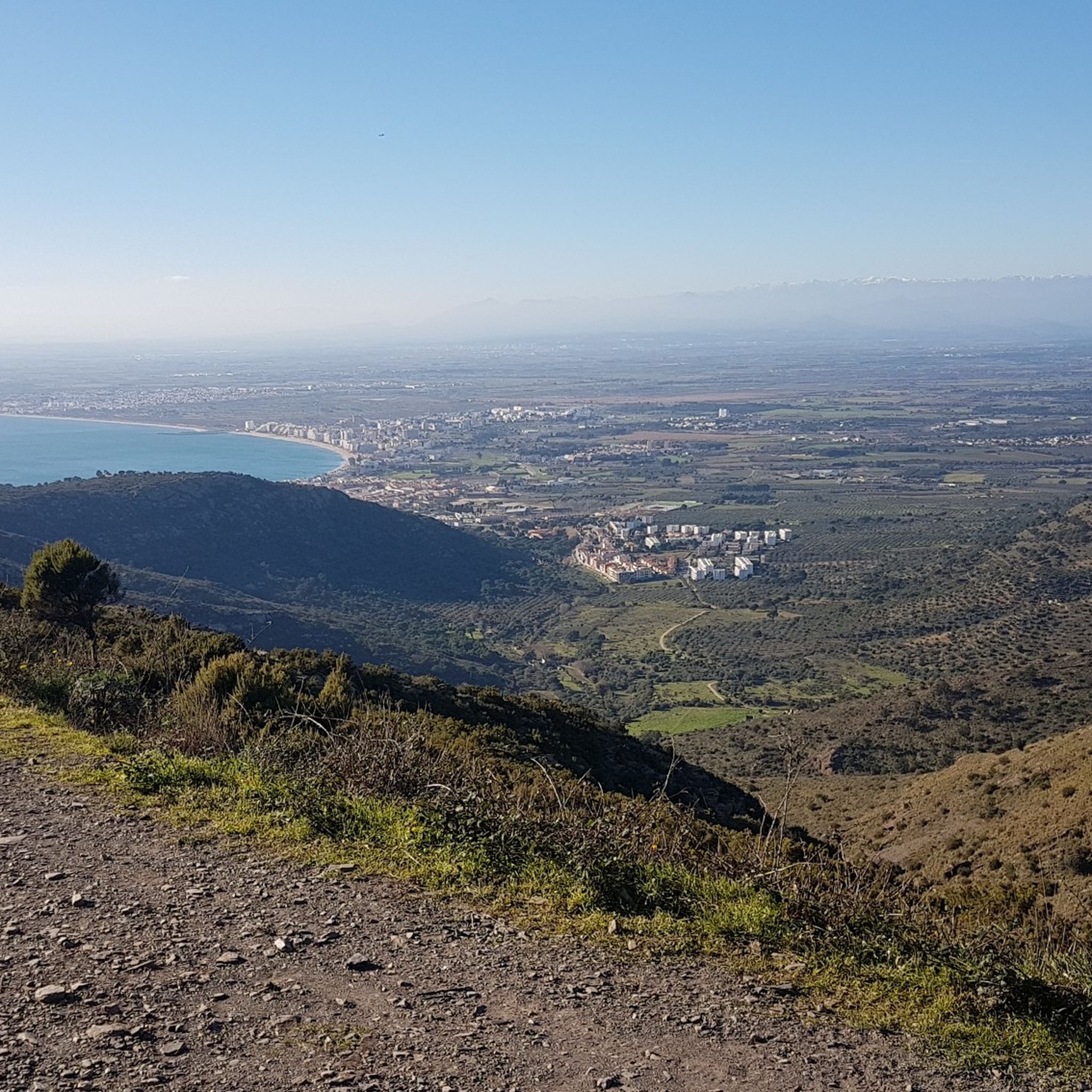
Magnificent all-round view to the Pyrenees and the Costa Brava.
3
0

Medieval castle located at the highest point of the Serra de Rodes, from where there are spectacular views of the monastery of Sant Pere de Rodes and of the entire Cap de Creus and the Empordà. The church is preserved, an architectural structure with a rectangular plan; a part of the set of walls; as well as remains of one of the castle's towers. Ruins of a medieval castle located at the highest point of the Serra de Rodes, 670 meters high, in the middle of the Cap de Creus Natural Park and very close to the monastery of Sant Pere de Rodes. From this point there are spectacular views of the monastery itself and of the entire cape of Creus and the Empordà. The church is preserved from the old construction, an architectural structure with a rectangular plan; a part of the set of walls that closed the enclosure; as well as remains of one of the castle's towers. The church is Romanesque, the rest of the buildings are from the 13th century and it is mentioned for the first time in 904. You can go up by the Can Ventòs track or by connecting with it via Santa Creu and more directly by a fairly straight path from the Sant Pere de Roda monastery itself.
3
1

Ruins of a medieval castle at the highest point of the Sierra de Rodes, 670 meters high, in the heart of the Cabo de Creus Natural Park and very close to the Monastery of San Pedro de Rodes. From this point there is a spectacular view of the monastery itself, as well as the entire Cap de Creus and the Empordà.
10
1
Frequently Asked Questions
What historical sites can I explore in the Cap de Creus region?
The Cap de Creus region is rich in history, featuring several significant fortifications and historical sites. You can visit the Sant Pere de Rodes Monastery, a fortified Benedictine monastery with roots in the 9th century, offering insights into medieval religious and strategic life. Nearby are the Sant Salvador de Verdera Castle Ruins, perched at 670 meters, which was a crucial defensive structure. Further inland, the Quermançó Castle, dating back to the 10th century, showcases early medieval Catalan defense architecture.
What kind of views can I expect from the castles in Cap de Creus?
The castles and historical sites in Cap de Creus offer breathtaking panoramic views. From the Sant Salvador de Verdera Castle Ruins, you'll get spectacular vistas of the entire Cap de Creus peninsula, the Empordà plain, and the Monastery of Sant Pere de Rodes. The monastery itself provides magnificent views over the bay of Llançà and Port de la Selva. Quermançó Castle also offers beautiful views of the Empordà plain from its elevated position.
Are there any family-friendly castle ruins to visit in the Cap de Creus area?
Yes, the Sant Pere de Rodes Monastery is a great option for families. It's a well-preserved complex where children can explore the architecture and learn about medieval life. The Sant Salvador de Verdera Castle Ruins offer an adventurous experience with its high vantage point and remnants of walls, which can be exciting for older children who enjoy exploration and panoramic views.
What is the best time of year to visit the castles in Cap de Creus?
The best time to visit the castles and historical sites in Cap de Creus is generally during spring (April to June) and early autumn (September to October). During these months, the weather is pleasant for exploring, with milder temperatures and fewer crowds than in the peak summer season. The natural landscapes are also particularly vibrant during spring.
How difficult are the walks to the castles in Cap de Creus?
The difficulty varies. The walk to the Sant Salvador de Verdera Castle Ruins from the Monastery of Sant Pere de Rodes is approximately 30 minutes and is considered intermediate. The monastery itself is easily accessible. Quermançó Castle is located on a high hill, and while accessible, involves an uphill walk. Many routes in the Cap de Creus Natural Park are rated intermediate, so comfortable footwear is recommended.
Are there hiking or cycling trails near these historical sites?
Absolutely. The Cap de Creus Natural Park offers numerous outdoor activities. You can find various traffic-free bike rides, MTB trails, and running trails that often pass by or offer views of these historical sites. For example, there are routes that include the Monastery of Sant Pere de Rodes, allowing you to combine history with outdoor adventure.
What natural features can I see around the castles?
The castles are situated within the stunning Cap de Creus Natural Park, where the Pyrenees meet the Mediterranean. You'll encounter unique geological formations sculpted by the Tramuntana wind, rugged coastlines, and diverse Mediterranean flora. The strategic locations of these castles were chosen for their defensive advantages, often providing expansive views of the sea, plains, and mountains.
Is there parking available for visiting the castles?
Parking availability varies by site. For the Sant Pere de Rodes Monastery, there is usually designated parking nearby. For the Sant Salvador de Verdera Castle Ruins, visitors typically park at the monastery and walk up. For Quermançó Castle, parking might be available closer to Vilajuïga, requiring a walk to the ruins. It's advisable to check specific access details for each site.
Can I visit the Cap de Creus Lighthouse, and what does it offer?
Yes, the Cap de Creus Lighthouse is a notable landmark at the easternmost point of the Iberian Peninsula. Built on the foundation of an ancient watchtower, it offers spectacular panoramic views of the park's unique geological formations. The site also includes an information office and a restaurant, making it a compelling historical and scenic destination. You can find more information about it on visitacostabrava.com.
Are there any cafes or restaurants near the castles?
Yes, particularly near the more popular sites. The Sant Pere de Rodes Monastery often has facilities or nearby options. The Cap de Creus Lighthouse also features a restaurant. For other castle ruins like Sant Salvador de Verdera and Quermançó, you would typically find amenities in the nearest towns such as El Port de la Selva, Cadaqués, or Vilajuïga.
What should I wear when visiting the castles and historical sites?
Given the often elevated and exposed locations of these sites, and the potential for walking on uneven terrain, comfortable walking shoes are essential. Layers of clothing are recommended, as the weather can change, especially due to the Tramuntana wind. Sun protection, such as a hat and sunscreen, is also advisable, particularly during sunnier months.
Most popular routes around Parc Natural del Cap de Creus
Most popular attractions around Parc Natural del Cap de Creus

Get inspired with the komoot mobile app


Explore more
Looking for the best castles somewhere else? Discover other guides around Parc Natural del Cap de Creus:
