Top 5 Natural Monuments in Voronezh
Natural monuments in Voronezh Oblast are characterized by diverse natural features, including significant reserves and large water bodies. The region, located in southwestern Russia, encompasses areas like the ancient Usmansky Pine Forest and the expansive Voronezh Reservoir. These natural attractions offer varied landscapes for exploration.
Best natural monuments in Voronezh
- The most popular natural monuments is Krivoborye Nature Monument, a natural monument that features a high bank of the Don River located at an angle of approximately 80 degrees.…
Last updated: June 26, 2026
Holy Spring of Matrona of Moscow and Xenia of Saint Petersburg
Highlight • Religious Site
Translated by Google •
Tip by

160-year-old oak and 100-year-old linden at Tolshevsky Monastery
Highlight • Natural Monument
Tip by
Sign up now to discover places like this
Get recommendations on the best single tracks, peaks, & plenty of other exciting outdoor places.
Sign up for free
Krivoborye Nature Monument
Highlight • Natural Monument
The first mention of Krivoborie dates back to 1389 in the description of the journey along the Don of the Moscow Metropolitan Pimen …
Translated by Google •
Tip by
Holy Spring and Bath of the Icon 'She Who Ripens the Grain'
Highlight • Natural Monument
Translated by Google •
Tip by
200-year-old pedunculate oaks in Chertovitsy
Highlight • Natural Monument
Tip by
Turtle Lake
Highlight • Lake
Translated by Google •
Tip by
Historic Venevitinov–Olenin Estate Park
Highlight • Natural Monument
Translated by Google •
Tip by
Start today with a free account
Your next adventure awaits.
Login or Signup



Tips from the Community

Рядом с бывшими усадьбами Тулиновых-Толстых (сейчас пансионат имени Дзержинского) и Михневых-Кряжовых-Кожуховой (сейчас детский санаторий) произрастает вдоль дороги сразу пять дубов-великанов. Скорее всего, в свое время деревья росли на территории усадебного парка известных дворян. На данный момент можно увидеть стеснённые постройками двух великанов - два дуба черешчатых возрастом около 200 лет.
0
0
Удивительное явление природы открывается на центральной усадьбе Биосферного заповедника у Толшевского Спасо-Преображенского монастыря. Дуб и липа, растущие вместе 100 лет! Ещё недавно это были "два дуба да липа" - два старых дуба, в развилке которых выросла липа. Разглядывая их, все интересуются - как такое получилось? Достоверно никто не может рассказать, как образовался этот "союз". Мы часто наблюдаем такие молодые деревца, выросшие на карнизах и крышах старых домов. А почему бы не поселиться на дереве?! Много десятилетий стволы дуба "охраняли" липу, однако с возрастом ствол липы постепенно увеличивался в диаметре, распирая развилку из дубов.
0
0
An ancient park located on the grounds of the Venevitinov-Olenin estate in the village of Starozhivotinnoye in the Voronezh Region. This picturesque area features centuries-old oak trees, dirt paths, a pond, and the Church of St. John the Baptist, preserving the ambiance of the 18th century.
0
0
Among the largest springs in the Voronezh Region, there is a source located between the Serdyuki farmstead and the abandoned Klyuchi farmstead at the foot of a chalk mountain. "Klyuchi", another name is Serdyukovsky Klyuch. The spring is located on the southern outskirts of the Serdyuki farmstead near the disappearing Klyuchi farmstead. The spring was consecrated in the name of the Holy Blessed Matrona of Moscow and Xenia of Petersburg on the feast of the Baptism of the Lord in 2018. In common parlance, this place is called Serdyukovsky Klyuch or Klyuchi. The water comes out at the foot of the chalk slope. Seven streams flowing out of the chalk layer merge into one reservoir, from which the stream begins. After 3.5 km, it flows into the Potudan River. The activity of the spring is about 20 liters per second. In 2017, a beautiful wooden closed bathhouse with a font, topped with a dome with a cross, was built at the spring. Water outlets were cleared, the area around the spring was fenced, and places for rest were provided.
0
0
An oval-shaped lake that turns into a swamp. The only large population of turtles of a rather rare species, the pond turtle, has survived here (well, how can one not remember the turtle Tortilla from "Buratino"). Local residents claim that there were once countless turtles here.
0
0
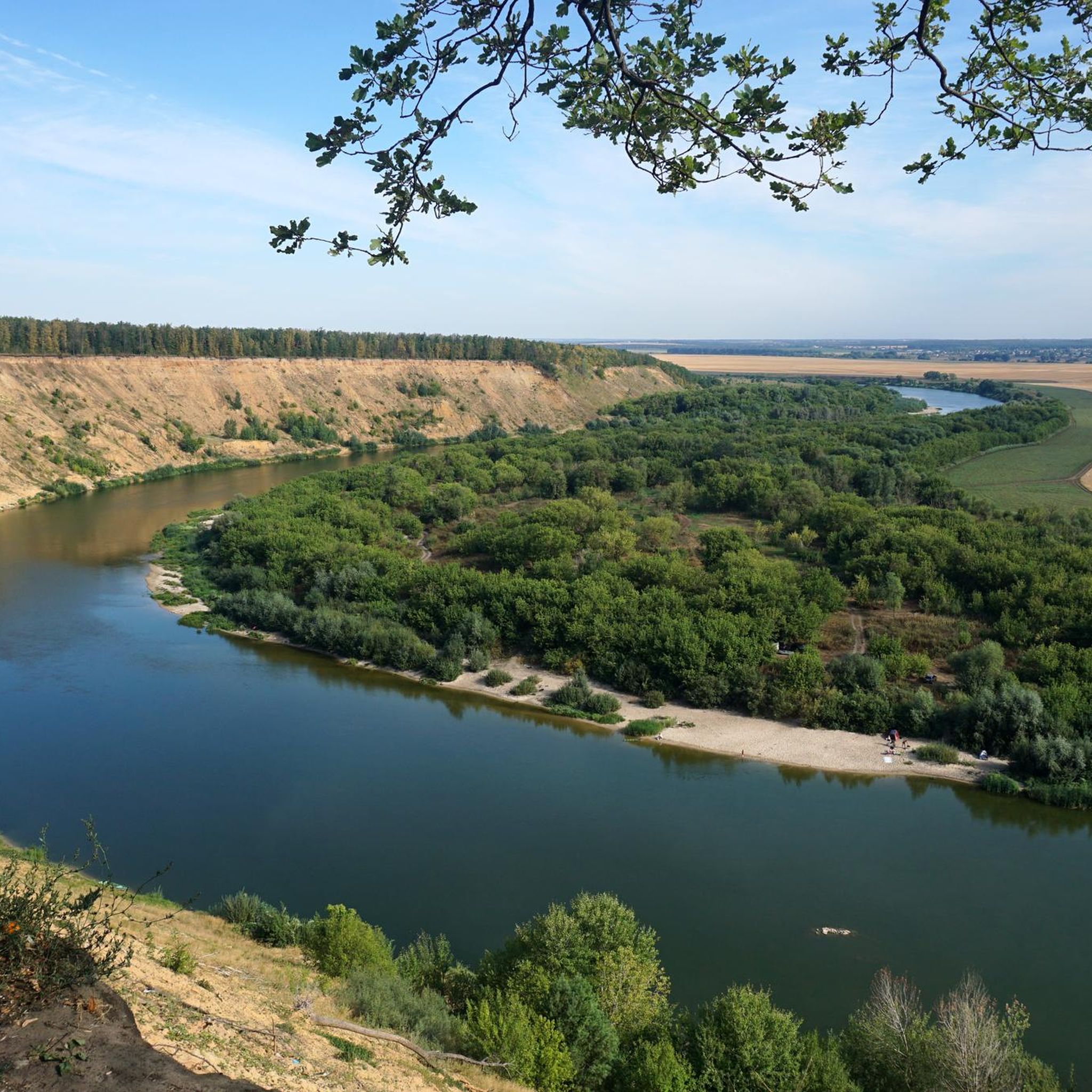
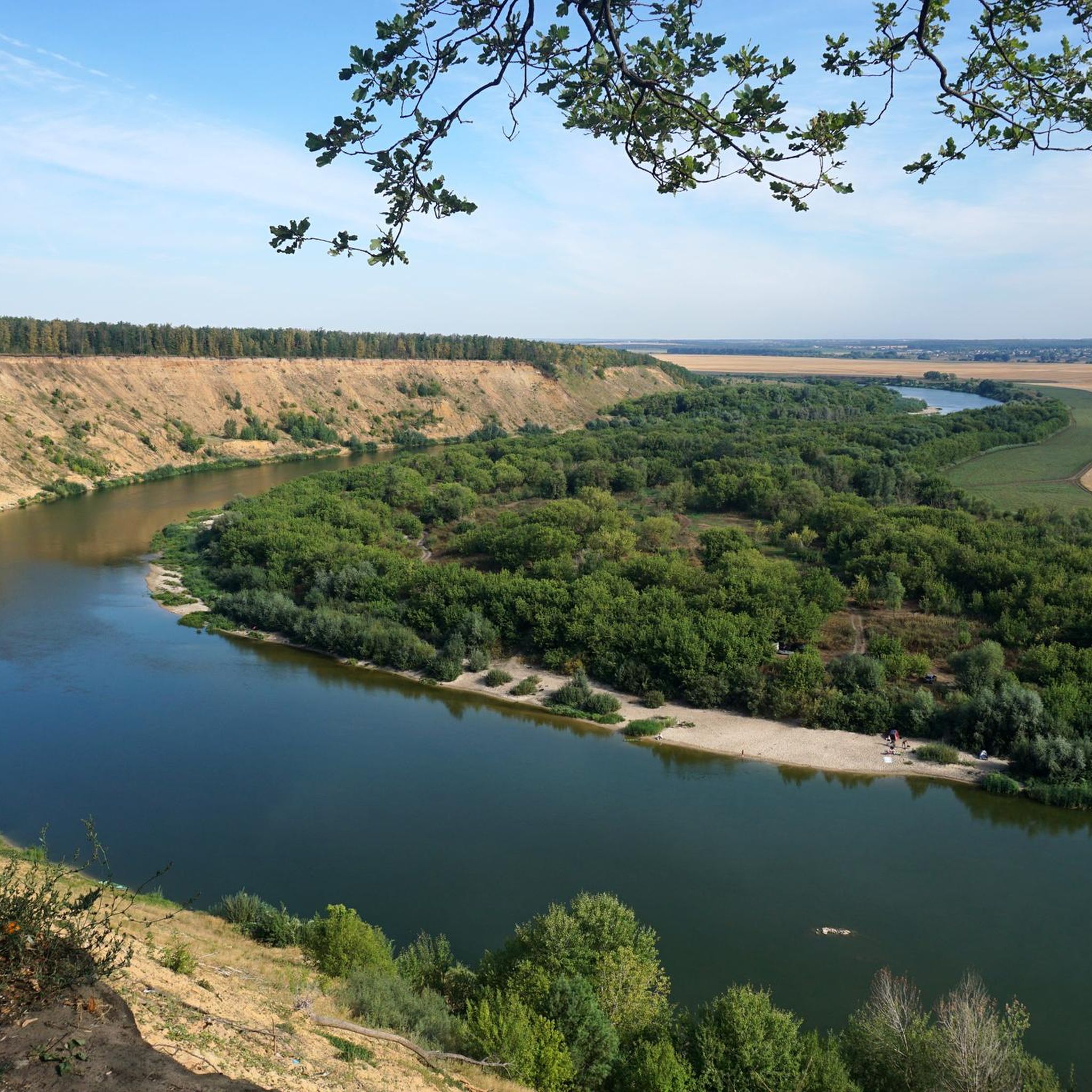
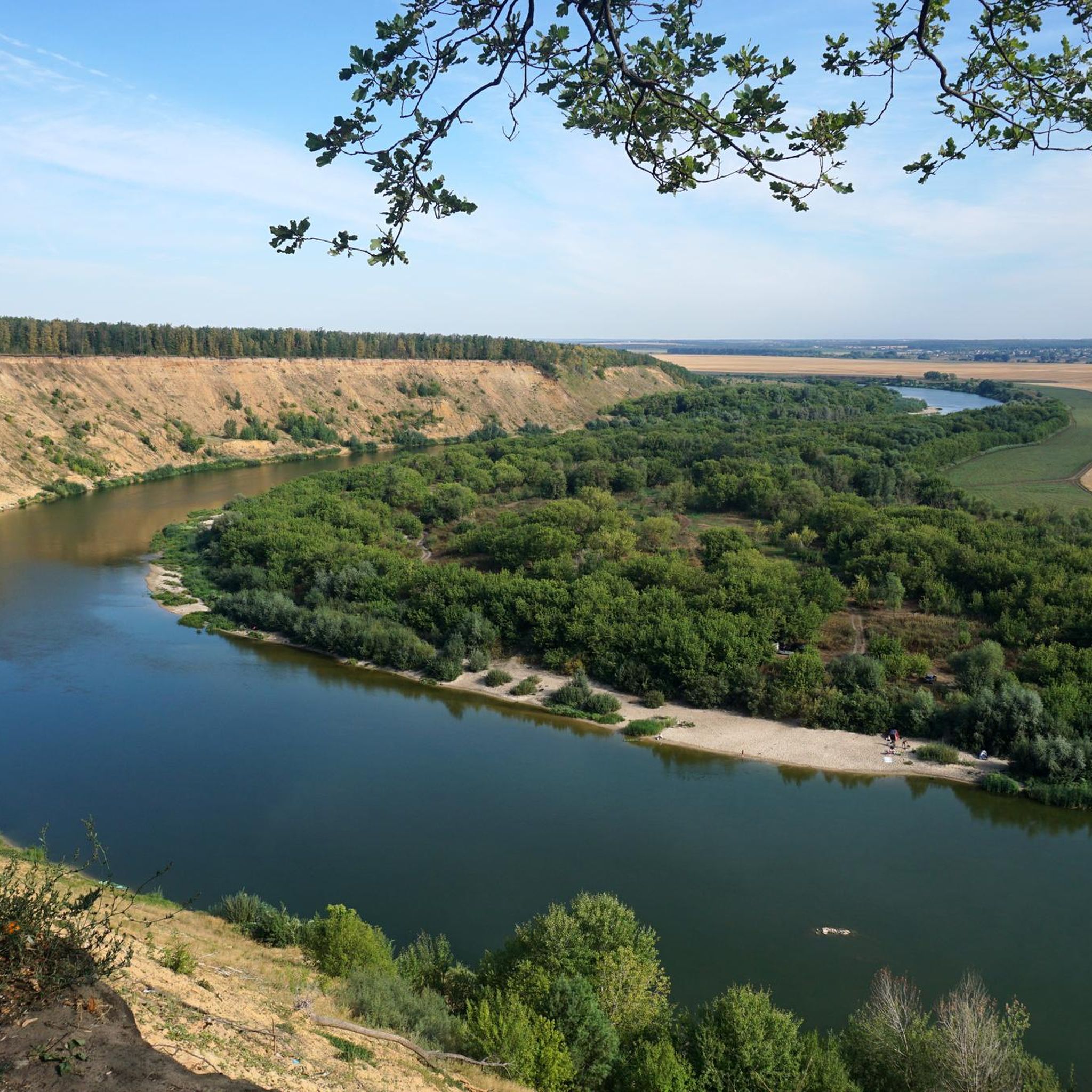
Geological natural monument of the tract "Krivoborie". The first mention of Krivoborie dates back to 1389 in the description of the journey along the Don of the Moscow Metropolitan Pimen to Constantinople. In the 16th century, the tract Krivoj Bor is constantly found in the schedule of Russian patrols. At the end of the 17th century, the meadows near Krivoj Bor belonged to the Karachunsky Monastery. It was then that the monastery peasants settled here, founding a village whose name came from the tract Krivoborie itself. The tract is a high bank of the Don River, located at an angle of approximately 80 degrees. The height above the river is 50 meters.
0
0
In the Repyevskiy district of the Voronezh region, on the outskirts of the Sasovka 2-aya farm, near the Ust-Muravyanka river, there is a hill popularly called "Pyramid". Many springs flow from under the hill. They form a large stream that feeds the Muravyanka river. The most intense of the springs is consecrated in honor of the icon of the Mother of God "Giver of Bread". At the same time, the arrangement of the spring together with the font was organized quite recently - somewhere in 2015, approximately.
0
0
Frequently Asked Questions
What are some of the most unique natural monuments in the Voronezh region?
The Voronezh region offers diverse natural monuments. A notable geological feature is the Krivoborye Nature Monument, which features a high bank of the Don River rising 50 meters at an 80-degree angle. Another unique spot is Turtle Lake, known for its population of pond turtles. The V. Peskov Voronezh State Nature Biosphere Reserve, while not listed as a highlight in this guide, is a significant ecological reserve renowned for its ancient Usmansky Pine Forest and its role as the world's first experimental beaver nursery.
Are there any natural monuments in Voronezh with historical or cultural significance?
Yes, several natural monuments in the region have historical or cultural ties. The Krivoborye Nature Monument has mentions dating back to 1389 and was historically associated with the Karachunsky Monastery. Additionally, the Historic Venevitinov–Olenin Estate Park is a natural monument featuring centuries-old oak trees and the Church of St. John the Baptist, preserving the ambiance of the 18th century.
What kind of outdoor activities can I do near the natural monuments in Voronezh?
The area around Voronezh's natural monuments provides various outdoor activities. You can find numerous routes for hiking, including moderate trails like the '200-Year-Old Birch Tree – 300-Year-Old English Oak loop'. For cycling, there are routes such as the 'View of the River loop from Agriculutural Institute area'. Running trails are also available, with options like the 'Church Complex loop from Voronezh'.
Are there any family-friendly natural monuments in Voronezh?
Yes, the Historic Venevitinov–Olenin Estate Park is considered family-friendly, offering picturesque grounds with ancient oak trees and a pond. While not a highlight in this guide, the V. Peskov Voronezh State Nature Biosphere Reserve also offers family-friendly eco-trails like 'Zapovednaya Skazka' and a 'Beavarium' where children can observe beavers.
Can I visit natural springs in the Voronezh region?
Yes, the Voronezh region is known for its springs. You can visit the Holy Spring of Matrona of Moscow and Xenia of Saint Petersburg, one of the largest springs in the region with an activity of about 20 liters per second, featuring a wooden bathhouse. Another significant spring is the Holy Spring and Bath of the Icon 'She Who Ripens the Grain', located near the Sasovka 2-aya farm, which feeds into the Muravyanka river.
What is the Voronezh Reservoir and can I visit it?
The Voronezh Reservoir, often called the 'Voronezh Sea,' is a large artificial body of water stretching 30 km through the city. It's one of Europe's largest urban reservoirs and offers beautiful views and recreational activities like boating, fishing, and swimming, especially during summer. It's a popular spot for locals and visitors seeking outdoor enjoyment.
Are there opportunities for wildlife observation at natural monuments in Voronezh?
Yes, there are. Turtle Lake is home to a significant population of pond turtles. The V. Peskov Voronezh State Nature Biosphere Reserve is particularly known for its diverse fauna, including a crucial beaver nursery and opportunities for bird watching and general wildlife observation along its eco-trails.
What is the best time of year to visit the natural monuments in Voronezh?
The best time to visit natural monuments in Voronezh largely depends on the activities you plan. Spring and autumn offer pleasant temperatures for hiking and exploring the reserves and parks. Summer is ideal for water-based activities at the Voronezh Reservoir. The V. Peskov Voronezh State Nature Biosphere Reserve is open year-round, with different seasonal attractions.
Can I find hiking trails of varying difficulty near Voronezh's natural monuments?
Yes, the region offers hiking trails for different skill levels. For example, within the broader Voronezh area, you can find moderate hiking routes like the '200-Year-Old Birch Tree – View of the River loop'. The V. Peskov Voronezh State Nature Biosphere Reserve also features various eco-trails, some designed for easier access and others for more extensive exploration of different forest biotopes.
Are there any natural monuments in the Voronezh region that are particularly good for a day trip?
For a day trip, the Krivoborye Nature Monument offers a striking geological formation and scenic views of the Don River, making it a rewarding destination. The V. Peskov Voronezh State Nature Biosphere Reserve, located about 40 km north of Voronezh, is also an excellent option for a full day, with its eco-trails, nature museum, and 'Beaver Town'.
What kind of trees and forests can I expect to see in the natural monuments of Voronezh?
The region is rich in diverse forest types. The V. Peskov Voronezh State Nature Biosphere Reserve is a significant fragment of the ancient Usmansky Pine Forest, featuring pine, oak, aspen, birch, and black alder trees. The Historic Venevitinov–Olenin Estate Park is also notable for its centuries-old oak trees.
Most popular routes in Voronezh
Most popular attractions in Voronezh

Get inspired with the komoot mobile app


Explore more
Extend your search for the best caves by checking out these guides of the top ones in Voronezh:
