The best walks and hikes in Voronezh
15
hikers
7
hikes
Hiking trails in Voronezh traverse a varied terrain characterized by river valleys, forest-steppes, and dense pine forests. The region features rolling plains and unique geological formations, including limestone cliffs in areas like Divnogorye. These natural features provide a range of environments for outdoor exploration.
Best hiking trails in Voronezh
- The most popular hiking route is 200-Year-Old Birch Tree – 300-Year-Old English Oak loop from Voronezh State Technical University, a 6.6 miles (10.7 km) trail that takes 2 hours 50…
Last updated: May 6, 2026
4
hikers
Moderate hike. Good fitness required. Easily-accessible paths. Suitable for all skill levels.
2
hikers
Moderate hike. Good fitness required. Easily-accessible paths. Suitable for all skill levels.

Sign up for free
2
hikers
Moderate hike. Good fitness required. Easily-accessible paths. Suitable for all skill levels.
Moderate hike. Good fitness required. Easily-accessible paths. Suitable for all skill levels.
2
hikers
Moderate hike. Good fitness required. Easily-accessible paths. Suitable for all skill levels.
2
hikers
Easy hike. Great for any fitness level. Easily-accessible paths. Suitable for all skill levels.
Our route recommendations are based on thousands of hikes, rides, and runs completed by other people on komoot.
Start today with a free account
Your next adventure awaits.
Login or Signup



Tips from the Community

The oak tree on the right bank of the Voronezh Reservoir near the village of Rybachy is the second oldest in the region. It is 320 years old and stands approximately 26 meters tall. Its trunk circumference at a height of 1.3 meters is 1.46 meters. Based on data from the National Register of Old-Growth Trees of Russia. https://treeportal.ru/
0
0
There are several springs in Rybachye. The water in them is clean and suitable for drinking. Twice a year, samples are taken from it to Rospotrebnadzor. One of the springs was improved by local philanthropist Vladimir Dmitrienko. The water here now flows out of a jug, like on the coat of arms of Voronezh. Hares, squirrels, martens, beavers and foxes live in Rybachye. The main advantages of the village are nature, silence and clean air. Source: RIA Voronezh | riavrn.ru | Category: Legends of Voronezh
0
0
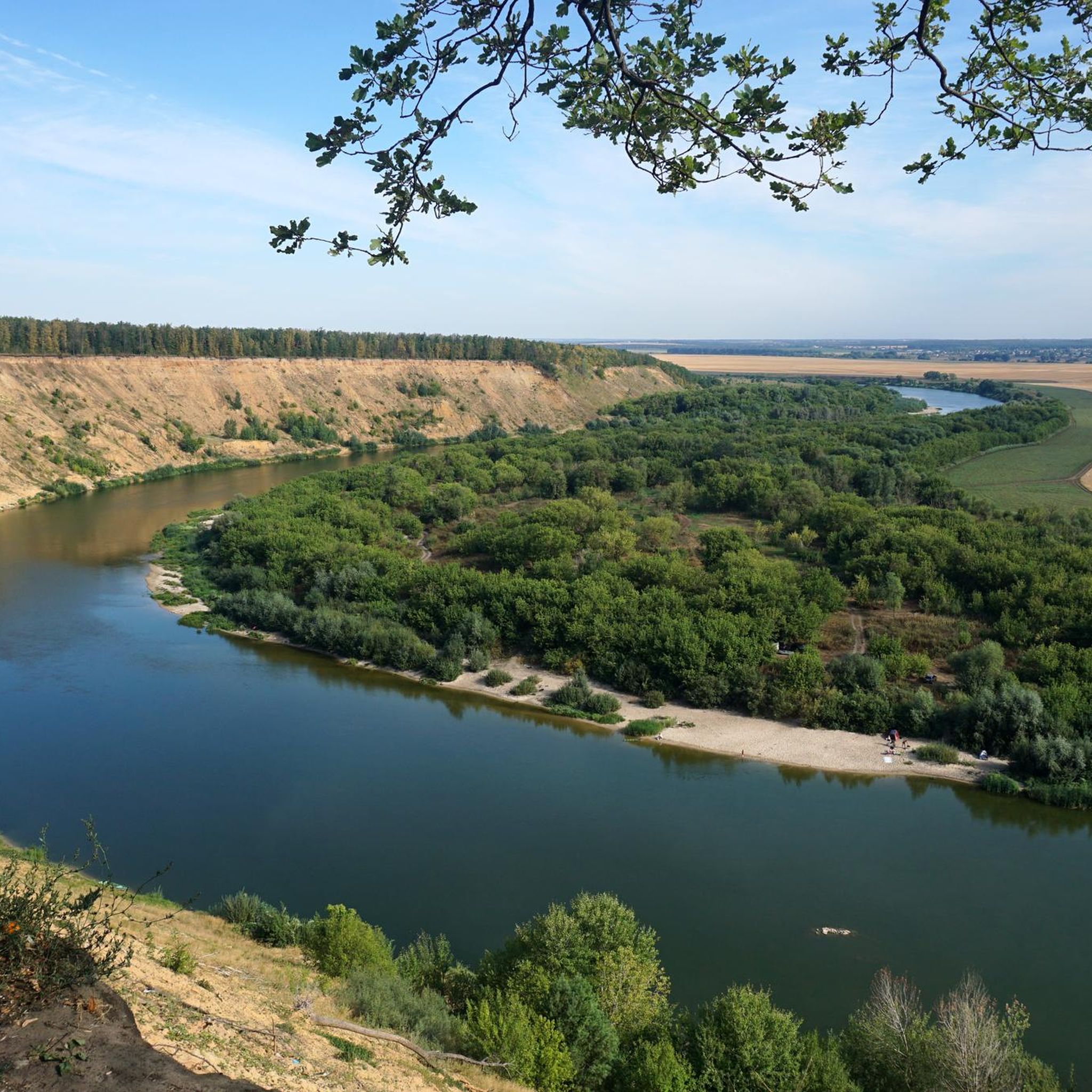
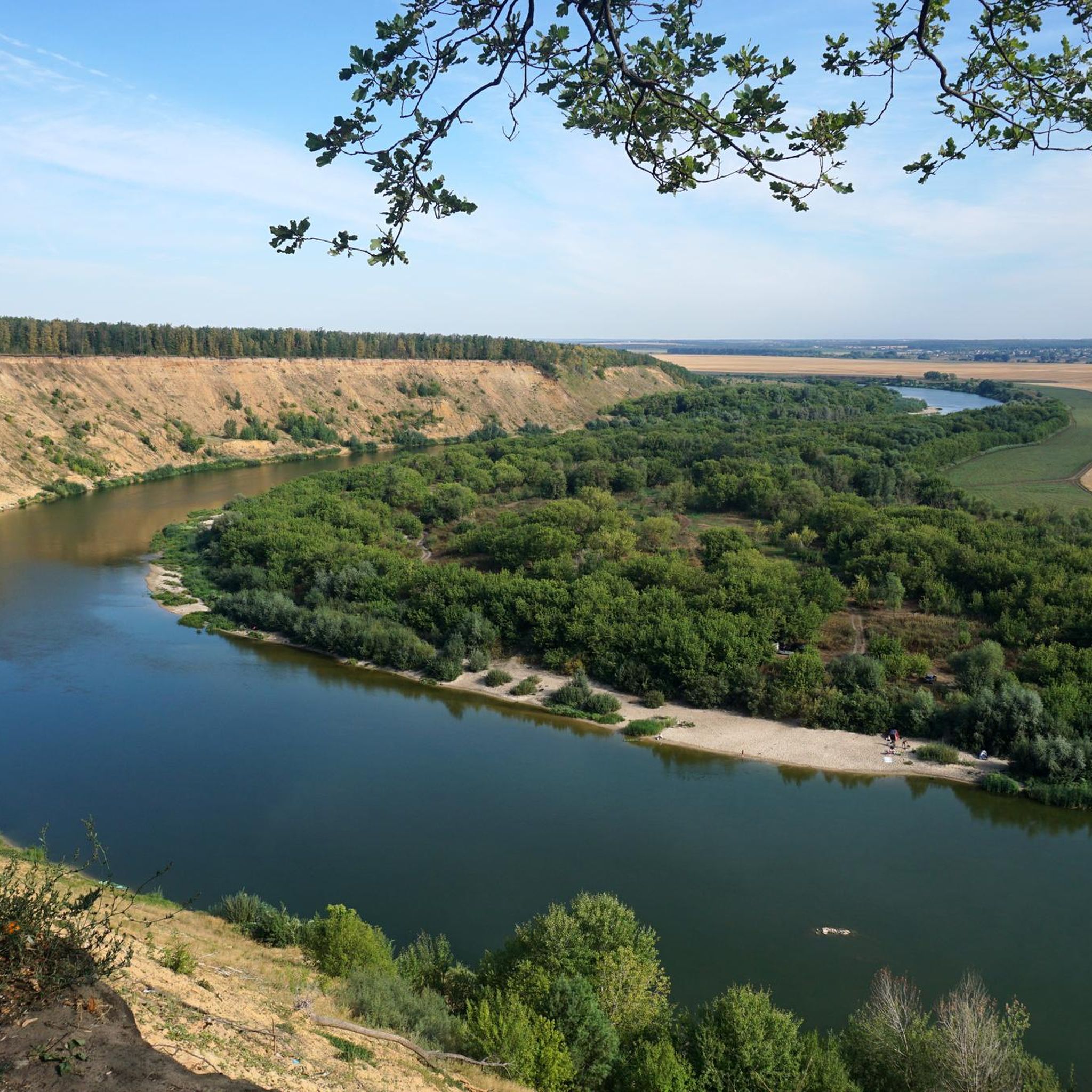
A book of memoirs by Nemchinov's great-granddaughter Lyudmila Nikolaevna, who passed away in 2009, has reached us. In the book, she described her relatives, family, and dacha. She writes that girls would come to the village singing and dancing, picking currants, making friends with local kids, and flirting with them. For example, they would throw frogs into a jug of kvass and milk, Lyudmila Chernyakina said. Rumors about Nemchinov's estate reached the local authorities. The merchant was brought to court for illegally seizing land. But at the trial, the landowner said: "The land is given by God. I have been conscientiously managing here for five years." The court took into account that Nemchinov had improved the land and planted beautiful gardens, and ruled in his favor. Nemchinov's apple and pear orchards remain in Rybachye to this day. Semyon Nemchinov died in 1932, and the estate passed to his beloved son Nikolai, who lived in Grozny until 1930. According to Lyudmila Chernyakina, Nikolai Nemchinov was an inventor: he created a mechanical shovel and an aerostat, which he used to fly all the way to Otrozhka. He took off from Lysaya Gora. Over time, Rybachye began to turn into a nice dacha corner for the creative intelligentsia - a kind of Voronezh Peredelkino. University scientists, nomenklatura workers, factory bosses, and hospital chief physicians settled in the village. Each was allocated a plot of 11 acres for the construction of fishing booths and boat docks. The decision to allocate plots was issued by the Voronezh Regional Executive Committee. Since these are forest lands, it has never been allowed to build large capital houses here. There are 632 houses in Rybachye. There are some unusual ones - for example, a bright blue wooden house in the Art Nouveau style that looks like a princess's castle. The summer cottages are tightly adjacent to each other, and the streets are so narrow that only two people can pass each other. Not only oaks grow in the oak grove, but also ash, maple, elm, linden, aspen, and alder. There are also unique ancient trees. For example, a giant oak located on the local "Druid glade". Another local attraction is Mount Obsypukha, which offers a beautiful view of the reservoir and the left bank of the Voronezh. Source: RIA Voronezh | riavrn.ru | Category: Legends of Voronezh
0
0
Romantics who grew up on the "Lord of the Rings" call it the Voronezh Middle-earth, and skeptics - for the cramped conditions and narrow streets - the Voronezh Shanghai. You can get to Rybachye either by "dacha" minibus 60C on a weekend, or on foot from the "Olimpik" stop. A walk around the area will take about an hour. The village is located on the territory of Nagornaya Dubrava - a unique nature reserve that stretches along the coast of the Voronezh Reservoir from the Gorky sanatorium to Ramoni. Right above Rybachye in the 8th-10th centuries stood an ancient Slavic city. According to one version, this is the famous Vantit. The area of the city was 13 times larger than the area of pre-Christian Kyiv. As archaeological excavations have shown, the urban complex was a series of settlements 42 km long. The entire territory of Rybachye is a triple monument. Firstly, it is located in a water protection zone, secondly, the entire forest is a reserve, a natural monument, and thirdly, there is a whole chain of archaeological monuments here - ancient settlements, settlements, burial mounds. Along the picturesque shore of the reservoir, miniature houses are crowded in several rows, fishing boats, motorboats and even yachts are rocking at the piers. Summer residents living in Rybachye enjoy swimming in the reservoir: they say that the water here is clean, flowing, fed by springs. On the local patch of land near the village "office", as in Soviet times, guests are greeted by a bust of Ilyich (V. I. Lenin). Next to it is the wooden house of the merchant Semyon Nemchinov, built in 1904. Enterprising local residents Sergey Fedyainov and Pavel Novikov carefully restored the house with their own efforts, preserving the beautiful carved platbands. In 2017, when the village celebrated its 85th anniversary. The only local history Museum of the Fisherman in the entire Voronezh Region was opened here. All exhibits are gifts from local residents. Among them is a relative of the merchant Nemchinov - the chairwoman of the cooperative Lyudmila Chernyakina. The history of Rybachye is usually counted from 1892. Stary Oskol tradesman Semyon Nemchinov is considered the pioneer of these places. The merchant moved to Voronezh and bought a small house on the bank of the Voronezh River from the state registrar Grigory Yakhontov and one hectare of land, where he laid out apple and pear orchards, planted a currant nursery and arranged two ponds. The giant chestnut tree planted by Nemchinov has survived to this day in the village. The Nemchinovs invited young peasant women from Podgorny to harvest the crop. Source: RIA Voronezh | www.riavrn.ru | Category: Legends of Voronezh
0
0

Frequently Asked Questions
What types of landscapes can I expect to see while hiking in Voronezh?
Voronezh Oblast offers a diverse range of landscapes for hikers. You'll find trails traversing river valleys, expansive forest-steppes, and dense pine forests. Unique geological formations, such as the limestone cliffs in Divnogorye National Park, also provide breathtaking views and a mystical atmosphere.
Are there any easy or beginner-friendly hiking trails in Voronezh?
Yes, Voronezh has options suitable for beginners. For an easy walk, consider the L'Art de l'Esprit Spring loop from Voronezh State Technical University, which is 3.6 miles (5.8 km) and typically takes about 1 hour 35 minutes through local green spaces.
Can I find circular hiking routes in the Voronezh region?
Many of the trails in Voronezh are designed as circular routes, allowing you to start and end at the same point. An example is the 200-Year-Old Birch Tree – 300-Year-Old English Oak loop from Voronezh State Technical University, a moderate 6.6-mile (10.7 km) trail.
What natural attractions or landmarks can I explore on a hike in Voronezh?
The region is rich in natural beauty. You can visit the Krivoborye Nature Monument, explore the serene Turtle Lake, or discover spiritual sites like the Holy Spring of Matrona of Moscow and Xenia of Saint Petersburg. Divnogorye National Park is particularly notable for its limestone cliffs and ancient caves.
Are there any historical sites or cultural landmarks accessible via hiking trails?
Yes, you can combine hiking with exploring historical sites. For instance, the Voronezh Concert Hall – Orlyonok Park loop from Voronezh State University passes through urban green spaces. Other notable historical sites in the region include the Repyovsky Rubezh Memorial Complex and the Venevitinov–Olenin Estate.
What is the best time of year to go hiking in Voronezh?
The best time for hiking in Voronezh is generally during the spring (late April to June) and autumn (September to October) when the weather is mild and the natural scenery is at its most vibrant. Summer can be pleasant, but be prepared for warmer temperatures. Winter hiking is also possible, offering a unique experience of the snow-covered landscapes.
Are there family-friendly hiking options in Voronezh?
Many of the trails in Voronezh are suitable for families, especially those with moderate difficulty and shorter distances. The region's nature reserves, like the Voronezh Nature Reserve, often feature eco-trails designed for easy walks and wildlife observation, such as the 'Zapovednaya Skazka' trail.
Can I bring my dog on the hiking trails in Voronezh?
While specific regulations can vary by protected area, many natural parks and forest trails in Voronezh are generally dog-friendly. It's always recommended to keep your dog on a leash and ensure you clean up after them to preserve the natural environment for everyone.
Are there opportunities for wildlife viewing while hiking in Voronezh?
Absolutely. The Voronezh Nature Reserve, for example, is famous for its beaver population and offers excellent opportunities for wildlife observation within its forest-steppe ecosystem. Hikers might also spot various bird species and other forest inhabitants along the trails.
How can I get to the hiking trailheads in Voronezh using public transport?
While some trailheads, especially those closer to the city, might be accessible by local buses or marshrutkas, access to more remote natural parks like Divnogorye or the Voronezh Nature Reserve often requires a combination of public transport and potentially a taxi or personal vehicle. Planning your route in advance using local transport apps is advisable.
Are there any trails that offer scenic viewpoints of the Voronezh River or Reservoir?
Yes, some routes provide views of the region's waterways. The 200-Year-Old Birch Tree – View of the River loop from Voronezh State Technical University is a moderate 10.4-mile (16.7 km) path specifically designed to offer views of the river as it passes through diverse woodland.
What makes the Voronezh Nature Reserve a unique hiking destination?
The Voronezh Nature Reserve (V.M. Peskov Biosphere Reserve) is one of Russia's oldest and most significant. It protects a fragment of the ancient Usmansky Pine Forest, dating back 2,500 years, and features a unique forest-steppe ecosystem. It's particularly known for its beaver population and offers several eco-trails like 'Zapovednaya Skazka' for nature walks.
Most popular routes in Voronezh
Most popular attractions in Voronezh

Get inspired with the komoot mobile app


Explore more
Browse the best Hikes in other regions.
