Top 4 Castles around Crawley
Best castles around Crawley offers a unique perspective on historical sites, though the featured highlights are located near Winchester. The area around Crawley itself is characterized by its blend of urban development and surrounding natural landscapes, including ancient woodlands and parks. While Crawley does not host traditional medieval castles within its immediate boundaries, it serves as a gateway to exploring historical sites in the wider region. The local area provides opportunities for walks and appreciating the natural environment.
Best castles around Crawley
- The most popular castles is Wolvesey Castle (Old Bishop's Palace), a historical site that was once one of the most important buildings in England. While now in ruins, it retains a sense of grandeur and is managed by English Heritage.
- Another must-see spot is Merdon Castle Lane, a castle site that features an iron age hill fort and later Norman castle remains. Visitors can explore the historical significance of this location.
- Visitors also love King Arthur's Round Table, The Great Hall, Winchester Castle, a man-made monument that is one of the finest surviving medieval aisled halls from the 13th century. It is special for housing the iconic Round Table, linked to the legends of King Arthur.
- Crawley is known for historical sites and castle-like structures, offering a mix of ancient ruins and unique modern interpretations. The area provides a variety of historical points of interest to see and explore.
- The castles around Crawley are appreciated by the komoot community, with 39 upvotes and 61 photos shared by visitors.
Last updated: October 4, 2026
Wolvesey Castle (Old Bishop's Palace)
Highlight • Historical Site
Tip by

King Arthur's Round Table, The Great Hall, Winchester Castle
Highlight • Monument
In 1222, Henry III began the construction of one of the earliest Gothic styled medieval halls. Dominating the Great Hall is the iconic Round Table, linked to the ancient legends of King Arthur and his Knights.
The Great Hall is normally open every day from 10am-4.30pm. For more information, visit: hants.gov.uk/thingstodo/greathall.
Tip by
Sign up now to discover places like this
Get recommendations on the best single tracks, peaks, & plenty of other exciting outdoor places.
Merdon Castle Lane
Highlight (Segment) • Castle
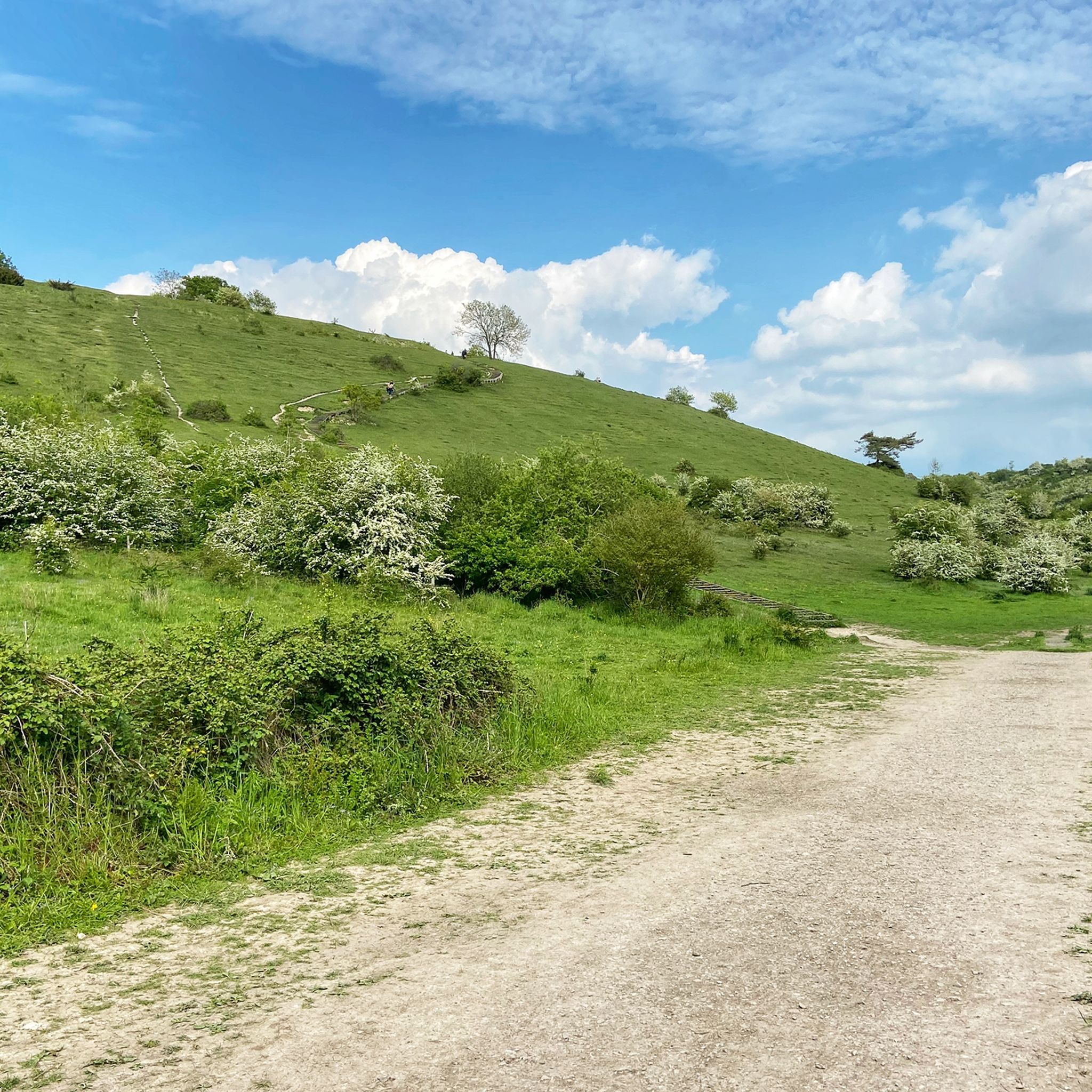
Merdon Castle is the site of an iron age hill fort and later Norman castle.
Tip by

Mottisfont House and Gardens
Highlight • Historical Site
Tip by
Start today with a free account
Your next adventure awaits.
Tips from the Community

Winchester Castle was one of the most important royal fortresses in England during the medieval period, though today, only a magnificent part of it remains.
1
0
The Round Table in Winchester's Great Hall is an iconic artifact often associated with the legend of King Arthur and his Knights. Location: It hangs on a wall in the Great Hall, which is the last remaining part of the medieval Winchester Castle. Actual Date: Despite the legend, carbon dating proves the table is a medieval creation, made from English oak between 1250 and 1280 AD. It was likely commissioned by King Edward I for an Arthurian-themed tournament or feast.
1
0
Wolvesey Castle (also known as the Old Bishop's Palace) was the medieval residence of the extremely wealthy and powerful Bishops of Winchester.
0
0
Queen Eleanor's Garden: Outside the Hall is a tranquil recreated medieval garden, named after Eleanor of Provence (wife of Henry III) and Eleanor of Castile (wife of Edward I). The Westgate: The imposing Westgate, a surviving medieval fortified gate, is located nearby and was once the main entrance to the castle complex.
0
0
Gothic Architecture: The Hall is a stunning example of 13th-century Gothic architecture. It is an immense, aisled hall featuring elegant Purbeck marble columns and soaring pointed archways. Hammer-Beam Roof: It is topped with a magnificent hammer-beam roof, which creates a large, unobstructed open space. Judicial History: For centuries, the Great Hall served as the primary law court for Hampshire, hosting Assize Courts until 1974. Notable trials held here include that of Sir Walter Raleigh (1603) and the "Bloody Assizes" under Judge Jeffreys (1685).The Great Hall is most famous for housing the Winchester Round Table, which is prominently displayed on the west wall. The Legend: This enormous circular wooden tabletop is strongly linked to the legendary King Arthur and his Knights of the Round Table, symbolizing equality as it has no "head." The Reality: The table is a genuine medieval artifact, but it is not from King Arthur's time. Carbon dating suggests the wood was cut in the late 13th century (around 1250-1280), approximately 600 years after Arthur is traditionally thought to have lived. Purpose: Historians believe it was likely created for a lavish "Round Table" tournament, possibly hosted by King Edward I in 1290 to celebrate a royal betrothal. The Painting: The famous painted design, which features the Tudor rose in the centre and a figure resembling a young King Henry VIII as Arthur, was commissioned by King Henry VIII in the early 16th century (c. 1522) to reinforce his connection to the legendary king.
0
0
The Great Hall is all that remains of the vast Winchester Castle, which was founded by William the Conqueror in 1067 as a seat of royal power and government. The present Great Hall was built between 1222 and 1235 during the reign of King Henry III, who was born in Winchester Castle. It is regarded as one of the finest surviving medieval great halls in England. While the rest of Winchester Castle was largely destroyed in 1649 following the English Civil War on the orders of Oliver Cromwell, the Great Hall was spared, possibly for use as a courthouse.
0
0
Features: The medieval complex included two great halls (East and West), a huge kitchen block, a keep, and one of the earliest known piped water supply systems in medieval Britain. Royal Connections: Due to the decline of Winchester Castle, Wolvesey became the favoured lodging for royalty visiting the city. The most famous event was the wedding banquet of Queen Mary I and Philip II of Spain in 1554, which took place in the East Hall before their marriage ceremony in Winchester Cathedral. Destruction: Wolvesey Castle was significantly damaged and largely stripped of its fortifications by the Parliamentarians (Roundheads) in 1646 during the English Civil War. Replacement Palace: The medieval palace was eventually abandoned in the 17th century. The site's fortunes changed with the Restoration of the Monarchy: Bishop George Morley (1662–1684) commissioned the construction of a new, smaller Baroque palace right next to the ruins. This palace was later partially demolished but its surviving West Wing remains the current private residence of the Bishop of Winchester today.
0
0
It was the principal residence of the immensely wealthy and powerful Bishops of Winchester throughout the Middle Ages, and is now a spectacular ruin managed by English Heritage. The extensive ruins visible today are largely the work of Bishop Henry of Blois (1129–1171), the brother of King Stephen. Henry was a dominant political and religious figure who built a magnificent, fortified palace to reflect his status. Although often referred to as a castle, it was primarily a lavish palace built in the style of a castle (fortified) due to the turbulent political period of the 12th century known as The Anarchy.
0
0
Frequently Asked Questions
What kind of historical sites or 'castles' can I find directly in or very near Crawley?
While Crawley itself doesn't host traditional medieval castles, you can explore unique historical sites and castle-like structures. These include the 17th-century ruins of Brambletye House near Forest Row, the distinctive, self-built Beaubush Castle in Crawley, and the historic moated site of Ifield Court within the Ifield Village Conservation Area. These offer insights into local history and architecture.
What are some notable traditional castles accessible for a day trip from Crawley?
For traditional castle experiences, you can visit sites like Wolvesey Castle (Old Bishop's Palace), a significant ruin managed by English Heritage. Another historical site is Merdon Castle Lane, featuring an Iron Age hill fort and Norman castle remains. Additionally, King Arthur's Round Table, The Great Hall, Winchester Castle, offers a glimpse into medieval history with its iconic Round Table.
Are there any family-friendly activities at the castles near Crawley?
Yes, sites like Wolvesey Castle (Old Bishop's Palace) and King Arthur's Round Table, The Great Hall, Winchester Castle are considered family-friendly. Wolvesey Castle offers a chance to explore ruins with informative boards, while The Great Hall provides an engaging historical experience with the legendary Round Table and Queen Eleanor's garden, a recreation of a medieval garden.
What are the opening hours for Wolvesey Castle and The Great Hall?
Wolvesey Castle is typically free to enter daily from 10 am to 5 pm, from April until October. The Great Hall at Winchester Castle is usually open every day from 10 am to 4:30 pm. It's always a good idea to check their official websites for the most current information before planning your visit.
Can I explore the area around Merdon Castle Lane on foot?
Yes, Merdon Castle Lane is a site with an Iron Age hill fort and Norman castle remains, offering opportunities for exploration on foot. The lane itself includes a half-kilometer hill with an 8-10% gradient, making it suitable for those looking for a moderate walk or cycle.
Are there any walking or cycling routes near these historical sites?
Yes, the wider region around Crawley offers various outdoor activities. For cycling, you can find routes like the 'Stoke Charity Pond – River Dever Path, Hunton loop' or 'River Test at Mottisfont – Crawley Duck Pond loop'. For running, options include 'Jump Line – Worthy Down Singletrack loop' or 'Crawley Duck Pond loop'. You can find more details on these and other routes in the Road Cycling Routes around Crawley, Cycling around Crawley, and Running Trails around Crawley guides.
What is the historical significance of Ifield Court in Crawley?
Ifield Court, located in the Ifield Village Conservation Area, has a long history as a moated building, with mentions dating back to 1387. While the original manor house no longer stands in its entirety, the moat itself remains, crossed by an 18th-century brick bridge. Ifield is one of Crawley's most historic parts, with evidence of Saxon iron works and mentions in the Domesday Book, offering a glimpse into the town's ancient past.
What makes Beaubush Castle in Crawley unique?
Beaubush Castle, officially Beaubush Cottage, is a distinctive, self-built house in Crawley designed with numerous castle-style features. Its owner aimed for a unique and historic look, incorporating crenellated battlements, cast metal lions, and intricate curved brickwork. It stands out as a prominent landmark, showcasing a modern interpretation of castle architecture.
What do visitors enjoy most about the historical sites near Crawley?
Visitors appreciate the sense of grandeur even in ruins, the informative historical context provided by sites like Wolvesey Castle, and the unique historical experience offered by The Great Hall with King Arthur's Round Table. The tranquil settings and the opportunity to explore the atmosphere of bygone times are also frequently highlighted.
Are there any natural features or viewpoints near these castles?
While the castles themselves are historical sites, the surrounding region offers natural landscapes. For instance, The Great Hall at Winchester Castle features Queen Eleanor's garden, a recreation of an enclosed medieval garden, providing an injection of nature. The wider Crawley area is characterized by ancient woodlands and parks, offering opportunities for walks and appreciating the natural environment.
Is public transport available to reach these castles from Crawley?
While specific public transport routes directly from Crawley to each castle are not detailed here, the castles mentioned (Wolvesey Castle, Merdon Castle Lane, The Great Hall) are located near Winchester. Winchester is well-connected by public transport, and local services would likely be available from there. For sites closer to Crawley like Ifield Court, local bus services within Crawley might be an option. It's recommended to check local transport schedules for the most accurate information.
What is the best time of year to visit the castles and historical sites around Crawley?
The period from April to October is generally ideal for visiting outdoor historical sites like Wolvesey Castle, as it's open daily during these months. Visiting during spring or autumn often provides pleasant weather for exploring ruins and walking around the grounds, with fewer crowds than peak summer. Indoor attractions like The Great Hall are accessible year-round.
Most popular attractions around Crawley

Get inspired with the komoot mobile app


Explore more
Looking for the best castles somewhere else? Discover other guides around Crawley:
