Top 5 Castles around El Gastor
Best castles around El Gastor are found in a region known for its historical and archaeological sites. El Gastor, often called the "Balcony of the White Villages," offers panoramic views overlooking the Embalse de Zahara-El Gastor and the Sierra de Grazalema. While traditional castles are not directly within El Gastor, the surrounding area features significant historical fortifications and ancient structures. These sites provide insight into the region's rich past, from prehistoric times to Moorish and medieval periods.
Best castles around…
Last updated: July 4, 2026
Zahara de la Sierra Castle
Highlight • Castle
Translated by Google •
Tip by

Castillo de Olvera
Highlight • Castle
Translated by Google •
Tip by

Sign up now to discover places like this
Get recommendations on the best single tracks, peaks, & plenty of other exciting outdoor places.
Sign up for free
Archpriest Church of Our Lady of the Incarnation and Saint Joseph (Olvera)
Highlight • Religious Site
Translated by Google •
Tip by
Torre Alháquime and Arco de la Villa
Highlight • Historical Site
The labyrinthine layout of its streets is nestled in its most important monuments: the parish of Nuestra Señora de la …
Translated by Google •
Tip by
Start today with a free account
Your next adventure awaits.
Login or Signup
Other adventures around El Gastor

Tips from the Community

We didn't manage to visit the castle... unfortunately. It was constantly closed. We did see people upstairs, but we don't understand how they got there.
0
0

The Parish of Our Lady of the Incarnation is one of Olvera's most iconic monuments, both for its imposing architecture and its historical and religious significance. It was commissioned by the Dukes of Osuna at the end of the 18th century and completed in 1843. It was built on the remains of an old Moorish mosque and a Gothic-Mudejar church, the apse of which is still preserved in the baptismal chapel. It has undergone several restorations, the most recent between 1994 and 1999, and again in 2010 after a fire damaged a processional image.
1
0
Olvera Castle is one of the most iconic monuments in the White Villages of Cádiz, offering a stunning historical and visual experience. It was built in the late 12th century by the Arabs as part of the defensive system of the Nasrid Kingdom of Granada. After the Christian conquest, the castle was renovated several times, incorporating Christian architectural elements. It was declared a Site of Cultural Interest in 1985 and is part of the Olvera Historic-Artistic Complex.
1
0

The Iglesia Parroquial de Nuestra Señora de la Encarnación in Olvera is the town's most striking church building and, together with the neighboring Moorish castle, dominates the town's panorama. It towers high above the historic Barrio de la Villa district and is visible from afar. The church was built in 1822 in the neoclassical style on the foundations of an earlier Renaissance church. This, in turn, stood on the site of a former Muslim mosque, as was common in many Andalusian towns. Construction dragged on for decades and was not completed until the end of the 19th century. The church is characterized by its monumental façade, flanked by two large towers. The building's style was inspired by the great cathedrals of Spain – unusually imposing for a town the size of Olvera.
0
1
The Castillo de Olvera is a historic fortress in the Andalusian town of Olvera (province of Cádiz). It was built by the Moors in the late 12th century and served as part of the defense system of the Nasrid Kingdom of Granada. The castle sits atop a 623-meter-high cliff and offers sweeping views of the surrounding landscape. The castle has an irregular, elongated-triangular floor plan that follows the shape of the cliff. Particularly striking is the rectangular Torre del Homenaje (Keep) in the southern part of the complex. It has two stories with barrel vaults and was the central element of the defense. Other features of the fortress include a barbican-protected entrance gate, battlements, towers, an underground vault, and two cisterns for the water supply. After its conquest by Castilian troops under King Alfonso XI in 1327, the Moorish fortress was extensively rebuilt. This is where many of the Christian elements visible today were created. Since 1985, the Castillo de Olvera has been listed as a "Bien de Interés Cultural" (Cultural Property of Special Interest). Opening Hours: Summer (approx. April–October): Tuesday to Sunday, 10:30 a.m.–2:00 p.m. & 4:00 p.m.–7:00 p.m. Winter (approx. November–March): Tuesday to Sunday, 10:30 a.m.–2:00 p.m. & 4:00 p.m.–6:00 p.m. Closed on Mondays Admission: €2 per person. Tickets are available at the Tourist Office. (As of May 2025)
0
1

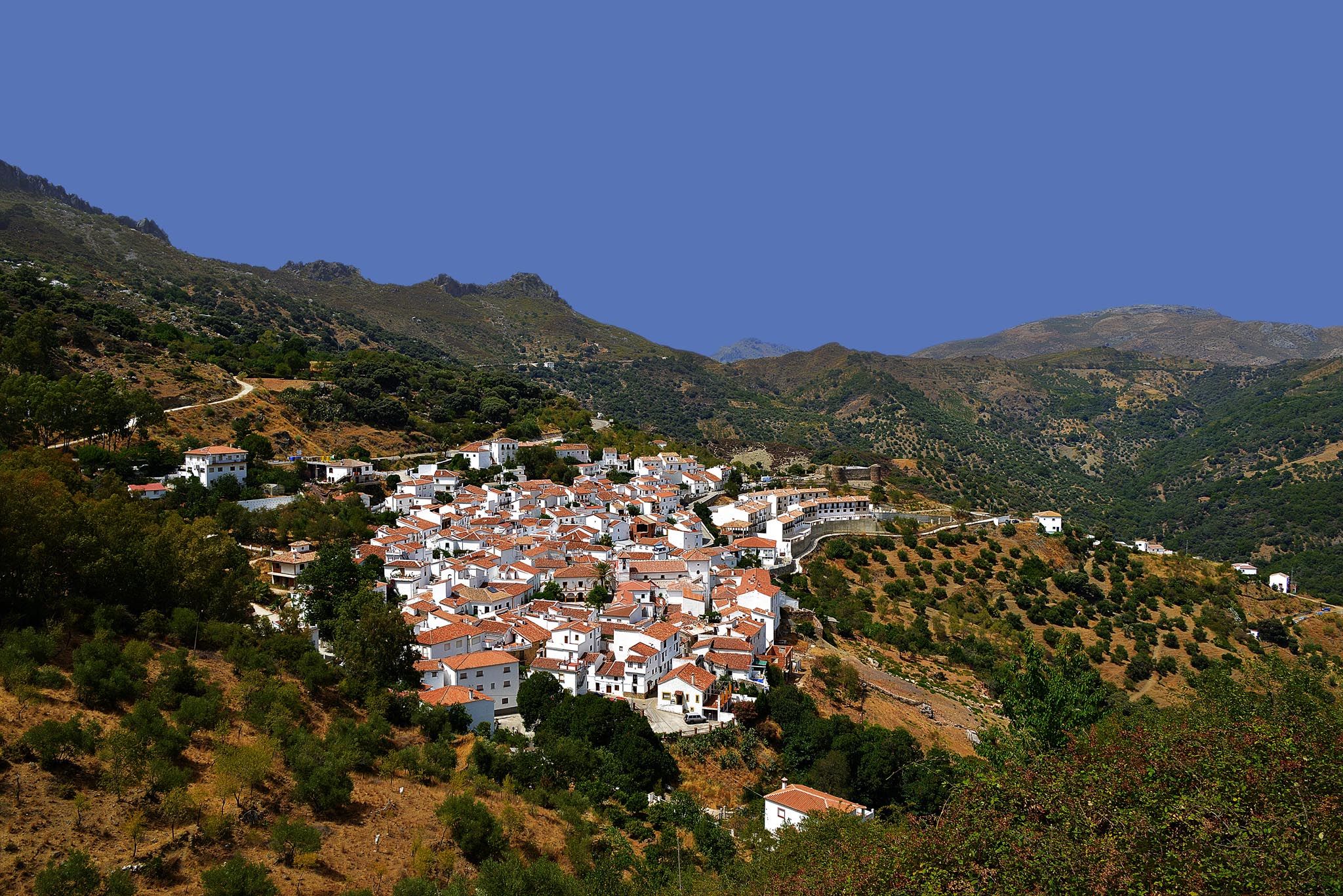
The Castillo de Torre Alháquime is a historic fortification located in the central part of the village of Torre Alháquime, in the province of Cádiz, Andalusia, Spain. The castle stands at an altitude of approximately 495 metres above sea level and offers beautiful views of the surrounding area. The castle was built during the Moorish period and was part of a powerful defence line that protected the Kingdom of Granada. The castle has an irregular triangular shape and consists of several remaining structures such as towers, walls and an entrance gate. The castle has been a Bien de Interés Cultural monument since 1985 and is currently a recreational area called Parque de las Murallas
7
0
As its name suggests, Torre Alháquime is an Islamic name. The labyrinthine layout of its streets is nestled in its most important monuments: the parish of Nuestra Señora de la Antigua and the monument to the Sacred Heart. Cycle through its steep streets until you climb to the ruins of the castle and enjoy a beautiful view of the entire area around it. A white town in the province of Cádiz.
8
0
An entrance fee is €2 and a visit certainly does not take long. The bike can wait in the bike rack.
4
0
Frequently Asked Questions
What kind of historical sites can I explore around El Gastor?
While traditional castles are not directly within El Gastor, the region is rich in historical and archaeological sites. You can explore significant prehistoric sites like the Dolmen del Gigante, a megalithic burial site dating back over 6,000 years. The area also features other dolmens and prehistoric tombs, offering a glimpse into ancient cultures. For more recent history, nearby villages host impressive medieval fortifications.
Which are the most notable castles in the vicinity of El Gastor?
The most popular castle in the area is Zahara de la Sierra Castle, which features remains of a Moorish castle with a keep above the village of Zahara. Another must-see is Castillo de Olvera, built at the end of the 12th century as part of the Emirate of Granada's defense system, offering extensive views from its high perch.
Are there any religious buildings with historical significance near El Gastor's castles?
Yes, near the Castillo de Olvera, you can visit the Archpriest Church of Our Lady of the Incarnation and Saint Joseph (Olvera). This religious building was also part of the defensive line of the Nazarene of Granada and offers great panoramic views from its elevated position.
What other historical fortifications can be found in the region?
Beyond the main castles, you can visit Torre Alháquime and Arco de la Villa. This site, with its Islamic name, features the ruins of a castle and offers beautiful views of the surrounding white village and landscape. It was part of a powerful defense line protecting the Kingdom of Granada.
What kind of views can I expect from the castles and historical sites?
Many of the historical sites and castles in the area, such as Zahara de la Sierra Castle and Castillo de Olvera, are strategically located on high points. They offer extensive panoramic views of the surrounding landscapes, including the Embalse de Zahara-El Gastor and the Sierra de Grazalema natural park. El Gastor itself is known as the 'Balcony of the White Villages' for its stunning vistas.
What outdoor activities can I do near these historical sites?
The region around El Gastor offers various outdoor activities. You can find numerous mountain biking trails, such as those detailed in the MTB Trails around El Gastor guide. There are also running trails, including the Llanos de Rabel Trail, which you can explore through the Running Trails around El Gastor guide. Cycling routes are also popular, with options like the Grazalema – Pass of the Doves loop, found in the Cycling around El Gastor guide.
Are there challenging hikes or routes near the castles?
Yes, the Sierra de Grazalema Natural Park, which surrounds many of these sites, offers challenging routes. For mountain biking, you can find difficult trails like the 'Mountain biking loop in Sierra de Grazalema' (85 km). Running enthusiasts can tackle difficult routes such as the 'Llanos de Rabel Trail' (10 km). For cyclists, routes like the 'Grazalema – Pass of the Doves loop' (90 km) are considered difficult. More details are available in the respective komoot guides for MTB, running, and cycling.
What do visitors particularly enjoy about the castles and historical sites in this area?
Visitors appreciate the historical depth and the stunning views. For instance, the Zahara de la Sierra Castle is valued for its well-preserved Moorish remains and the panoramic view of the lake. The Castillo de Olvera is praised for its phenomenal views and its historical significance as part of the Emirate of Granada's defense. The entire region's blend of ancient history and natural beauty is a major draw.
Is there an entrance fee for the castles?
For Castillo de Olvera, there is an entrance fee of €2. It's advisable to check the specific requirements for other sites, as some may have varying access conditions or small fees.
What is the best time to visit the historical sites and castles around El Gastor?
The region experiences hot summers, so spring (April-May) and autumn (September-October) are generally the most pleasant times to visit. During these seasons, the weather is milder, making it ideal for exploring the outdoor historical sites and engaging in activities like hiking and cycling without the intense heat of summer.
Are the historical sites around El Gastor suitable for families?
Many of the sites, especially those in the white villages, can be explored by families. While some castle ruins might have steep steps, like parts of Castillo de Olvera, the overall experience of exploring ancient history and enjoying the views can be rewarding for children. The prehistoric sites like the Dolmen del Gigante offer a unique educational experience.
Can I find viewpoints near the castles and historical sites?
Absolutely. Many of the castles and historical sites are inherently viewpoints due to their strategic locations. For example, the Zahara de la Sierra Castle offers views of the lake, and Castillo de Olvera provides extensive vistas from its 623-meter elevation. El Gastor itself, known as the 'Balcony of the White Villages,' has spots like the Mirador de El Gastor, offering panoramic views of the Embalse de Zahara-El Gastor and the Sierra de Grazalema.
Most popular routes around El Gastor
Most popular attractions around El Gastor

Get inspired with the komoot mobile app


Explore more
Looking for the best castles somewhere else? Discover other guides around El Gastor:
