Top 11 Castles around Bàscara
Castles around Bàscara offer a glimpse into the region's historical fortifications and medieval heritage. Situated in the Alt Empordà region, Bàscara features structures strategically located overlooking the Fluvià River. The area is characterized by its historical significance, with remnants of castles and defensive walls shaping the landscape. Exploring these sites provides insight into centuries of regional history and architectural evolution.
Best castles around Bàscara
- The most popular castles is Sant Feliu de la Garriga Castle, a castle that is…
Last updated: July 3, 2026
Sant Morí Castle
Highlight • Castle
Translated by Google •
Tip by

Historic centre of Vilaür
Highlight • Historical Site
Translated by Google •
Tip by

Sign up now to discover places like this
Get recommendations on the best single tracks, peaks, & plenty of other exciting outdoor places.
Sign up for free
Sant Feliu de la Garriga Castle
Highlight • Castle
Translated by Google •
Tip by

Espinavessa
Highlight • Settlement
Translated by Google •
Tip by
San Mori
Highlight • Settlement
Translated by Google •
Tip by

Sign up for free to discover even more castles around Bàscara.
Sign up for free
Already have an account?
Start today with a free account
Your next adventure awaits.
Login or Signup



Tips from the Community


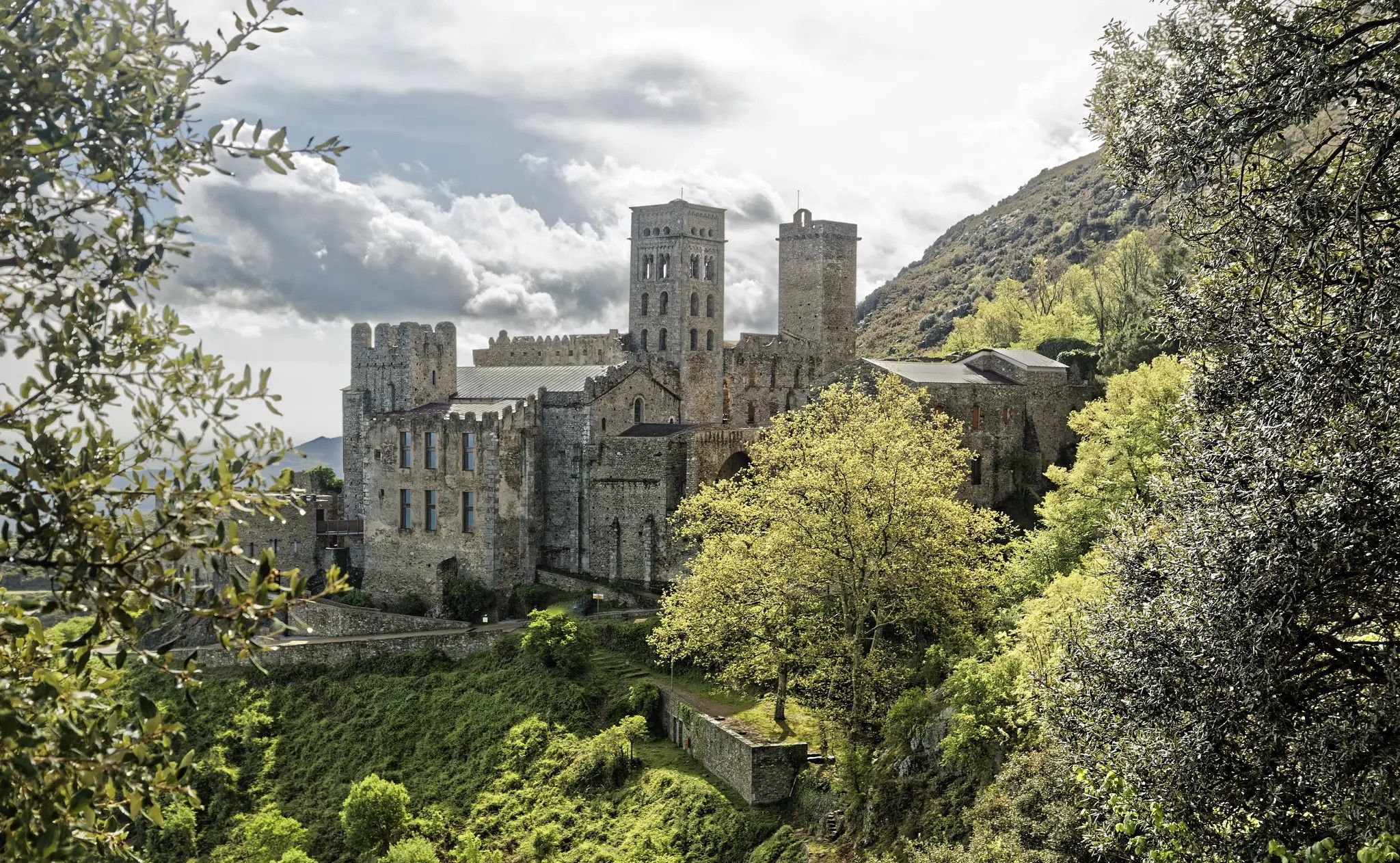
Medieval complex dating from the 11th to the 13th century. Currently inhabited castle... Romanesque in style. The church appears documented for the first time in 889.
1
0

Very beautiful and impressive, as is the entire surrounding area.
0
0

https://www.youtube.com/watch?v=oi0HgiBDuF0The imposing building that we can see today was built in the 15th century on the remains of a medieval castle documented since 1149 and that in the century XIII was owned by Bernat de Creixell. Historians do not agree on whether the monastery of Sant Miquel de Fluvià had the superior lordship. In any case, we know that the Creixells passed by marriage to the Vilaguts and from these to the Rocabertís, already in the 15th century. It was at that time when the first major transformation of the castle took place and when Queen Joana Enríquez, mother of Ferdinand the Catholic, settled there for a while. Since then it has been in the hands of the descendants of Pere de Rocabertí, the Cardona-Rocabertí and then the Sentmenat and the Moxó. Maria Mercè de Sentmenat i de Patiño received the title of Marchioness of Sant Mori in 1893. The castle is located in the middle of the town. It is configured as a large massive block, rectangular in plan, with a central courtyard. The main portal is dovetailed and on the facades there are several bigeminated crown windows, decorated with noble coats of arms, one of which shows the fleurs-de-lis of the Vilagut. Other windows are the result of modern restoration. swIf you want, you can rent it for rooms or weddings... https://www.airbnb.es/rooms/30806789?adults=1&children=0&enable_m3_private_room=true&infants=0&pets=0&check_in=2024-02-29&check_out=2024-03-05&source_impression_id=p3_1704139137_peqk24%2FuplIlvbBN&previous_page_section _name=1000&federated_search_id=8a9627cf-4904-4024- 9e09-702153ebb233
3
0
This church, of medieval origin, is part of the most important architectural heritage of the old town of Sant Mori, along with the Sant Mori Castle and other historical buildings. The church is an outstanding testimony of the history and architecture of the area, reflecting the rich cultural heritage of the town.
5
0
https://www.itinari.com/es/location/castillo-sant-mori https://www.youtube.com/watch?v=oi0HgiBduF0 It is an architectural jewel from the 15th century with Gothic-Renaissance influences. This castle-palace was significantly remodeled in the 16th century on the ruins of an earlier structure. Today, Sant Mori Castle is not only a testament to the region's rich historical past, but also offers a unique holiday experience, with its impressive architectural features such as a charming interior courtyard, three floors full of history, and a garden terrace with pool. In addition, its location allows easy access to cultural and natural attractions in the area, such as the Dalí House Museum and the beaches of the Costa Brava. https://www.youtube.com/watch?v=rocwax-EevA
0
0
Espinavessa is part of the municipality of Cabanelles and, according to the 2011 census, it had 58 inhabitants. One of the most notable points of interest in Espinavessa is the Espinavessa Castle, a medieval fortification built by the Peralada lordship. This castle, which was erected to protect the area from attacks, especially from pirates, is today a historical and tourist monument of great value. From its rooms, you can see the Pyrenees mountains and the Mediterranean coast, which makes it a relevant tourist attraction in the region. The town of Espinavessa is located on the left bank of the Fluvià river, at its confluence with the Sant Jaume stream. Historically, the town was part of the Navata batllia until the 17th century. The population center is compact, with houses dating from the 17th and 18th centuries. Among the places of interest in Espinavessa is the parish church of Sant Llorenç, which dates from the late 18th century but contains earlier elements, such as a Romanesque-style carreu and a 14th-century Gothic tombstone. Another notable place is the Font d'Espinavessa, surrounded by vegetation and formerly used by the town's inhabitants to wash clothes.
2
0
Espinavessa is a small municipality located in the Alt Empordà region, in the province of Girona, Catalonia, Spain. It is part of the municipal area of Cabanelles and, according to the 2011 census, it had 58 inhabitants. One of the most notable points of interest in Espinavessa is the Espinavessa Castle, a medieval fortification built by the Peralada lordship. This castle, which was erected to protect the area from attacks, especially from pirates, is today a historical and tourist monument of great value. From its rooms, you can see the Pyrenees mountains and the Mediterranean coast, which makes it a relevant tourist attraction in the region. The town of Espinavessa is located on the left bank of the Fluvià river, at its confluence with the Sant Jaume stream. Historically, the town was part of the Navata batllia until the 17th century. The population center is compact, with houses dating from the 17th and 18th centuries. Among the places of interest in Espinavessa is the parish church of Sant Llorenç, which dates from the late 18th century but contains earlier elements, such as a Romanesque-style carreu and a 14th-century Gothic tombstone. Another notable place is the Font d'Espinavessa, surrounded by vegetation and formerly used by the town's inhabitants to wash clothes.
2
0
Frequently Asked Questions
Which castles around Bàscara offer unique historical insights?
The region boasts several sites with rich history. The Historic centre of Vilaür, for instance, has references dating back to 1017 and still preserves parts of its medieval wall. While the Episcopal Castle of Bàscara is privately owned and not open to the public, its exterior and the visible remnants like the "Torre de la Presó" offer a glimpse into its strategic past overlooking the Fluvià River. You can also explore the remaining sections of the 13th-century Walls of Bàscara within the town's medieval core.
Are there any castles near Bàscara that are still inhabited or have been repurposed?
Yes, Sant Feliu de la Garriga Castle is a beautiful and impressive medieval complex from the 11th to 13th century that is currently inhabited. Additionally, Sant Morí Castle, rebuilt in the 15th century, has been repurposed and can be rented as a hotel and restaurant, offering an excellent state of conservation.
What kind of outdoor activities can I do near the castles around Bàscara?
The area around Bàscara offers various outdoor activities. You can find numerous routes for mountain biking, gravel biking, and road cycling. For example, there are MTB trails like the 'Ruta de las torres de defensa' and road cycling routes that take you to Lake Banyoles. You can explore these and other routes on the MTB Trails around Bàscara, Gravel biking around Bàscara, and Road Cycling Routes around Bàscara guide pages.
Are there any family-friendly castle experiences in the Bàscara region?
While the Episcopal Castle of Bàscara is not publicly accessible, families can enjoy exploring the exterior of its remnants and the medieval streets of Bàscara. The Sant Morí Castle is listed as family-friendly, and its current use as a hotel and restaurant might offer unique experiences. The settlement of Espinavessa, which includes Espinavessa Castle, is also noted as family-friendly and offers historical interest.
Can I visit the Episcopal Castle of Bàscara?
The Episcopal Castle of Bàscara is a significant historical landmark, but it is currently in a state of 'partially consolidated ruin' and is **closed to the public** as it is privately owned. Visitors can, however, observe its exterior and the surviving sections, particularly from the area near the church square, to appreciate its historical context and strategic location overlooking the Fluvià River.
What is the best time of year to visit the castles around Bàscara?
The region generally enjoys a Mediterranean climate. Spring (April-May) and autumn (September-October) typically offer pleasant temperatures for exploring historical sites and engaging in outdoor activities like cycling or walking. These seasons avoid the peak heat of summer and the cooler, potentially wetter days of winter, making for a more comfortable visit.
Are there any castles near Bàscara that offer scenic views?
Yes, the Espinavessa Castle, located within the settlement of Espinavessa, is a medieval fortification from which you can see the Pyrenees mountains and the Mediterranean coast. This makes it a relevant tourist attraction for those seeking historical sites with panoramic vistas.
What are the historical origins of the castles and fortifications in Bàscara?
The fortifications in Bàscara, including the Episcopal Castle and the Walls of Bàscara, have deep medieval roots. The Episcopal Castle's existence is recorded as early as 1241, and the town's walls date back to the 13th century. These structures were strategically important due to Bàscara's position on the road from Girona to France, reflecting centuries of defensive architecture and regional power struggles.
Are there any fortified houses or unique architectural examples near Bàscara?
Just under 2 km from Bàscara, you'll find Calabuig Castle, which is primarily a fortified house rebuilt between the 16th and 18th centuries. It features guardhouses and loopholes, offering insight into regional architectural adaptations from a traditional castle to a fortified residence. While details on public access are not specified, its exterior represents a distinct historical evolution.
What do visitors appreciate most about the castles and historical sites in the Bàscara area?
Visitors often appreciate the historical significance and the tangible remnants of the past. For example, Sant Feliu de la Garriga Castle is described as 'very beautiful and impressive.' The ability to explore medieval town centers like Vilaür and see integrated wall sections also provides a strong sense of history. The komoot community has shown its appreciation with 28 upvotes and 11 photos shared across various highlights in the area.
Are there any walking routes that allow me to see multiple historical sites or castles around Bàscara?
While specific routes connecting multiple castles are not detailed, exploring the medieval nucleus of Bàscara allows you to see the exterior of the Episcopal Castle and sections of the 13th-century Walls of Bàscara. Many of the nearby cycling routes, such as those listed in the MTB Trails around Bàscara guide, pass through or near historical settlements and points of interest, offering opportunities for combined exploration.
Most popular routes around Bàscara
Most popular attractions around Bàscara

Get inspired with the komoot mobile app


Explore more
Looking for the best castles somewhere else? Discover other guides around Bàscara:
