Top 4 Caves around Turrivalignani
Best caves around Turrivalignani are found in the Abruzzo region of Italy, offering a glimpse into historical human adaptation. The area features unique "Grotte rupestri," which are shelters carved into the friable clayey conglomerate rock. These sites hold historical significance, notably as refuges during World War II, and are set amidst distinctive "calanchi" landscapes. Visitors can explore these historical rock caves and the surrounding natural attractions.
Best caves around Turrivalignani
- The most popular caves is Hermitage of Saint Bartholomew in…
Last updated: August 23, 2026
Hermitage of Saint Bartholomew in Legio
Highlight • Religious Site
Translated by Google •
Tip by

Sant'Angelo Cave
Highlight • Cave
Translated by Google •
Tip by

Sign up now to discover places like this
Get recommendations on the best single tracks, peaks, & plenty of other exciting outdoor places.
Sign up for free
Hermitage of Sant'Onofrio of Serramonacesca
Highlight • Religious Site
Translated by Google •
Tip by
Cerrone Hut
Highlight • Cave
Translated by Google •
Tip by

Start today with a free account
Your next adventure awaits.
Login or Signup
Tips from the Community

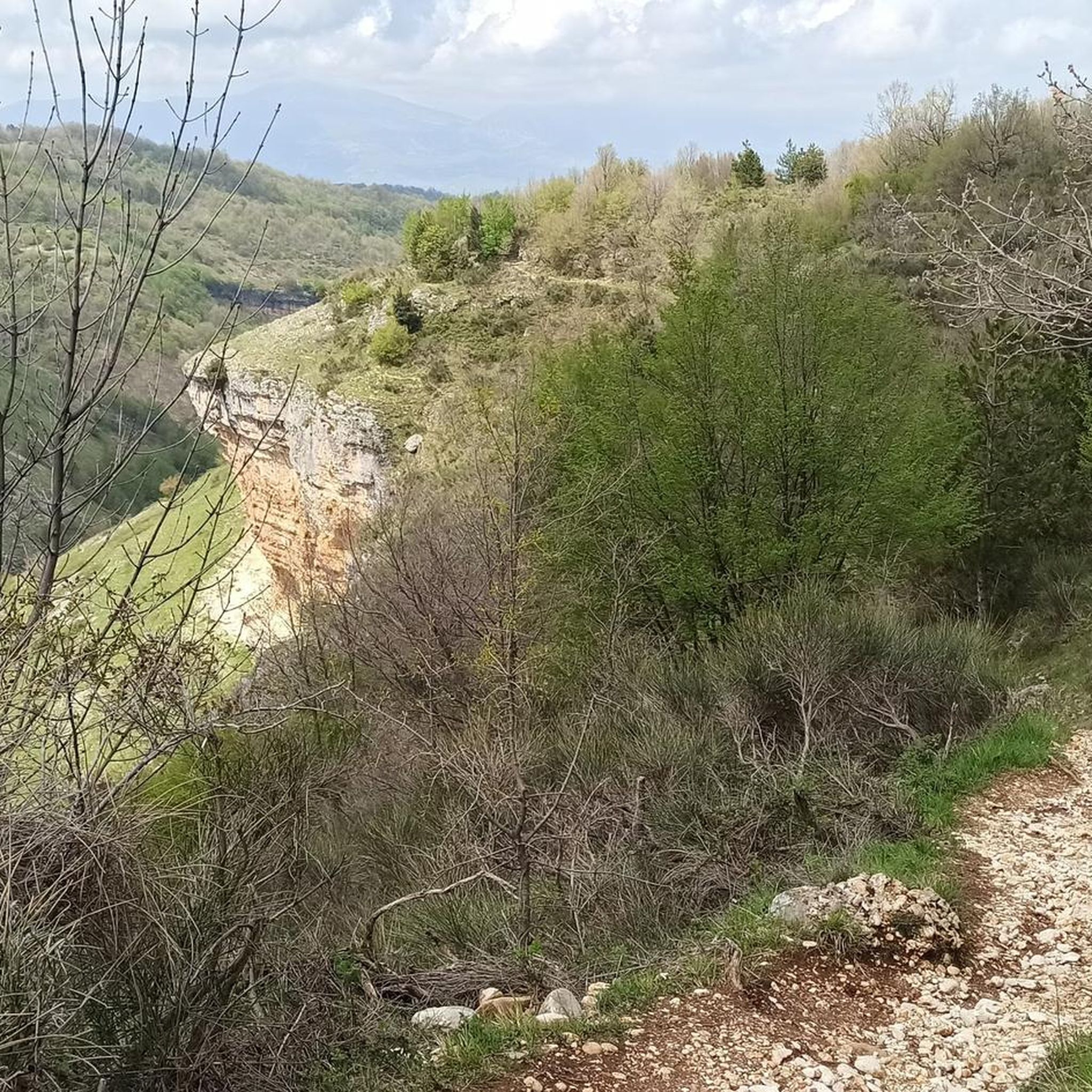
The Hermitage of San Bartolomeo in Legio is located in the Majella National Park, between the villages of Abbateggio and Roccamorice. It is a very evocative hermitage, set on the rocky wall of the Vallone dello Spirito, where the Capo La Vena stream flows. The hermitage's oratory is almost entirely embedded in the rock. There is also a 16th-century altar with a niche containing an 19th-century wooden statue depicting the saint. On August 25th, San Bartolomeo is celebrated in Roccamorice, and on this occasion, the villagers carry the wooden statue of the saint in procession from the hermitage to the village church.
1
0


The Cave of Sant'Angelo di Lettomanoppello in the Vallone di Sant'Angelo is a place of uncertain origin, mentioned in the Decrees of the First Holy Visit of the bishop of Chieti in 1844. It is believed that the hermitage is dated thanks to the presence of a statue of San Michele Arcangelo similar to that of San Tommaso in Caramanico, dating back to the XIII century. According to legend, the hermitage was inhabited by a man of holiness, but he mysteriously disappeared leaving behind the statue of the angel. In front of the rocky outcrop where a church once stood, today only a rectangular enclosure remains called the Bed of Sant'Angelo. Furthermore, in front of the church is the Fonte del Garzillo.
2
0

The hermitage is made up of two elements: the church and the part of the house. The hypothesis is that the origins go back to the use of the cave for prayer, then transformed into agro-pastoral use. The church was rebuilt in 1948.
3
0
The Hermitage of San Bartolomeo was built inside a wall of the San Bartolomeo valley, and was frequented by Pope Celestine V.
2
0

Lovely place!! The paths to reach it are well maintained.. the one coming from the Giumentina valley is a bit more demanding
0
0

Curious cave carved into a rock, easily reachable by an easy and short path that starts from the Passo Lanciano car park called the Cerratina ring.
0
0

Location and access are absolutely worth seeing and interesting
0
0
Frequently Asked Questions
What kind of caves are found in Turrivalignani?
The caves in Turrivalignani are primarily "Grotte rupestri," which are not natural geological formations with stalactites and stalagmites. Instead, they are man-made or adapted shelters carved into the friable clayey conglomerate rock of the area. Their significance lies in their historical use rather than their geological features.
What is the historical significance of the caves in Turrivalignani?
The "Grotte rupestri" of Turrivalignani hold profound historical significance, particularly as refuges for the local population during World War II. Residents used them to escape bombings and hide from German soldiers, adapting the spaces with benches, tables, and even ovens. They offer a direct connection to the community's resilience during wartime.
Are there any family-friendly caves to visit?
Yes, the Cerrone Hut is considered family-friendly. It is a curious cave carved into a rock, easily reachable by an easy and short path that starts from the Passo Lanciano car park, known as the Cerratina ring.
What natural features can I see around the caves?
The journey to the caves offers natural beauty, characterized by distinctive "calanchi" (badlands or gullies). The area is also known for being a habitat for the rare Lanner Falcon, a protected species, adding an ecological dimension to your visit.
What are some notable historical cave sites in the region?
Beyond the Grotte rupestri, you can visit the Hermitage of Saint Bartholomew in Legio, a religious building and cave built inside a valley wall, frequented by Pope Celestine V. Another significant site is the Hermitage of Sant'Onofrio of Serramonacesca, which consists of a church and a residential part, with origins potentially linked to prayer use of the cave.
How accessible are the Grotte rupestri in Turrivalignani?
Approximately twenty Grotte rupestri exist in Turrivalignani, with five currently accessible to visitors. They are reached via a path below the "calanchi" of Turrivalignani. The path is suitable for trekking, but appropriate footwear is recommended. Efforts are ongoing to open more of these historical shelters.
What outdoor activities can I do near these caves?
The area around Turrivalignani offers various outdoor activities. You can explore MTB Trails, Road Cycling Routes, and general Cycling routes. These guides provide options for different difficulty levels, allowing you to combine cave exploration with active outdoor pursuits.
What should I wear when visiting the caves?
Given that the paths to the caves are suitable for trekking, appropriate footwear is recommended. The internal conditions of the Grotte rupestri are simple shelters carved into rock, so comfortable clothing suitable for exploration is advisable.
Is there a cave with religious significance dedicated to an angel?
Yes, the Sant'Angelo Cave is a natural monument of uncertain origin, believed to date back to the XIII century. A statue of San Michele Arcangelo was found within, and according to legend, the hermitage was inhabited by a man of holiness who mysteriously disappeared, leaving the statue behind.
How long does it take to explore the Grotte rupestri in Turrivalignani?
While the exact duration depends on your pace and interest, the accessible Grotte rupestri vary in size, with some being smaller and others larger. The path to reach them is suitable for trekking. You can expect to spend a few hours exploring the caves and their immediate surroundings, allowing time to appreciate their historical context and the natural landscape.
What makes the caves around Turrivalignani unique compared to typical show caves?
Unlike typical show caves valued for their geological formations, the caves around Turrivalignani, particularly the "Grotte rupestri," are unique for their profound historical narrative. Their value lies in the human stories embedded within their walls, serving as improvised shelters during WWII, offering a tangible sense of daily life during difficult times, and showcasing human ingenuity.
Most popular routes around Turrivalignani
Most popular attractions around Turrivalignani

Get inspired with the komoot mobile app


Explore more
Extend your search for the best caves by checking out these guides of the top ones around Turrivalignani:
