Top 20 Castles in the Lesser Caucasus
Castles in the Lesser Caucasus offer a glimpse into the region's turbulent history and strategic importance. This area, encompassing parts of Georgia, Armenia, and Azerbaijan, features strongholds often perched atop dramatic landscapes. These structures showcase unique architectural features and compelling stories from various historical periods. The region is characterized by its mountainous terrain and its historical significance as a crossroads for different cultures.
Best castles in the Lesser Caucasus
- The most popular castles is Narikala Fortress, a castle built in the 3rd century. It offers views over Tbilisi and was a significant medieval stronghold in Georgia.
- Another must-see spot is Smbataberd Fortress, a large fortress ruin located high on a hill. Its strategic position between deep valleys provided an almost impregnable defense and offers extensive views.
- Visitors also love Rabati Fortress, a well-restored medieval fortification. It features towers, a mosque, and gardens within its fortified citadel.
- The Lesser Caucasus is known for ancient fortified settlements, medieval strongholds, and castle ruins. Visitors can explore a variety of defensive architecture and historical sites.
- The castles in the Lesser Caucasus are appreciated by the komoot community, with over 90 upvotes and more than 60 photos shared across 20 highlights.
Last updated: August 21, 2026
Narikala Fortress
Highlight • Castle
Translated by Google •
Tip by

Rabati Fortress
Highlight • Castle
Translated by Google •
Tip by

Sign up now to discover places like this
Get recommendations on the best single tracks, peaks, & plenty of other exciting outdoor places.
Sign up for free
Amberd Fortress Ruins
Highlight • Castle
Talk to Khachik, the caretaker and director of the ruins. He's a very kind soul who fought in the Artsakh war in 2020.
Enjoy some ice cream and fresh Gata too
Tip by

Gvara Fortress Ruins
Highlight • Historical Site
Showing Translation
Tip by

Askana Castle Ruins
Highlight • Castle
Very little is known about the ancient history of the Askana castle. Archaeologists found there layers of IV century. The Turks Askana Castlecaptured it in 1774, but soon the princes Gurieli with the help of Imeretian kings repulsed it back. At the beginning of the XIX century it belonged to the princes Asatiani and was captured by the Gurian princes until about 1820. About it in the book of Vasily Potto “Caucasian war” there is a big story. With abbreviations, it looks like this:
“…This day memorable in the country, the struggle waged by Kaikhosro against two of the worst enemies of the order, two moravov: hasanskogo – David Asatiani and langusage of Taboadela of Gardonia. Folk tradition clothed the fall Askana legendary halo. In this legend are drawn in vivid terms, and the nature of Kaikhosro, and status in the then houris of morals.
Built in a deep gorge, on a steep rock, the Askan castle on a favorable location more than other fortresses represented a reliable stronghold and a brothel for robbers. In it, after a wild youth, lived out his life old David Asatiani. He was surrounded by a crowd of his relatives, as willful and disobedient as himself, and all sorts of people rejected by the homeland, hiding here from the persecution of the law.
Tip by

Gogia Fortress Ruins
Highlight • Historical Site
Tip by

Tmogvi Fortress
Highlight • Castle
Tip by

Smbataberd Fortress
Highlight • Castle
Translated by Google •
Tip by

Tmogvi Fortress
Highlight • Castle
Tmogwi was an important military stronghold in southern Georgia. The fortress is first mentioned in historical sources from the 9th century. In the Middle Ages it controlled the important route between the Mtkvari Gorge and the Javakheti Plateau. In the 16th century it came under the control of the Ottoman Empire, which conquered the Samtskhe region. Tmogwi was returned to Georgia under the Russian Empire in 1829 as a result of the Russo-Turkish War.
The fort is spread over three hills and was surrounded by defensive curtain walls with defensive towers on each hill. A secret tunnel provided access to the river even during the siege. There are church ruins inside and outside the fortress. One of them, the Church of Saint Ephrem, has fragments of 13th-century frescoes.
Source: georgianholidays.com/de/attraction/fortresses/tmogvi-fortress
Translated by Google •
Tip by

Goris-Tsikhe Fortress
Highlight • Castle
-Wikipedia-
Translated by Google •
Tip by
Sign up for free to discover even more castles in the Lesser Caucasus.
Sign up for free
Already have an account?
Start today with a free account
Your next adventure awaits.
Login or Signup
Popular around Lesser Caucasus



Tips from the Community

We climbed up to this ruin from the road and it was quite challenging. For the less fit, it is better to descend from the local restaurant. The photos we took are great
2
0

The path from Tmogvi (turning left from the river) is still dangerous and impassable, it is full of loose rocks and stones. After a period of rain only managable with Equipment
0
0

The path from Tmogvi (turning left from the river) is dangerous and impassable, it is full of loose rocks and stones and is asking for trouble.
2
0
Dear Komoot team, the fortress will be renovated and closed for at least another few months. Feel free to check back from time to time. Otherwise: everything is beautiful and worthwhile.
1
0

Sept 2024 unfortunately not accessible
0
0

Excellent place with unique atmosphere of ancient times!
0
0
It is an abandoned castle on a high rock above the river. Very little is known about the ancient history of the Askana castle. Archaeologists found there layers of IV century. The Turks Askana Castlecaptured it in 1774, but soon the princes Gurieli with the help of Imeretian kings repulsed it back. At the beginning of the XIX century it belonged to the princes Asatiani and was captured by the Gurian princes until about 1820. About it in the book of Vasily Potto “Caucasian war” there is a big story. With abbreviations, it looks like this: “…This day memorable in the country, the struggle waged by Kaikhosro against two of the worst enemies of the order, two moravov: hasanskogo – David Asatiani and langusage of Taboadela of Gardonia. Folk tradition clothed the fall Askana legendary halo. In this legend are drawn in vivid terms, and the nature of Kaikhosro, and status in the then houris of morals. Built in a deep gorge, on a steep rock, the Askan castle on a favorable location more than other fortresses represented a reliable stronghold and a brothel for robbers. In it, after a wild youth, lived out his life old David Asatiani. He was surrounded by a crowd of his relatives, as willful and disobedient as himself, and all sorts of people rejected by the homeland, hiding here from the persecution of the law.
0
0

The highlights of a visit to the fortress are the beautiful views of Tbilisi, the panoramic path to the Kartli Deda statue (Mother of Georgia), and the St. Nicholas Church, on the lower part of the fortress complex. A visit to the botanical garden can also be combined with the route to the fortress.
0
0
Frequently Asked Questions
What historical significance do the castles in the Lesser Caucasus hold?
The castles and fortresses in the Lesser Caucasus are crucial historical sites, reflecting the region's turbulent past and strategic importance. They served as military strongholds, controlling vital trade routes and defending against invasions. Many date back to the medieval period, with some, like Narikala Fortress, having origins as early as the 3rd century. They offer insights into ancient and medieval military architecture and the stories of empires and battles.
Which castles in the Lesser Caucasus offer the best panoramic views?
Many castles in the Lesser Caucasus are strategically perched on high ground, offering breathtaking panoramic views. Narikala Fortress provides fantastic views over Tbilisi. Smbataberd Fortress, situated high on a hill between deep valleys, offers extensive views in all directions. Similarly, Gogia Fortress Ruins and Gvara Fortress Ruins also provide nice views of their respective valleys and surrounding mountains.
Are there family-friendly castles to visit in the Lesser Caucasus?
Yes, some castles are particularly suitable for families. Rabati Fortress is a well-restored medieval fortification that is considered family-friendly. It features towers, a mosque, gardens, and open spaces within its citadel, providing an engaging experience for all ages. Its amenities, including cafes and toilets, also make it convenient for family visits.
Can I find hiking trails near the castles in the Lesser Caucasus?
Absolutely. Many castles in the Lesser Caucasus are located in scenic areas, making them excellent starting points or destinations for hikes. For example, Gogia Fortress Ruins are on a trail leading to Cross Mountains. You can explore various hiking opportunities in the region, including easy hikes and waterfall hikes. Check out guides like Easy hikes in the Lesser Caucasus or Waterfall hikes in the Lesser Caucasus for routes near these historical sites.
What kind of architectural features can I expect to see at these castles?
The castles in the Lesser Caucasus showcase diverse architectural features, reflecting different historical periods and defensive strategies. You'll find extensive defensive curtain walls with towers, like those at Tmogvi Fortress, and impressive battlements. Some, such as Ananuri Castle, feature intricate carvings, delicate frescoes, and skillfully crafted wooden balconies. Many also include secret tunnels for water access during sieges, highlighting advanced defensive design.
What makes Tmogvi Fortress a significant historical site?
Tmogvi Fortress, first mentioned in the 9th century, was a vital military stronghold in southern Georgia. Its strategic location on the Mtkvari River allowed it to control a crucial route. The fortress is notable for its extensive defensive curtain walls and towers spread over three hills, and a secret tunnel that provided access to the river during sieges. Its proximity to the Vardzia Cave Monastery also makes it a significant historical complement for visitors.
Are there any ancient fortified settlements that are not strictly 'castles' but are historically significant?
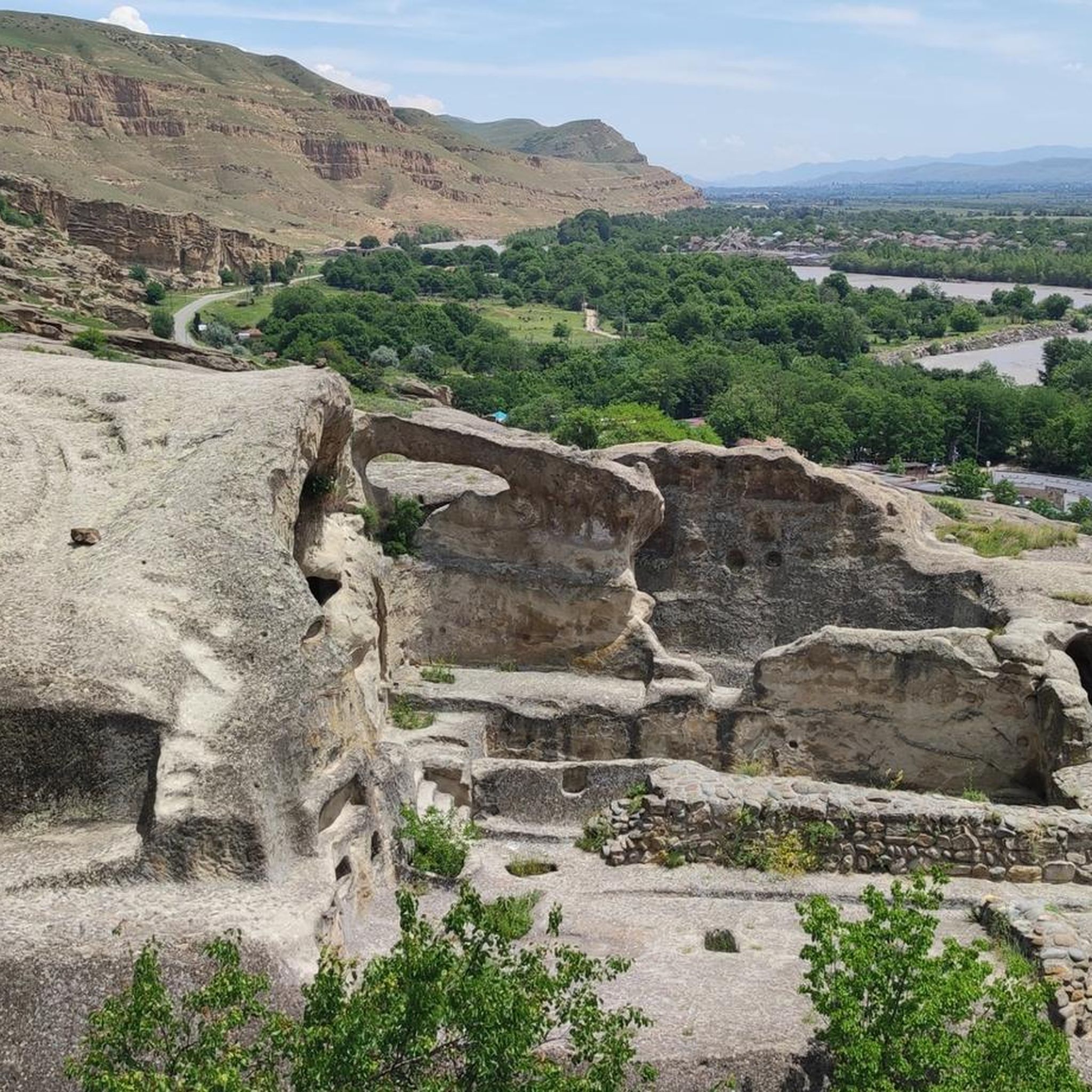
Yes, the region also features ancient fortified settlements that offer deep historical insights. Uplistsikhe Cave Town in eastern Georgia, dating back to the first millennium BCE, is an ancient fortified settlement with a complex of caves, temples, and tunnels carved into rock. The Armaziskhevi Archaeological Site near Mtskheta was a significant settlement and capital of Iberia, with royal residences and tombs from the 4th-3rd century BCE.
What is the best time of year to visit the castles in the Lesser Caucasus?
The best time to visit the castles in the Lesser Caucasus is generally during the spring (April to June) and autumn (September to October) months. During these periods, the weather is typically mild and pleasant for exploring outdoor sites and hiking. Summers can be hot, especially in lower elevations, while winters can bring snow and colder temperatures, potentially making some sites less accessible.
Are there options for public transport to reach these castles?
Public transport options vary greatly depending on the specific castle. Major sites closer to cities like Narikala Fortress in Tbilisi are easily accessible. However, many ancient ruins and fortresses, especially those in more remote or mountainous areas like Smbataberd Fortress or Tmogvi Fortress, may require private transportation, taxis, or a combination of local marshrutkas (minibuses) and walking to reach. It's advisable to research specific transport options for each destination.
What amenities are typically available at or near these castle sites?
Amenities vary by site. Well-known and restored castles like Rabati Fortress often have facilities such as cafes, toilets, and sometimes even museums within their grounds. For more remote ruins like Smbataberd Fortress or Tmogvi Fortress, amenities might be limited to basic facilities in nearby villages, so it's wise to bring your own water and snacks. Larger towns near castle clusters will offer a wider range of accommodation and dining options.
How long should I plan for a visit to a typical castle in the Lesser Caucasus?
The duration of a visit depends on the size and complexity of the castle, as well as your interest in exploring. For smaller ruins or viewpoints like Askana Castle Ruins, 1-2 hours might suffice. Larger, well-preserved sites such as Rabati Fortress, with multiple sections, museums, and cafes, could easily take 3-4 hours or more to fully appreciate. If you plan to combine a castle visit with hiking, allocate a full half-day or day.
Are there any castles that are particularly challenging to reach for hikers?
Yes, some castles are situated in rugged terrain, making them more challenging to access. Tmogvi Fortress, for instance, is categorized as 'challenging' due to its location. Many of these strongholds were built for their impregnable positions, often requiring steep climbs or treks through less-developed paths. Hikers seeking a more strenuous adventure will find these sites rewarding for their historical significance and dramatic settings.
What unique defensive features do some of these castles possess?
The castles in the Lesser Caucasus often feature ingenious defensive designs. Many, like Tmogvi Fortress, utilized their natural surroundings, being built on high hills or between deep valleys for an almost impregnable location. Common features include extensive curtain walls, multiple towers, and citadels. A notable unique feature found in several sites, including Tmogvi and Uplistsikhe Cave Town, is the presence of secret tunnels providing access to water sources like rivers, crucial for survival during sieges.
Most popular routes in the Lesser Caucasus
Most popular attractions in the Lesser Caucasus

Get inspired with the komoot mobile app


