Top 20 Caves around Wolfsegg
Best caves around Wolfsegg are located in the Upper Palatinate region of Germany, an area characterized by diverse geological formations and natural landscapes. While the Burghöhle Wolfsegg is not publicly accessible due to conservation and safety, the surrounding region offers numerous impressive show caves. This area features river valleys, limestone cliffs, and ancient forests, providing a rich environment for cave exploration. Many caves here showcase significant geological and paleontological features, including extensive dripstone formations and evidence of prehistoric habitation.
Best…
Last updated: June 27, 2026
Vils Riverside Trail and Rock Formations
Highlight (Segment) • Trail
Translated by Google •
Tip by

Robber's Cave
Highlight • Cave
Translated by Google •
Tip by

Sign up now to discover places like this
Get recommendations on the best single tracks, peaks, & plenty of other exciting outdoor places.
Sign up for free
Jurasteig Robber's Cave Trail
Highlight (Segment) • Trail
Translated by Google •
Tip by

Loch Cave Castle Ruins
Highlight • Castle
Translated by Google •
Tip by

Burglengenfeld Historic Beer Cellars
Highlight • Historical Site
Translated by Google •
Tip by
Sign up for free to discover even more caves around Wolfsegg.
Sign up for free
Already have an account?
Start today with a free account
Your next adventure awaits.
Login or Signup
Tips from the Community

The Höhlenburg Loch > a geotope The Höhlenburg Loch is one of only two cave castles in Bavaria (the second is in Stein an der Traun in Upper Bavaria). The lower, flatter part of the castle complex lies in slab dolomites belonging to the Velburg Horizon. The steep wall, at the base of which the (residential) caves appear, is formed by mass dolomites of the Middle Franconian Alb Formation. Bavarian State Office for the Environment (LfU). https://www.umweltatlas.bayern.de/standortauskunft/rest/reporting/sb_geotope/generate?additionallayerfieldvalue=375A026
1
0

Beautiful rock formations in the forest
2
0

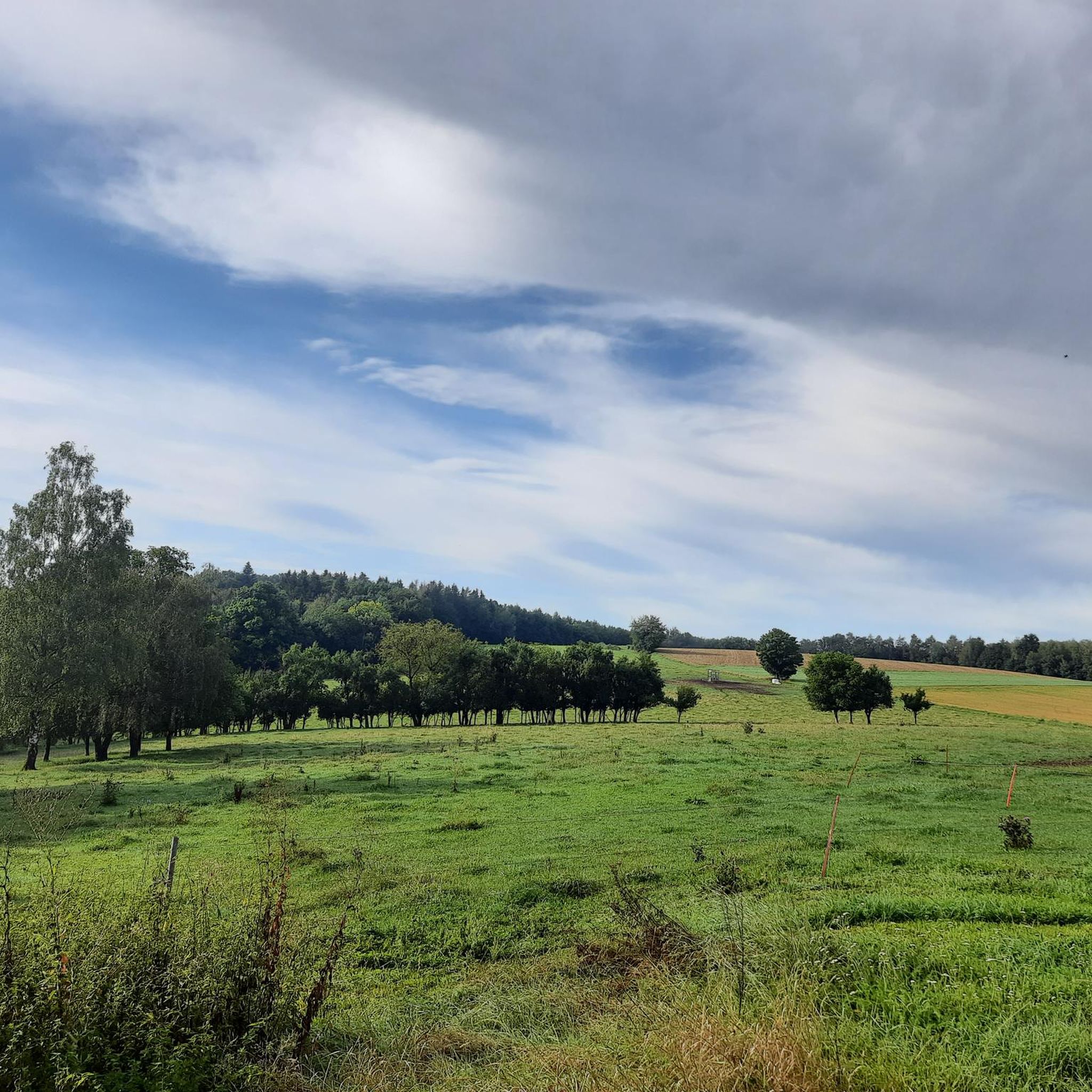
Beautiful view back over the Vils
3
0
Rock formations are now majestically visible in March. They soon disappear into the sea of leaves and are then almost invisible again—unfortunately!
4
0

Loch Castle Ruins Loch Castle was probably built by the Rammelsteiners, the lords of a nearby estate. They were first mentioned in the 12th century and were ministerials of the burgraves of Regensburg and later of the Bavarian dukes. Their castle in Loch was probably only built after 1300 to protect an iron hammer mill in the Laber Valley. A "Hugo vom Loch" is mentioned in a fief book of the Regensburg monastery of St. Emmeram at this time. Jakob Rammelsteiner vom Loch was district judge in Sulzbach in 1388 and court master to the Duke of Ingolstadt, Ludwig the Bearded, in 1413. His descendants Dietrich and Wolfgang took part in the knights' revolts of the Böckler and Löwler, but this did not cause any lasting damage to the family. After 1500, the lords of the castle also gained control of the Schönhofen and Eichhofen castles. When the last Rammelsteiner Sebastian died in 1556, the complex passed to his nephew Wolf Heinrich Sauerzapf in 1573 after long inheritance disputes. The Sauerzapf - a very successful family of hammer lords - gave up their seat in 1625 at the latest and resided in Schönhofen. In 1714, the last Sauerzapf Christoph bequeathed Loch Castle, already in ruins, to the Carthusian monastery of Prüll in Regensburg. The former Loch Castle, although it remained historically insignificant, offers many interesting features. The shape of the cave castle is extremely rare. The entrance was in the north, where a moat, still clearly visible today, separates the castle terrace. A gatehouse with a drawbridge can be clearly seen in the 1718 depiction, as can the residential buildings, which lean against the steep wall in the east in front of several cave rooms. At the southern end of the terrace stands the well-preserved keep, which is 23 meters high. It has 2 m thick walls, a toilet bay and large windows on the top floor. The structural design of the keep, which was built from roughly hewn rubble stone and was designed to be relatively comfortable with large windows and a toilet bay, clearly points to the 14th century. Clearly visible remains of built-in features have been preserved in the largest cave. It is surprising that such an uncomfortable and defensively unfavourable location was chosen for a castle in the late Middle Ages. It was extremely vulnerable to attack from the plateau above. The reason for the choice of location was probably solely the nearby hammer mill. Source: Excerpts from www.burgenseite.de
3
0

ATTENTION: On the Etterzhausen JURA🦕Steig ascent to the robber's cave, a very special person, compared to whom even real robbers appear to be honorable merchants, has made nasty mistakes: 3 flats in 6 months, always in the same place, and today, while patching, he discovered a fresh thumbtack. See picture #82. Time to upgrade to tubeless! Always a flat ride! 🍀🚴🏿♂️😀
4
0

The castle is best seen from Eichhofen, as entering is forbidden and not possible due to the fence
0
0

Beautiful, wonderful tips that make you want to go on a nasty tour! Thanks!
1
0
Frequently Asked Questions
What are some of the most impressive publicly accessible caves near Wolfsegg?
While the Burghöhle Wolfsegg is not publicly accessible, the broader region offers several remarkable show caves. These include the Teufelshöhle in Pottenstein, known for its extensive dripstone formations and cave bear skeleton; the Sophienhöhle near Burg Rabenstein, celebrated for its diverse stalactites and Ice Age animal remains; the Osterhöhle near Neukirchen b. Sulzbach-Rosenberg with its cave lake and sinter basins; and the Großes Schulerloch Dripstone Cave in Essing, which combines beautiful dripstones with significant Neanderthal history.
Are there any caves near Wolfsegg with historical significance?
Yes, several caves in the region hold historical importance. The Robber's Cave, for instance, was formed during the Jurassic period and historically served as a refuge and a starting point for raids. The Großes Schulerloch Dripstone Cave is notable for being a shelter for Neanderthals during the Middle Paleolithic. Additionally, the House without a Roof (Kallmünz) is a unique, still-used cave dwelling dating back to the 18th century.
Can families with children visit caves around Wolfsegg?
Many of the publicly accessible caves in the region are suitable for families. Caves like the Teufelshöhle and Sophienhöhle offer well-lit paths and guided tours, making them engaging for children. The Großes Schulerloch also features a unique projection onto its walls, which can be very appealing to younger visitors. Always check specific cave websites for age recommendations or special family programs.
Is it possible to visit the cave directly beneath Wolfsegg Castle?
No, the cave directly beneath Wolfsegg Castle, known as Burghöhle Wolfsegg, is not accessible to the public. This is due to ongoing conservation efforts and safety concerns. However, the surrounding Upper Palatinate and Franconian Switzerland regions offer numerous other impressive and accessible caves.
What kind of geological formations can I expect to see in the caves?
The caves around Wolfsegg are rich in diverse geological formations. You can expect to see extensive dripstone formations, including impressive stalagmites and stalactites, sinter flags, and flowstones. Caves like the Teufelshöhle and Sophienhöhle are particularly renowned for their abundance and variety of these formations, often given imaginative names like 'the Millionaire' stalagmite or 'Elephant's Ear' sinter flags. Some caves also feature cave lakes and sinter basins, as seen in the Osterhöhle.
Are there any caves that offer unique experiences like special events or projections?
Yes, some caves provide unique experiences. The Sophienhöhle near Burg Rabenstein offers special 'Sophie at night' events, which include music and fascinating light installations to highlight the cave's splendor. The Großes Schulerloch Dripstone Cave enhances the visitor experience with a unique projection onto its walls, combining geological wonders with archaeological insights.
What outdoor activities can I combine with a cave visit near Wolfsegg?
The region around Wolfsegg is excellent for combining cave exploration with other outdoor activities. You can find numerous routes for gravel biking, running, and road cycling. For example, you could explore routes like the 'View of Kallmünz Castle Ruins – Path Along the Vils River' for gravel biking, or the 'Baldursstube – View of Weihergut' for running. For more options, check out the Gravel biking around Wolfsegg, Running Trails around Wolfsegg, and Road Cycling Routes around Wolfsegg guides.
What should I wear when exploring caves in this region?
Caves typically maintain a constant cool temperature, often around 9°C (48°F), regardless of the outside weather. It's advisable to wear warm clothing, even in summer, and comfortable, sturdy shoes with good grip, as paths can sometimes be damp or uneven. A light jacket or sweater is recommended.
Are there any dog-friendly options for cave exploration around Wolfsegg?
While many show caves have restrictions on pets for safety and conservation reasons, some outdoor cave features or surrounding trails might be dog-friendly. For instance, the Robber's Cave is publicly accessible and located on a forest path, making it potentially suitable for well-behaved dogs on a leash. Always check the specific rules of each cave or natural site before visiting with your dog.
When is the best time of year to visit the caves near Wolfsegg?
The constant cool temperatures inside the caves make them a refreshing escape during warmer months, especially from spring to autumn. Some caves, like the Osterhöhle, are open from Easter until the end of October, as they serve as winter roosts for bats during colder months. It's always best to check the specific opening hours for each cave before planning your visit.
Where can I find refreshments or accommodation near the caves?
Many of the publicly accessible caves are located near towns or villages that offer amenities. For example, the Osterhöhle has a rustic forest tavern and beer garden right by the cave. The Teufelshöhle is in Pottenstein, a picturesque town with various options for dining and accommodation. Similarly, the Sophienhöhle is near Burg Rabenstein, which also offers facilities. You'll often find local restaurants, cafes, and guesthouses in the vicinity of these popular cave attractions.
What is the "House without a Roof" near Wolfsegg?
The House without a Roof (Kallmünz) is a unique and still-used cave dwelling from the 18th century. It consists of a natural cave whose entrance is closed off by a plastered wall with a door and windows, creating living quarters inside the rock. Located in Kallmünz, it's a fascinating example of historical adaptation to the natural landscape, though the interior is not open to visitors.
Are there any cave castles or unique cave dwellings in the area?
Yes, the region is known for its unique cave structures, including cave dwellings and cave castles. The House without a Roof (Kallmünz) is a prime example of a cave dwelling. Additionally, the Loch Cave Castle Ruins are an extremely rare example of a cave castle, where two caves in the slope were connected and walled to create living spaces within the rock. While the Loch Castle Ruins are currently closed to visitors, they represent a significant historical feature of the area.
Most popular routes around Wolfsegg
Most popular attractions around Wolfsegg

Get inspired with the komoot mobile app


Explore more
Extend your search for the best caves by checking out these guides of the top ones around Wolfsegg:
