Top 20 Caves around Halsbrücke
Best caves around Halsbrücke offer a unique array of underground experiences, primarily consisting of artificial structures and remnants of historical mining activities. These sites provide insight into the region's industrial past and geological makeup. The area is characterized by its deep roots in mining history, with many locations showcasing the legacy of ore extraction.
Best caves around Halsbrücke
- The most popular caves is Jungfernloch Cave, a cave that is an artificial formation with an adjacent pond created after 1990.…
Last updated: October 13, 2026
Jungfernloch Cave
Highlight • Cave
Translated by Google •
Tip by

Upper portal of the Porzellanfelsenrösche
Highlight • Cave
Translated by Google •
Tip by

Sign up now to discover places like this
Get recommendations on the best single tracks, peaks, & plenty of other exciting outdoor places.
Entrance to the Old/Deep Fürstenstolln
Highlight • Historical Site
In the valley of the Freiberger Mulde, the mouth of the most important and longest Freiberger adit was attached to the main adit Stehenden. …
Translated by Google •
Tip by

Andreas Alnpeckscher (Weißstaubner) Stolln
Highlight • Structure
Translated by Google •
Tip by

Reicher Silbersegen Mine Entrance
Highlight • Historical Site
Translated by Google •
Tip by
Sign up for free to discover even more caves around Halsbrücke.
Already have an account?
Start today with a free account
Your next adventure awaits.

Tips from the Community

The Reicher Silbersegen mine is a small, historic exploratory tunnel (operational period approx. 1866–1896) for silver ores in the valley of the Wilden Weißeritz. It is located south of Tharandt, on the municipal border between Dorfhain and Edle Krone. The tunnel, almost 35 m long, was economically insignificant. Today, the entrance is easily accessible from the Barthmühle during a hike, but it is not publicly accessible.
0
0

According to legend, the shallow cave in the rock (quartz-armed porphyry or rhyolite) was once much larger, and three fairies lived there. On a full moon night, a minstrel who had previously played at the fair in Hintergersdorf (spa town of Hartha) passed by. The three fairies had laid out laundry on the meadow to bleach. The musician picked up a lace cloth and took it with him. However, when he got home, instead of the cloth, he held a gray cobweb in his hand. Before sunrise, he returned the cobweb to its place, where it became a lace cloth again, just as the other laundry disappeared with the first rays of sunlight. Since then, the fairies have not been seen again, and the cave has become a shallow hole.
0
1

quartzite was extracted here, an additive for porcelain production
1
1

On the right side of the Röschenmundloch there is a small cave that was created by quartzite mining. Apparently, opportunity not only makes thieves but also miners, because this cave was created almost incidentally during the construction of the Rösche to extract quartzite for porcelain production.
4
1
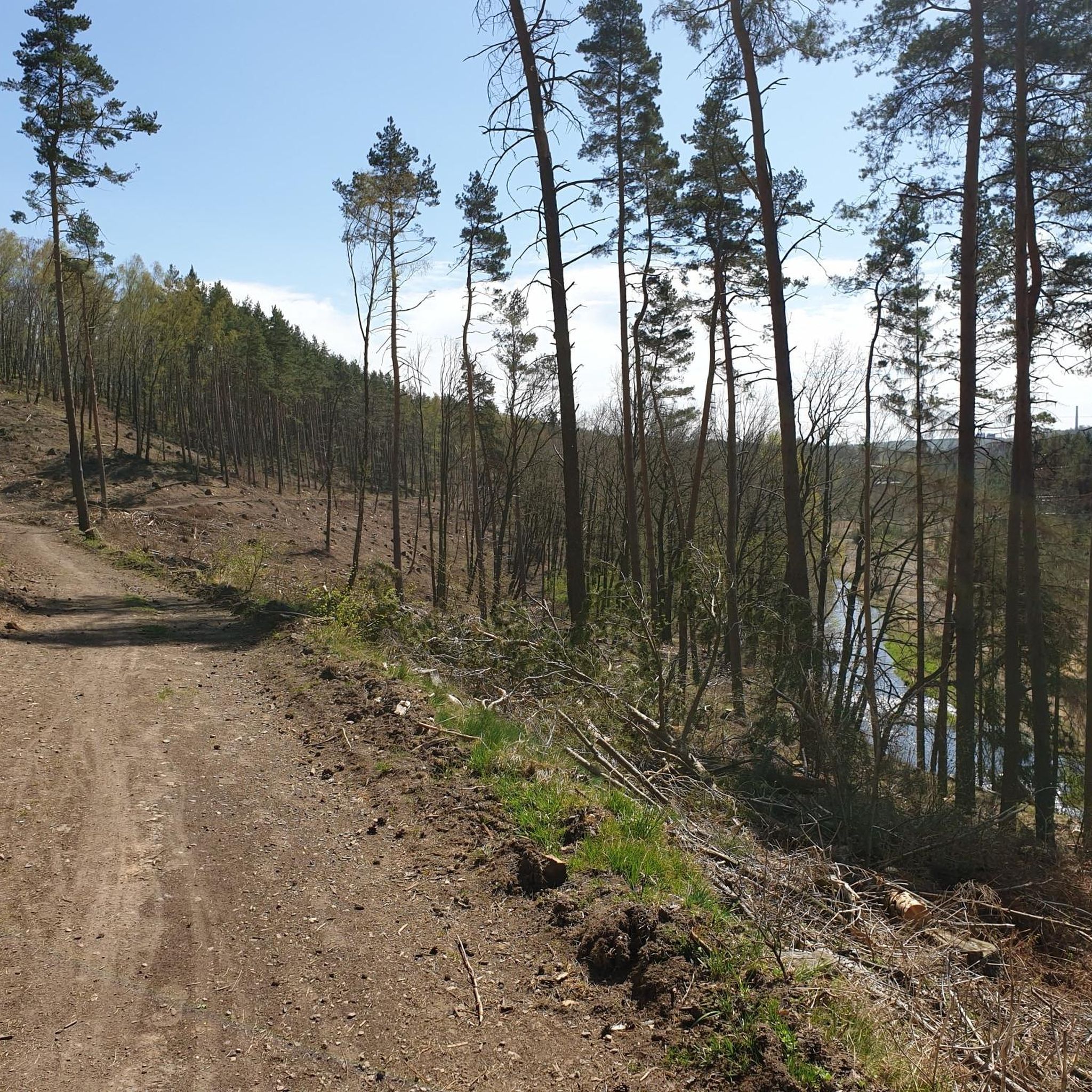
After a few hundred meters through the forest, a little off the Bobritzsch, the hiking trail and the artificial ditch, which is very well preserved here, reach the upper mouth of the 150-meter-long porcelain rock rose. On the right side of the Röschenmundloch there is a small cave that was created by quartzite mining. Apparently opportunity makes not only thieves but also miners, because this cave was created almost incidentally during the construction of the Rösche to win quartzite for porcelain production.
4
1

Beautiful walk-in cave from quartzite mining
2
1

Orifice Alter/Tiefer Fürstenstollen Kunstgraben Roter Graben In the valley of the Freiberger Mulde, the mouth of the most important and longest Freiberger adit was attached to the main adit Stehenden. In the valley of the Freiberger Mulde, the mouth of the most important and longest Freiberger adit was attached to the main adit Stehenden. This tunnel, which was bought free by the Saxon sovereign in the late Middle Ages, was later called the Fürstenstolln. The mouth of the old/deep prince's adit has walls that can be dated to the 18th century. The mouth hole itself is part of a dry set wing wall. Above the vertical joints is a basket arch, including a coat of arms stone with the Saxon coat of arms. In the mouth hole there is a large sandstone tablet on the left joint, which marks the area zero for the area profile plan of the Freiberg area that was made in 1850-1852 and added later.
4
0
Rich silver blessing Mine · Dresden-Elbland
1
0
Frequently Asked Questions
What kind of 'caves' can I expect to find around Halsbrücke?
The 'caves' around Halsbrücke are primarily artificial structures and remnants of historical mining activities, rather than natural formations. These sites offer a unique glimpse into the region's significant industrial past and geological makeup, showcasing the legacy of ore extraction.
Are there any historical mining sites among the caves in Halsbrücke?
Yes, Halsbrücke is rich in mining history. Notable historical sites include the Upper portal of the Porzellanfelsenrösche, a 150-meter-long artificial ditch created during quartzite mining, and the Entrance to the Old/Deep Fürstenstolln, an important and lengthy Freiberg adit dating back to the 18th century. The Heyneberg Limestone Quarry Cave also provides insight into historical quarrying practices.
Are the caves around Halsbrücke suitable for families?
Many of the sites, while historical, can be explored by families. For example, the Upper portal of the Porzellanfelsenrösche is categorized as family-friendly. The artificial Jungfernloch Cave with its adjacent pond also offers an interesting point for exploration within local walking trails.
What kind of geological features can be observed near these sites?
The region's geological makeup is closely tied to its mining history. At the Heyneberg Limestone Quarry Cave, you can observe slate rock walls interspersed with calcareous and quartzitic greywacke, reaching up to 15 meters in height. The Porzellanfelsenrösche is significant for its quartzite, which was used by the Meissen porcelain factory for glaze.
Are there hiking trails that lead to or past these caves?
Yes, the caves are often integrated into local hiking networks. The Upper Triebisch Valley Geological Hiking Trail, approximately 17 km long, provides insight into the region's geology and history, passing by sites like the Heyneberg Limestone Quarry Cave. You can find various hiking options in the area by exploring Hiking around Halsbrücke or Easy hikes around Halsbrücke.
What do visitors particularly enjoy about the caves around Halsbrücke?
Visitors appreciate the unique blend of history and nature. Many find the sites, like the Jungfernloch Cave, to be peaceful and idyllic resting places. The historical significance of the mining tunnels and quarries, such as the Porzellanfelsenrösche, offers a fascinating educational experience.
Can I visit the VII. Lichtloch (Seventh Light Hole) in Halsbrücke?
The VII. Lichtloch is part of the UNESCO World Heritage site in the Ore Mountains/Krušnohoří region and represents a significant piece of the region's rich mining heritage. While it is a crucial historical object, specific visitor access details would need to be checked with local tourism information.
Are there any cycling routes near the caves in Halsbrücke?
Yes, the region offers cycling opportunities. You can find various routes that pass through the area, allowing you to explore the landscape and potentially some of the cave sites. For cycling options, refer to the Cycling around Halsbrücke guide.
Is the Andreas Alnpeckscher (Weißstaubner) Stolln accessible to visitors?
The Andreas Alnpeckscher (Weißstaubner) Stolln is noted as a locked old mining entrance. It is part of the Freiberg dynamite hiking route, offering a great hike for those interested in mining history, but direct entry into the tunnel may be restricted.
What is the best time of year to visit the caves and mining sites in Halsbrücke?
The historical mining sites and artificial caves around Halsbrücke can generally be visited year-round, though accessibility to trails might vary with weather conditions. Spring and autumn offer pleasant temperatures for hiking and exploring the outdoor aspects of these sites. Always check local conditions before your visit.
Are there any specific regulations or permits required to visit these sites?
While general access to the outdoor areas around these historical sites is usually open, specific regulations might apply to certain areas, especially if they are protected natural monuments or active historical preservation sites. It's advisable to check for any specific visitor permits or access restrictions for individual locations before your visit.
Most popular routes around Halsbrücke
Most popular attractions around Halsbrücke

Get inspired with the komoot mobile app


Explore more
Extend your search for the best caves by checking out these guides of the top ones around Halsbrücke:
